Kostanjevica Monastery: A Carmelite and Franciscan Religious Complex in Slovenia
Site at a Glance
- Rating
- 4.6
- Popularity
- Low
- Country
- Slovenia
- Primary era
- Early Modern
- External website
- Open
- Eras represented
- Early Modern, Modern
- Civilizations
- Habsburg
- Site type
- Religious
- Remains
- Monastery
On this page12 sections
History
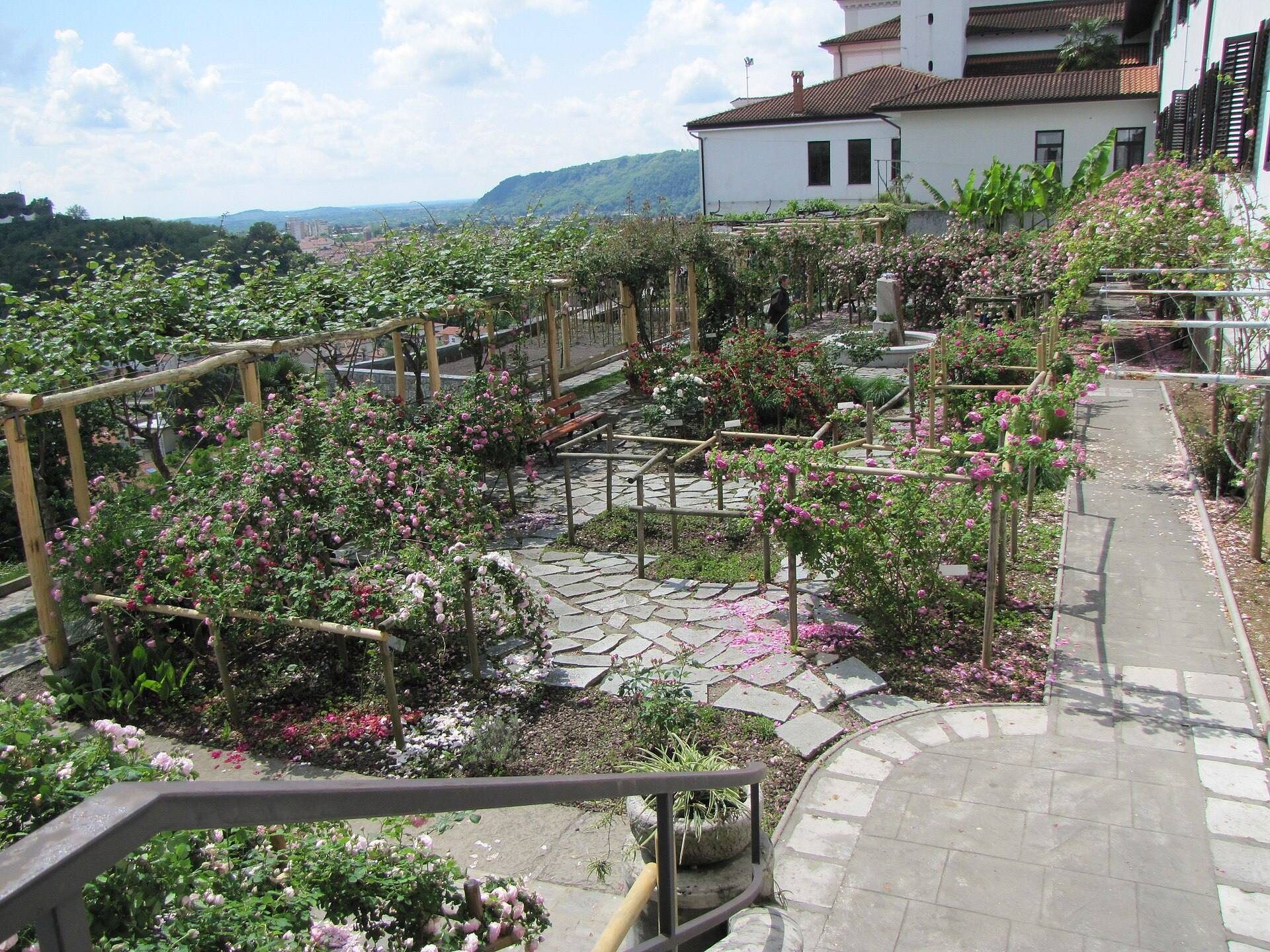
Kostanjevica Monastery is a Carmelite and Franciscan religious complex in Slovenia, located on Kostanjevica Hill above Nova Gorica. It began in 1623 with a Carmelite sanctuary, followed by a monastery beside it, and expanded during the next 134 years through the efforts of Count Heinrich Matthias von Thurn, a seventeenth-century nobleman associated with the anti-Habsburg revolt of the Bohemian estates that helped trigger the Thirty Years’ War.
Carmelite foundation and pilgrimage
The church and monastery became an important pilgrimage destination for worshippers from Friuli and the Goriška region, the historical area around Gorizia. The church is locally called Kapela, meaning “chapel.” Its religious importance grew from the veneration of an image of the Virgin Mary, for which the original small church was established.
Suppression and Franciscan renewal
Emperor Joseph II, whose reforms included the suppression of many religious orders and monasteries in the Habsburg lands, dissolved the monastery in 1781. The complex was then abandoned and closed. In 1811, the Franciscans, members of the Order of Friars Minor, acquired the buildings and re-established monastic life. From 1821, Kostanjevica also housed a Franciscan secondary school and theological college.
The Franciscans transferred approximately 10,000 books from the nearby Sveta Gora Monastery, a Franciscan monastery and pilgrimage site, to Kostanjevica. The collection later took the name of Father Stanislav Škrabec, who lived and worked at Kostanjevica for more than 40 years.
The Bourbon burials
After the July Revolution of 1830 forced Charles X of France to abdicate, he went into exile and settled in Gorizia in 1836. Charles X, who had been king of France from 1824, died there of cholera and was buried in the monastery church. The Franciscan crypt later became the burial place of other exiled members of the French Bourbon family, a European royal dynasty that ruled France and other territories.
The Bourbon burials include Charles X; his son Louis-Antoine de Bourbon, Duke of Angoulême and titular King Louis XIX; Marie-Thérèse of France, Louis-Antoine’s wife and the only surviving child of Louis XVI and Marie Antoinette; Louise d’Artois, Duchess of Parma; Henri d’Artois, Count of Chambord, the last male member of the senior Bourbon line; and Henri’s wife, Marie-Thérèse of Modena. Henri and Marie-Thérèse supported the construction of the present crypt for the exiled family. Pierre Louis Jean Casimir de Blacas d’Aulps, a diplomat and foreign minister of Charles X, is also buried there and is the only person in the crypt who was not a Bourbon.
War, reconstruction, and changing borders
During the First World War, Kostanjevica stood near the Isonzo front, where Italian and Austro-Hungarian armies fought a series of offensives along the Isonzo River. The monastery and church suffered severe damage during the battles, and the church was destroyed in the fighting of 1916 and 1917. Reconstruction and restoration took place between 1924 and 1929.
Until the end of the Second World War, Kostanjevica belonged to Gorizia. In 1947, the Italian-Yugoslav border was established a few hundred metres west of the monastery, placing the complex within the newly established Yugoslav city of Nova Gorica. Since 25 June 1991, it has been part of independent Slovenia. The Annunciation Church now serves as the parish church of the Nova Gorica–Kapela parish. The monastery library was registered as a cultural and historical monument in 1952, and the wider complex received the same designation from the Yugoslav federal government in 1985.
During the First World War, Zita of Bourbon-Parma arranged for the Bourbon sarcophagi to be taken to Vienna because the fighting threatened Gorizia. They were later returned to the monastery. Because it contains the graves of the senior French Bourbons, Kostanjevica is known among French royalists as “Little Saint-Denis,” recalling the traditional burial church of the French kings.
Remains
The monastery and Annunciation Church stand on the 143-metre-high Kostanjevica Hill, a rocky elevation dividing Nova Gorica from Pristava. The complex lies approximately 200 metres from the Italy-Slovenia border. Its surviving arrangement combines the church, the former Carmelite cloister, the Franciscan monastery, the Bourbon Crypt, and the library within one historic religious complex.
Church and monastic buildings
Annunciation Church
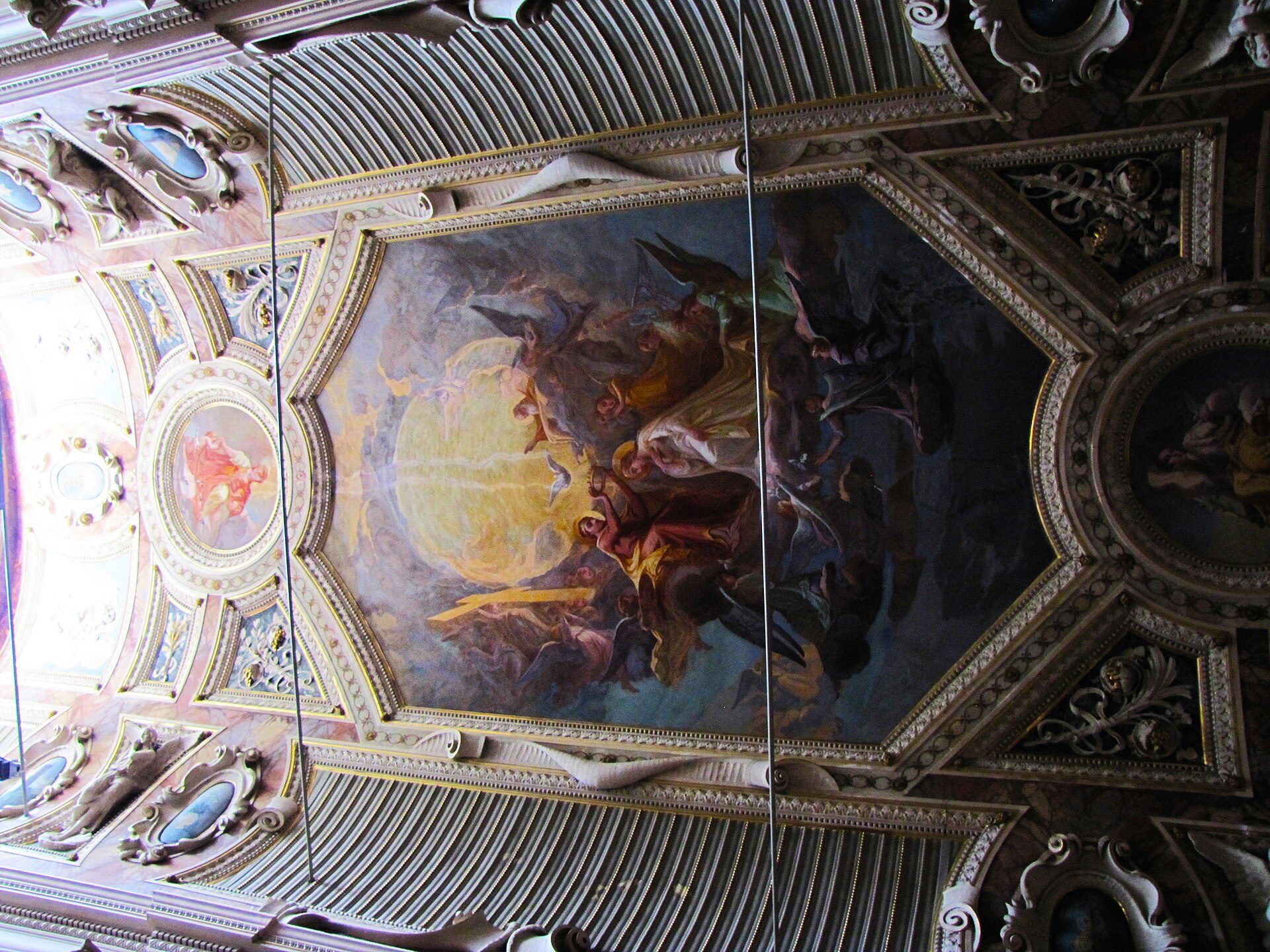
The Annunciation Church developed from the small Carmelite sanctuary built for an image of the Virgin Mary into the church seen today. The building was destroyed during the Isonzo fighting in 1916 and 1917, then reconstructed between 1924 and 1929. That work included the restoration of its stucco decoration and frescoes. The main altar painting shows the Virgin Mary with the Christ Child. The church also contains Leonardo Rigo’s fresco of the Merciful Madonna of Kostanjevica and Giovanni Moro’s ceiling fresco of the Coronation of Mary. Numerous grave slabs belonging to members of the local nobility are preserved inside.
Monastery and cloister
The monastery was built beside the original Carmelite church, and the former Carmelite cloister remains part of the complex. After the Carmelite departure and the closure ordered under Joseph II, the buildings returned to religious use when the Franciscans took possession in 1811. Their later occupation incorporated the monastery into a wider Franciscan educational and scholarly centre.
Burial crypt
Bourbon Crypt
The Bourbon Crypt, established and enlarged during the nineteenth century, lies within the monastery complex. It contains the tombs of Charles X, Louis-Antoine de Bourbon, Marie-Thérèse of France, Louise d’Artois, Henri d’Artois, and Marie-Thérèse of Modena. Pierre Louis Jean Casimir de Blacas d’Aulps is buried in a niche in front of the Bourbon burial area. The crypt’s present form reflects the effort of Henri and Marie-Thérèse to provide a burial place for their exiled family.
Monastery library
The monastery library holds approximately 10,000 books, including about 30 incunabula, books printed in Europe before 1501, and many works printed between the sixteenth and nineteenth centuries. Part of the collection originated in sixteenth-century holdings of the Franciscan monastery at Sveta Gora. Repeated transfers led to the loss of many books, after which the Franciscans replenished the collection. Among its notable works is Adam Bohorič’s Arcticae horulae, or “Winter Hours,” printed in 1584 as the first work written in Slovenian and bearing the author’s handwritten signature.