Bastione Maiano: A Medici Bastion in Grosseto, Italy
Site at a Glance
- Rating
- 4.6
- Popularity
- Very Low
- Country
- Italy
- Primary era
- Early Modern
- Eras represented
- Early Modern, Modern
- Civilizations
- Unclassified
- Site type
- Military
- Remains
- Wall
On this page11 sections
History
Bastione Maiano is a sixteenth-century Medici bastion in Grosseto, Italy, built as part of the reconstruction of the city’s defensive walls. A bastion is a projecting fortification designed to strengthen a wall and provide positions for firearms. Occupying the southeastern corner of the circuit, it connects the Fortezza bastion complex with Bastione Cavallerizza, beyond Porta Vecchia.
Medici construction
The bastion was the first new bastion built during the Medici reconstruction of Grosseto’s walls in the second half of the sixteenth century. Construction began in 1565 to a design by Baldassarre Lanci, an Italian architect and military engineer, and was completed under his direction in 1566.
Its former name, Baluardo delle Palle, came from a hexagonal sentry structure positioned above a marble Medici coat of arms. A sentry structure was a small fortified shelter or lookout post. The nearby casino delle Palle served as a military gunpowder store and remained in use at least until 1786.
Demilitarization and water supply
The definitive demilitarization of Grosseto’s walls, followed by their conversion into a public urban park, began in 1833. Most sentry structures along the walls were demolished, while the one at Bastione Maiano and two at the Fortezza survived this phase.
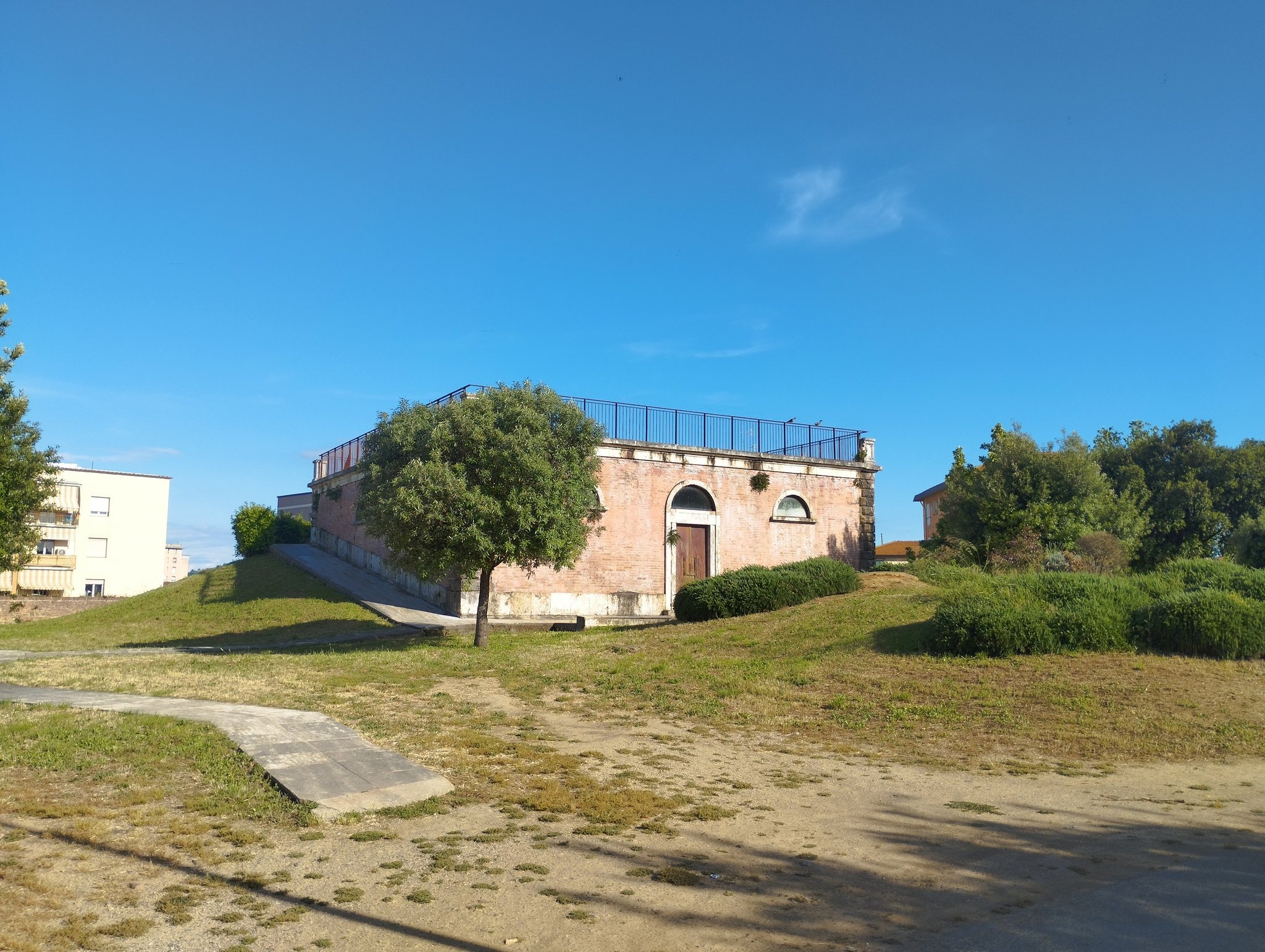
Between 1870 and 1872, the Maiano water depot was built to a design by Loresindo Pruneti. The depot received water conveyed by the Maiano aqueduct and formed the terminus of Grosseto’s first aqueduct. Poor results led to the inauguration of a new aqueduct in 1896 and the closure of the Maiano system.
War damage and later works
Anglo-American bombing during the Second World War destroyed the hexagonal sentry structure and the casino delle Palle. The marble Medici coat of arms survived intact.
Between 1997 and 2002, the former ditch between Bastione Maiano and the Fortezza was excavated and converted into a green area. A recovery project for the bastion began, was abandoned, resumed in 2008, and was interrupted again while work remained under way. In June 2002, part of the curtain wall was demolished because it was considered a nineteenth-century addition. The intended iron staircase linking the bastion’s upper level with Piazza Esperanto was never built. The work site was dismantled in 2013, after which the bastion became usable again through restoration of the water depot and the creation of pedestrian paths and planted areas. The site was initially owned by the Medici and is now owned by the municipality of Grosseto.
Remains
Fortification and waterworks
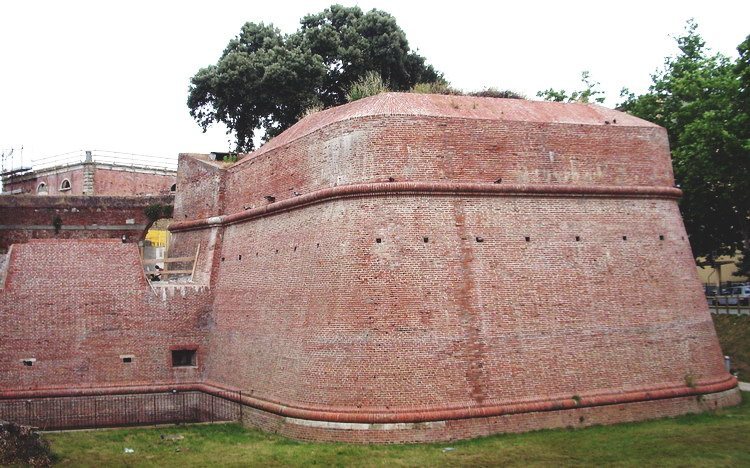
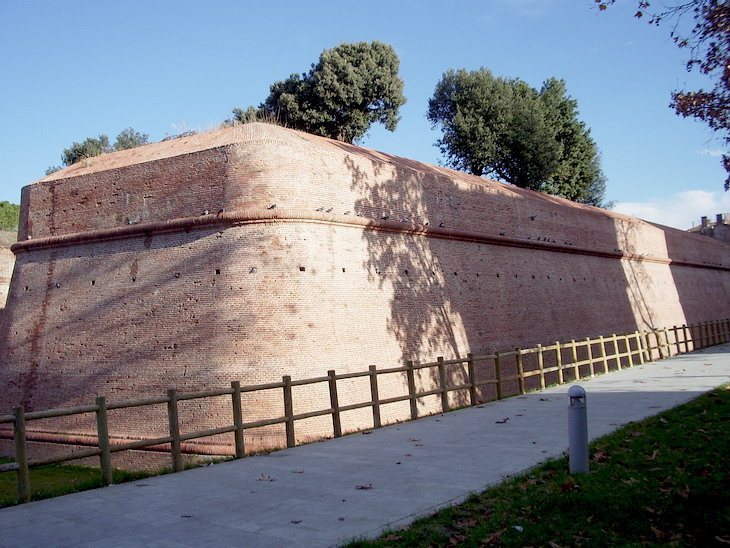
The bastion has a polygonal plan with battered bases, meaning that its lower walls slope outward for additional strength. Two projecting horizontal masonry bands, called cordons, articulate the structure. One lies close to ground level, while the other marks the transition between the battered base and the curtain wall, the main wall section between projecting fortifications. A series of galleries within the bastion formerly led to the gun emplacements, the positions where artillery was operated.
Maiano water depot
The Maiano water depot, built between 1870 and 1872, forms part of the later physical history of the fortification. It was a receiving or storage facility in Grosseto’s water-supply system and was restored during the works that returned Bastione Maiano to usable condition.
Medici coat of arms
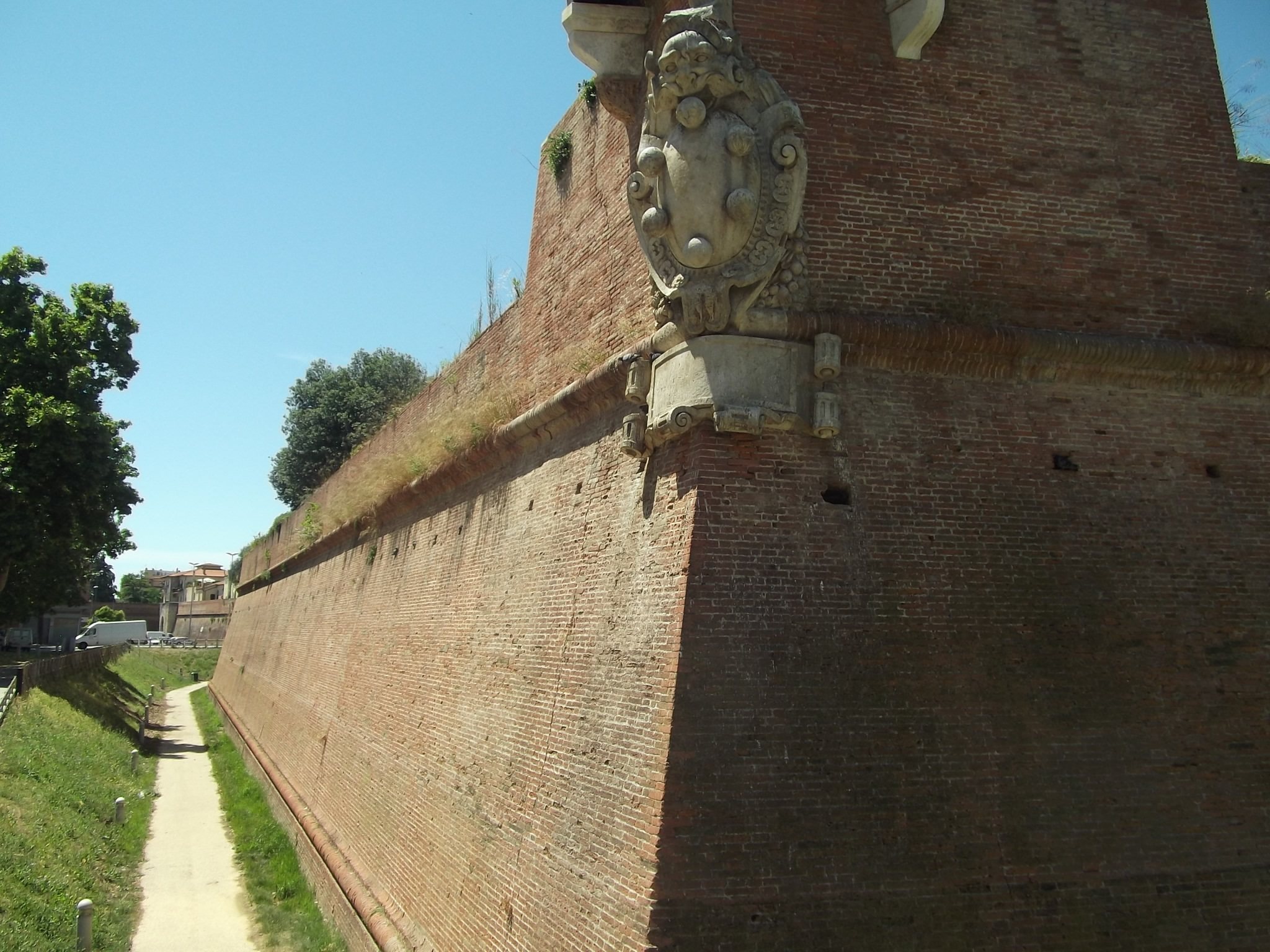
The marble Medici coat of arms remains in place above the former position of the hexagonal sentry structure. The structure and the casino delle Palle were destroyed by wartime bombing, but the coat of arms remained intact.
Walls, promenade, and former ditch
Curtain wall and Porta Vecchia connection
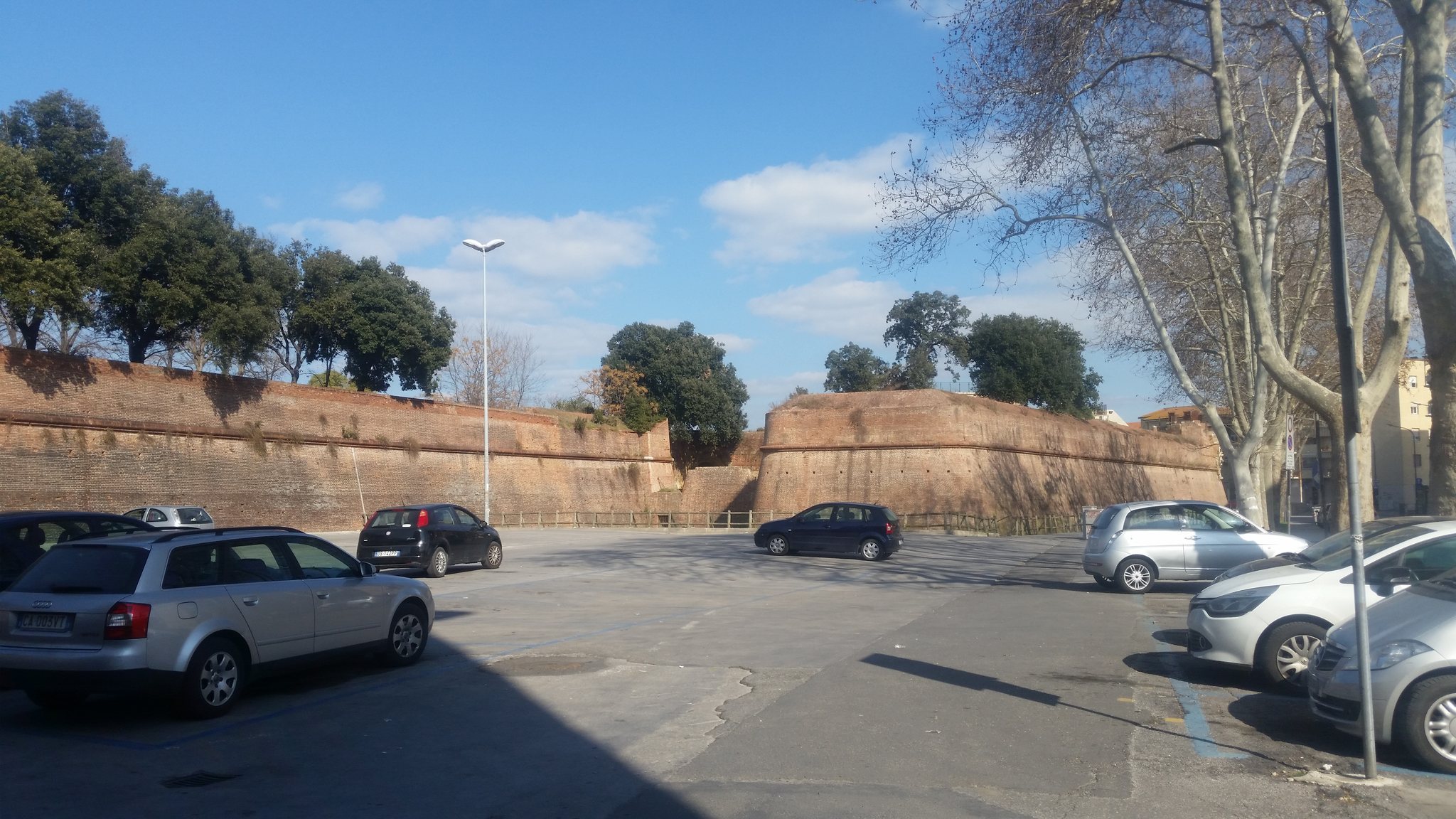
A section of curtain wall on the side facing Piazza Esperanto was removed in 2002. An iron staircase was planned to connect the square with the upper level of the bastion, but it was never constructed. A promenade follows the curtain wall between Bastione Maiano and Bastione Cavallerizza, passing above Porta Vecchia. Shortly before the gate, a descent provides access to Porta Vecchia from ground level.
Former ditch and landscaped area
The former ditch outside the bastion extended from Maiano to the Fortezza. It was excavated and converted into a green area between 1997 and 2002. Later works added pedestrian paths and planted areas around Bastione Maiano.