Thann Castle: A Medieval Hilltop Fortress in Germany
Site at a Glance
- Rating
- 4.6
- Popularity
- Low
- Country
- Germany
- Primary era
- Medieval
- External website
- Open
- Eras represented
- Medieval, Modern
- Civilizations
- Duchy of Bavaria, Holy Roman Empire
- Site type
- Military
- Remains
- Castle
On this page16 sections
History
Thann Castle, also known as Burgthann, is a ruined Gothic hilltop fortress in Burgthann, Germany, built in the twelfth century, probably around 1160, by the imperial ministerial family of Thann. Imperial ministerials were officials who served rulers of the Holy Roman Empire and could exercise military, administrative, and local lordship functions. The family’s principal seat was at Altenthann, and a knight of Thann was first mentioned at Göckelsberg in 1160.
From Thann family seat to princely administration
The castle first appears in a surviving record from 1287. On 31 July that year, Heinrich of Thann sold it to Duke Ludwig II of Bavaria and received it back as a fief, meaning land held in return for service. In September or October, Ludwig transferred the castle through King Rudolf I to Burgrave Friedrich III of Nuremberg. Heinrich of Thann and his son Hermann received it back as a fief in late August 1288.
From 1346, Thann Castle became the seat of a Hohenzollern Pflegeamt, a territorial office responsible for judicial and governmental administration. The Hohenzollerns were a German princely and royal dynasty, while the Nuremberg branch held the office of burgrave. The castle therefore served not only as a fortified residence but also as a centre of territorial government.
The castle also appears in the history of criminal justice. In 1381, the Franconian robber knight Eppelein von Gailingen was imprisoned there for one night before being handed over to the executioner of Neumarkt.
War, reconstruction, and decline
Thann Castle was destroyed in 1460 during the Bavarian War, a fifteenth-century conflict in which rival Bavarian powers fought for political and territorial control. Reconstruction followed in 1463. During the Thirty Years’ War, the wider European conflict fought from 1618 to 1648 over religious, dynastic, and territorial issues, imperial troops destroyed the southeast wing in 1635. Swedish troops plundered the castle in 1648, and rebuilding took place after 1652.
The Pflegeamt was transferred elsewhere in 1792. After that change, the castle passed through several ownerships, deteriorated, and was used as a quarry. Initial stabilization began in 1968, followed by large-scale municipal work from 1988. Archaeological excavations between 1987 and 1989 produced finds that are now displayed in the castle’s local museum.
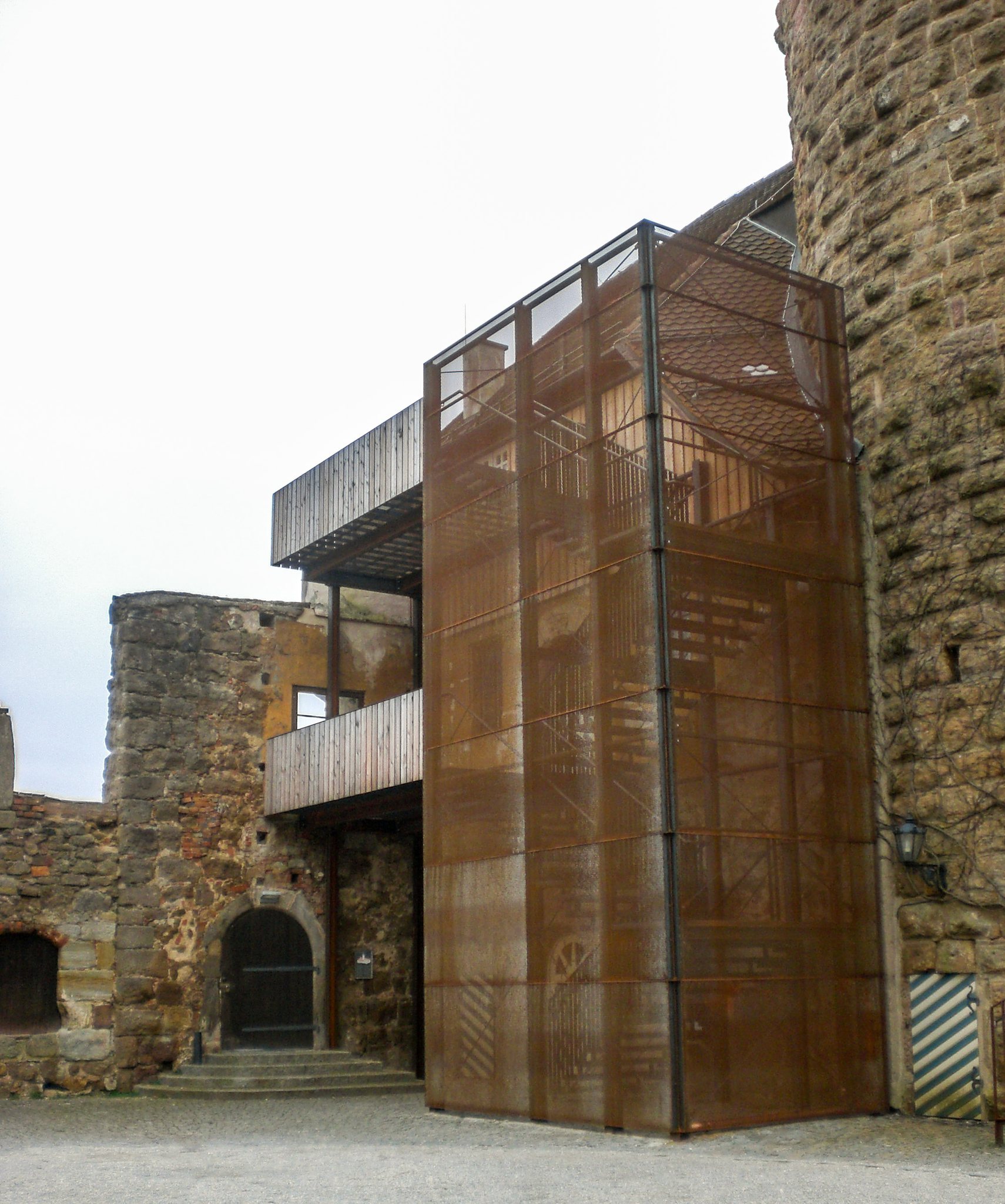
Thann Castle is protected as an architectural monument by the Bavarian State Office for Monument Protection. The Bavarian Ludwig–Danube–Main Canal Museum opened there in 1995. In 2007, a research group cleared the 14-metre-deep castle well of accumulated rubbish. Safety and fire-protection measures were installed in spring 2015, and their metal structures substantially changed the castle’s appearance, prompting continuing local controversy.
The northern slope of the castle hill was designated a protected landscape area on 1 August 2001. Covering about four hectares, it preserves the characteristic landscape of the castle-hill ensemble. Traditional grazing maintains its semi-dry grasslands and hedges, while three castle oaks are protected as natural monuments.
Remains
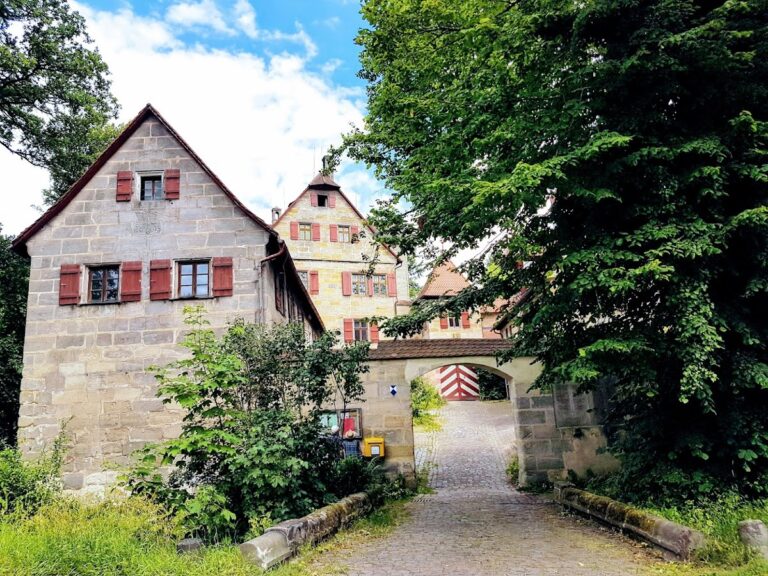
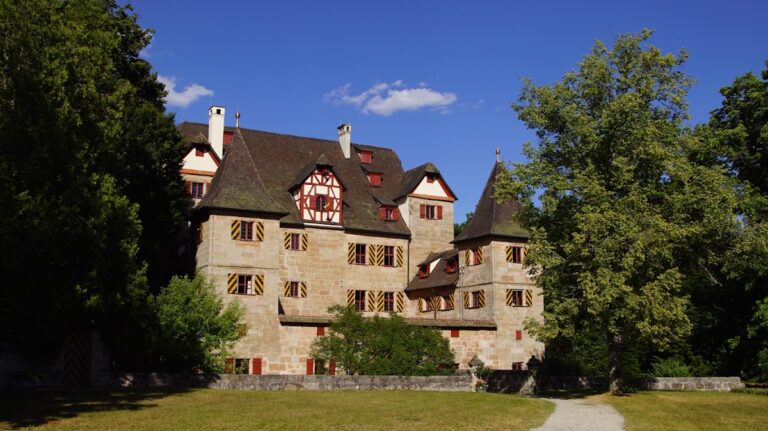
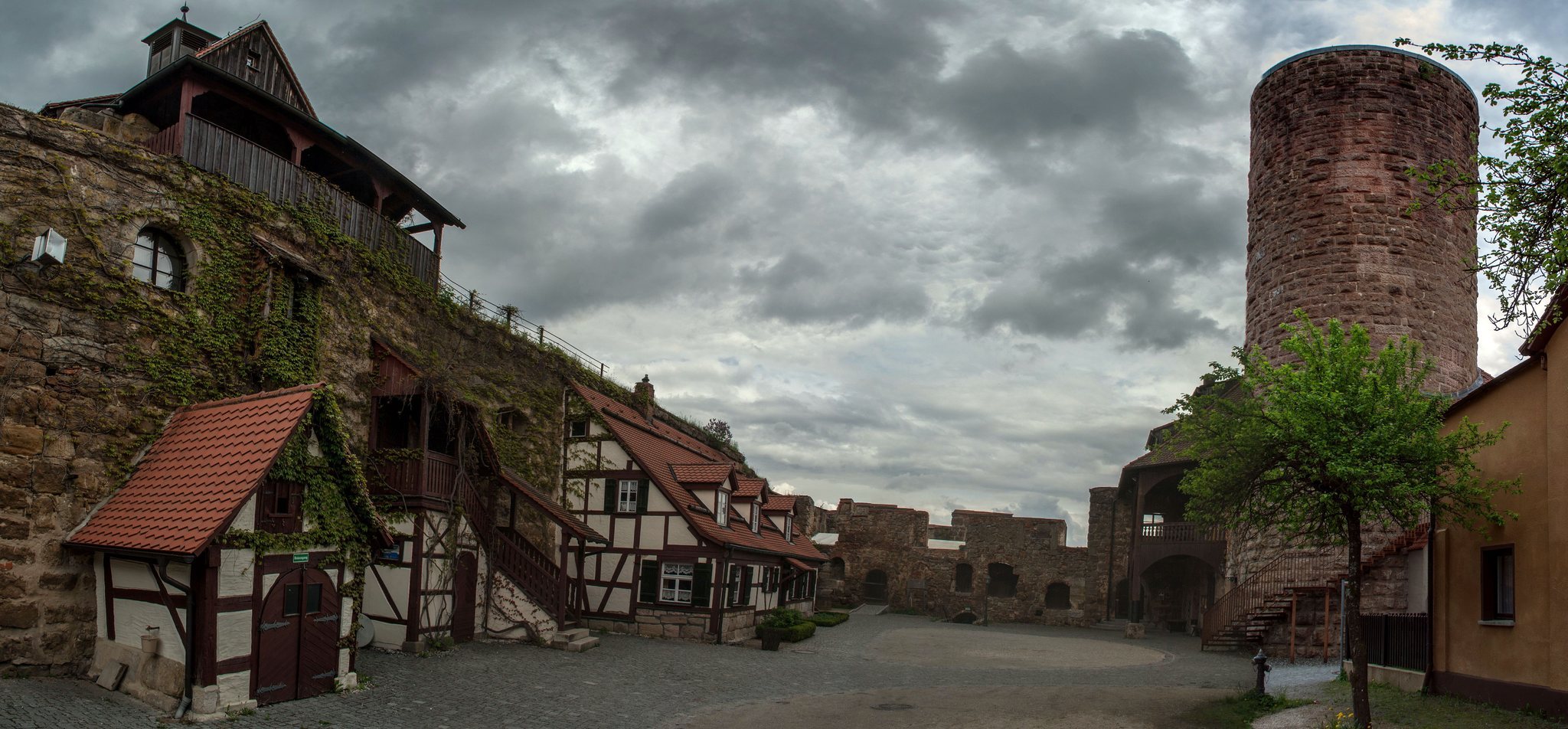
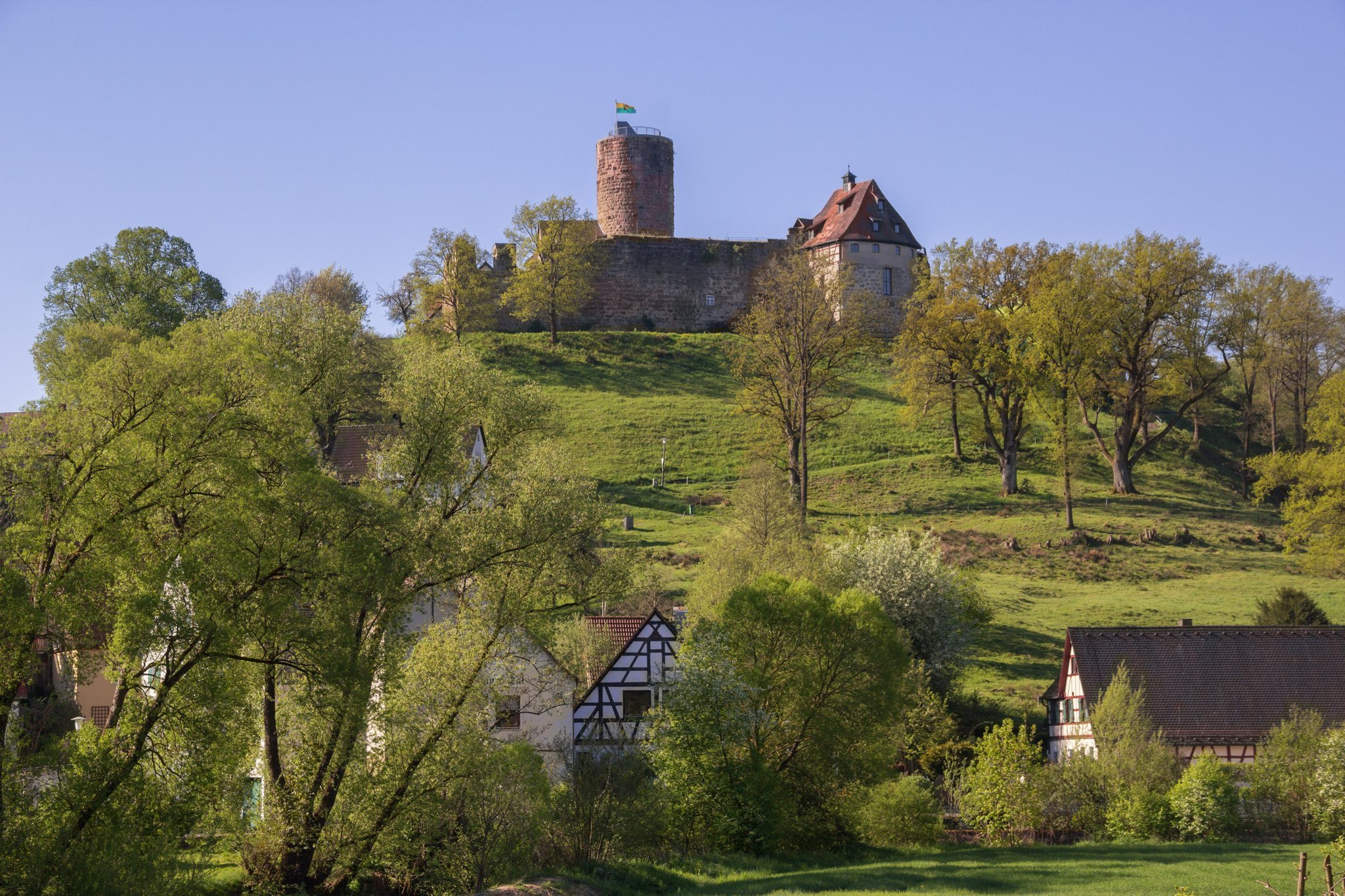
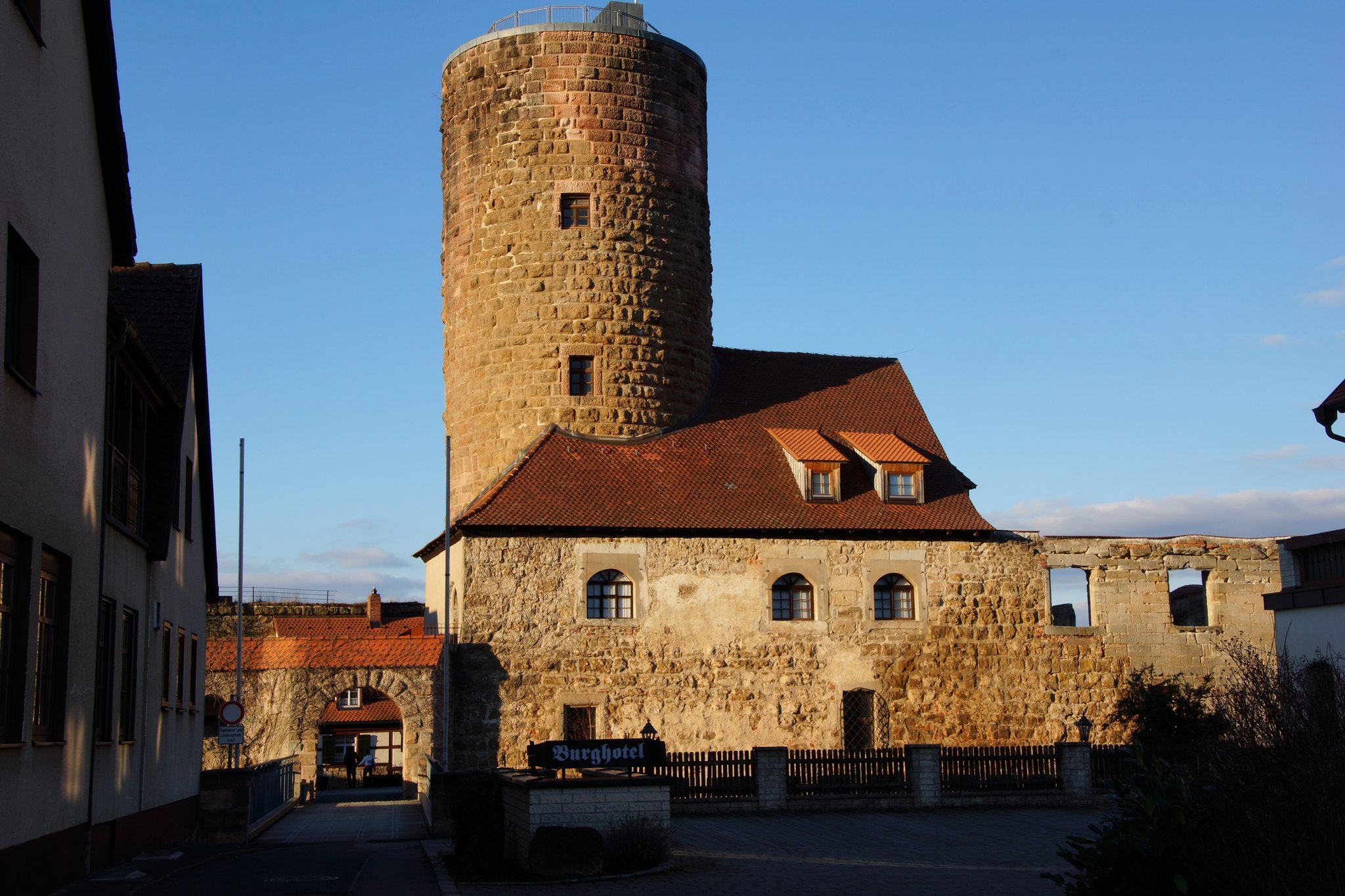
Thann Castle occupies a rocky spur about 420 metres above sea level above the Schwarzach valley. It is organized as a main castle and an outer bailey, with defensive walls, a gate approach, a tall keep, later administrative and religious buildings, and surviving traces of former residential structures. Much of the complex is built from sandstone, and its Gothic character remains visible in the arrangement and construction of the ruins.
Defensive enclosure
Outer bailey and neck ditch
The outer bailey survives through sections of wall. A neck ditch cut into the rock separated this lower part of the complex from the higher ground behind it, strengthening the castle’s position on the hilltop spur.
Gate approach and enceinte
A narrow zwinger, or fortified space outside the main wall, stood before the gate. The gatehouse probably once had a drawbridge, but lightning destroyed it in 1897; the gate arch visible today is of more recent construction. The sandstone enceinte, meaning the defensive perimeter wall, is largely preserved and includes wall walks, passages along the tops of defensive walls. Its outer wall was built from medium-sized blocks in the twelfth century and is the oldest part of the castle complex.
Keep and residential buildings
Thirteenth-century keep
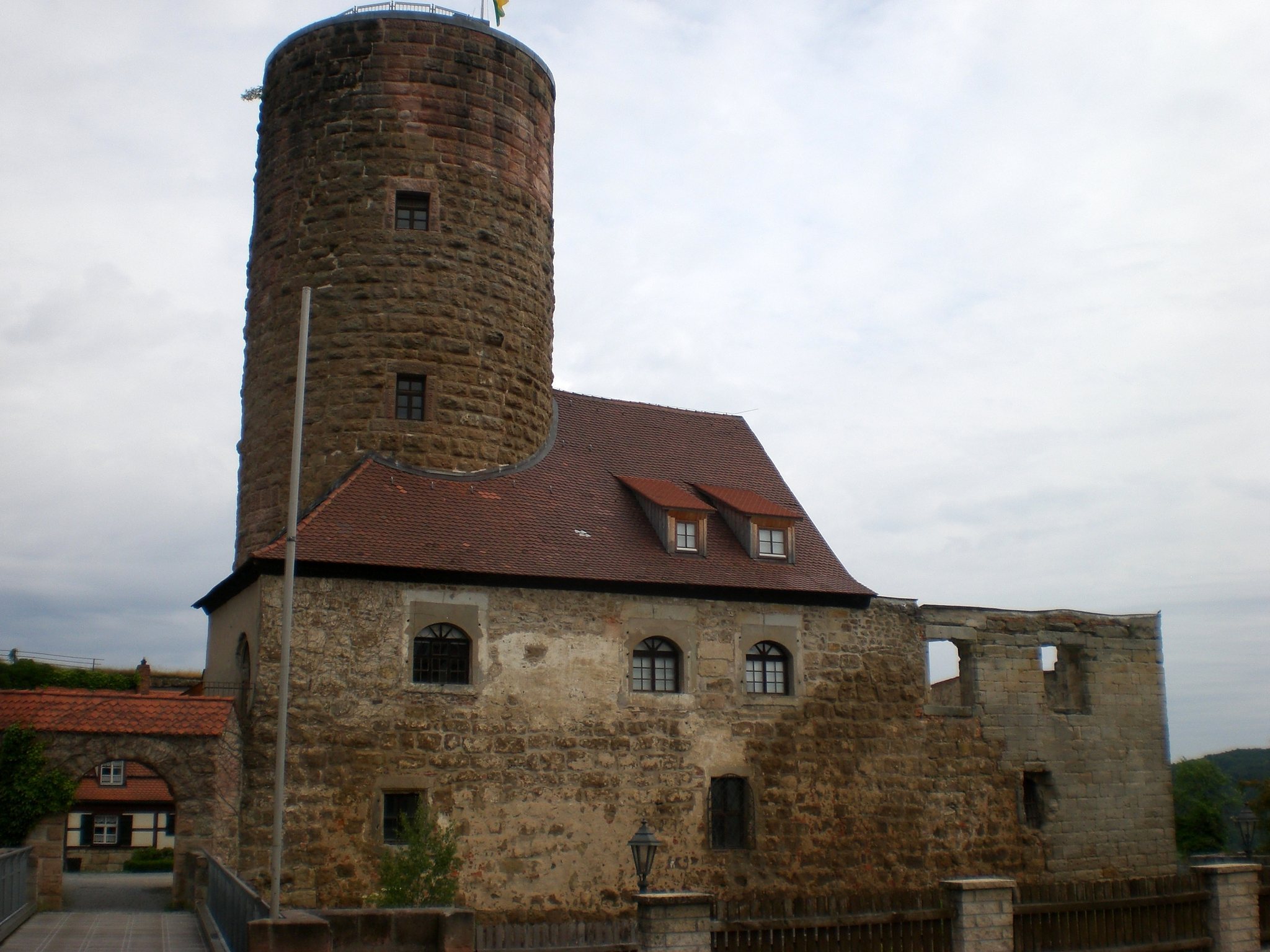
The well-preserved round keep dates from the thirteenth century and rises 27 metres. It is built with rusticated stonework, in which the outer faces of the dressed blocks project in a rough, bossed finish. Inside, the tower has a square plan. As the principal defensive tower of a German medieval castle, the keep was distinct from a permanent residential tower.
Former palas
The west side contained the palas, the principal residential and representative building of a medieval castle. Light openings and a projecting garderobe, a castle latrine built out from the wall, remain as evidence of this former structure.
Administrative and residential buildings
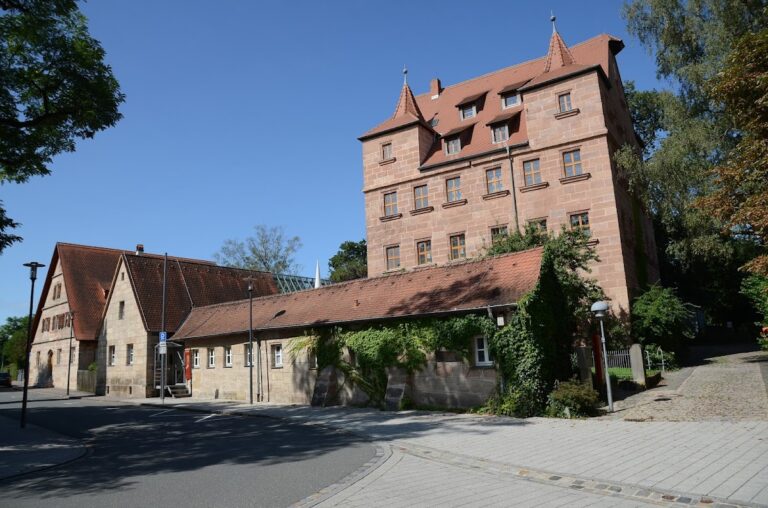
A later building associated with the Pflegeamt stands on the south side of the complex. It is relatively well preserved and has a dragon relief above its entrance. On the east side, wall remains belong to a large building destroyed during the Thirty Years’ War. Its basement contained stables, while the upper floor held women’s chambers. A more recent residential house in the northwest was demolished in 2017.
Castle chapel
A timber-framed chapel was added later against the exterior of the defensive perimeter wall. Its position against the enceinte reflects the way religious and domestic buildings were added to the earlier fortified framework.
Museums and castle-hill landscape
Local-history museum
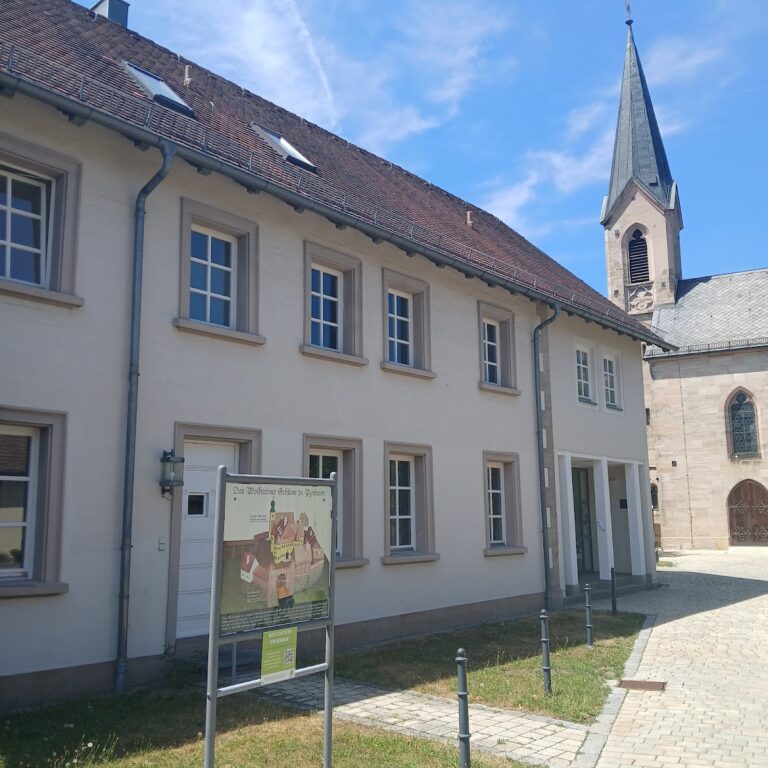
The local-history museum inside the castle displays archaeological finds from the excavations carried out between 1987 and 1989. These objects provide material evidence for the site’s long occupation and changing use.
Bavarian Ludwig–Danube–Main Canal Museum
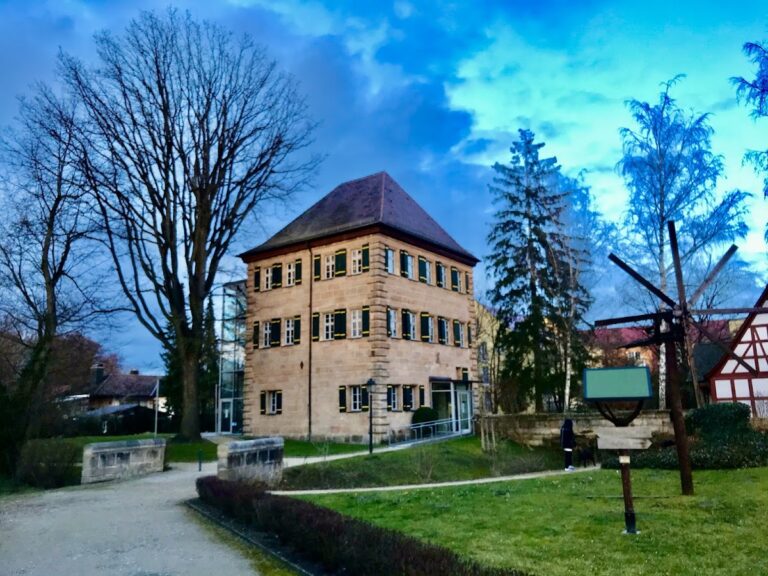
The Bavarian Ludwig–Danube–Main Canal Museum presents original and unique objects associated with the water-management authorities of Nuremberg, Ansbach, and Regensburg. Its collections add a later administrative and engineering history to the medieval remains.
Castle hill
The castle hill descends northward toward the Schwarzach valley. Its protected landscape includes semi-dry grassland, hedges, and three castle oaks designated as natural monuments. Traditional grazing helps maintain this landscape around the surviving fortress.