Budišov Castle: A Renaissance and Baroque Residence in Czechia
Site at a Glance
- Rating
- 4.4
- Popularity
- Low
- Country
- Czechia
- Primary era
- Early Modern
- External website
- Open
- Eras represented
- Early Modern
- Civilizations
- Habsburg, Holy Roman Empire, Margraviate of Moravia
- Site type
- Domestic
- Remains
- Castle
On this page13 sections
History
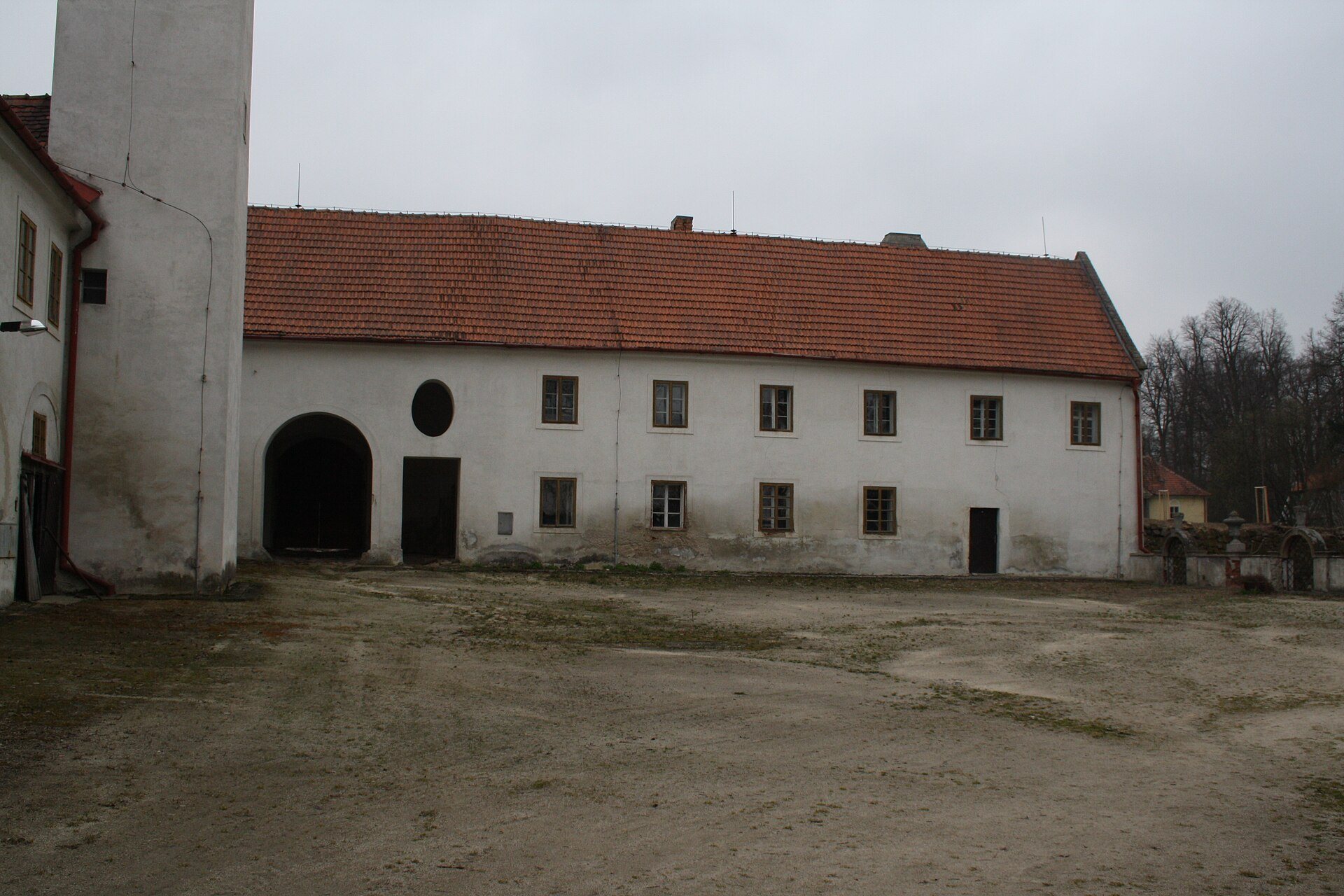
Budišov Castle is a Renaissance and Baroque residence in Budišov, Czechia, developed on the site of a medieval water fortress probably dating to the thirteenth century. Václav Berka of Dubá built the Renaissance castle after 1573, during the 1570s, and its inner courtyard preserves this sixteenth-century phase.
From Medieval Fortress to Renaissance Castle
The earlier water fortress provided the site for Berka’s new residence. Its replacement formed part of the architectural culture of the Renaissance, which spread through Europe from the fifteenth century onward. The courtyard created during this rebuilding remains part of the castle’s present layout.
Baroque Reconstruction and Late-Baroque Remodelling
In 1715, Marie Anna Františka Paarová acquired the Tasov and Budišov estates after disputes between branches of the Waldstein family, a prominent Bohemian noble house. Together with her husband, she rebuilt the castle as a Baroque residence between 1715 and 1721, probably around 1720. The Baroque style, associated with the seventeenth and eighteenth centuries, often used dramatic forms and elaborate decoration.
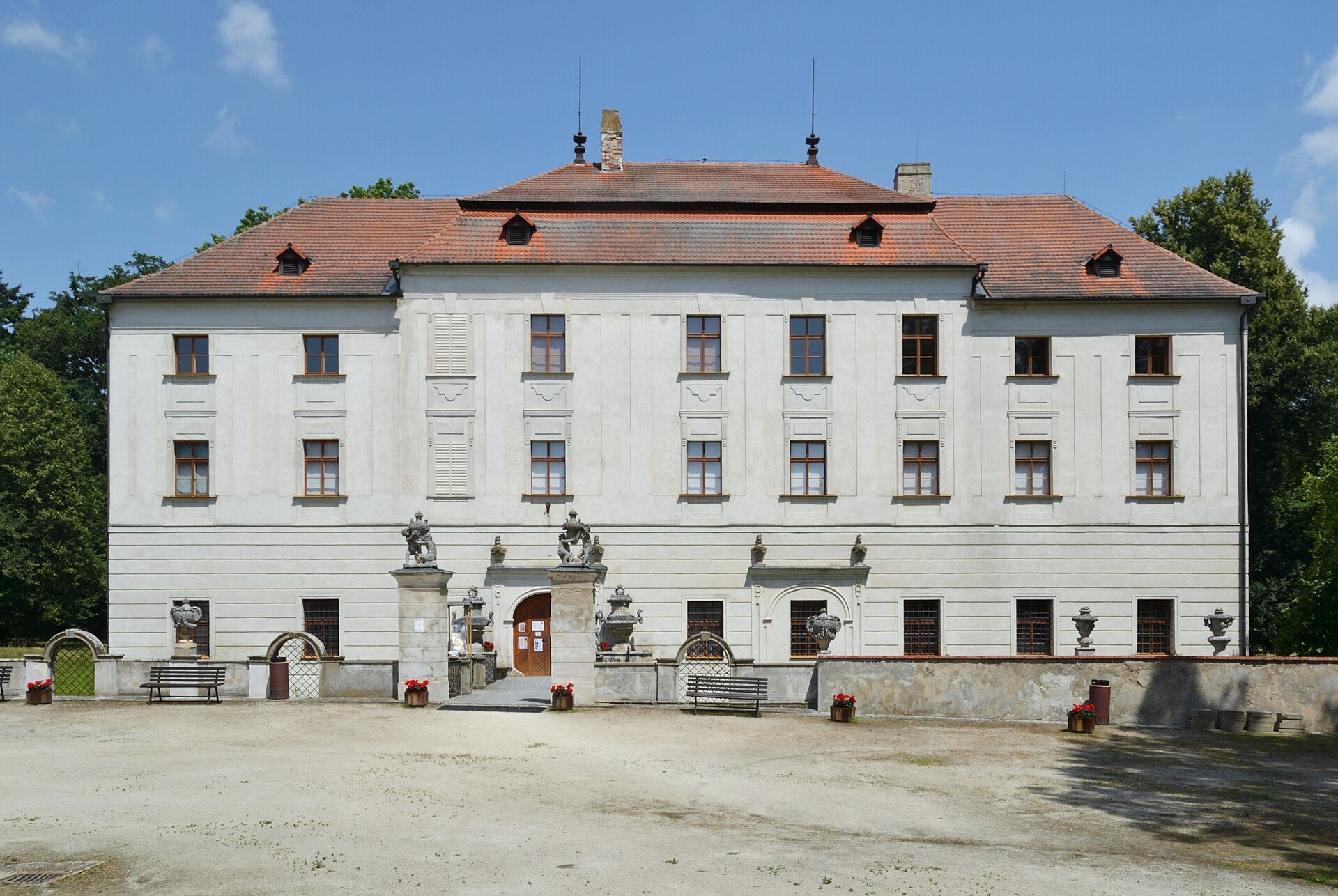
Their son, Josef Quidobald Paar, inherited the castle but moved to Vienna, where he died. The estate subsequently declined. In 1768, it was exchanged for the Kardašova Řečice estate, and Budišov passed to František Josef Jungwirth. Jungwirth moved to Budišov and commissioned further late-Baroque remodelling in 1776 and 1781 under the direction of Josef Zeissel. This work established the form that has survived.
Twentieth-Century Changes and Museum Use
Richard Baratta Dragono, the castle’s resident at the time, lived there until 1945. After the Second World War, the state took ownership. Parts of the building were converted into apartments, and the castle was also used for a period as a school and a textile warehouse.
In 1972, the Moravian Museum, a major museum in Brno with natural-science, historical, and cultural collections, assumed responsibility for Budišov Castle and established a repository there. Extensive repairs followed between 1972 and 1976. The castle is now owned by the market town of Budišov and houses the Moravian Museum’s natural-science repositories. It is protected as a cultural monument of the Czech Republic.
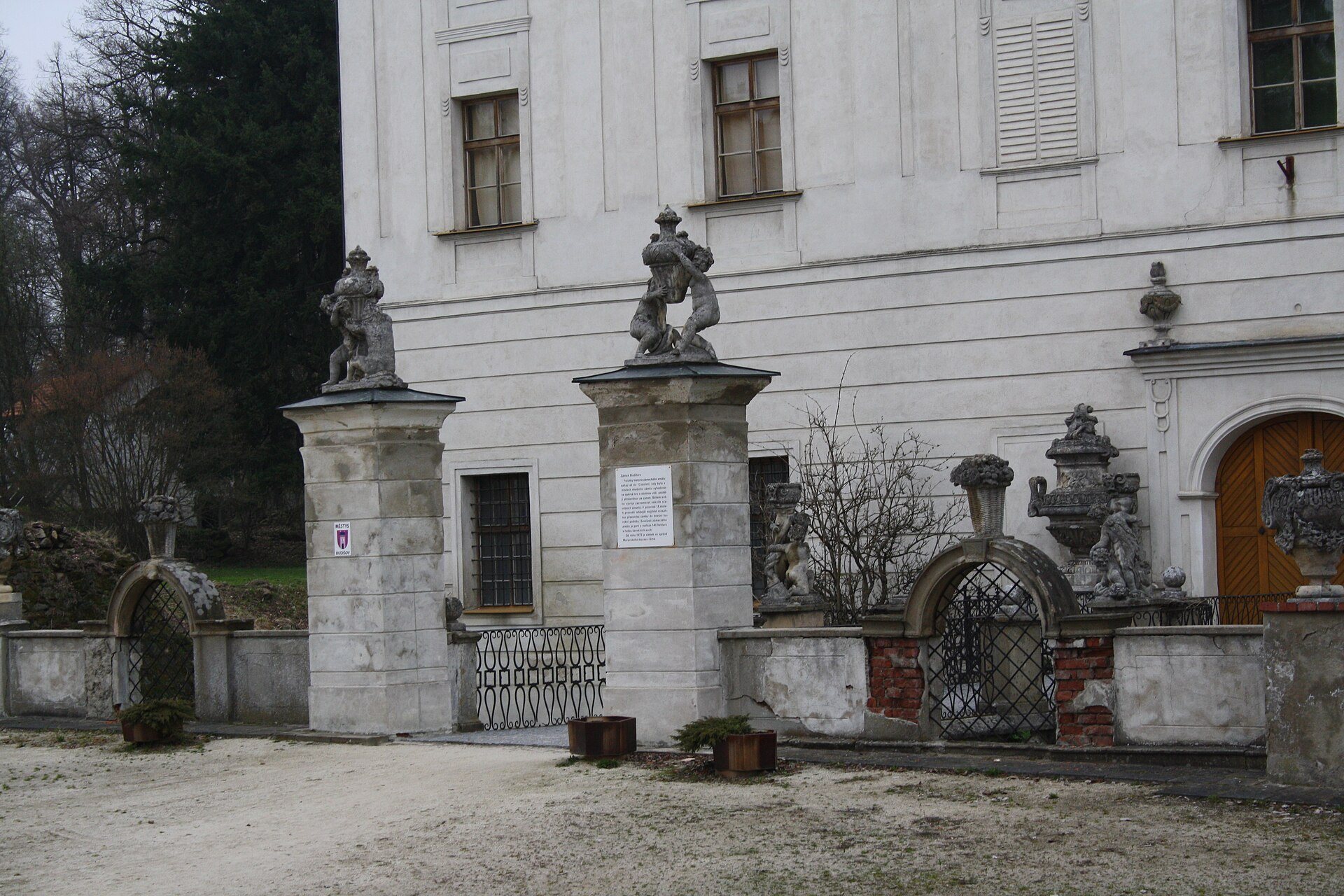
The Chapel of Saint Anne underwent comprehensive restoration between 2010 and 2020. The work conserved its ceiling, repaired the interiors, restored the Holy Family altar, and reconstructed the original wooden floor. The chapel was nominated for the 2021 Zlatá jeřabina cultural-heritage poll, a Czech award and poll recognizing notable heritage projects and sites. Further restoration work in the entrance courtyard reconstructed elements of its sculptural decoration during 2023, 2024, and 2025.
Remains
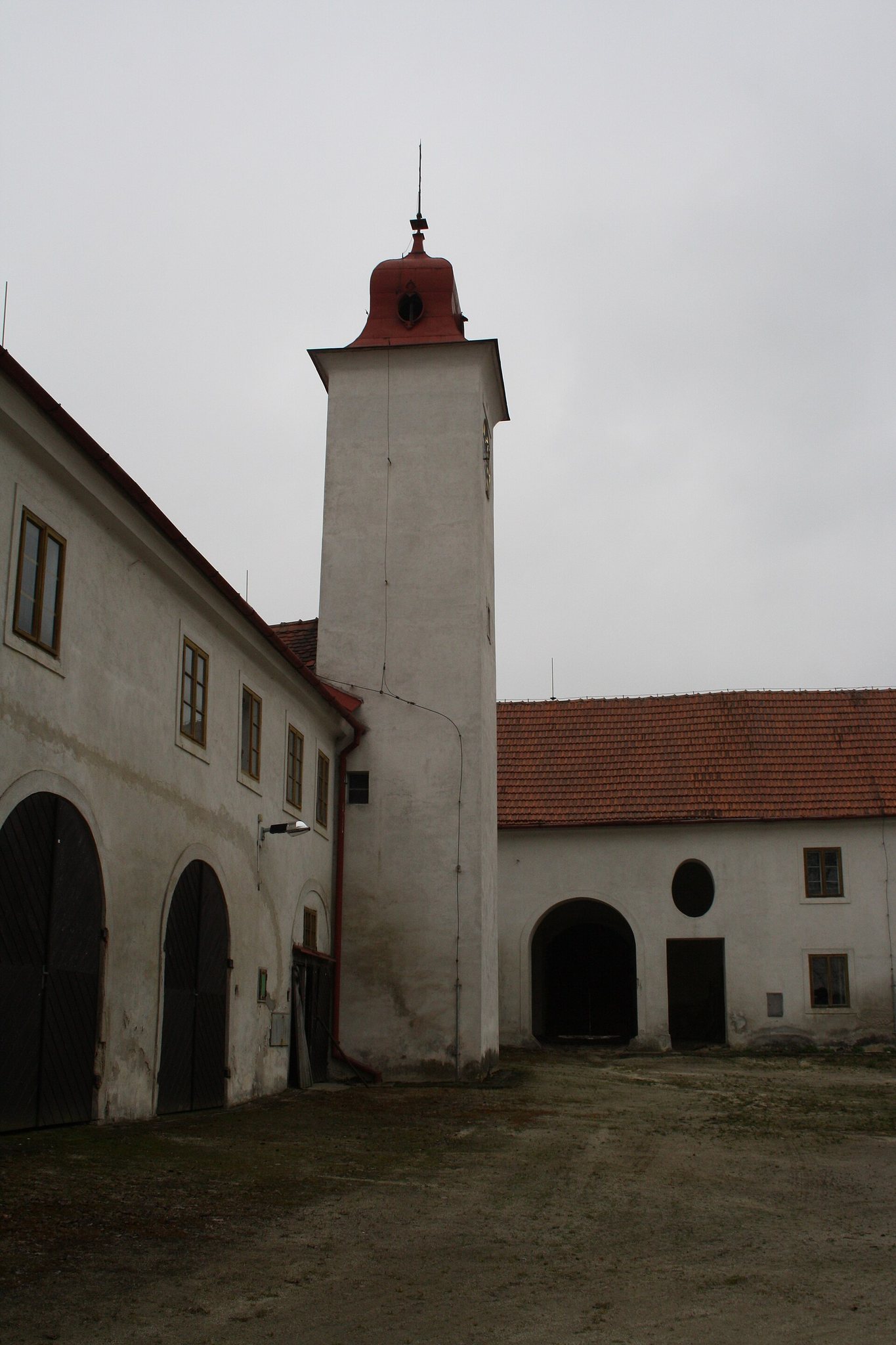
Budišov Castle forms an irregular quadrilateral around an inner courtyard. The courtyard belongs to the sixteenth-century Renaissance remodelling, while the surviving rooms and exterior arrangement also reflect the later Baroque and late-Baroque transformations. Several rooms retain elaborate decoration, and a small number of sculptures survive from the formerly extensive French garden.
Interior Rooms and Chapel
Chapel of Saint Anne
The Chapel of Saint Anne contains the restored Holy Family altar, a conserved ceiling, repaired interiors, and a reconstructed original wooden floor. These elements reflect the chapel’s restored interior arrangement within the castle.
Antique Room and Fisherman’s Room
On the second floor, the so-called Antique Room and Fisherman’s Room retain substantial artistic decoration. They form part of the castle’s surviving group of decorated residential interiors.
Sala Terrena
The ground-floor sala terrena, a decorated garden or reception room traditionally related to a formal garden, retains historically valued decoration. Its floor was concreted during the 1978 repairs, while its paintings were intended for specialist restoration.
Park and Courtyard Sculpture
Stone Sphinxes
The English landscape park contains stone sphinxes beside a staircase. Their authorship is attributed, with qualification, to Lorenzo Matielli, an eighteenth-century sculptor known for decorative and monumental work associated with Central European Baroque architecture.
Atlas Sculpture
A sculptural group depicting Atlas with a globe was stored in the castle. Its presence belongs to the surviving record of the estate’s sculptural decoration.
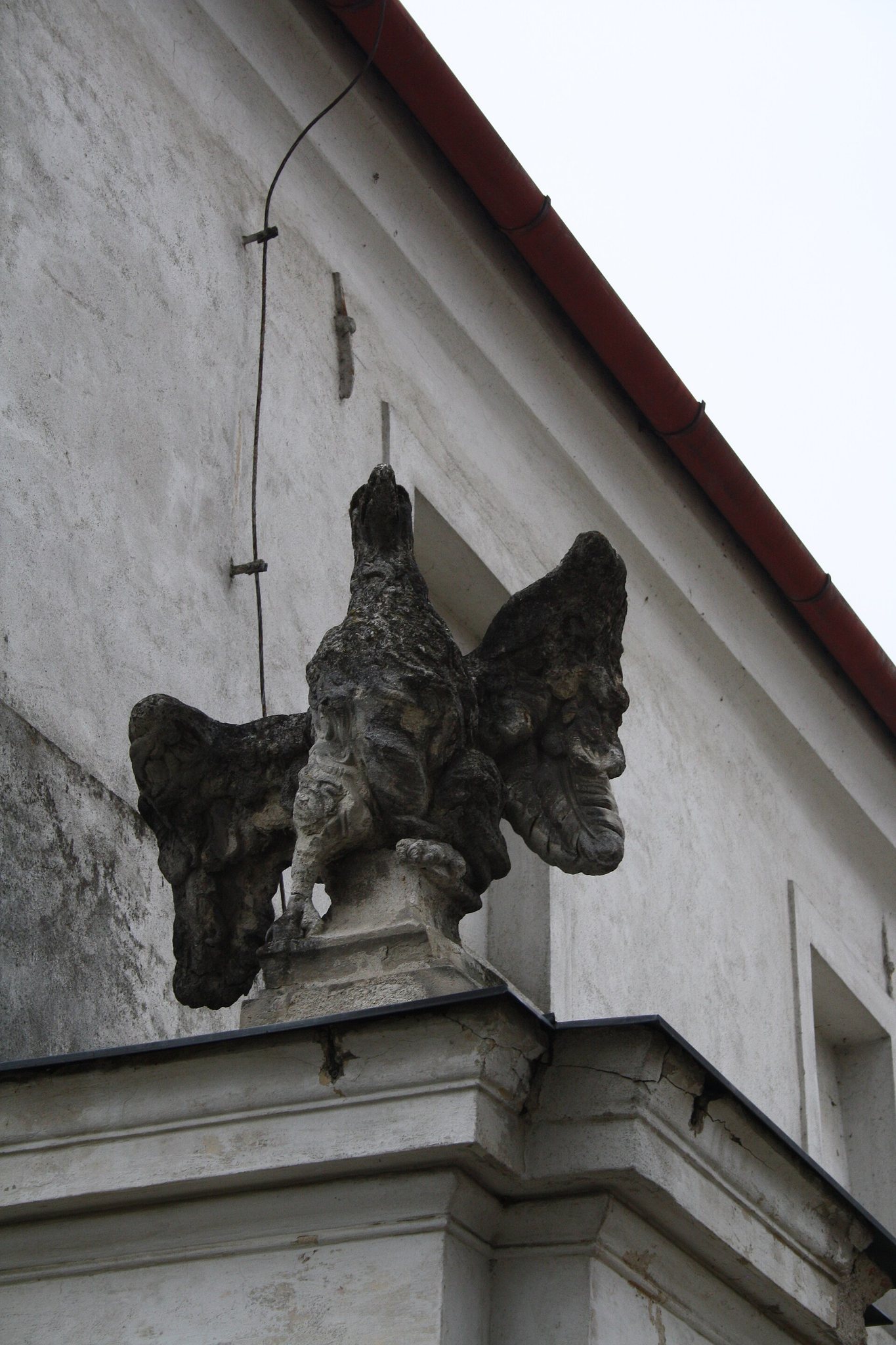
Entrance Courtyard Decoration
The entrance courtyard contains sculptural decoration whose elements have been reconstructed in recent restoration work. These interventions have renewed parts of the courtyard’s ornamental fabric while retaining its place within the castle’s historic quadrilateral layout.