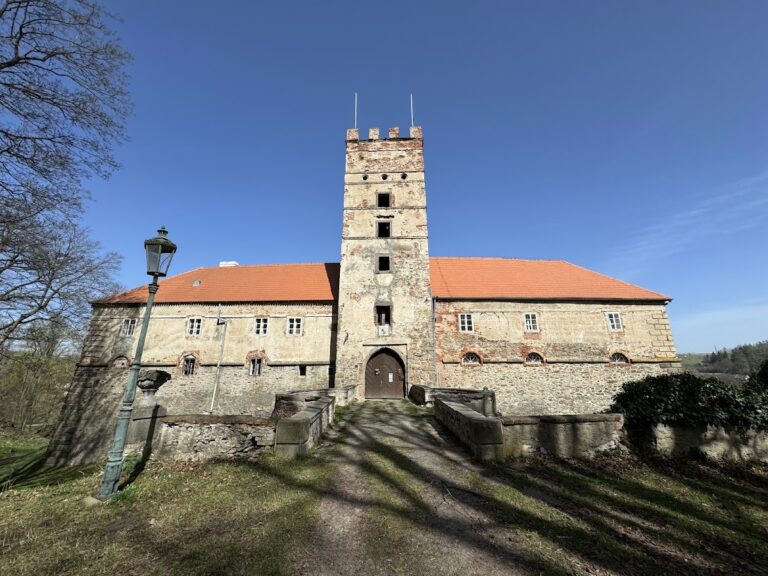
Třebíč Castle: A Former Benedictine Monastery and Renaissance Castle


Site at a Glance
- Rating
- 4.6
- Popularity
- Medium
- Country
- Czechia
- Primary era
- Early Modern
- External website
- Open
- Eras represented
- Medieval, Early Modern
- Civilizations
- Habsburg, Holy Roman Empire
- Site type
- Domestic
- Remains
- Castle
On this page11 sections
History
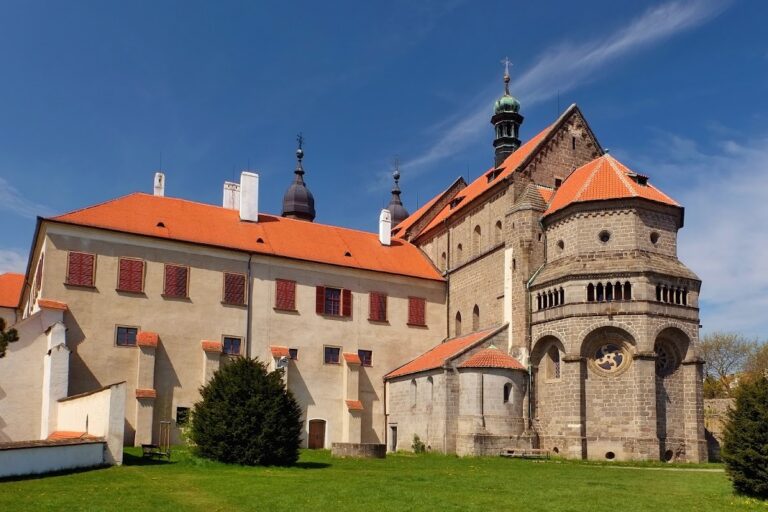
Třebíč Castle in Czechia developed from a Benedictine monastery founded in 1101 by the princes Oldřich of Brno and Litold of Znojmo. The monastery, originally dedicated to the Virgin Mary, stood beside the Jihlava River at a crossroads linking Hungary and Austria with Moravia. It was the third monastery established in Moravia and later became a Renaissance castle.
Foundation and Medieval Monastery
Oldřich and Litold, sons of Conrad I of Brno, had been expelled from their lands when they established the monastery on the boundary between the Brno and Znojmo appanages. Benedictine monks were invited to the foundation, whose first abbot, Zuno, served from 1101 until his death in 1138. He was followed by Abbot Vojtěch and Abbot Naděj, who appears in a document from 1160.
The monastery functioned chiefly as an economic and cultural center. It acquired nearby settlements, founded new ones, and during the thirteenth century exchanged distant properties for lands closer to Třebíč. The town grew around the monastery, probably during that century. The complex also became a burial place for members of the Přemyslid dynasty, the medieval ruling family of Bohemia and related Central European lands.
The earliest buildings were made of wood, and their original appearance and extent are unknown. Stone construction began in the second quarter of the thirteenth century. In the 1240s, Abbot Arnold of Porini ordered a new monastic building, while around 1260 the monastery church, formerly called the Church of the Assumption of the Virgin Mary, was built as the Basilica of Saint Procopius.
War and Secularization
A prolonged crisis began in the second half of the fourteenth century and continued into the Hussite Wars, fifteenth-century religious and political conflicts in Bohemia and Moravia associated with the followers of Jan Hus. The monastery sold or mortgaged property, and a Hussite siege brought further financial and structural damage. Its defenses were substantially strengthened during the subsequent recovery.
On 12 May 1468, Hungarian forces led by King Matthias Corvinus besieged Třebíč. Matthias, who ruled Hungary from 1458 to 1490, captured and burned the town after two days. Victorin of Poděbrady and his troops, defending the town, withdrew into the monastery and destroyed the bridge over the river. Provisions left on the opposite bank were either inaccessible or swept into the water. After the supplies ran out, the defenders attempted to escape during the night of 5–6 June in three groups. Two groups reached the army of Jindřich of Poděbrady, while a third surrendered to the Hungarians on 15 June.
The fighting severely damaged the monastery and burned its church. Because the abbot had supported George of Poděbrady, the Bohemian king from 1458 to 1471, Matthias Corvinus removed him from office. He transferred the monastery and its property to Zdeněk of Sternberg as compensation for wartime losses. Most of the monks departed, while others remained among the ruins without an abbot, effectively ending the monastery’s independent religious life.
From Monastery to Castle
The property later passed to William of Pernstein, who paid the monastery’s debts. The Benedictines retained a legal right to redeem their former holdings but lacked the money to do so. In 1502, the Pernstein family repaired the complex and demolished a tower that was close to collapse.
From 1527, Třebíč and the former monastery belonged to the Osovský of Doubravice family, which began converting the complex into a Renaissance castle. From 1582, the town and castle were owned by the Waldstein family, which retained them until 1945. The complex is also associated with Baroque architecture.
The castle was repaired between 1930 and 1935 and substantially renovated in 1957 for use by the Vysočina Museum and an archive. Together with the Basilica of Saint Procopius, the former monastery forms part of a national cultural monument in the Czech Republic, a status granted to the complex in 2002.
Remains
The surviving complex combines medieval monastic fabric with later Renaissance castle construction and Baroque alterations. Parts of the medieval monastery remain within Třebíč Castle and the Basilica of Saint Procopius, while the 1930–1935 repairs and the 1957 renovation shaped the present use of the castle as a museum and archive.
Early Monastic Structures
Chapel of Saint Benedict
The first monastic structure was the Chapel of Saint Benedict. Heřman, Bishop of Prague, consecrated it on 10 July 1104. It belongs to the earliest phase of the foundation, when the monastery’s buildings were still primarily wooden.
Monastery Church and Basilica
Oldřich of Brno and Litold of Znojmo were buried in the crypt of the monastery church. A crypt is a vaulted chamber, often beneath a church, used for burials. Jan II, Bishop of Olomouc, consecrated the church in 1109. The later church, built around 1260 and dedicated initially to the Assumption of the Virgin Mary, survives as the Basilica of Saint Procopius in an almost original form.
Defensive and Residential Fabric
Fortifications
The monastery’s defenses were strengthened after the Hussite siege and later wartime damage. During the repairs of 1502, a severely deteriorated tower was demolished. This work formed part of the complex’s transition from a damaged monastery toward a more secure noble residence.
Renaissance Castle
Beginning after 1527, the former monastic complex was reshaped as a Renaissance castle, a fortified or residential noble complex influenced by architectural ideas that spread from Italy during the fifteenth and sixteenth centuries. Later Baroque changes and the twentieth-century repairs and renovation adapted the surviving buildings for institutional use.
Nearby sites