Fort Aguada: A Portuguese Coastal Fortress in Goa, India
Site at a Glance
- Rating
- 4.2
- Popularity
- Very High
- Country
- India
- Primary era
- Early Modern
- External website
- Open
- Eras represented
- Early Modern, Modern
- Civilizations
- Indian, Portuguese
- Site type
- Military
- Remains
- Fort
On this page12 sections
History
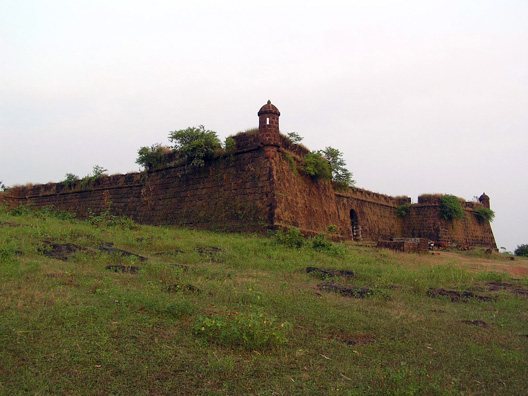
Fort Aguada is a seventeenth-century Portuguese fortification in Candolim, India, built at the mouth of the Mandovi River between 1609 and 1612. Constructed in the Portuguese and Manueline tradition, it formed part of the defensive system protecting Goa, then the capital of Portuguese India, and guarded shipping routes near the Bardez subdistrict.
Foundation and Portuguese defense
The complex was completed in 1612 as Portugal faced threats from Dutch and Maratha forces. Its defenses were later expanded to counter Dutch and English raids. The fort occupied the southwestern tip of the Bardez peninsula, where it controlled access from the Arabian Sea and provided protection for Portuguese vessels.
Fort Aguada also served as a maritime landmark and a watering station. Its name comes from the Portuguese word aguada, referring to the freshwater supplied to ships. Springs within or beneath the fortification allowed passing crews to replenish their reserves, making the site important to Portuguese maritime operations.
Later uses and modern history
Fort Aguada became one of Portugal’s most important forts in Goa. During the twentieth-century administration of António de Oliveira Salazar, Portugal’s authoritarian ruler, the complex was reused as a political prison. It remained Goa’s largest prison until 2015.
After Goa’s annexation by India, part of the former fortification was adapted for hotel use. The Taj Fort Aguada Resort, previously known as the Fort Aguada Beach Resort, opened at the historic site in 1974.
The renovated prison section opened in 2021 as a Freedom Struggle Museum devoted to Goa’s anti-colonial struggle and the people imprisoned during opposition to Portuguese rule. Two cells are dedicated to T. B. Cunha, a Goan nationalist, and Ram Manohar Lohia, an Indian anti-colonial politician and activist who supported Goa’s liberation movement. The Archaeological Survey of India, India’s national body for protecting major archaeological sites and monuments, protects Fort Aguada as a Monument of National Importance in Goa. The fort is also recognized as a Portuguese-influenced heritage monument.
Remains
Fortified complex and waterworks
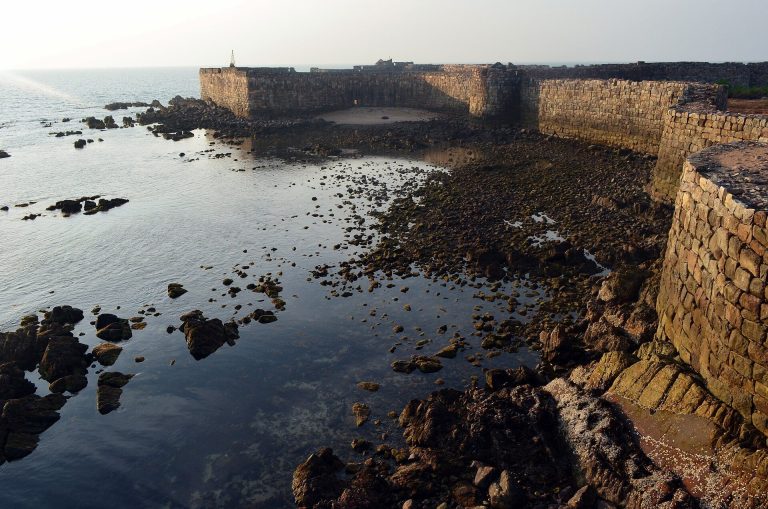
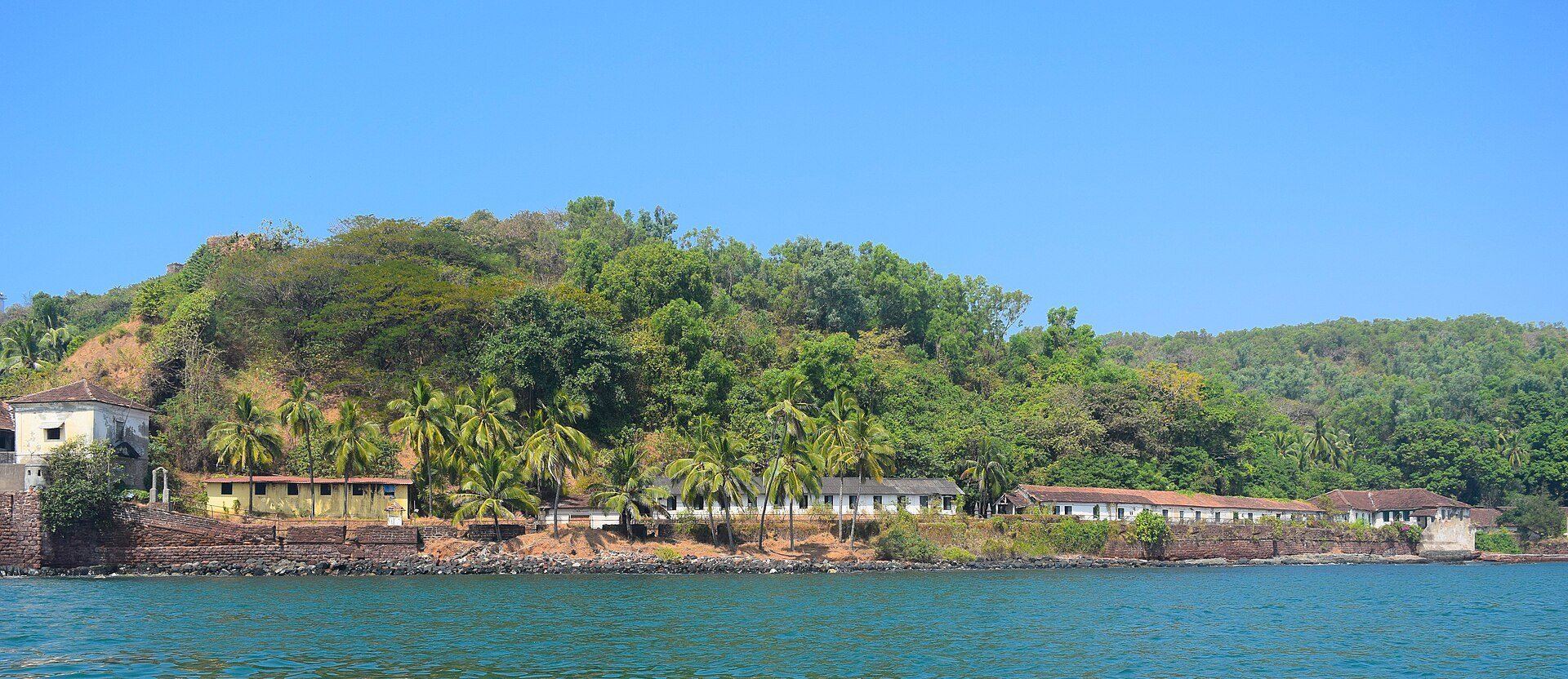
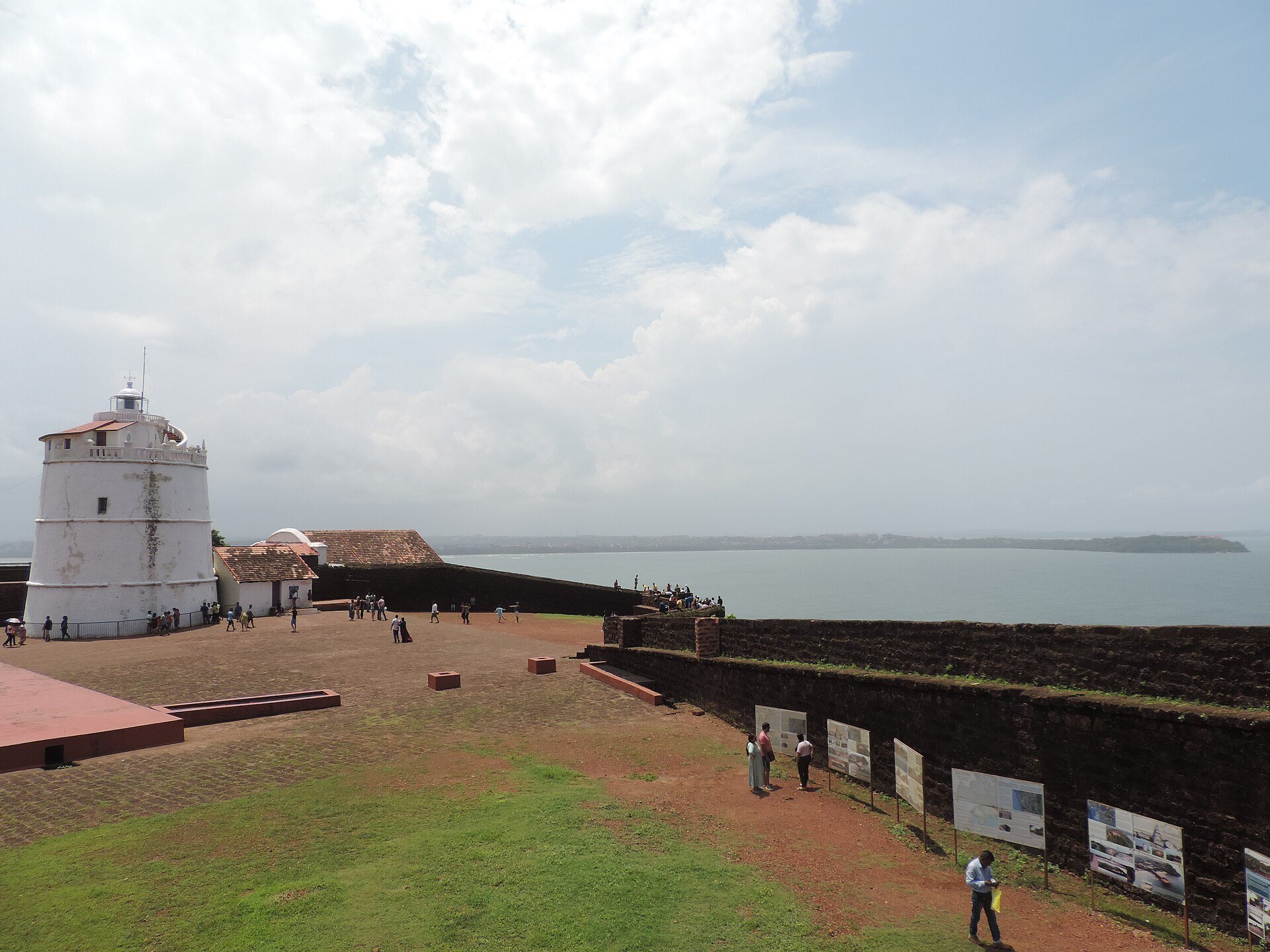
Fort Aguada stands on the shore south of Candolim, overlooking Sinquerim Beach and the Arabian Sea. The wider fortified complex extended across the peninsula and descended toward the sea. It was divided into an upper section, which served as the principal fort and watering station, and a lower section that provided a protected berth for Portuguese ships.
Upper fort
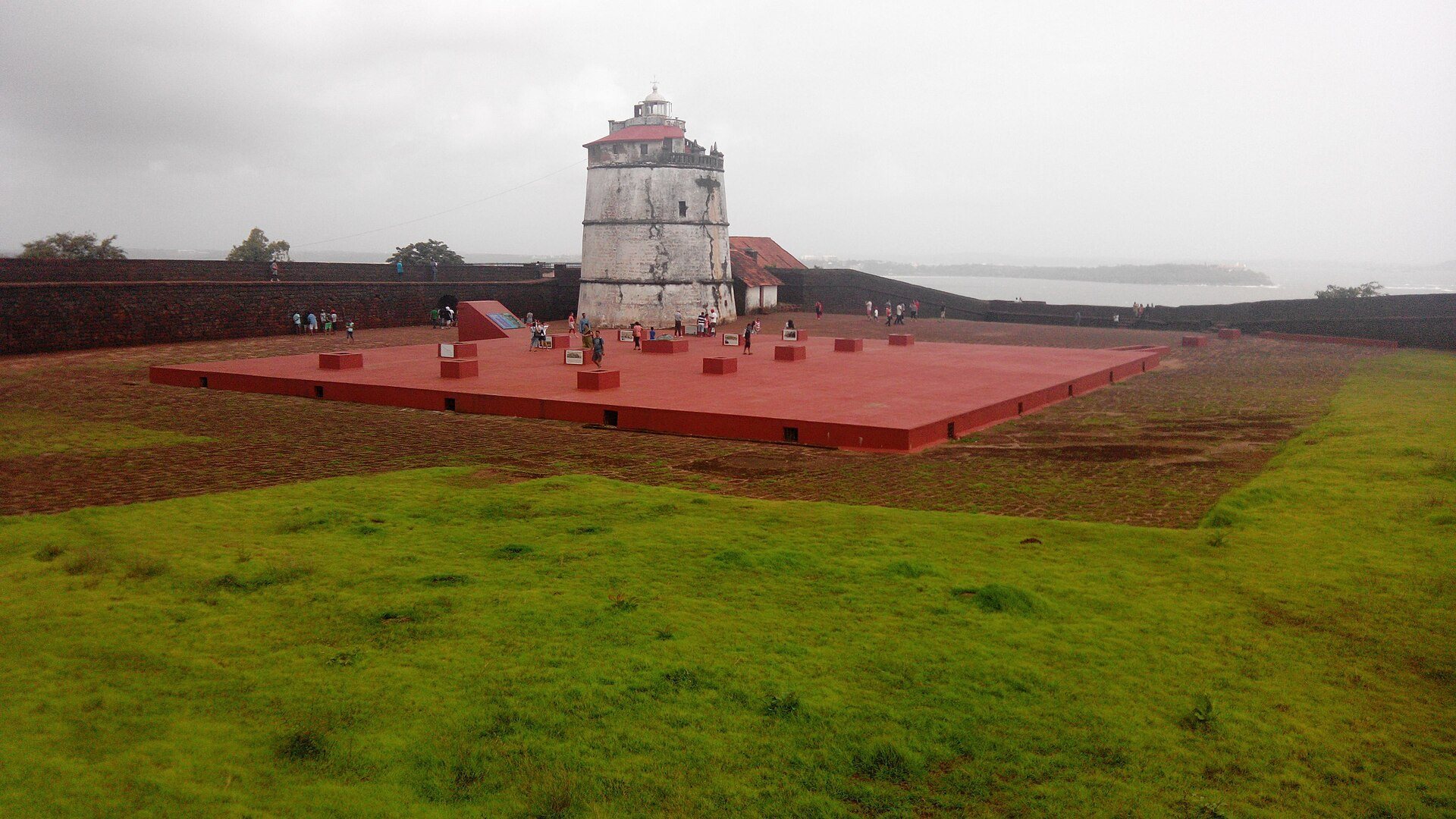
The upper fort was a bastioned fortification, a defensive layout with projecting platforms that allowed artillery and defenders to cover the walls and surrounding ground. Its system included walls, bridges, moats, covered roads, bastions, and a main redoubt, a strongly defended enclosed position within the larger fortress. The upper section also contained an underground water-storage chamber, a gunpowder room, a lighthouse, and a secret escape passage intended for wartime or other emergencies.
Water-storage chamber and springs
The fort’s water-storage capacity was approximately 2,376,000 gallons, making it one of the largest freshwater storage capacities in Asia at the time. Freshwater came from springs within or beneath the fortification. Three springs supplied ships at the seaward entrance, where the water source was cut into the rock and crews replenished their stores.
Lower section and artillery
The lower section protected Portuguese ships at the shore. Across the fortified complex, artillery consisted of 79 cannons. Portuguese cannons remain among the physical features associated with the site, alongside the walls, bastions, and other defensive works.
Lighthouses
Seventeenth-century lighthouse tower
The principal redoubt was formerly crowned by a seventeenth-century lighthouse tower. Its position formed part of the fort’s system of defensive and maritime structures.
1864 lighthouse
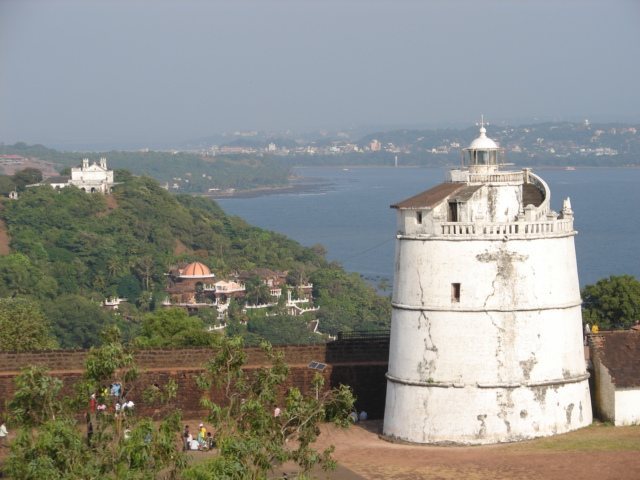
A four-storey Portuguese lighthouse was built on a hill west of the fort in 1864. It is identified as the oldest lighthouse of its type in Asia. Its original light appeared once every seven minutes and was later altered to appear every thirty seconds. The lighthouse was replaced by a new one in 1976 and has been inactive since then. A large bell associated with it was found among the ruins of the Church of Saint Augustine in Old Goa.
Prison remains and commemorative features
The site contains prison cells from its twentieth-century use as a political prison. These spaces now form part of the Freedom Struggle Museum, together with monuments associated with Goa’s anti-colonial struggle. Two cells are dedicated to T. B. Cunha and Ram Manohar Lohia, linking the surviving prison spaces with the history of resistance to Portuguese rule.