Abbaye de Cercamps: A Former Cistercian Abbey in France
Site at a Glance
- Rating
- 4.7
- Popularity
- Low
- Country
- France
- Primary era
- Early Modern
- External website
- Open
- Eras represented
- Medieval, Early Modern
- Civilizations
- French
- Site type
- Religious
- Remains
- Monastery
On this page10 sections
History
Abbaye de Cercamps is a former Cistercian abbey in France, at Cercamp, a hamlet of Frévent. Founded in the 12th century and attached to the Diocese of Amiens, it was a daughter house of Pontigny dedicated to Notre-Dame. Its foundation is dated either to 1137 or to 10 November 1141, when it became part of the Cistercian Order, a Western monastic movement that emphasized communal discipline, manual work, and an austere religious life. The abbey later served as a burial place for the Counts of Saint-Pol and other noble families, and became involved in several major political and military events.
Foundation and early development
The foundation was attributed to Hugues III de Campdavaine, Count of Saint-Pol, after his attack on Saint-Riquier in 1131. Greek fire destroyed the town and abbey during that assault, and 2,500 people were killed. According to the foundation tradition, Pope urged Hugues to establish a monastery after Louis VI of France, known as Louis the Fat, threatened him with punishment. A related legend says that divine judgment changed Hugues into a chained wolf condemned to haunt the places he had devastated. This figure became known as the Bête canteraine.
The first monastic buildings were complete by 1147, and work on the church began from 1150. The abbey soon acquired an aristocratic funerary role. Hugues Corbet, who had taken part in a crusade with his father Renaud Corbet, was buried there in 1124, and his son Raoul was later buried at the same monastery. Hugues IV de Campdavaine, who died in 1205, also received burial at Cercamp.
Noble patronage and monastic revenues
In 1239, Hugues V de Châtillon-Saint-Pol and his second wife, Marie d’Avesnes, granted the monastery an annual and perpetual rent of thirteen muids of grain. The monks were required to send 10,000 herrings and three pots of butter each year to Pont-aux-Dames at Couilly. The butter obligation was redeemed in 1360 for six muids of red wine from the vineyards of Crécy. The herring payment was later replaced by an annual rent of 140 livres, which continued until 1789.
Several prominent members of the nobility were buried at Cercamp. Mahaud de Brabant died on 29 September 1288 and was buried near her second husband, Guy de Châtillon II, Count of Saint-Pol. Their tomb was made of gilded copper and decorated with enamel and precious stones. Mahaud had previously been married to Robert I, Count of Artois, and had later married Guy with a dispensation from Pope Alexander IV. Marie de Bretagne and her husband, Guy IV de Châtillon-Saint-Pol, Count of Saint-Pol, were both buried at the abbey on 5 May 1339. Marie of Luxembourg and her father, Pierre II of Luxembourg-Saint-Pol, were also partly buried there.
War, rebuilding, and commendatory rule
The English army ravaged the abbey in 1415 during the Hundred Years’ War, the long conflict between the English and French crowns. King Louis XI confirmed Cercamp’s privileges by letters patent on 21 January 1464. From 1512 to 1550, Abbot Pierre de Bachimont directed a major rebuilding campaign. The monastery received new roofing, stained glass, carved furnishings, a wooden enclosure, and two altars dedicated to the Virgin and All Saints.
After the Concordat of Bologna in 1516, the abbey entered the system of commendatory abbots. Under this arrangement, the king appointed an abbot who generally did not live at the monastery or manage its religious life, but received its revenues. Fifty-four abbots governed Cercamp over six centuries. The first conventual abbot, Jourdain, held office from 1140 to 1141. Later commendatory abbots included Cardinal Mazarin, who held the office from 1659 to 1661, and Alexandre Angélique de Talleyrand-Périgord, the last abbot, who served from 1777 to 1789.
Diplomacy and military events
Charles de La Roche-sur-Yon stayed at Cercamp from 5 to 7 August 1553 while taking part in the wars against Charles V. He then joined Henry II at the siege of Renty. On 15 October 1558, preliminary negotiations for the treaties of Cateau-Cambrésis began at the abbey before moving to the Château du Cateau-Cambrésis. Signed on 2 and 3 April 1559, the treaties ended the conflict between France, Spain, and England.
In 1617, Louis XIII appointed Eustache Picot, master of the music of the royal chapel, to defend the king’s rights over the feudal relationship of the County of Saint-Pol. Gaspard III de Coligny camped at the abbey on 26 May 1638 during an attempt to besiege Saint-Omer. He was forced to withdraw after the intervention of Thomas of Savoy-Carignan and Piccolomini. An inscription dated 25 September 1684 recorded the transfer of the remains of Guy de Châtillon and Anne of Brittany, Pierre of Luxembourg, the Lady of Essaux, and Jacques of Luxembourg.
Destruction, dissolution, and later uses
The garden walls were destroyed during the War of the Spanish Succession in 1710. In 1713, the Knight of Saint-Lazare, Sieur Bonnaire, received a royal pension of 1,000 livres charged against the abbey. During the French Revolution, the property passed to the Department of Pas-de-Calais in 1790, and the abbey was dissolved around 1790 or 1791. In 1793, its charters, books, manuscripts, and title papers were taken to the district of Arras and publicly burned. The abbey and its immediate dependencies, covering 32 arpents, were sold on 30 May 1795.
In 1823, François-Luglien de Fourment established a wool-spinning mill among the ruins of the former monastery. The mill burned in 1871. The estate was later developed as a château with a stud farm and art collections, then bequeathed to the Assistance publique de la Seine for institutions connected with health care or education. By 1837, the abbey church had become largely a heap of ruins. In 1915, during the First World War, Marshal Ferdinand Foch established his headquarters at the estate. He received King George V, Alexandre Millerand, and Generals Joffre and French there, and President Poincaré presented him with the insignia of Grand Cross of the Legion of Honour.
The surviving estate has been open to the public since 2012 and has undergone progressive restoration. The abbey and associated buildings are protected as French historic monuments. The Porterie, Hôtes, and Étrangers buildings, their annexes, and the park were registered in 1946 and classified in 2015. The Hôtes building and the façades and roofs of the Porterie were classified in 1947.
Remains
Monastic setting and surviving buildings
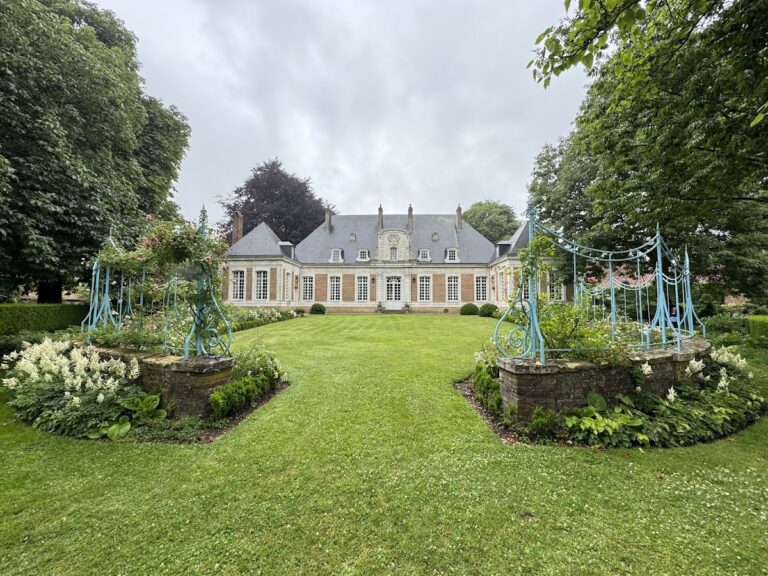
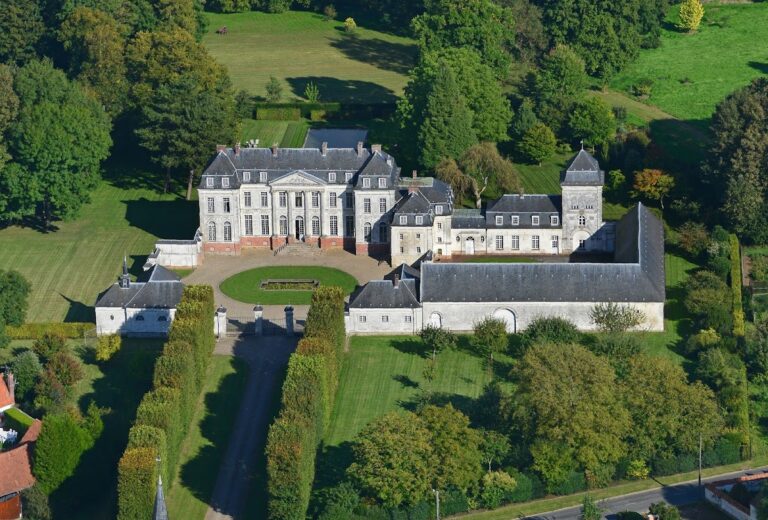
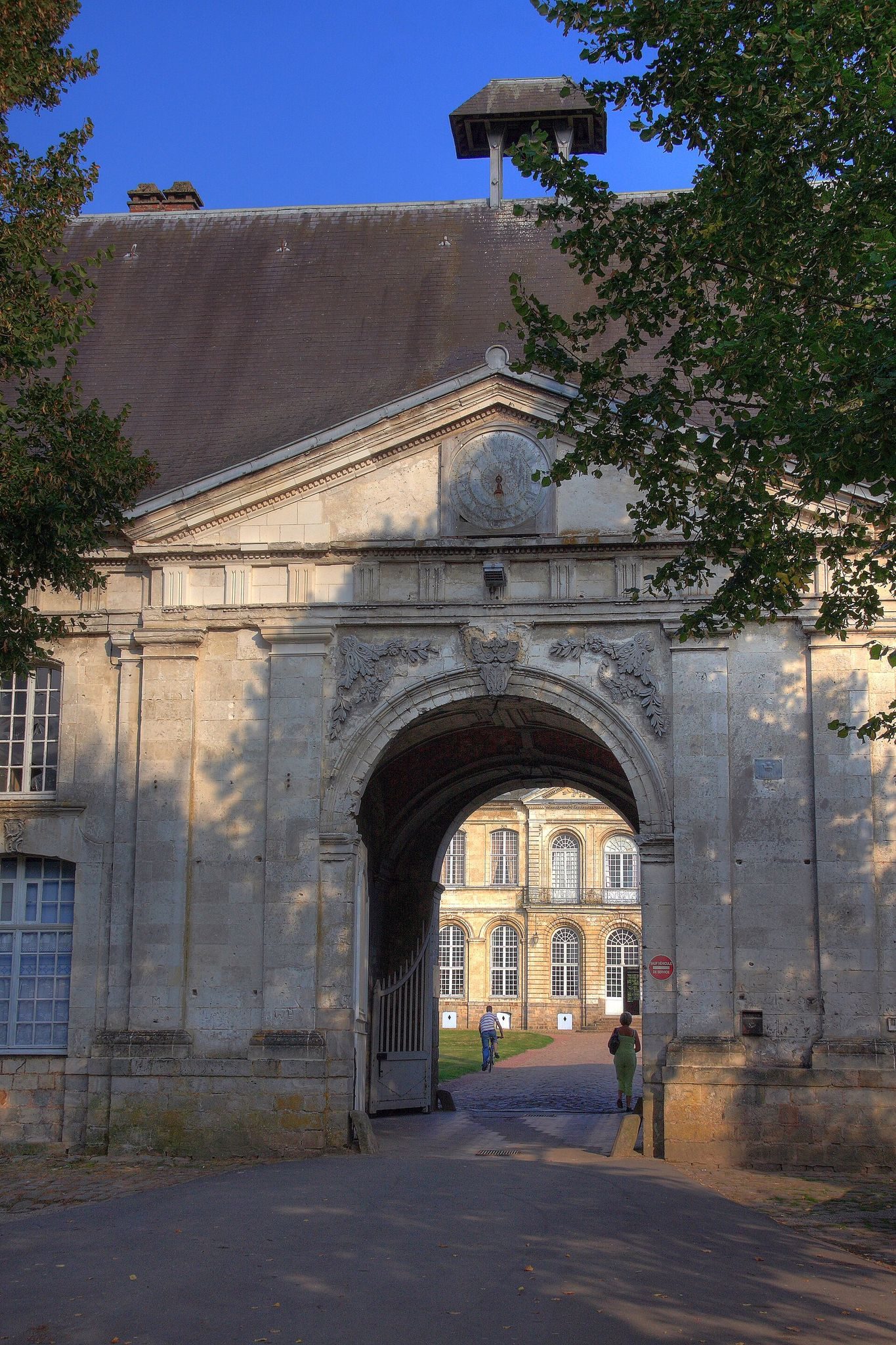
The abbey stood in the valley of the Canche. A hand-dug canal followed the northern monastery walls, carried water to the gardens, and marked that side of the monastic enclosure. The principal surviving architectural group consists of the Porterie, Hôtes, and Étrangers buildings, together with ancillary buildings and the park. The surviving entrance pavilion has a horseshoe-shaped plan.
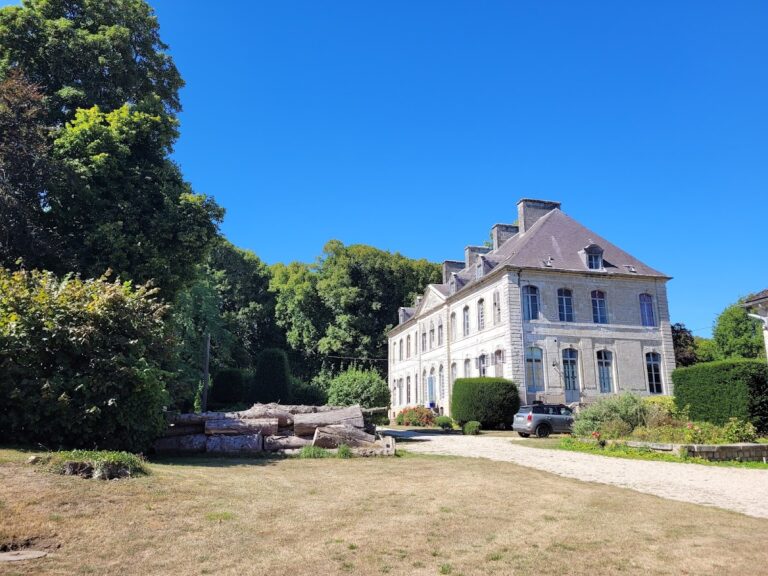
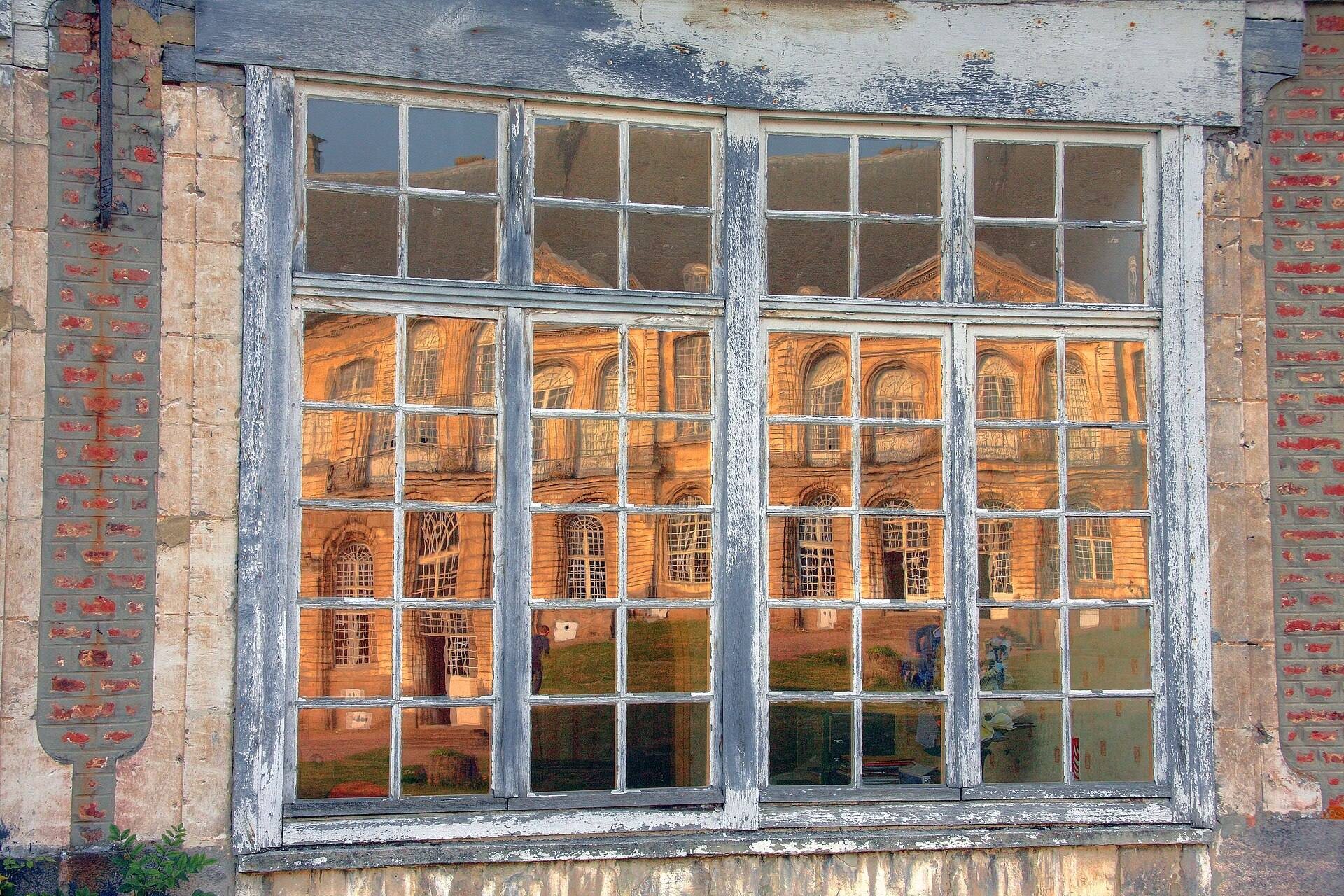
The guest building, dating from 1740, is a two-storey structure built by the architect Raoul Coigniard. Its projecting central section has three axes, and the building is now described as a château. The Hôtes building retains its façades, roofs, chimneys, and ground-floor rooms with wood panelling. The Porterie retains its façades and roofs. Together, these buildings preserve the later architectural form of the estate after the monastic complex had been adapted to new uses.
Church, furnishings, and burials
Only slight remains survive of the abbey church, which was approximately 94 metres long. Pierre de Bachimont’s rebuilding campaign replaced the tiles over the crossing, transept, and nave with slate. The church also received coloured stained glass, including three high windows opened in the choir above the altar, commissioned carved furnishings, a wooden enclosure around the lectern, and altars dedicated to the Virgin and All Saints.
The church and abbey precinct contained aristocratic tombs and transferred remains associated with the Counts of Saint-Pol, the Counts of Artois, the Luxembourg family, and other noble families. A 1684 inscription recorded the movement of several bodies. The abbey’s principal building once carried a sculpted coat of arms that may have represented “the deer field,” an interpretation connected with the name Cercamp. The coat of arms was later incorporated into a side wall of the Hôtel Saint-Martin at Frévent.
Industrial and estate transformations
The former monastic complex was successively adapted as an industrial site, a château estate, and premises for institutions connected with health care or education. The wool-spinning mill founded in 1823 occupied part of the ruins until its destruction by fire in 1871. The surviving buildings and park now form the principal physical remains of the former abbey estate, while progressive restoration has preserved elements of its monastic and later architectural history.