Yoshimi Hundred Caves: A Kofun-Period Burial Complex in Japan
Site at a Glance
- Rating
- 3.8
- Popularity
- Medium
- Country
- Japan
- Primary era
- Medieval
- External website
- Open
- Eras represented
- Medieval, Modern
- Civilizations
- Japanese, Yamato
- Site type
- Burial
- Remains
- Necropolis
On this page9 sections
History
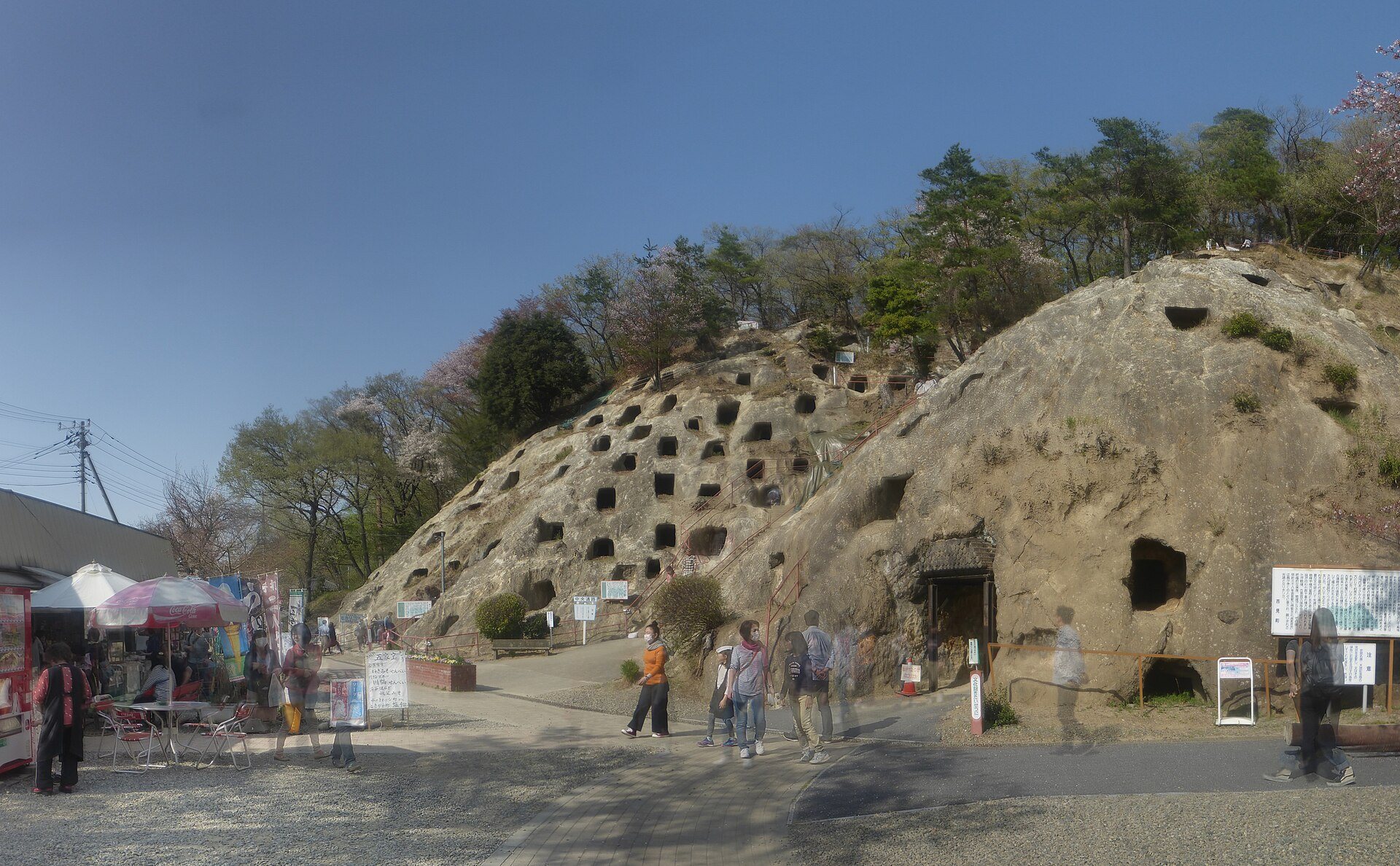
Yoshimi Hundred Caves is a late Kofun-period group of horizontal burial caves in Yoshimi, Japan, cut into the Yoshimi Hills during the sixth and seventh centuries. The Kofun period, conventionally dated from approximately the third to the seventh century, was an era of large burial mounds and developing regional political authorities. With 219 identifiable caves, the site is the largest identified cluster of this type of horizontal burial cave in Japan.
Formation of the burial complex
A horizontal burial cave is a tomb entered through a passage cut laterally into a slope, allowing the chamber to be reopened for later burials. At Yoshimi, raised platforms inside many chambers, along with grave goods and wall paintings, supported the interpretation that the caves were tombs. Several platforms within a chamber indicate that successive burials took place in the same space.
By the middle of the Edo period, several caves had been exposed, although their purpose was not understood. In 1887, the archaeologist and anthropologist Tsuboi Shōgorō investigated the site with local assistance from Negishi Takeka, a wealthy local notable, member of the House of Peers, and local historian. The excavation of 237 caves formed part of the early development of archaeology and anthropology in Japan.
Changing interpretations
Tsuboi initially proposed that the caves had been dwellings used by a small indigenous people associated with the folkloric Koro-pok-guru, a small-statured people in Ainu tradition. He suggested that some caves were later reused as tombs. Anthropologist Mitsutarō Shirai and other researchers challenged this view, pointing to the lack of sufficient evidence for habitation and the caves’ similarities to Kofun-period burial chambers. From the Meiji into the Taishō period, archaeological research established the interpretation of Yoshimi as a collective burial complex.
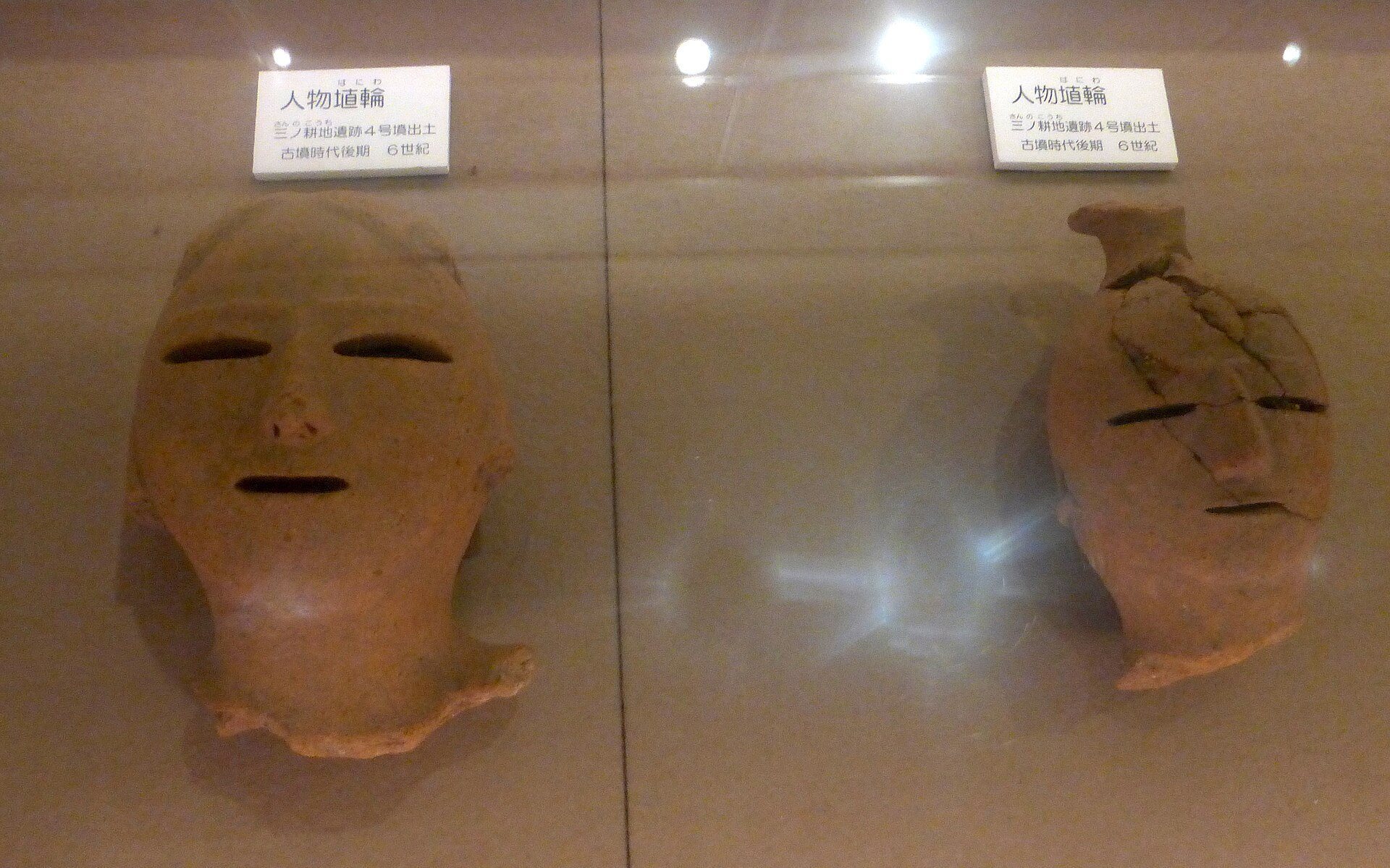
Excavations recovered Jōmon pottery fragments, magatama beads, gold and silver rings, swords, and bronze mirrors. A magatama is a curved, comma-shaped bead used in ancient Japan as an ornament and ritual object. These finds, together with the burial platforms and wall paintings, helped clarify the funerary character of the caves.
Protection and wartime transformation
Yoshimi Hundred Caves became a National Historic Site on March 7, 1923. The luminous moss locality was separately designated a Natural Monument of Japan on November 30, 1928. This designation recognizes important natural features, including rare species and distinctive habitats. The site lies within Hiki Hills Prefectural Natural Park.
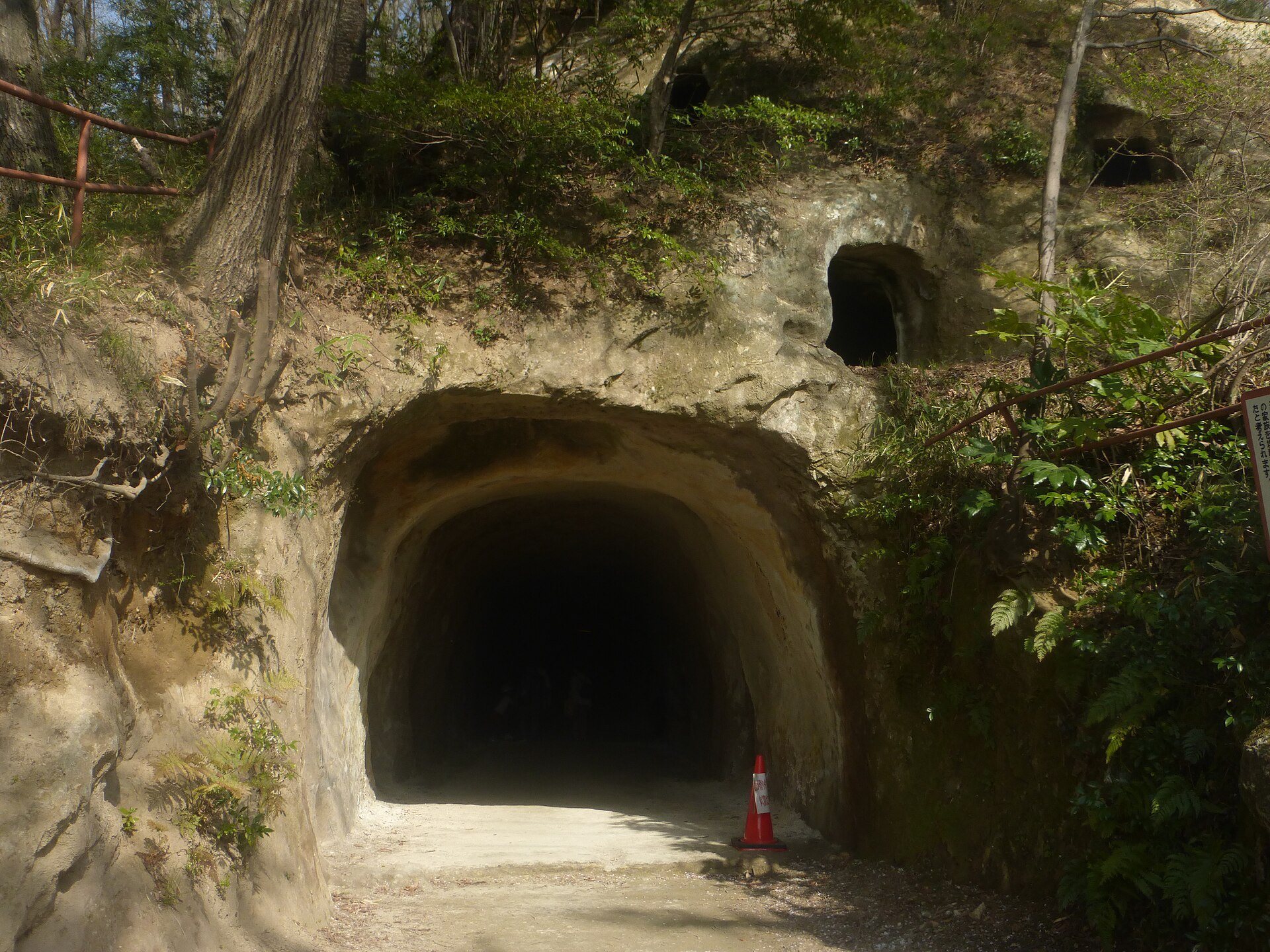
During the final months of the Pacific War in 1945, an underground military factory and tunnel network were cut through the hillside in association with Nakajima Aircraft Company, a Japanese aircraft manufacturer. The project was intended for aircraft-related production, but the war ended before the Yoshimi facility began operating. About 3,000 to 3,500 conscripted and volunteer laborers worked on the tunnels, and more than ten pre-existing burial caves were destroyed. A separate factory in an abandoned mine produced Oerlikon machine guns for Imperial Japanese Navy aircraft. The former tunnels remain part of the site’s historical remains, while collapse risks led to their closure and the installation of iron bars at their entrances by 2023.
Remains
Burial caves and hillside layout
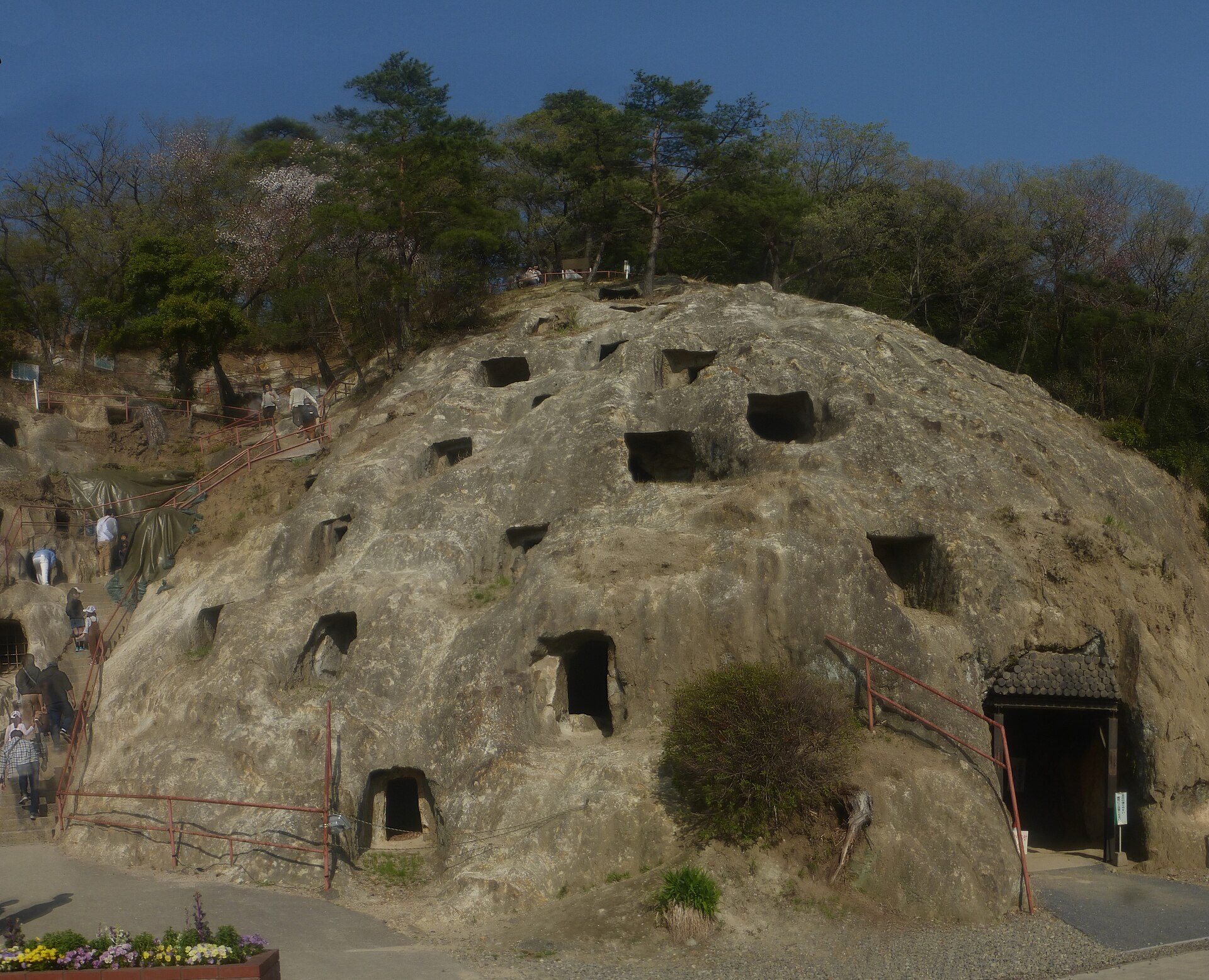
The caves were cut into a relatively soft cliff of tuffaceous sandstone on the Yoshimi Hills, overlooking the Nogawa, a tributary of the Arakawa River. Tuffaceous sandstone contains a substantial component of volcanic ash or other volcanic material. The cave openings are arranged in several rows running generally from west to east along the hillside. Each opening is approximately one metre square, although local topography produces variations in size.
A typical cave contains a forecourt, an entrance passage, an inner doorway, and a burial chamber. The chambers are commonly two to three metres square, while some extend several metres into the hill. Archaeologists classify them into eight forms based on their floor plans and six forms according to the cross-sectional shape of their ceilings.
Burial chambers and grave goods
Most burial chambers contain raised platforms about 10 to 20 centimetres high along or near the walls. These probably supported coffins or bodies. Entrances appear to have been closed with slabs of green chlorite schist, a metamorphic rock containing the green mineral chlorite. The arrangement allowed chambers to be reopened for later burials, while the recovered beads, ornaments, weapons, mirrors, pottery, and paintings provide material evidence for their funerary use.
Wartime tunnel network
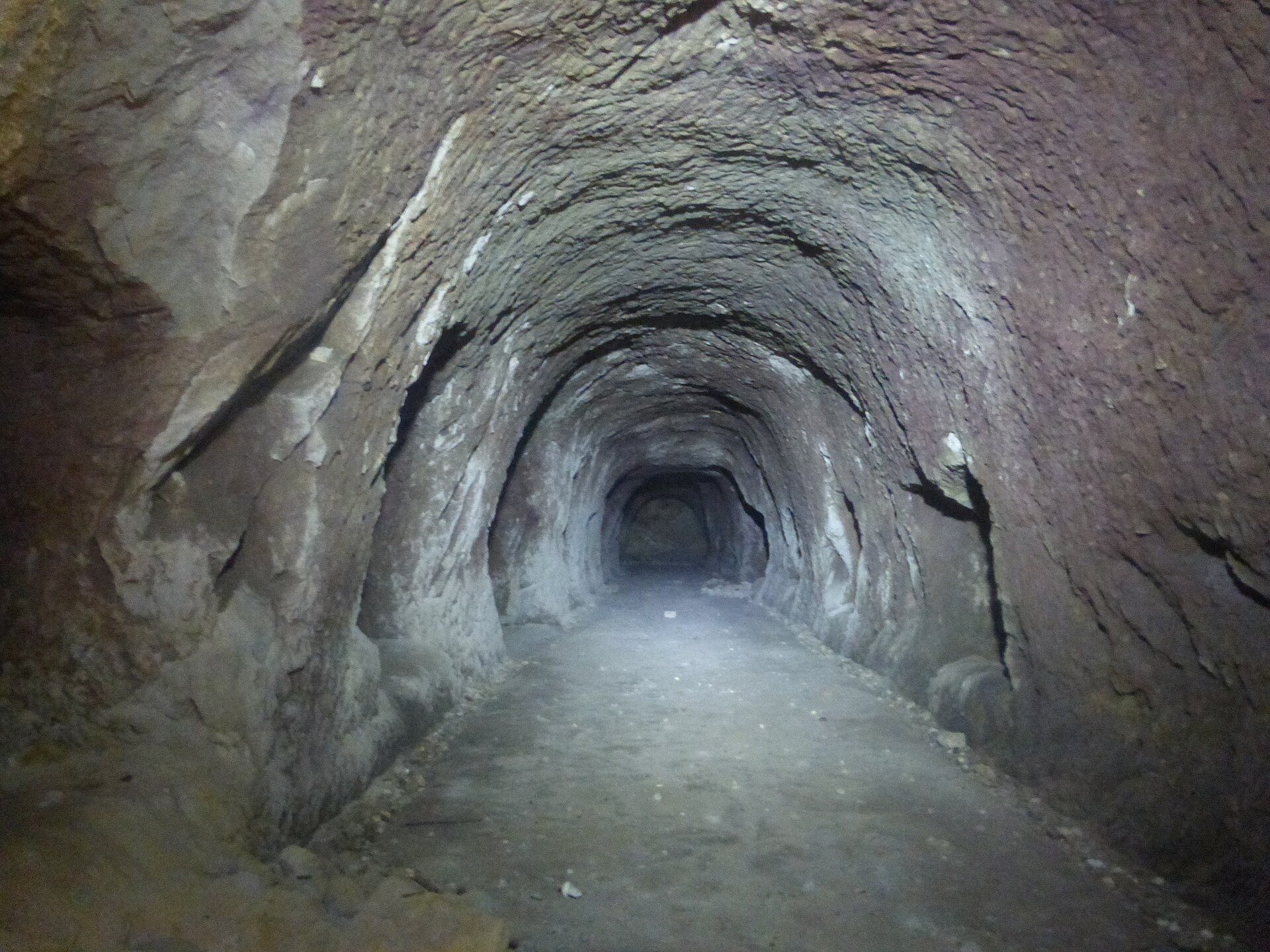
Below the hillside, the wartime passages intersect in a grid-like arrangement, with three exits leading toward the burial caves. The passages are roughly three to four metres across; one measurement gives a width of about four metres and a height of 2.2 metres. Their construction altered the ancient cave complex by destroying more than ten burial caves, and the tunnel entrances are now secured with iron bars because of collapse risks.
Luminous moss locality
The luminous moss grows in caves in the lower part of the rocky hill. The species, Schistostega pennata, emits a greenish light. Its occurrence at this lowland site is unusual because it normally favors particular temperature and humidity conditions associated with mountainous areas. The locality forms a natural feature within the wider archaeological complex.