Cirencester Abbey: An Augustinian Religious House in England
Site at a Glance
- Rating
- 4.6
- Popularity
- Medium
- Country
- United Kingdom
- Primary era
- Medieval
- Eras represented
- Medieval
- Civilizations
- English, Norman
- Site type
- Religious
- Remains
- Monastery
On this page13 sections
History
From minster to Augustinian abbey
Cirencester Abbey was an Augustinian abbey in Cirencester, United Kingdom, founded in 1130 by Henry I of England on the site of a large late-Saxon church. Dedicated to the Virgin Mary, it combined communal religious life with the clerical duties of parish ministry. The abbey church brought together Romanesque and Gothic forms, and the foundation became one of England’s wealthiest Augustinian communities.
A large minster, meaning an early medieval church serving a broad district, existed at Cirencester by 1086. Its revenues had been enlarged by estates associated with Regenbald, a royal clerk. Later claims that Regenbald had been dean, or that the church already possessed a complete prebendal structure, arose from subsequent misunderstanding and alteration of documents. Florence of Worcester, a medieval English monk and chronicler, wrote that Henry I began a “new work” at Cirencester in 1117, but this statement cannot be securely connected with the abbey’s construction.
Henry’s charter was altered in the later twelfth century to strengthen Cirencester’s property claims, and its earliest confirmations do not mention prebends. In 1130, Serlo became the first abbot. A canon of Salisbury Cathedral who had probably served as Salisbury’s dean, he led the transformation of the older church into an Augustinian foundation. The first regular canons came from Merton Priory, and the new community absorbed the revenues of the earlier church while beginning a major building campaign.
Growth, learning, and estate management
The abbey church was dedicated on 17 October 1176 by Bartholomew of Exeter, the medieval bishop. As construction progressed, the canons transferred parish worship to the church of St John the Baptist in Cirencester. They also administered the dependent Hospital of St John, first mentioned in the late twelfth or early thirteenth century.
Abbot Adam, who held office from 1177 to 1183, obtained papal confirmations of established customs and strengthened management of the abbey’s estates. After Robert’s troubled abbacy from 1183 to 1186, Richard, abbot from 1187 to 1213, regained royal favour, secured important fiscal concessions, and advanced appropriations that supported the community. Henry I’s grant included nineteen churches in several counties. These churches produced about £350 in the 1254 Norwich valuation, while broad estates and lordship over the town were supported by mills and managed watercourses.
Water-powered economic activity sometimes brought the abbey into conflict with its tenants. In 1301, the abbot’s officers broke unauthorized quern-stones, stones used for grinding grain by hand. The abbey was also a centre of learning. Robert of Cricklade, an early canon, wrote The Marriage of the Prophet Jacob there in the 1130s and added works by William of Malmesbury to the library. Alexander Neckam, a learned English teacher, writer, and Augustinian churchman, joined the community and served as abbot from 1213 to 1217, helping to restore its standing.
Geoffrey Brito, Neckam’s nephew and a Cirencester canon, edited and compiled a major collection of Neckam’s works, beginning with the words Sol meldunensis. A schoolmaster is mentioned at the abbey by 1242, and a school probably existed earlier. These activities contributed to Cirencester’s reputation for scholarship and to the development of its library.
Fourteenth-century strain and rebuilding
Political upheavals in the early fourteenth century placed pressure on the abbey’s finances and discipline. Episcopal visitation records and royal entries indicate disorder before a programme of repairs and construction associated with Abbot William Hereward, who held office from 1335 to 1352. Work continued on the eastern arm and chapels, while the east claustral range was remodelled with book rooms beside a new polygonal chapter house.
The number of canons declined from perhaps forty in the earlier Middle Ages to about seventeen by the 1530s. On 19 December 1539, Abbot John Blake surrendered the abbey during the dissolution of the monasteries. He received a pension, while the movable goods and precinct passed into lay hands.
Archaeological investigation
Excavations in 1964–66 examined the relationship between the abbey and its late-Saxon predecessor. Later investigations traced the plan of the medieval church, its eastern extensions, and parts of the water system, clarifying how the later foundation occupied and reshaped the earlier precinct.
Remains
Church and claustral buildings
Late-Saxon church
The predecessor was a long basilica, probably built in the tenth century. Its narrow nave was accompanied by elongated porticus, attached chambers or ranges beside the main body of an Anglo-Saxon church that could serve liturgical, funerary, or administrative purposes. A western porch or tower may also have formed part of the plan. Excavation showed that the abbey was built partly over the nave of this earlier church.
Abbey church
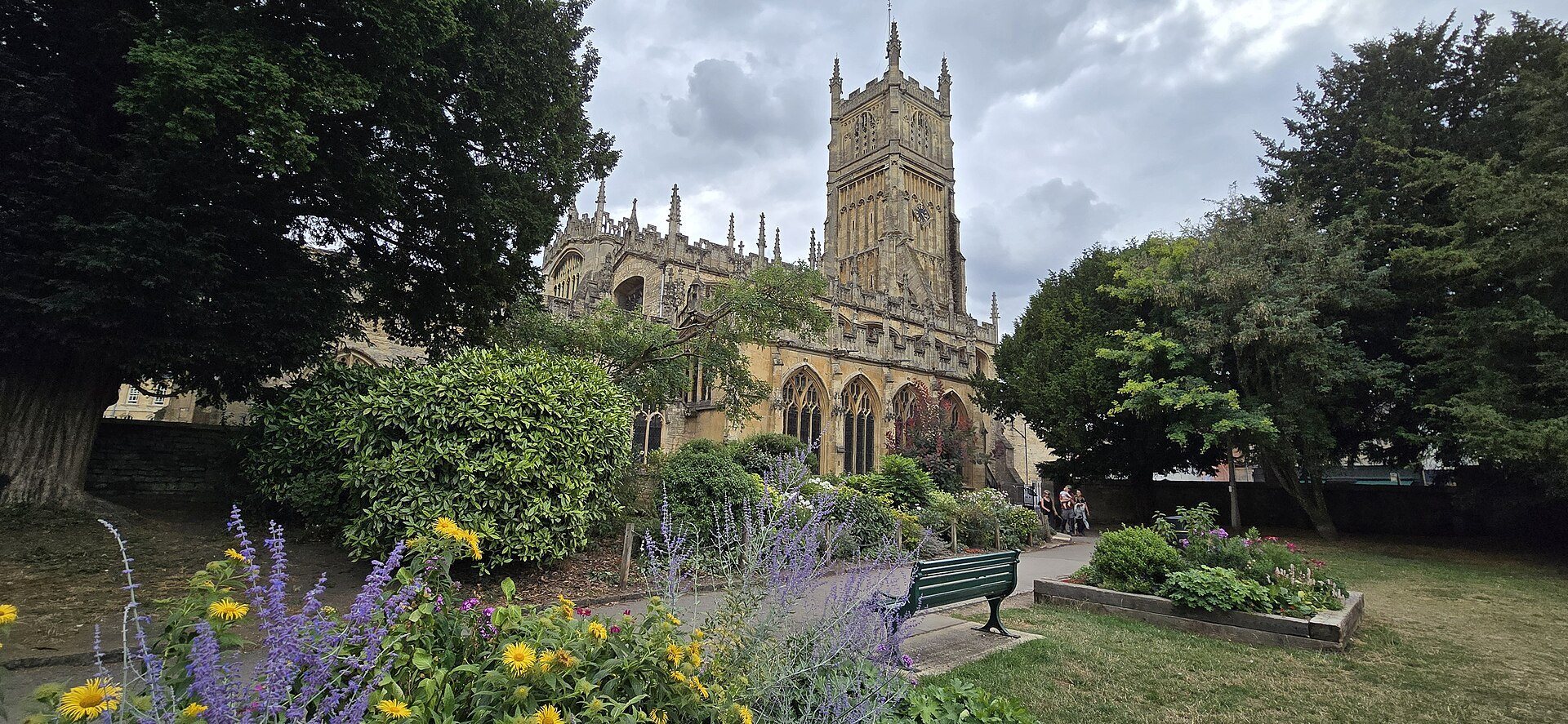
The abbey church combined Romanesque and Gothic forms. Its medieval plan included an eastern arm and chapels, with development continuing after the early fourteenth century. Two round-headed arches from the twelfth-century abbey fabric survive incorporated into the later parish church of St John the Baptist.
Cloister and chapter house
The cloister lay north of the church, an unusual arrangement in England that preserved continuity with the pre-Conquest precinct. Fourteenth-century remodelling of the eastern claustral range created book rooms flanking a new polygonal chapter house, the meeting room where the community handled administration and heard readings from its rules. Archaeological excavations within the abbey bounds have traced parts of these buildings and the wider church plan.
Water system and precinct
Conduit and claustral water supply
Between the 1220s and 1240s, the canons built a conduit to carry spring water to the lavatorium, a monastic washing place, and the refectory, the communal dining hall. By the middle of the thirteenth century, piped water served the claustral and domestic ranges. Excavation has also traced parts of this water system.
Gates and watercourses
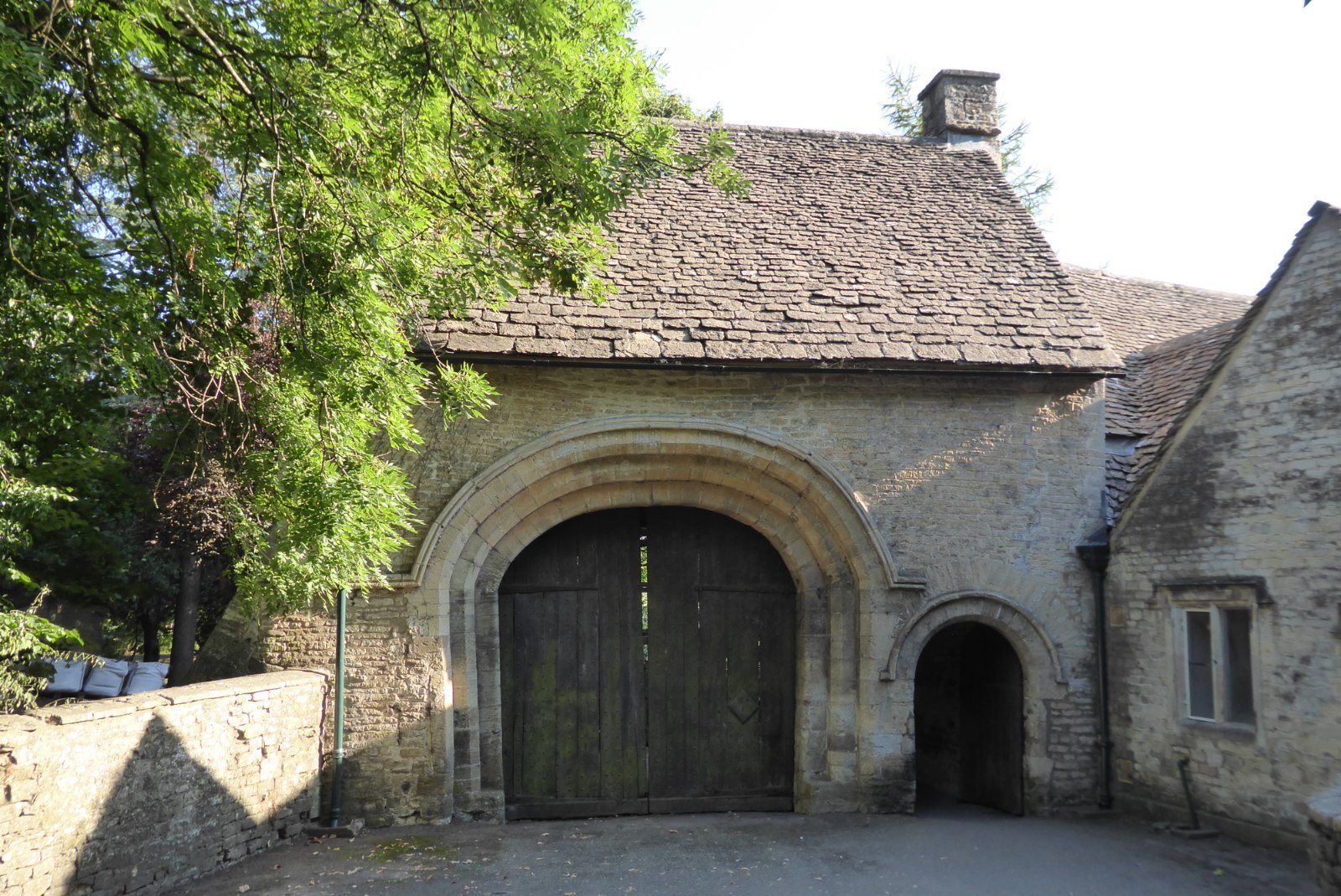
The extensive precinct was bounded by the River Churn and crossed by the Gunstool Brook. Its managed watercourses included those at Spital Gate and elsewhere within the grounds. Spital Gate, also called the Almery or Abbey Gateway, still stands as a surviving element of the medieval precinct.