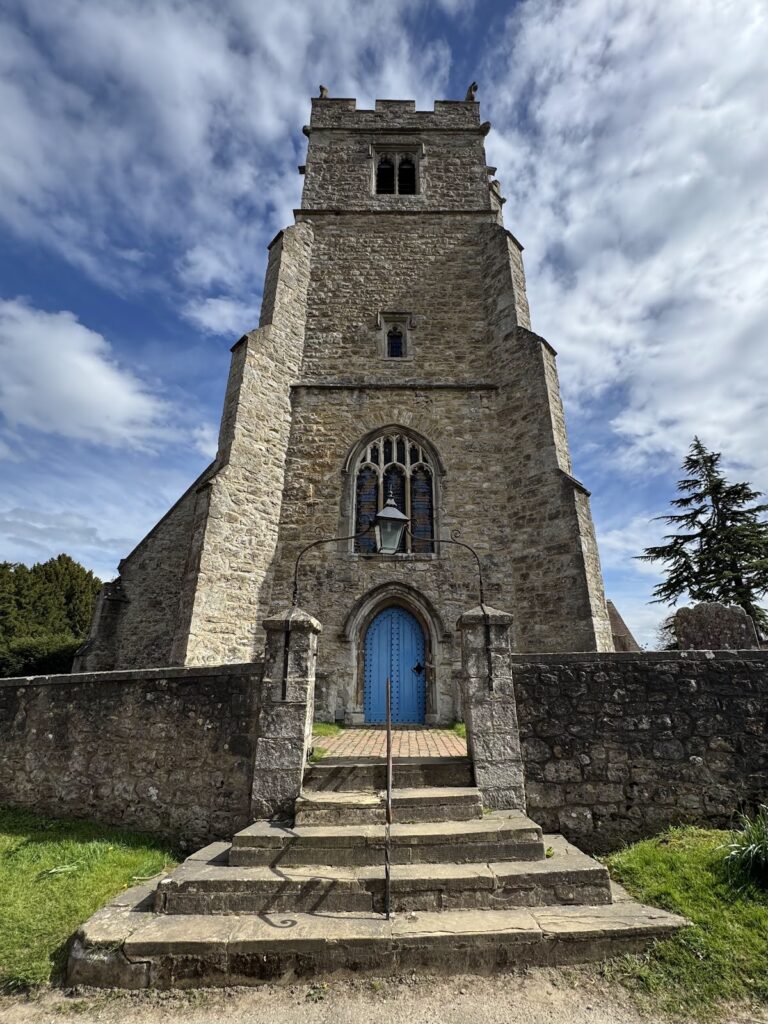
Aylesford Priory: A Carmelite Religious House and Shrine in Kent
Site at a Glance
- Rating
- 4.7
- Popularity
- Medium
- Country
- United Kingdom
- Primary era
- Medieval
- External website
- Open
- Eras represented
- Medieval, Early Modern, Modern
- Civilizations
- British, English
- Site type
- Religious
- Remains
- Monastery
On this page14 sections
History
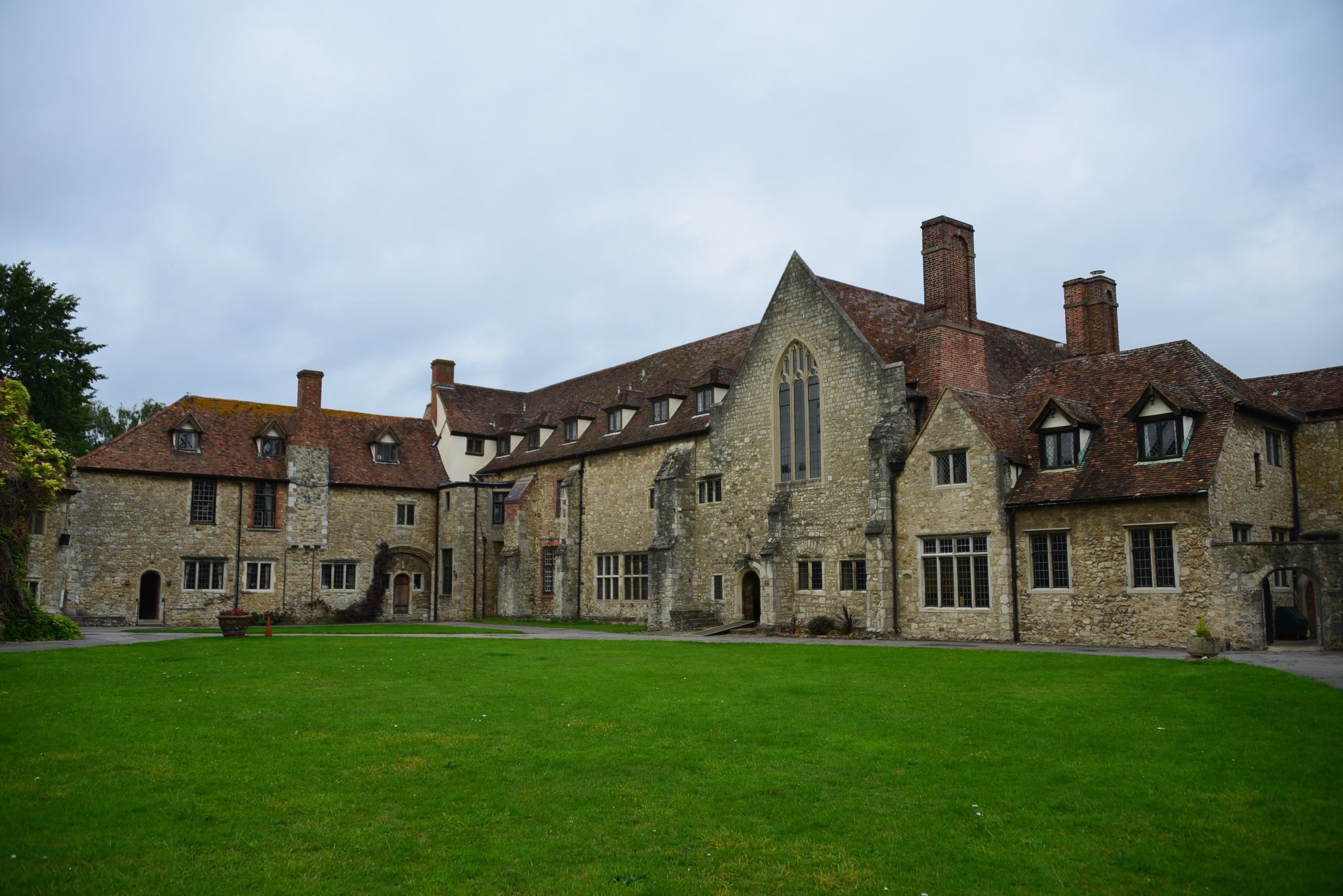
Aylesford Priory, also known as The Friars, is a Carmelite religious house and shrine in Aylesford, United Kingdom, founded in 1242 during the medieval period. The Carmelites, a Catholic order associated with Mount Carmel in the Holy Land, came to England under the patronage of Richard de Grey, a crusader who granted them land on his manor at Aylesford in Kent.
Foundation and the early Carmelites
Richard of Wendover, then Bishop of Kent, recognized the new Carmelite foundation. Aylesford soon acquired importance within the order when it hosted the first Carmelite General Chapter held outside the Holy Land. The meeting helped reshape the Carmelites’ way of life, moving them from a predominantly hermit tradition towards that of mendicant friars. Mendicant communities depended on preaching, communal religious life, and alms rather than the revenues of isolated monastic estates.
Dissolution and secular use
The Carmelites were forced to leave Aylesford in 1538 during the English Reformation, the sixteenth-century separation of the English Church from papal authority that also brought the dissolution or confiscation of many religious houses and their properties. Over the following four centuries, the buildings were adapted for other purposes, including use as an opulent and stately home.
Return to Carmelite ownership
A fire in 1930 prompted restoration work that exposed original elements, including remains dating from the fifteenth century. The property was offered for sale in 1949, enabling the Carmelite Order to regain ownership of its first motherhouse and restore it as a place of worship. Further restoration followed, and construction of the Shrine began in 1958. Father Malachy Lynch encouraged the project with the words “Courage to Build Anew.” In 1965, Cardinal Heenan was present when Archbishop Cyril Cowderoy rededicated the completed Shrine.
The priory is governed by the Roman Catholic Archdiocese of Southwark and remains a pilgrimage destination of national significance, particularly because its Shrine contains relics of St Simon Stock, a major medieval Carmelite figure associated with the order’s development in England. The main block became a Grade I listed building on 25 August 1959. The fifteenth-century gatehouse and the section of wall to the northeast received Grade I listing on 25 February 1987.
Aylesford Pottery
Aylesford Pottery was founded in 1953 by David Leach, a British studio potter and recent Catholic convert, as a project of Father Malachy Lynch intended partly to benefit the priory. It continues to operate as a commercial craft pottery within the priory precincts and is one of the few surviving commercial craft potteries in southeast England.
Remains
Medieval buildings and grounds
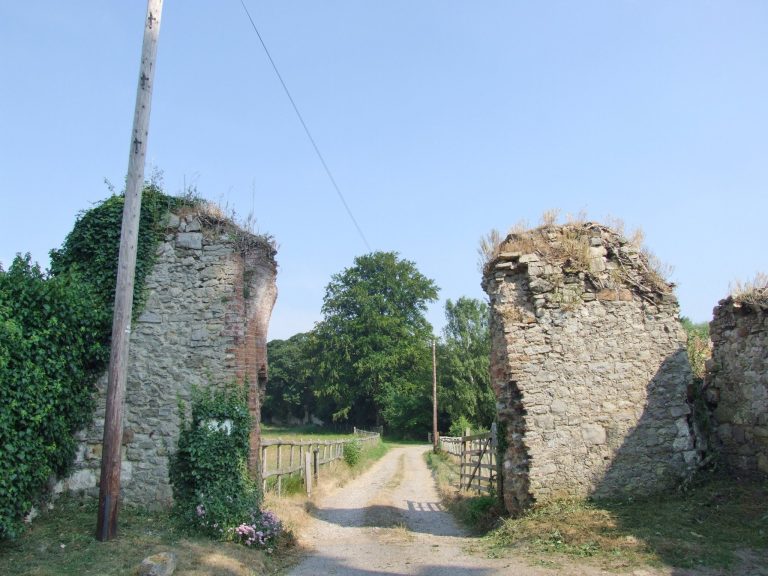
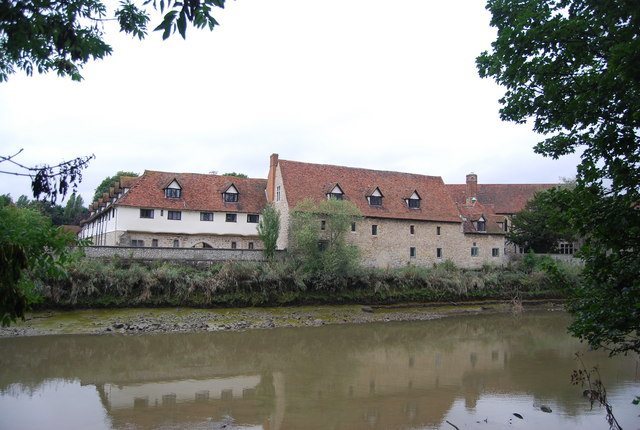
The medieval complex includes the Prior’s Hall, two walks of the cloisters, the Cloister Chapel, and a courtyard containing the Pilgrims’ Hall beside the River Medway. A cloister is a covered walkway, usually arranged around an open courtyard and connected with the buildings of a religious community. Restoration of the main block revealed fifteenth-century remains, while the fifteenth-century gatehouse and a surviving section of wall stand within the wider precincts. Two restored barns are located by the main entrance, including the seventeenth-century barn that houses the Tearoom and Giftshop.
Modern shrine and devotional spaces
The Shrine
Adrian Gilbert Scott designed the Shrine constructed from 1958 and rededicated in 1965. It contains relics of St Simon Stock and forms the principal modern religious feature of the restored priory. Behind it are the Rosary Way and, nearby, the Peace Garden.
Chapels and stained glass
The priory contains several chapels with stained glass and other works of religious art. Moira Forsyth’s Flos Carmeli window in the Cloister Chapel was a personal gift commemorating her reception into the Catholic Church there on the Feast of Our Lady’s Birthday in 1957. Its title means “Flower of Carmel” and begins a hymn sung by Carmelites to the Virgin Mary.
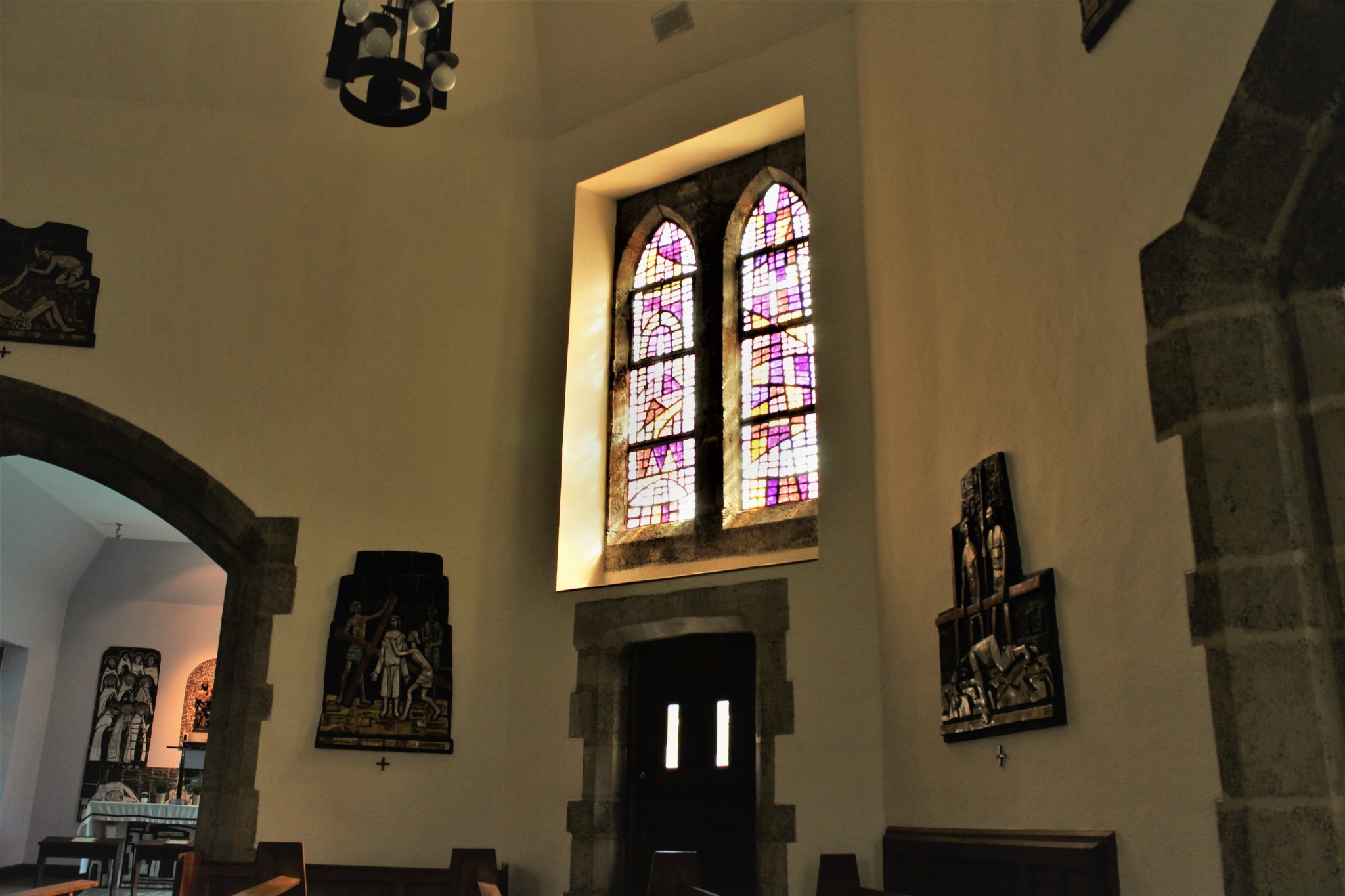
Dom Charles Norris was responsible for the windows in the Relic Chapel and designed those in its side chapel. The side-chapel windows use dalles de verre, a technique in which thick pieces of coloured glass are shaped by chipping and embedded in resin in a mosaic-like arrangement. Adam Kossowski designed the windows in the body of the chapel. Hartley Wood Glass of Sunderland produced the diamond-patterned windows in the Choir Chapel, the windows in the tribune of the Relic Chapel and in St Joseph’s Chapel, the Spring of Faith windows in St Anne’s Chapel, and the gold-, brown-, and orange-tinted windows in the former Convent Chapel.
Religious art
Michael Clark’s sculpture
Michael Clark created the small statues above the Courtyard doorways and produced the statue of the Glorious Assumption. For that work, he received the Otto Beit Medal for Sculpture.
Adam Kossowski’s works
Adam Kossowski, a Polish-born artist whose work included ceramics, painting, mosaic, wrought iron, and stained glass, began working at Aylesford in 1950. His first major commission was the seven-panel History of the Carmelites of Aylesford, executed in tempera. He later created the Rosary Way and The Vision of St Simon Stock, described as his largest ceramic commission at that time.
Kossowski’s creative relationship with the Aylesford Carmelites lasted from 1950 to 1972. During those years he produced approximately one hundred distinct works in ceramic, tempera, oil painting, mosaic, wrought iron, and stained glass. The priory’s religious art also includes modern paintings, ceramics, mosaics, stained glass, wrought ironwork, and tempera and oil paintings.
Burials and associated remains
Burials associated with the priory include Mazilia, also recorded as Marcelin or Mascelin, de Braci, the wife of William de Cantilupe, who died in 1239; Simon Stock; Sir Richard de Grey, 1st Lord Grey of Codnor; Adam Kossowski; and Stefania Kossowska.