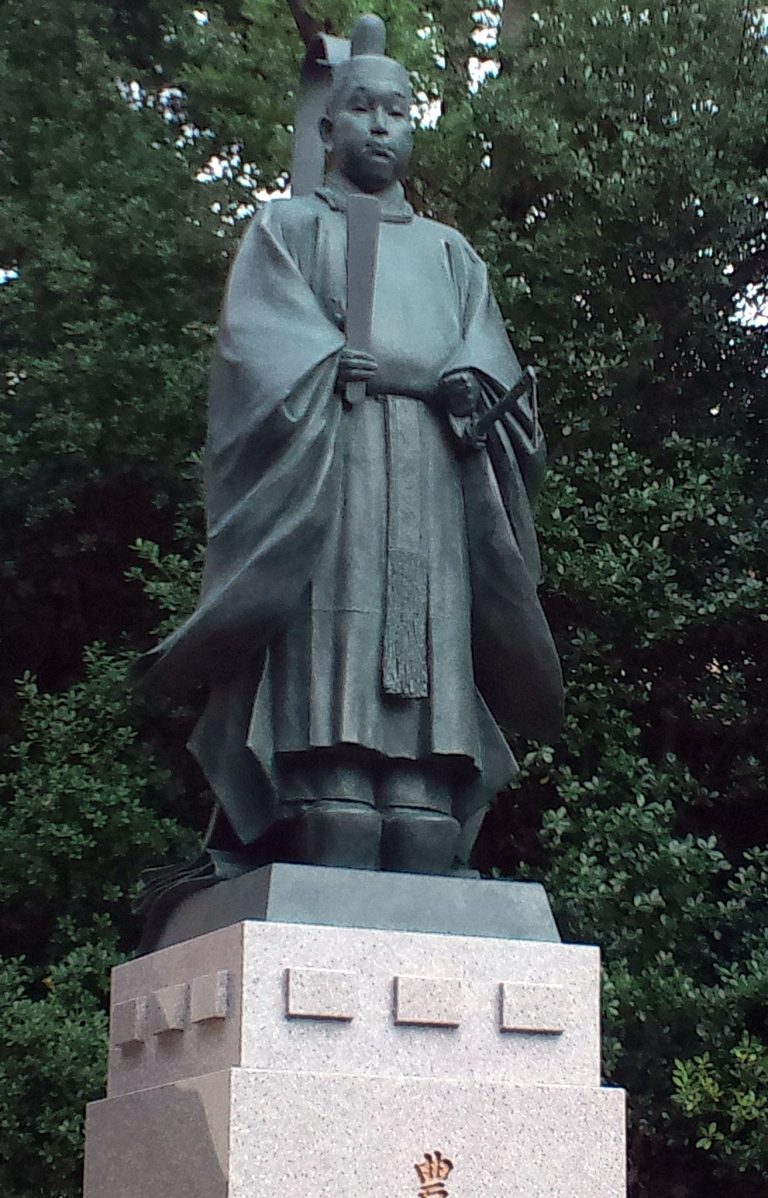
Fukushima Tenmangū: A Tenjin Shrine in Osaka, Japan
Site at a Glance
- Rating
- 3.8
- Popularity
- Low
- Country
- Japan
- Primary era
- Early Modern
- External website
- Open
- Eras represented
- Early Modern, Modern
- Civilizations
- Japanese, Tokugawa
- Site type
- Religious
- Remains
- Sanctuary
On this page18 sections
History
Fukushima Tenmangū is a Shinto shrine in Osaka, Japan, traditionally founded in 907 to venerate Sugawara no Michizane, a Heian-period court scholar and statesman later worshipped as Tenjin, the deity associated especially with scholarship. Its traditions connect the shrine with Michizane’s exile to Dazaifu and with a local sacred landscape of plum and pine trees.
Michizane and the foundation tradition
Michizane was exiled to Dazaifu, the major administrative and military centre of Kyushu, in 901. After visiting his aunt Kakujuni at Domyoji in Kawachi Province, he is said to have waited at this place for favourable winds before sailing from the Yodo River towards Kyushu. He died at Dazaifu in 903.
Local tradition holds that a resident named Tokujiro gave Michizane generous hospitality and received a self-portrait painted on cloth in return. The portrait became the shrine’s go-shintai, the sacred object through which a Shinto deity is ritually enshrined. Tokujiro’s family later took the surname Fukumoto at Michizane’s instruction and served as hereditary shrine elders and members of the local ritual association until the Meiji Restoration, the political transformation that began in 1868 and ended the Tokugawa shogunate.
The shrine is traditionally said to have been established in 907 where two branches, one from a plum and one from a pine, had taken root. Michizane is said to have composed a poem after seeing the plum and planted the pine branch beside it. The branches supposedly grew into one tree, which remained leafy until wind affected it during the Genroku era, a period of the Edo period from 1688 to 1704.
Early development and changing identity
On January 13, 908, Okuninushi no Mikoto and Kotoshironushi no Mikoto were added as accompanying deities. A major ceremony held on September 21 of that year is regarded as the beginning of the annual autumn festival.
In 993, an imperial envoy travelling towards Tsukushi reportedly visited while waiting for favourable winds after learning that Michizane was worshipped at the shrine. After offering sake before the deity, he is said to have experienced a divine manifestation in which Michizane’s face appeared reddened. The shrine consequently became known as “Sacred-Sake Tenjin.”
Two other Tenmangu shrines were later established in Fukushima. Fukushima Tenmangū therefore became known as the Upper Shrine of Tenmangu, or the Upper Tenjin, and was formerly classified as a village shrine. Its main sanctuary was remodelled in 1758 and rebuilt in 1850.
Fire, rebuilding, and wartime survival
The Northern Great Fire, also called the Tenma Fire, destroyed the principal buildings on July 31, 1909. The sacred object was moved with difficulty to Susa-no-o Shrine, also known as Urae Yasaka Shrine. Most of the shrine’s old records and treasures were lost.
With the autumn festival approaching, a temporary sanctuary was built quickly, and the sacred object was returned on October 19, 1909. A permanent main sanctuary was completed in 1915, followed by the worship hall and associated buildings in 1921.
During the second Osaka air raid on June 1, 1945, eleven incendiary bombs fell within the precinct, but none detonated and the shrine escaped damage. The surrounding residential district and much of the shrine’s parish territory suffered extensive wartime destruction. After the war, the former Middle Tenjin, which had been destroyed in the raid, was merged into the shrine. The Upper Tenjin consequently adopted the name Fukushima Tenmangū.
Postwar changes and preservation
The former Middle Tenjin site, north of Dojima Bridge and south of the main entrance to Osaka Hospital, became a detached precinct, meaning a separate parcel administered as part of the same shrine institution. It contains a Tenjin shrine and remains part of Fukushima Tenmangū.
In 1967, widening Naniwasuji took approximately 120 tsubo of land along the side facing the former Joshojibashi Street. The reduced precinct required the sanctuary buildings and other facilities to be rearranged.
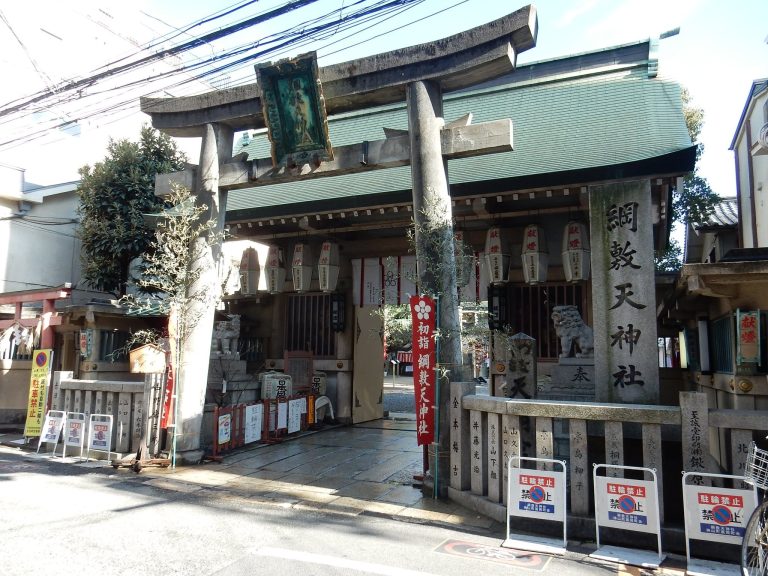
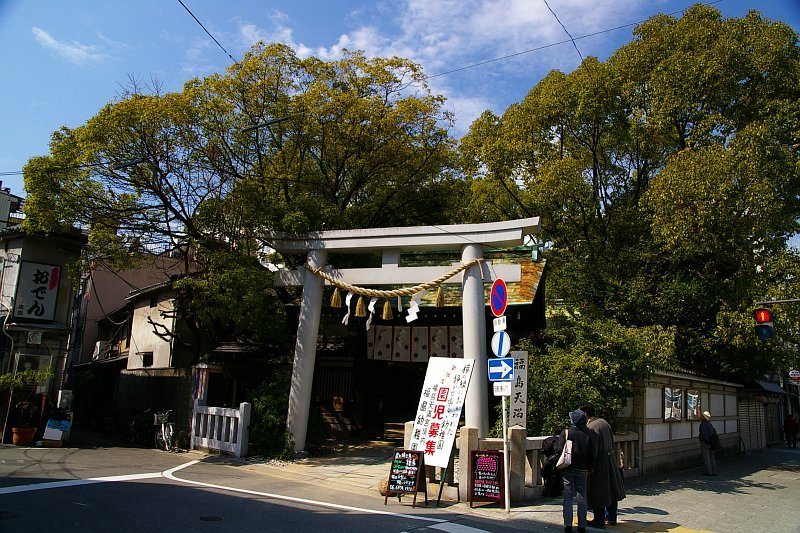
The Great Hanshin-Awaji Earthquake struck the Kobe and Osaka region on January 17, 1995. It destroyed all the precinct lanterns and damaged the buildings, loosening or partly breaking posts and beams and causing white plaster to peel. The stone main torii lost its western pillar at the base, while its eastern pillar was judged dangerous. The gate was dismantled and removed, and a replacement torii was donated and rebuilt with new materials later that year.
Fukushima Tenmangū remains one of the Twenty-Five Sacred Sites of Sugawara no Michizane, where it is stop 12. Its principal annual observance is the grand autumn festival held on October 21.
Remains
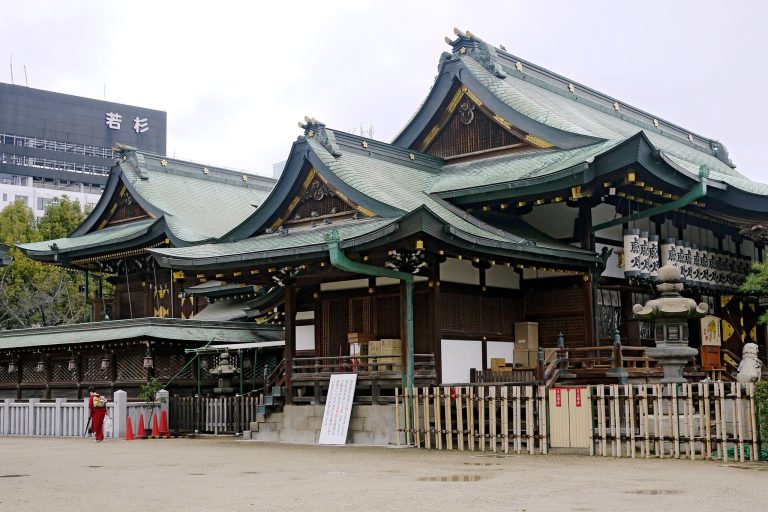
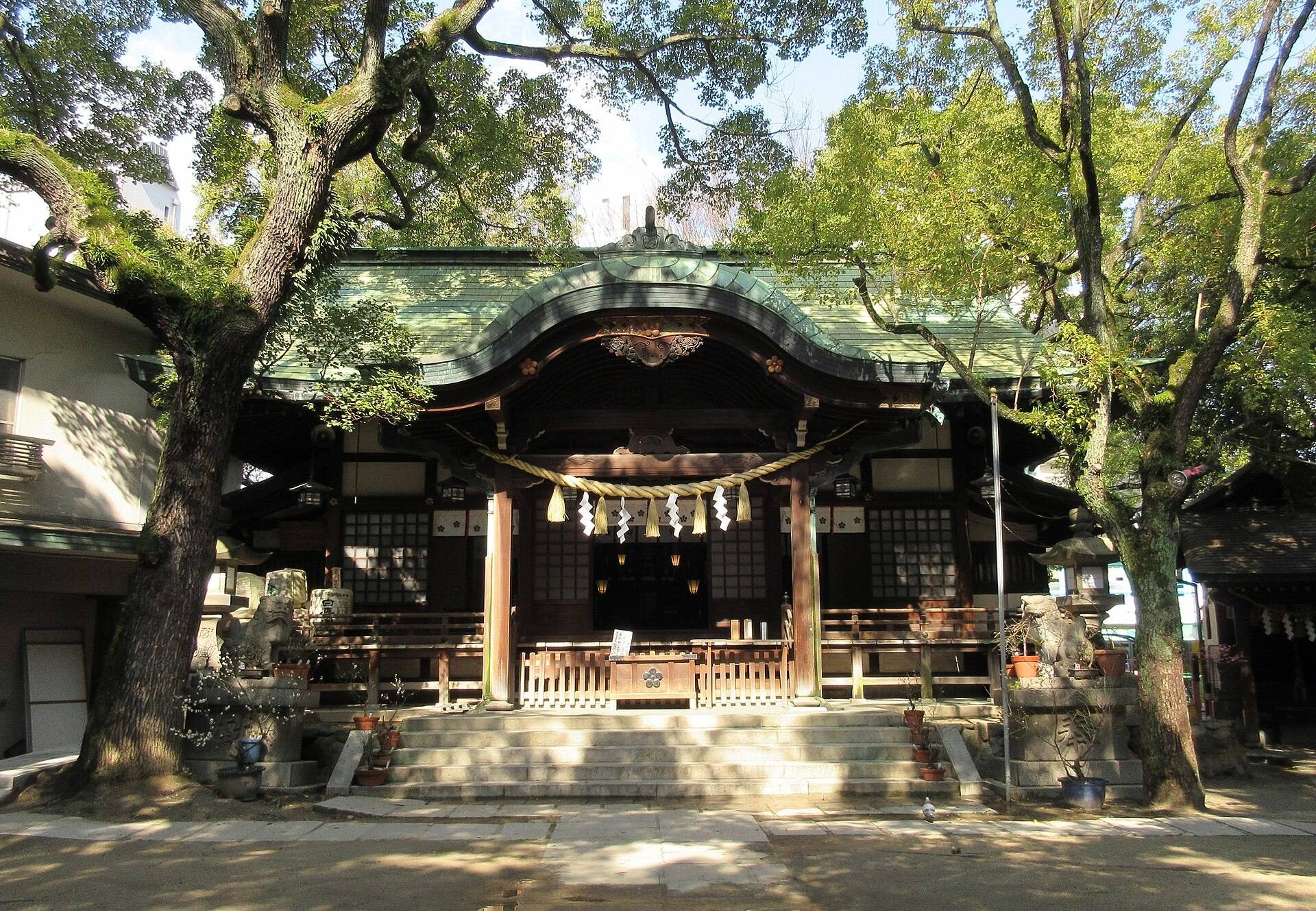
The present precinct centres on the main sanctuary rebuilt in 1915 and the worship hall and related buildings rebuilt in 1921. The site also contains several subsidiary shrines, smaller shrines within the grounds of the principal shrine, together with the sacred traditions associated with Michizane’s portrait and the former Middle Tenjin precinct.
Principal sanctuary and sacred objects
Main sanctuary and worship hall
The main sanctuary was rebuilt in 1850 after the earlier remodelling of 1758, while the present principal building derives from the reconstruction of 1915. The worship hall and associated buildings were rebuilt in 1921. Their present arrangement reflects the later reorganisation of the precinct after the 1967 road widening.
Michizane’s sacred portrait
The shrine’s go-shintai is traditionally identified as a self-portrait of Sugawara no Michizane painted on cloth. It is said to have been given to Tokujiro, the resident who hosted him, and is treated as the sacred embodiment of the shrine’s principal deity.
The plum and pine tradition
The shrine’s foundation tradition centres on a plum branch and a pine branch that supposedly took root together. Michizane is said to have planted the pine beside the plum, producing a single tree. The combined tree was believed to have remained leafy until it was affected by wind during the Genroku era.
Subsidiary shrines
Yoshitaka Inari Shrine
Yoshitaka Inari Shrine is dedicated to Ukanomitama no Okami and forms part of the subsidiary shrine group within the Fukushima Tenmangū precinct.
Nomi no Sukune Shrine
Nomi no Sukune Shrine is dedicated to Nomi no Sukune, regarded at Fukushima Tenmangū as an ancestral deity of the Sugawara family.
Isamu and Sumiyoshi shrines
Isamu Shrine is dedicated to Kukunochi no Mikoto. Sumiyoshi Shrine is dedicated to the four Sumiyoshi deities, including the three sea deities and Empress Jingu.
Haraedo, Kotohira, and Hayashi shrines
The precinct also contains a shrine dedicated to the Haraedo deities and Kotohira Shrine, which is dedicated to Omononushi no Mikoto. Hayashi Shrine commemorates Hayashi Iori, who became famous through the drama The Vendetta at Tenka Chaya. It originated as a subsidiary shrine of the former Middle Tenjin.
Detached Middle Tenjin precinct
Tenjin shrine
The former Middle Tenjin site is a detached precinct of Fukushima Tenmangū. Its Tenjin shrine enshrines Sugawara no Michizane and Sukuna-hikona no Mikoto, preserving a separate part of the institution’s postwar history after the former Middle Tenjin was destroyed during the 1945 air raid.
Reorganised precinct fabric
The 1967 widening of Naniwasuji reduced the land area by approximately 120 tsubo and led to the rearrangement of the sanctuary buildings and other facilities. The 1995 earthquake later destroyed the lanterns, damaged the structural timbers and plaster, and resulted in the removal of the former stone main torii. A replacement torii was erected later that year.