Beata Vergine del Soccorso: The Rotonda Church of Rovigo
Site at a Glance
- Rating
- 4.6
- Popularity
- Low
- Country
- Italy
- Primary era
- Early Modern
- External website
- Open
- Eras represented
- Early Modern, Modern
- Civilizations
- Italian, Venetian
- Site type
- Religious
- Remains
- Church
On this page18 sections
History
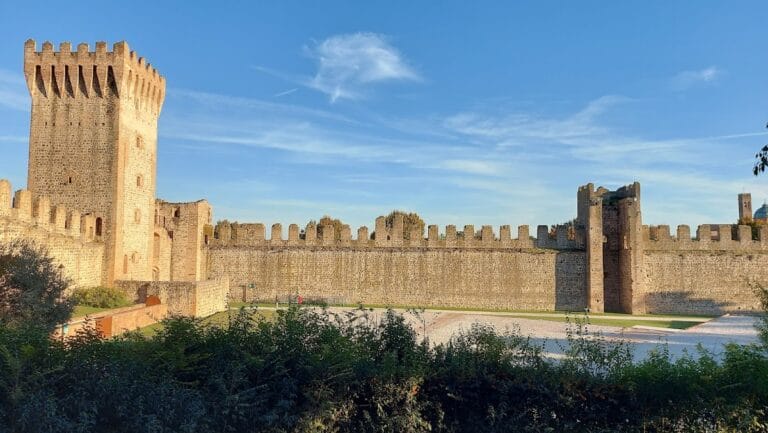
Beata Vergine del Soccorso, commonly called La Rotonda, is a Roman Catholic church in Italy built in Rovigo around a revered image of the Madonna and Child. The decision to construct it was taken in 1594, when devotion to the image had grown beyond the small Oratory of Santa Maria alle Mura beside the Franciscan friars’ convent.
Origins of the sanctuary
Written accounts of favors received after prayer before the image had circulated since 1591. By 1594, pilgrims were arriving in such numbers that the supply of food became a concern for the city council. The reasons for the Madonna’s growing reputation are uncertain, although local traditions connected her with 115 miraculous events. These included the liberation of Rovigo from a siege on 2 July in an unspecified year and the ending of an epidemic.
A 1609 report by the podesta Alvise Querini also recalled a vow made by Rovigo’s inhabitants during an outbreak of plague. A podesta was a civic governor appointed in many Italian cities, often as a representative of an outside ruling authority. In the Rotonda, the memory of civic officials and public crises later became part of the church’s decorative program.
Francesco Zamberlan designed the church in 1594. He served as chief engineer of the Water Magistracy of the Republic of Venice, although he did not formally hold the title of architect. Bishop Lorenzo Laureti of the Diocese of Adria blessed the foundations on 13 October that year. Residents supported the project with money and building materials, while disagreements over offerings and jurisdiction continued for generations. In 1764, the Venetian Senate finally assigned jurisdiction over the church to the city of Rovigo.
Construction and early furnishing
The building’s first roof was temporary. It was erected in 1601 and finished in 1603, but structural problems led to the demolition of the original dome in 1606. A pitched roof was developed in its place and completed in 1622. The altar was installed in 1607, the Madonna was placed in its altar niche on 8 September 1608, and the floor was laid between 1609 and 1613.
The interior was furnished over several decades. The first painting was probably installed in 1621, with further works added in 1622 and 1626. In 1625, the perimeter walls were altered and twenty niches were cut for statues. About ten years later, roughly twenty paintings were placed between them, creating the arrangement of sculpture and imagery that still characterizes the interior.
Civic and religious decoration
The main decorative campaign began in 1644 and continued until 1684. It brought together religious subjects, allegories connected with Rovigo and the Polesine, and representations of Venetian podestas and health magistrates. A health magistrate was a public official responsible for measures dealing with epidemics and public health. Their inclusion linked the church’s devotional purpose with the civic memory of administration, disease, and the protection of the population.
The bell tower was begun during the seventeenth century and is attributed to Baldassarre Longhena. Work stopped in 1657 and was delayed repeatedly, including by flooding of the Adige. The church factory contributed 500 ducats to the flood emergency. Construction resumed permanently in 1768, and the tower was completed in 1773; its small cupola followed in 1774.
A memorial to Camillo Silvestri was placed beneath the portico in 1719. From the nineteenth century, the portico and exterior walls also acquired marble fragments, archaeological pieces, and commemorative plaques transferred from demolished structures and bridges over the former Adigetto. The portico had initially honored deceased members of noble Rovigo families. From the early nineteenth century, it also served partly as a civic collection of archaeological and commemorative marble objects.
Alterations and restoration
The church underwent repeated repairs and changes. Later work included the cornice of the central drum, flat-sheet glazing, and a replacement ceiling. Explosions at Austrian forts during the 1866 conflict caused vibrations that damaged the ceiling, which collapsed several years later. Vittorio Bressanin painted the present ceiling fresco in 1887.
The former Franciscan nuns’ convent near the bell tower was demolished in 1860, creating the present Piazzale del Soccorso. In 1864, a street within the walls was enlarged to form Piazza XX Settembre. The principal entrance is at the end of Via IV Novembre, rather than on the facade facing that square.
After the second Adige flood of 1882, the principal parts of the church were restored. Further restoration of the building and its interior works took place between 1956 and 1966 using contemporary methods. A later conservation campaign at the beginning of the twenty-first century preserved the church with support from the Cassa di Risparmio Foundation of Padua and Rovigo. Many of the marble objects once kept on the portico were moved to the Museum of the Great Rivers, opened in 1980 in the former Olivetan monastery of San Bortolo, while about eighty pieces remained in place. The church is formally dedicated to the Blessed Virgin Mary of Succour and is recognized as an Italian cultural property.
Remains
Plan and exterior
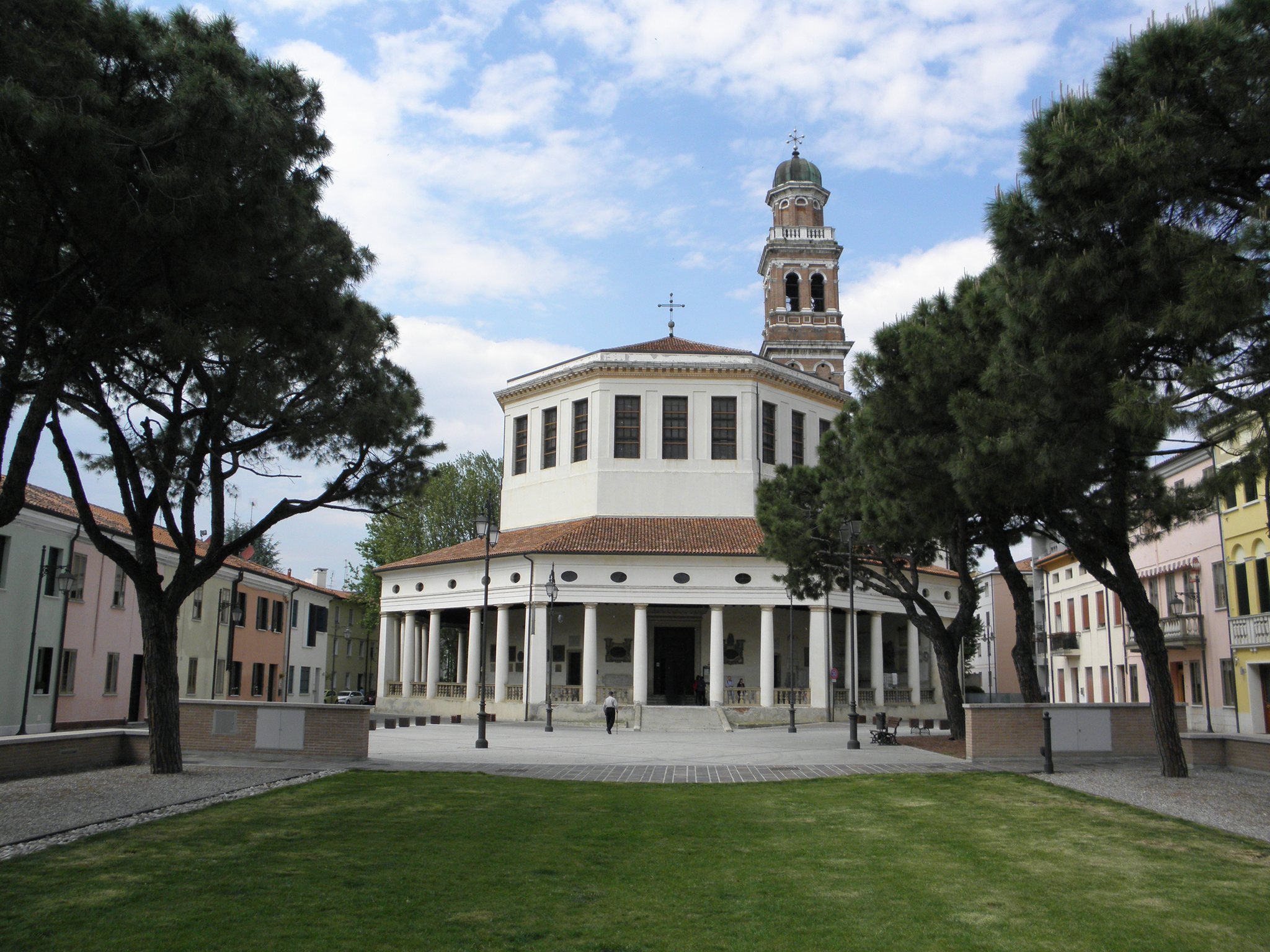
La Rotonda has a double-octagonal plan. An inner octagon contains the church, while an outer octagonal portico is open on seven sides. The eighth side is occupied by the sacristy. The inner structure has three windows on each side and is covered by the pitched roof completed in 1622 after the earlier dome was removed.
The exterior is restrained in form. The portico columns are smooth and lack bases, the elliptical attic windows have no frames, and large windows rise above the portico. Together, these elements define the church’s unusual outer shell while preserving the distinction between the enclosed devotional space and the surrounding walkway.
Portico marble works
The portico contains commemorative monuments and architectural fragments from structures that no longer survive, including elements from bridges over the central Adigetto. About eighty marble pieces remain on its walls. They include a statue of Saint Cajetan of Thiene, a memorial to Camillo Silvestri, an epitaph to Nicolò Roverella dated 1778, and an epitaph to Girolamo Silvestri.
The exact history of Saint Cajetan’s statue is unknown, but its presence is associated with the Concordi Academy’s decision to choose him as patron in 1697. The Concordi Academy was a learned cultural institution of Rovigo connected with literary, scholarly, and civic activity. Girolamo Silvestri, a priest and cultural figure, is commemorated for establishing and directing the academy’s agricultural section and opening a public library.
Bell tower
The bell tower stands on a small square beside the church and is attributed to Baldassarre Longhena. It rises 57 metres from compact sandy ground. A massive battered base, two metres high, supports the red shaft, which is divided by white cornices and irregularly placed windows. A four-metre-high cross crowns the summit.
Principal interior furnishings
High altar and Madonna image
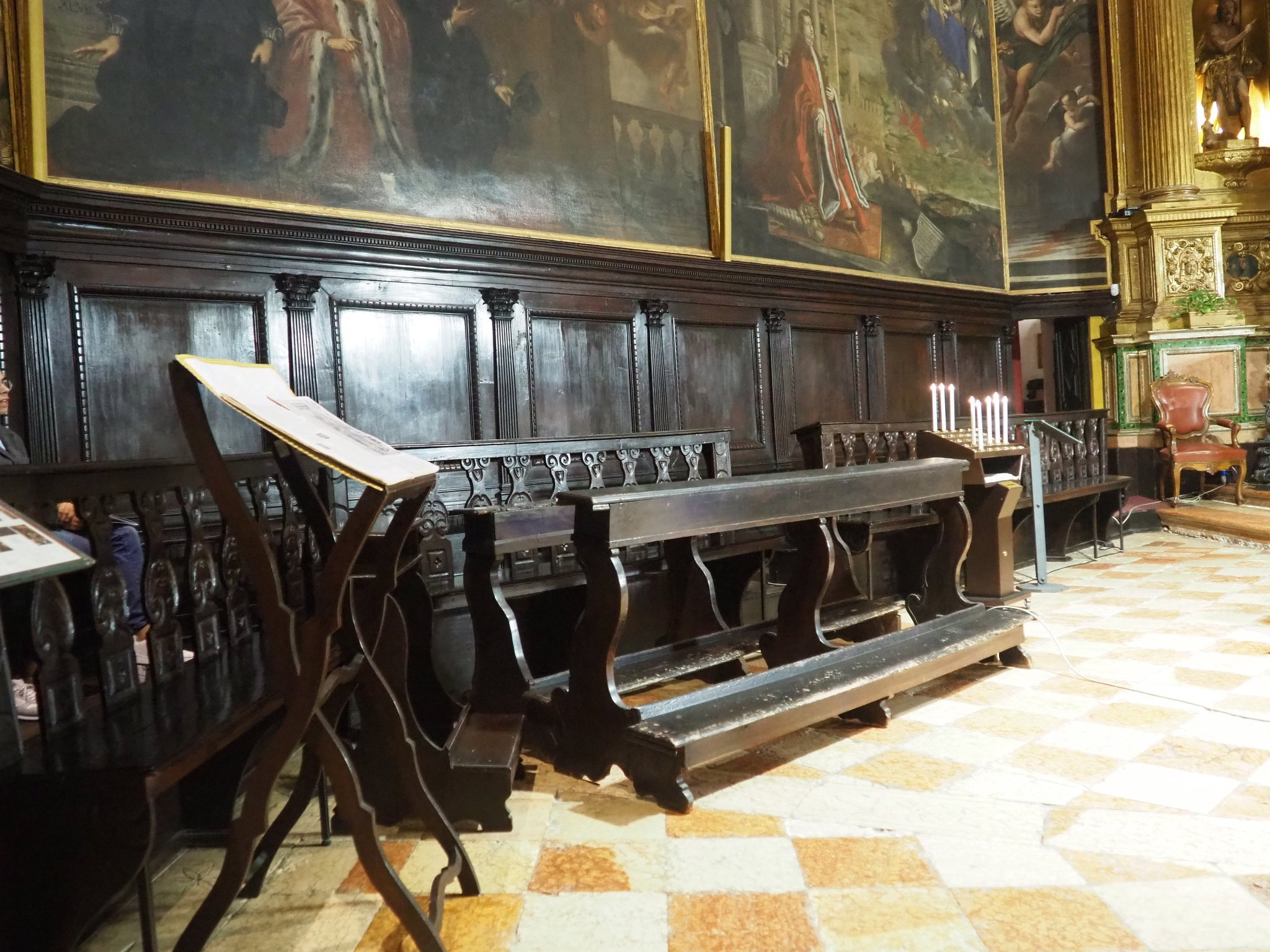
The wooden high altar was carved by Giovanni Caracchio and installed in 1607. Its design is also attributed to Francesco Zamberlan. A large gilded structure surrounds the small Madonna image, making it visually prominent within the church’s unusually broad octagonal interior.
The altar stands on a substantial podium. Four Corinthian columns rise from it and support a horizontal entablature, the architectural structure carried by columns, together with a small triangular pediment. Above are an attic bearing an inscription recalling the dedication to God and the Virgin, a broken curved pediment, and a Crucifixion scene. Wooden figures of Saint John the Baptist and Saint Francis of Assisi occupy niches beneath paintings of the Annunciation and the Birth of the Virgin. A projecting baldachin, or canopy above a sacred image, completes the arrangement.
The central Madonna of Succour came from the Oratory of Santa Maria alle Mura. The Virgin sits frontally on a throne with the blessing Christ Child on her knees, offering him a rose associated with Rovigo. Angels surround the image, while a blessing figure of the Creator appears above it.
Organ and choir loft
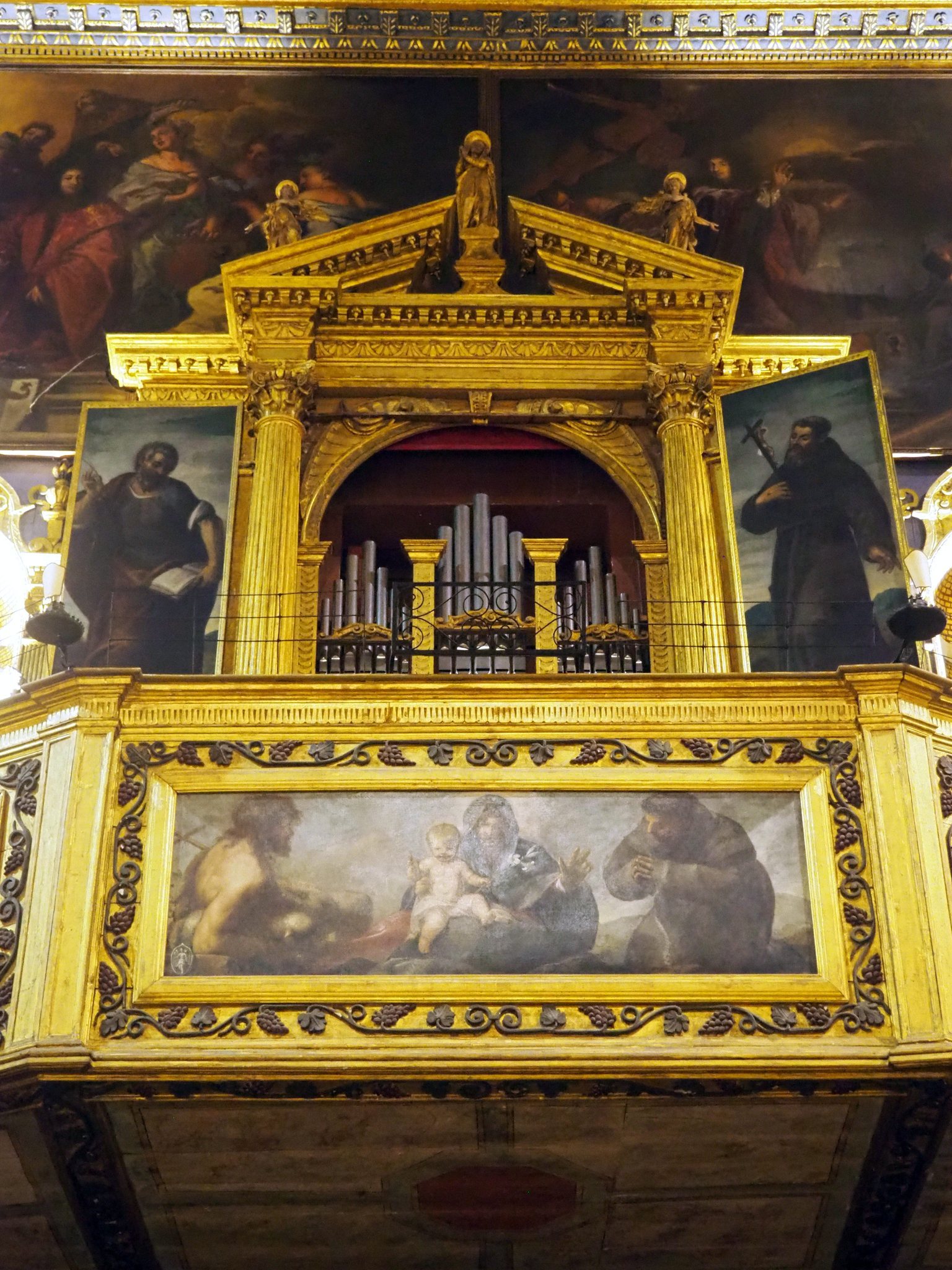
The organ was installed in 1767 by Gaetano Callido. Its early seventeenth-century choir loft and case may belong to an earlier instrument, while the pipes, bellows, and sound mechanism were renewed in 1767. The case has a broken pediment with a statue of the Madonna between two angels, and its wooden work resembles Caracchio’s altar.
Giovanni Battista Novelli painted the organ-case doors in 1615. Their outer sides show the Immaculate Virgin and Saint Agnes, while the inner sides depict Saint Mark and Saint Francis of Assisi. Paintings on the choir-loft parapet honor the Franciscan order. They include the Madonna and Child with Saint John the Baptist and Saint Francis, the Madonna and Child with Saint Bonaventure of Bagnoregio, and the Madonna and Child with Saint Anthony of Padua.
Sacristy
The sacristy lies behind the wall supporting the high altar. It contains a large late-Renaissance cabinet for liturgical furnishings, an image of the Blessed Virgin of Succour, and a sculpture of the Madonna and Child with the young Saint John the Baptist, brought there probably to protect it from the weather.
Other furnishings include a commemorative painting of Girolamo Priuli by Zaccaria Zaninelli, a panel of the Madonna and Child between Saints Lucy and Jerome, and a 1752 drawing of the bell tower by Silvestri, probably copied from Longhena’s lost design. Small paintings above the two doors show Saints Sebastian and Roch and an Apparition. A wooden staircase leads to a large upper room containing unused liturgical furnishings.
Painted and sculpted decoration
Lower wall canvases
The lower wall zone contains sixteen large canvases, including eight scenes from the history of Mary. Their original sequence was reconstructed by identifying the podestas represented. Among the works are the Coronation of the Virgin by Francesco Maffei, the Flight into Egypt attributed to Pietro Negri, the Glorification of Bartolomeo Querini by Pietro Ricchi, an Announcing Angel by an unknown artist, and The Annunciate by an unknown artist.
One canvas presents the Glorification of Pietro Morosini, painted by Antonio Randa in 1644. Morosini appears before a heavenly Madonna and Child, while horsemen and a cultivated landscape refer to good administration. Randa included a self-portrait and identified himself and the date within the painting.
Upper wall canvases
The upper zone contains seventeen canvases. Fourteen celebrate podestas, two honor health magistrates, and one represents the Passion of Christ above the altar. The paintings were installed progressively, with the health-magistrate pictures and the Passion scene placed in 1658. The upper decoration was complete by 1684.
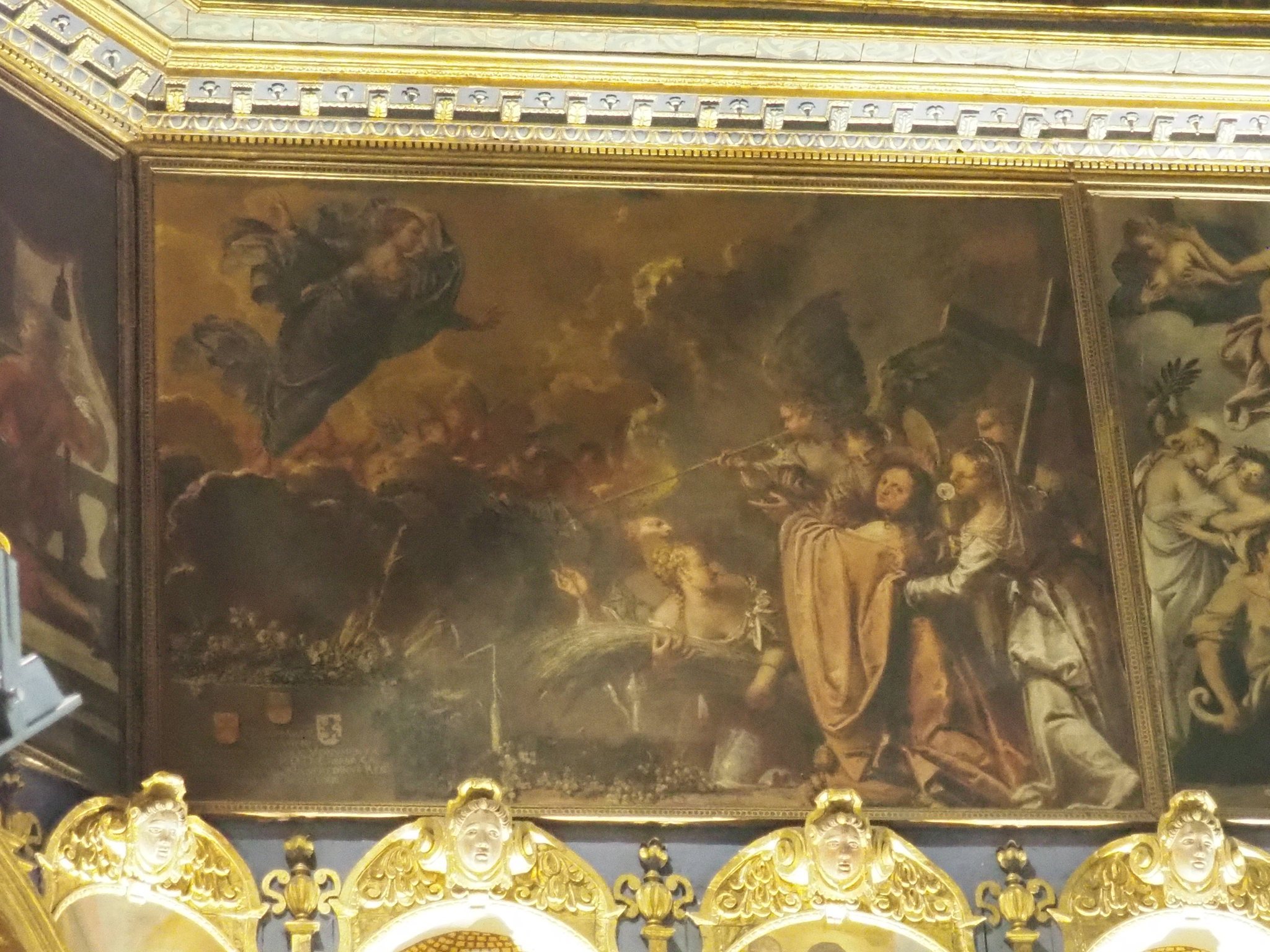
The large oil paintings use Baroque allegory, a system that represents cities, rivers, virtues, and institutions through human figures and symbolic objects. Their imagery includes personifications of Rovigo, the Adige, and the Po, together with the cardinal and theological virtues, coats of arms, and official clothing. The scenes connect the represented officials with their public service and civic reputation.
Giulio Cirielli painted the Glorification of Giovanni Battista Foscarini in 1678. It includes Foscarini, Rovigo shown in blue and red and crowned with white roses, the river Po as an old man pouring water from a large vessel, a personification of Ferrara, the Heliads, Faith, Wisdom, the Madonna and Child, and the Foscarini family arms.
The two health-magistrate canvases are the Glorification of Leonardo Donà delle Rose, now attributed to Giovanni Carboncino and probably painted around 1670, and the Glorification of the health magistrate Andrea Molin by Antonio Triva, painted in 1658. The first includes Saint Anthony of Padua, Justice, Charity, and Rovigo. The second includes the Madonna and Child, Saint Roch, and roses associated with Rovigo. Saint Roch’s presence reflects his traditional association with protection from plague and epidemics.
Statues and miracle paintings
The intermediate wall zone alternates twenty statues with twenty paintings in gilded wooden frames. The strong stucco statues are painted to resemble bronze and represent the Madonna, Christ, the Apostles, and Rovigo’s patron saints. Each stands on a pedestal bearing its name. They are attributed to Davide Arrieti, whose payment for work at the church is recorded in 1627.
Francesco Acellino carved the gilded frames, receiving payments for work at the church in 1640. Giovanni Battista Pellizzari painted the twenty rectangular pictures with lunette-shaped tops in 1639. They portray miracles traditionally associated with the Madonna of Succour, including the healing of Giovanni Paolino Buratino after a cart struck him, the recovery of Giovanni della Selva after a lightning strike, and the restoration of Ottaviano Contarini’s health after his wife made a vow.
Ceiling fresco
The original ceiling showed the Visitation of Mary to Elizabeth. After the later ceiling was damaged by the 1866 Austrian bombardments and collapsed, Vittorio Bressanin painted the present fresco in 1887. A Baroque frame imitating wood surrounds it, with two framed ovals containing the symbols of Faith and the Moon, associated with the Immaculate Conception.
The fresco shows the Madonna ending an epidemic in Rovigo. She appears above an aedicule while helping sick and dying people, including a man supported by a nun, a woman aided by an elderly man, and kneeling figures holding lit candles. The preparatory sketch survives in the Rotonda archives.