Güvercinada: A Historic Castle Island in Türkiye
Site at a Glance
- Rating
- 4.4
- Popularity
- Low
- Country
- Turkey
- Primary era
- Medieval
- Eras represented
- Medieval, Early Modern, Modern
- Civilizations
- Genoese, Ottoman
- Site type
- Military
- Remains
- Castle
On this page8 sections
History
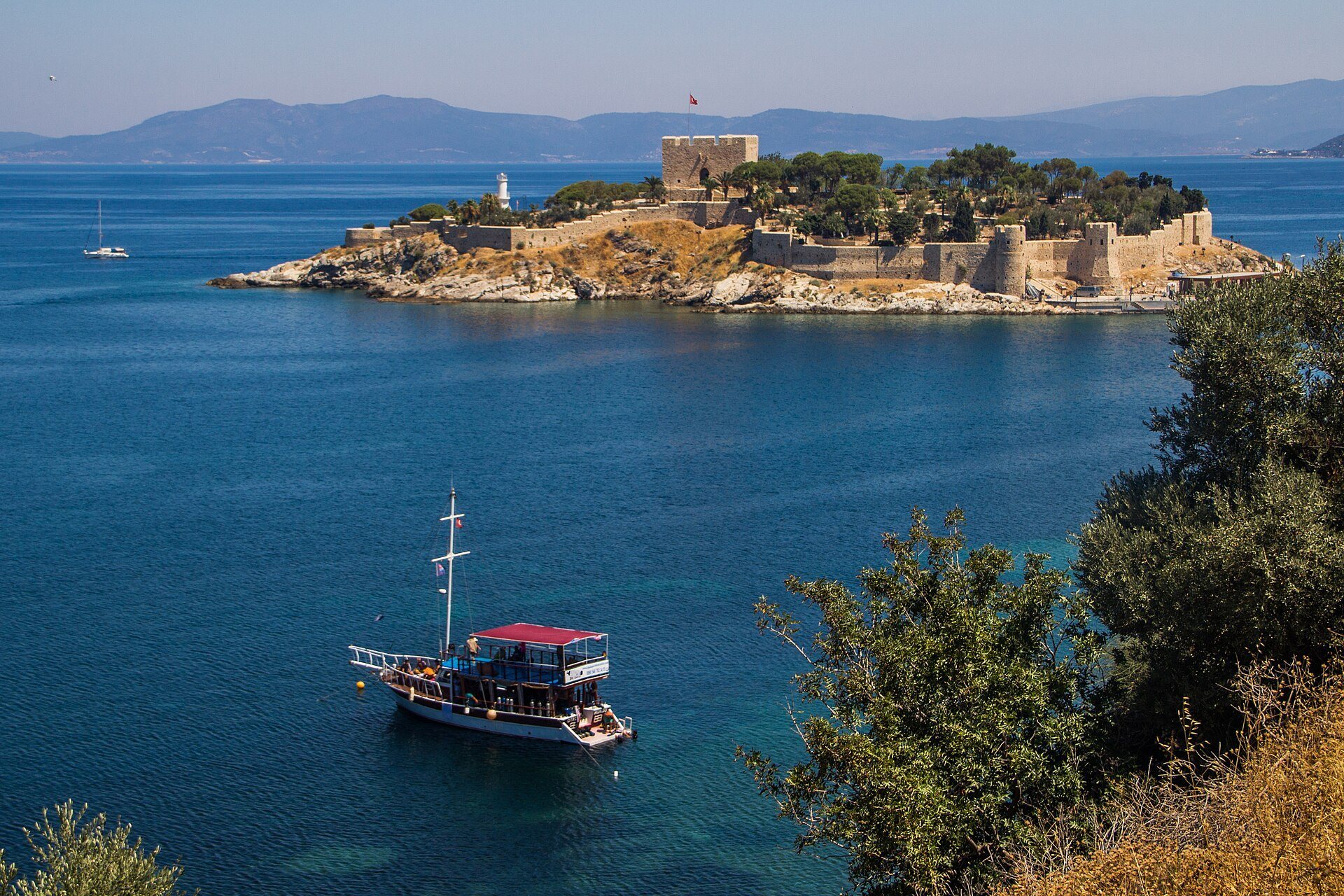
Güvercinada is a historic castle island in Türkiye, beside Kuşadası, whose fortifications reflect Genoese and Ottoman military activity from the late medieval period onward. The island is known as Pigeon Island because pigeons came there for shelter.
Genoese and Ottoman Foundations
Genoese settlers who reached Kuşadası in the late thirteenth or early fourteenth century are credited with building Güvercinada Castle. The citadel was later commissioned by Hayreddin Barbarossa, a prominent Ottoman admiral and naval commander, while its walls were constructed by İlyas Agha. In Ottoman usage, Agha was an honorific held by various military, administrative, and household officials.
Defensive Expansion and Modern Changes
The outer walls were built to protect the island from attacks arriving from nearby islands during the Greek Orlov Revolt of 1770, an uprising against Ottoman rule associated with Russian encouragement and intervention in the eastern Mediterranean. An inscription on the northern tower dates to 1826.
In 1957, a filled causeway connected Güvercinada to the mainland. The site was placed on Türkiye’s Tentative World Heritage List in 2020, a preliminary national list for places that may later be proposed for the UNESCO World Heritage List.
Remains
Island Setting and Causeway
Güvercinada lies in Kuşadası Bay and forms a natural cone with steep slopes on three sides. It extends approximately 245 metres from east to west, covers about 0.02 square kilometres, and rises to 8 metres above sea level. A man-made filled causeway links the island with the mainland. A designated protected area on Güvercinada preserves the endemic Kuşadası plant Centaurea mykalea, known locally as Aydın gaşağı. The plant has large, canary-yellow flowers, and its name derives from the ancient name of the Samson Mountains.
Castle Fortifications
Walls and Towers
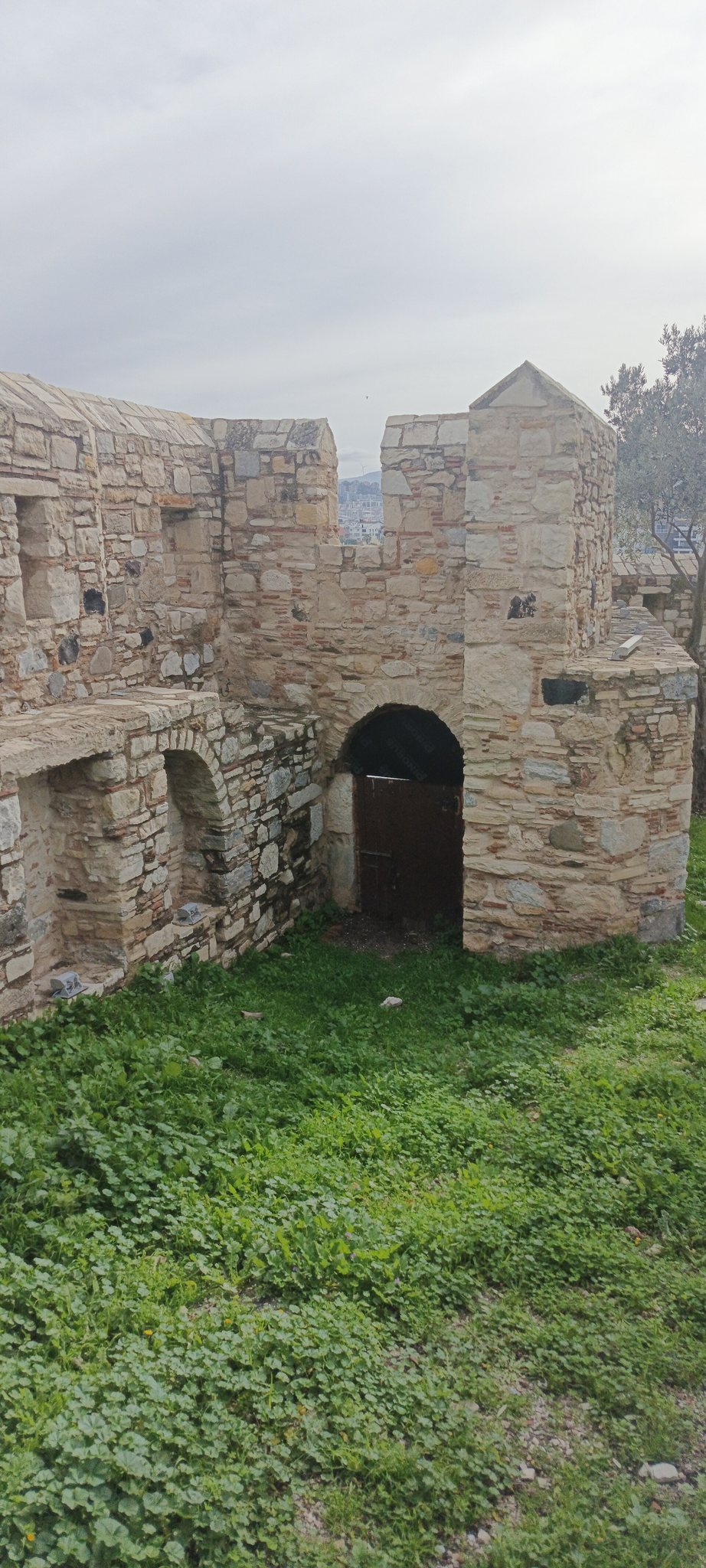
Güvercinada Castle’s stone walls are approximately 3 metres high and form a complete circuit around the island. The stone came from a quarry at Yılancıburnu. The entrance stands on the eastern side, in the southern part of the castle, and is flanked by two towers. The northern tower has a pentagonal plan, while the southern tower is cylindrical.
Gate and Inscriptions
An empty space remains above the castle gate where an inscription was formerly placed. The northern tower carries a four-line inscription dated 1826, providing a surviving date within the history of the fortifications.