Obelisco Agonale: A Roman Obelisk on the Fountain of the Four Rivers
Site at a Glance
- Rating
- 4.8
- Popularity
- Low
- Country
- Italy
- Primary era
- Classical
- Eras represented
- Classical, Early Modern
- Civilizations
- Papal States, Roman
- Site type
- Civic
- Remains
- Monument
On this page7 sections
History
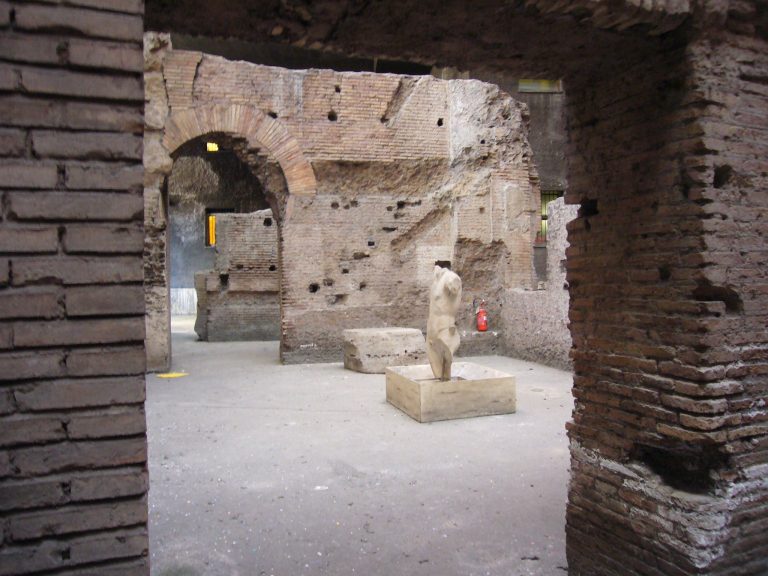
Obelisco Agonale is a Roman-period Egyptian obelisk in Rome, Italy, commissioned by Emperor Domitian during his reign from AD 81 to 96 and made from granite quarried at Aswan in Egypt. Its hieroglyphic inscriptions were created by Romans and praise Domitian, together with the deified emperors Vespasian and Titus, his father and elder brother. Today it crowns the Fountain of the Four Rivers at the centre of Piazza Navona, on the site of the ancient Stadium of Domitian.
Domitianic origins
The obelisk’s first setting remains uncertain. It was probably erected in the Campus Martius, an ancient district used for public, military, and religious purposes, between sanctuaries dedicated to Isis and Serapis. Another proposed location is Domitian’s Temple of the Flavian Family on the Quirinal Hill. One inscription at the base attributes its arrival in Rome from Egypt to Caracalla, but the obelisk was made for a Roman sanctuary under Domitian rather than transported as an ancient Egyptian monument.
Movement to the Circus of Maxentius
In the early fourth century, Emperor Maxentius moved the obelisk to the central barrier of the circus built along the Via Appia in honour of his son Romulus, who died in AD 309. Maxentius ruled from AD 306 to 312. The monument was later found at the circus broken into several pieces.
Reconstruction in Piazza Navona
In the late 1630s, Thomas Howard, 14th Earl of Arundel, tried to export the obelisk to England, but Pope Urban VIII stopped the plan. In the late 1640s, Pope Innocent X planned to bring water from the Aqua Virgo, an ancient aqueduct supplying Rome, to Piazza Navona, where the Pamphili family palace stood. He also ordered the square’s redesign around a fountain incorporating the fragments from the Circus of Maxentius.
Excavation and reconstruction were entrusted to the Jesuit scholar Athanasius Kircher under the direction of Luca Torreggiani, Archbishop of Ravenna. Innocent X inspected the work at the circus in 1648. The rebuilt obelisk was installed above the Fountain of the Four Rivers between 1649 and 1651, under Innocent X, in a project attributed to Gian Lorenzo Bernini. Kircher published Obeliscus Pamphilius in 1650, offering a reconstruction and interpretation of the fragmented inscriptions. His readings were inaccurate because Egyptian hieroglyphs had not yet been deciphered, and the monument consequently also became known as the Pamphilius Obelisk.
Remains
Obelisk form and inscriptions
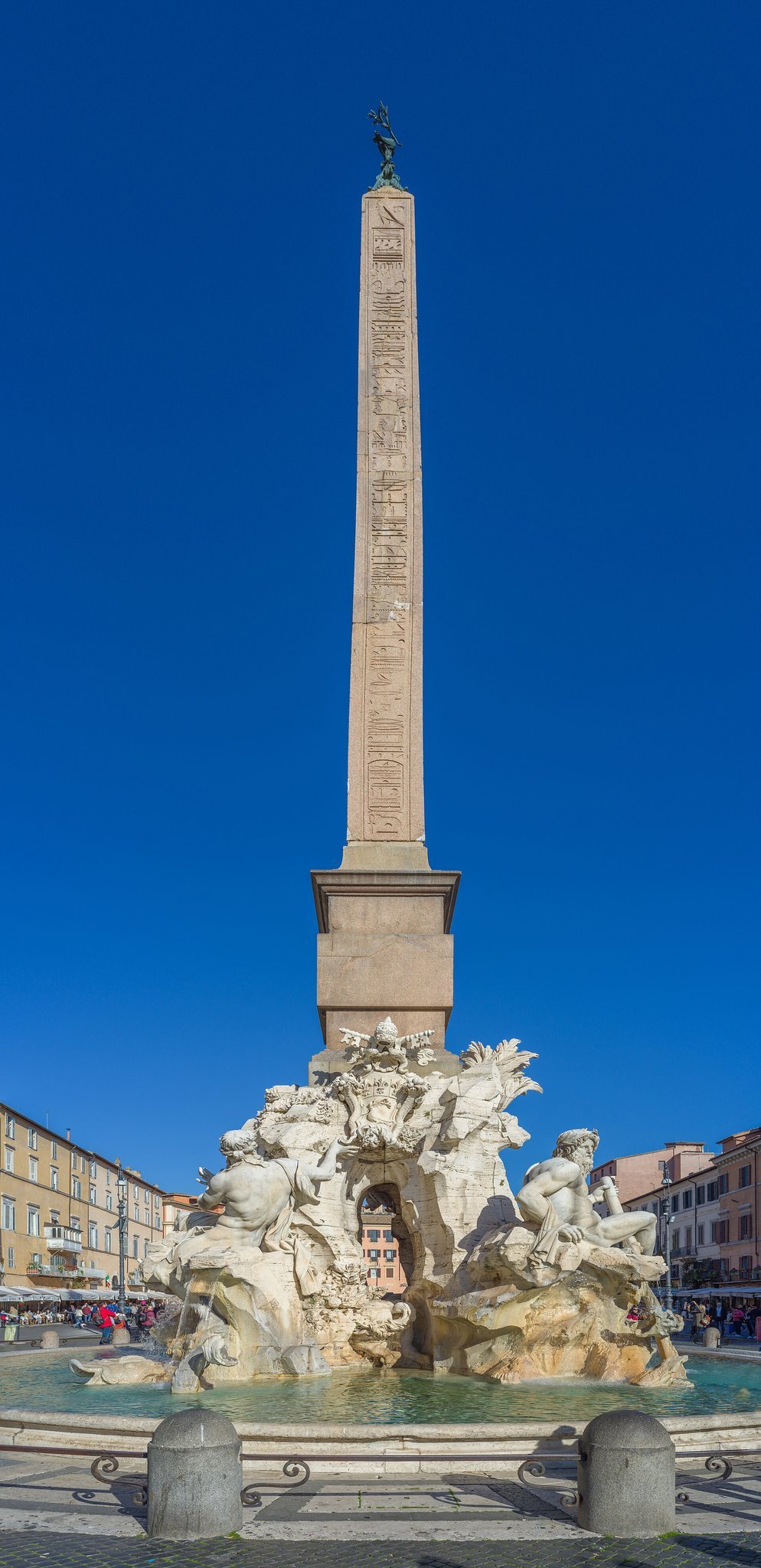
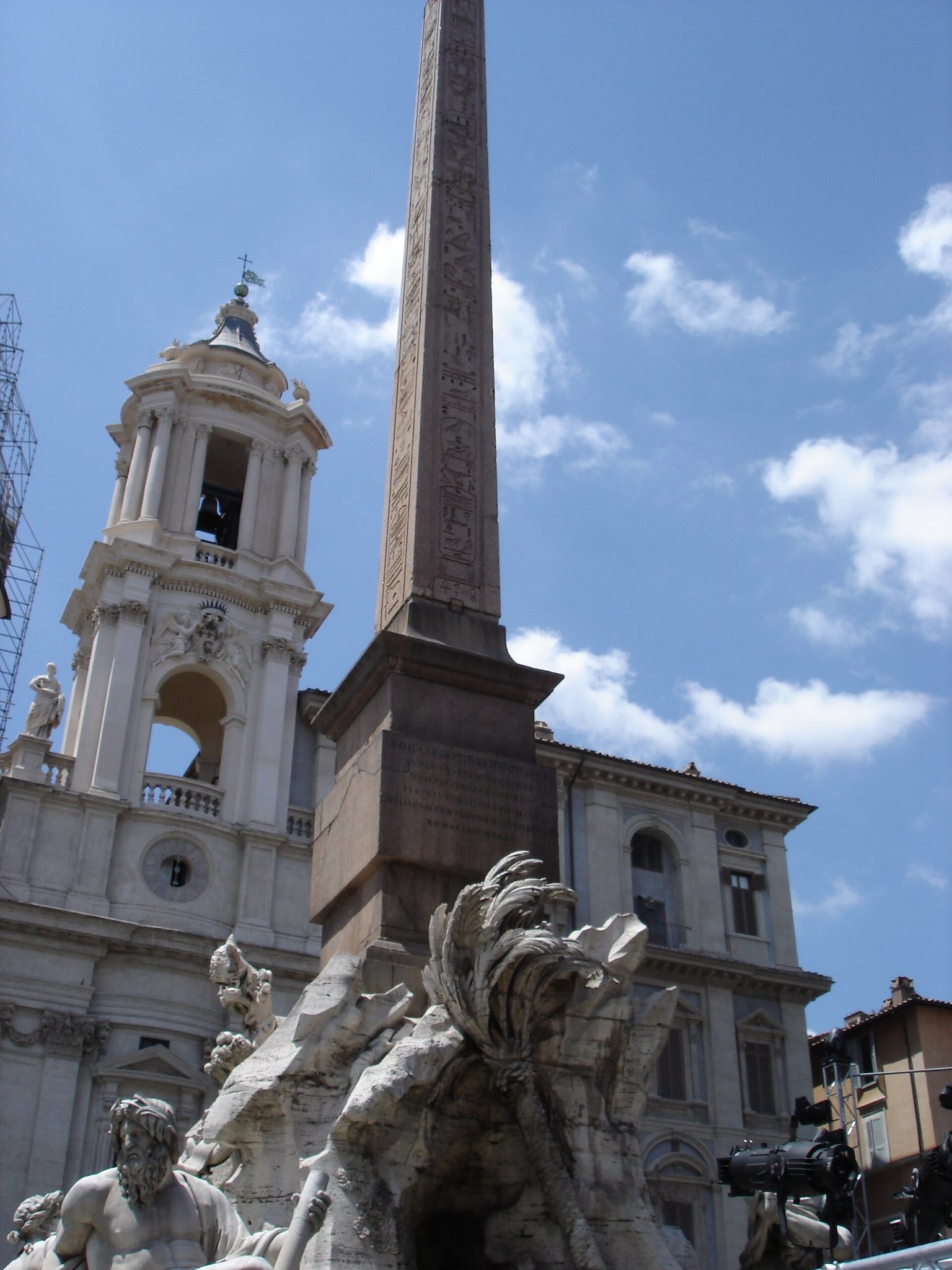
Obelisco Agonale is a four-sided obelisk shaped as a prism on a square base. Its stone shaft is approximately 16.53 to 16.55 metres high and consists of red Aswan, or Syene, granite. Hieroglyphic inscriptions run along all four faces. Four tablets at the base carry Latin translations prepared by Athanasius Kircher.
Fountain setting
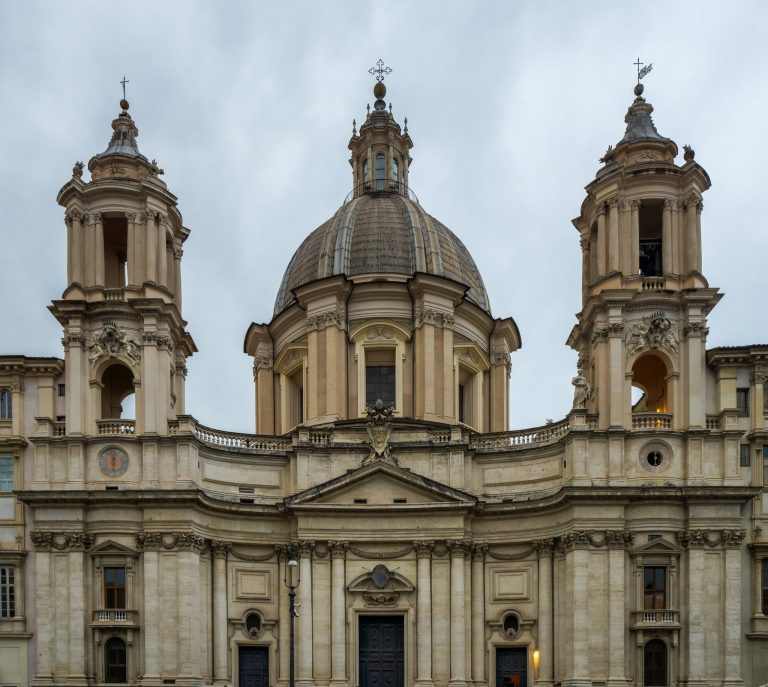
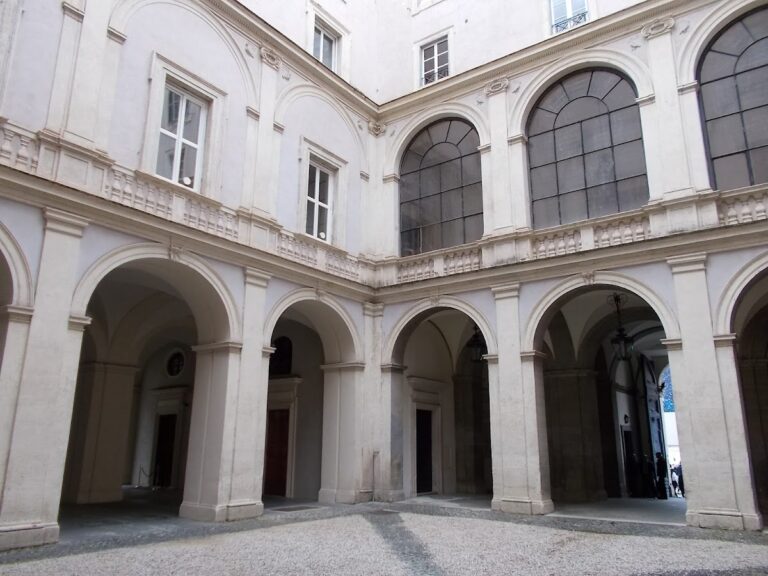
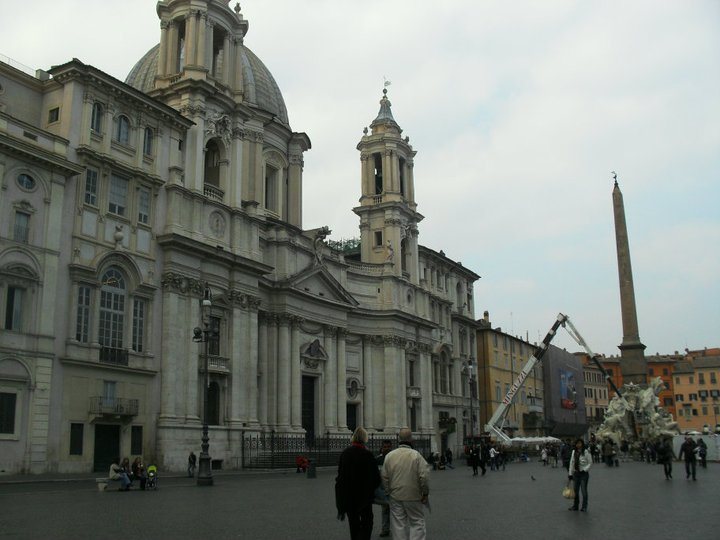
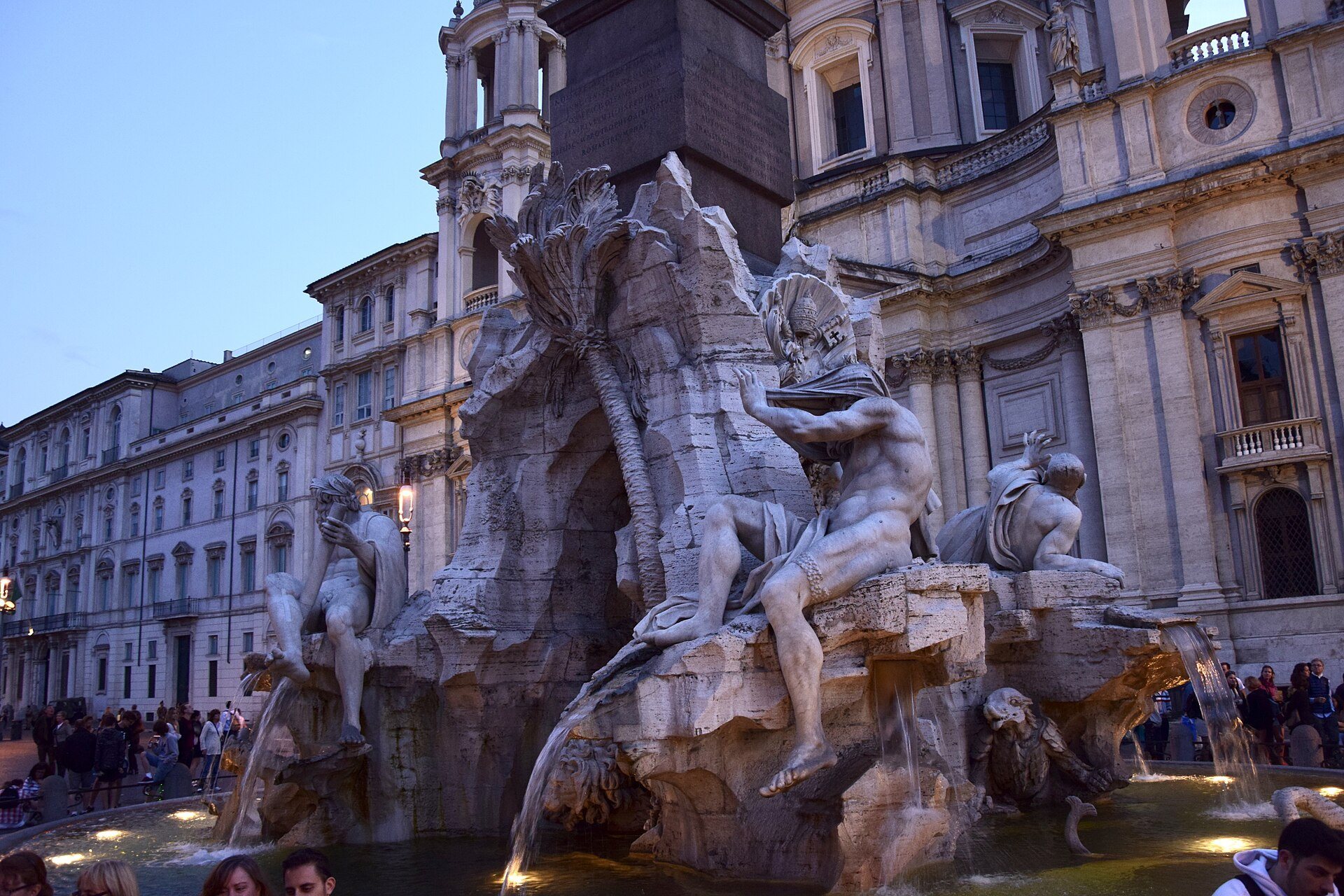
In its present arrangement, the obelisk rises about 30 metres above ground from the rocky sculptural base of the Fountain of the Four Rivers. Its summit carries a dove holding an olive branch, the emblem of the Pamphili family, rather than a cross. The Pamphili family palace stands beside the church of Sant’Agnese in Agone on Piazza Navona.