Krupa Monastery: A Serbian Orthodox Monastery in Croatia
Site at a Glance
- Rating
- 4.8
- Popularity
- Very Low
- Country
- Croatia
- Primary era
- Medieval
- External website
- Open
- Eras represented
- Medieval, Early Modern, Modern
- Civilizations
- Austrian Empire, Habsburg, Serbian
- Site type
- Religious
- Remains
- Monastery
On this page13 sections
History
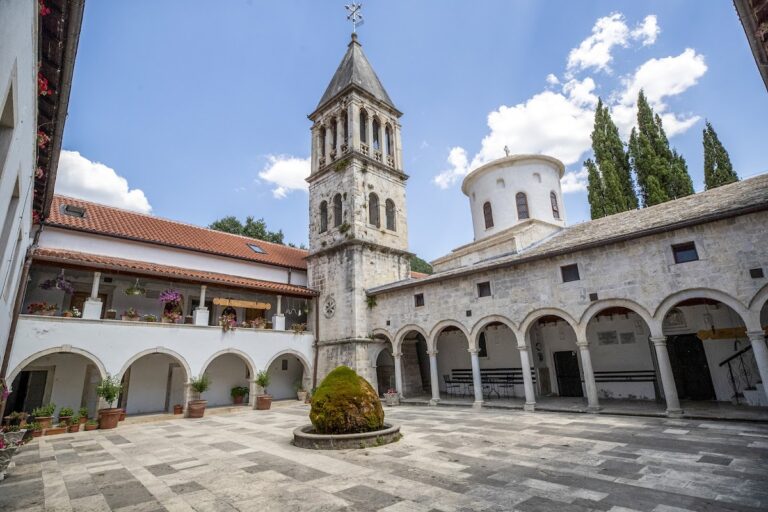
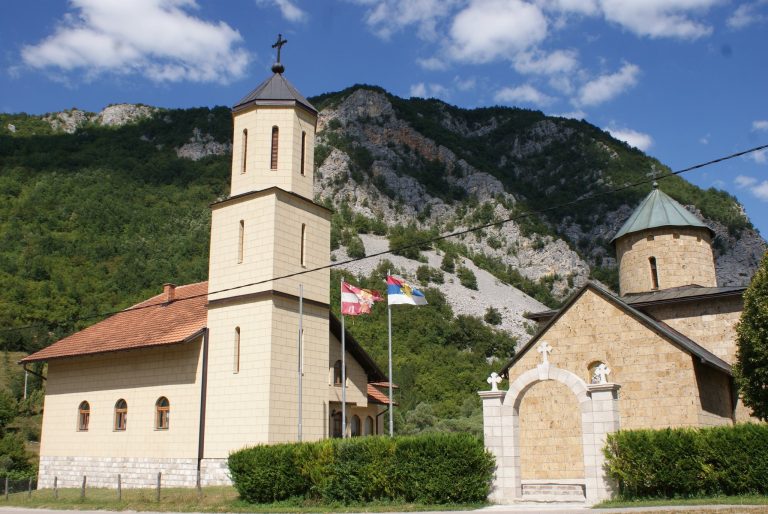
Krupa Monastery is a Serbian Orthodox monastery in Croatia, situated in northern Dalmatia beneath the Velebit Mountains beside the Krupa River. It is dedicated to the Dormition of the Theotokos, the Eastern Orthodox feast commemorating the death and bodily assumption of Mary, the mother of Jesus. Krupa is one of the three historic Serbian monasteries in Dalmatia, together with Krka and Dragović, and became an important spiritual center for Serbs in the region.
Foundation and medieval patronage
Tradition places the monastery’s foundation in 1317, during the reign of King Stefan Milutin of Serbia. According to this tradition, Milutin provided financial support and monks from Bosnia, or from the Krupa Monastery on the Vrbas, carried out the construction. A different interpretation connects the monastery with immigrating monks who may have built it around 1642, partly because of its Gothic-style windows. The precise construction date therefore remains uncertain.
The earliest recorded renovation took place in 1345 during the reign of Emperor Stefan Dušan. An inscription on the church vault preserves the memory of that work. King Milutin, his son Stefan Dečanski, and his grandson Stefan Dušan granted land to support the monastery, and Ottoman firmans later confirmed these holdings. Despotess Saint Angelina of Serbia also endowed Krupa, probably around 1494.
Ottoman rule and repeated rebuilding
After the Ottoman invasion of Serbian lands, Krupa developed an important religious role for Serbs in Dalmatia. The Branković despots paid substantial attention to the monastery. Krupa came under Ottoman rule in 1537, and from 1557 its administration was undertaken by the bishops of Dabro-Bosnia. An eparchy is a diocesan jurisdiction governed by a bishop.
The monastery suffered repeated destruction during the Venetian-Ottoman wars, particularly in 1502 and 1620, but was rebuilt after these setbacks. A major renovation followed in 1855, supported by Russia, Serbia, and Austria. The Austrian government required the monastery’s windows to be made in the Gothic style as a condition of its participation in the restoration.
Wartime destruction and restoration
The monastery and its surrounding buildings suffered severe damage in the twentieth century. In 1941, during the rule of the Ustaše, a Croatian fascist movement that governed the wartime Independent State of Croatia, the surrounding residential and service buildings were burned. The monastery interior was destroyed, and the complex was converted into a military post.
Further devastation came during the Croatian War of Independence. In Operation Storm, a major Croatian military offensive in August 1995, the monastery was damaged and looted. Local Orthodox Serbs and priests went into exile in Serbia, while the treasury had already been evacuated after the war began. Reconstruction began in part after 2000. Work included the additional church and the unfinished belfry, while some displaced artefacts returned in 2010. From the mid-2010s, the Croatian government contributed to renovation, and Bishop Fotije Sladojević of Dalmatia was associated with the restoration.
Religious and literary associations
Krupa’s history was recorded in eighteenth-century chronicles by Simeon Končarević, Bishop of Dalmatia. Gerasim Zelić, a Krupa archimandrite, traveller, and Serbian writer, gathered many of its liturgical books, vessels, and other valuables. An archimandrite is a senior monastic cleric. The Serbian writer and educator Dositej Obradović lived and worked at the monastery for a period, while Simo Matavulj stayed there for four years and was educated there.
The monastery’s principal feast is the Dormition of the Theotokos. A gathering held for the feast has historically attracted more than 6,000 people, reinforcing Krupa’s role as a religious center for the Serbian Orthodox population of Dalmatia.
Remains
The church and its artistic works
Church of the Dormition
The monastery church is dedicated to the Dormition of the Theotokos. Its vault carries the inscription referring to the renovation of 1345. The church contains frescoes painted between 1620 and 1622 by Georgije Mitrofanović, a Serbian Orthodox monk and painter associated with Hilandar. These paintings were discovered during the 1960s, and the interior also preserves frescoes by other Serbian masters of the seventeenth century.
Iconostasis and icons
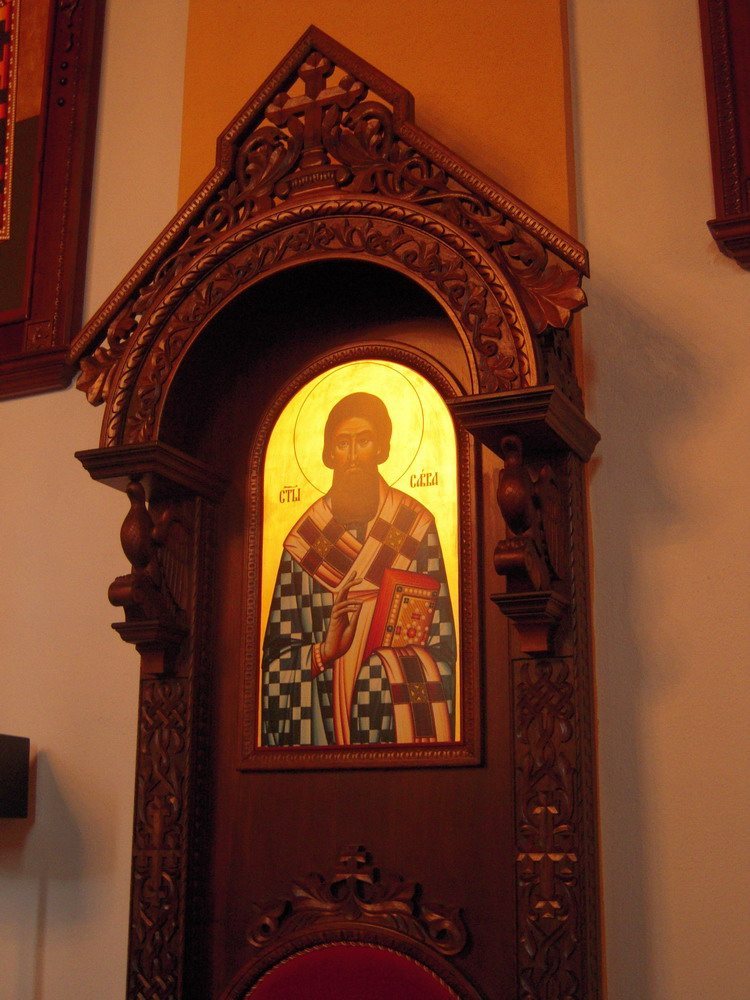
Around 1600, the Cretan painter and priest Ioannis Apakas produced four throne icons for the iconostasis, the image-bearing screen separating the sanctuary from the main body of an Orthodox church. The monastery also preserves icons associated with the Italo-Cretan school and attributed to Apakas, together with parts of an iconostasis.
Monastery buildings
Gothic-style windows
The church’s Gothic-style windows belong to the 1855 renovation. Their form resulted from the Austrian government’s condition for taking part in the restoration, giving the building a visible feature connected with the nineteenth-century rebuilding campaign.
Konaks and belfry
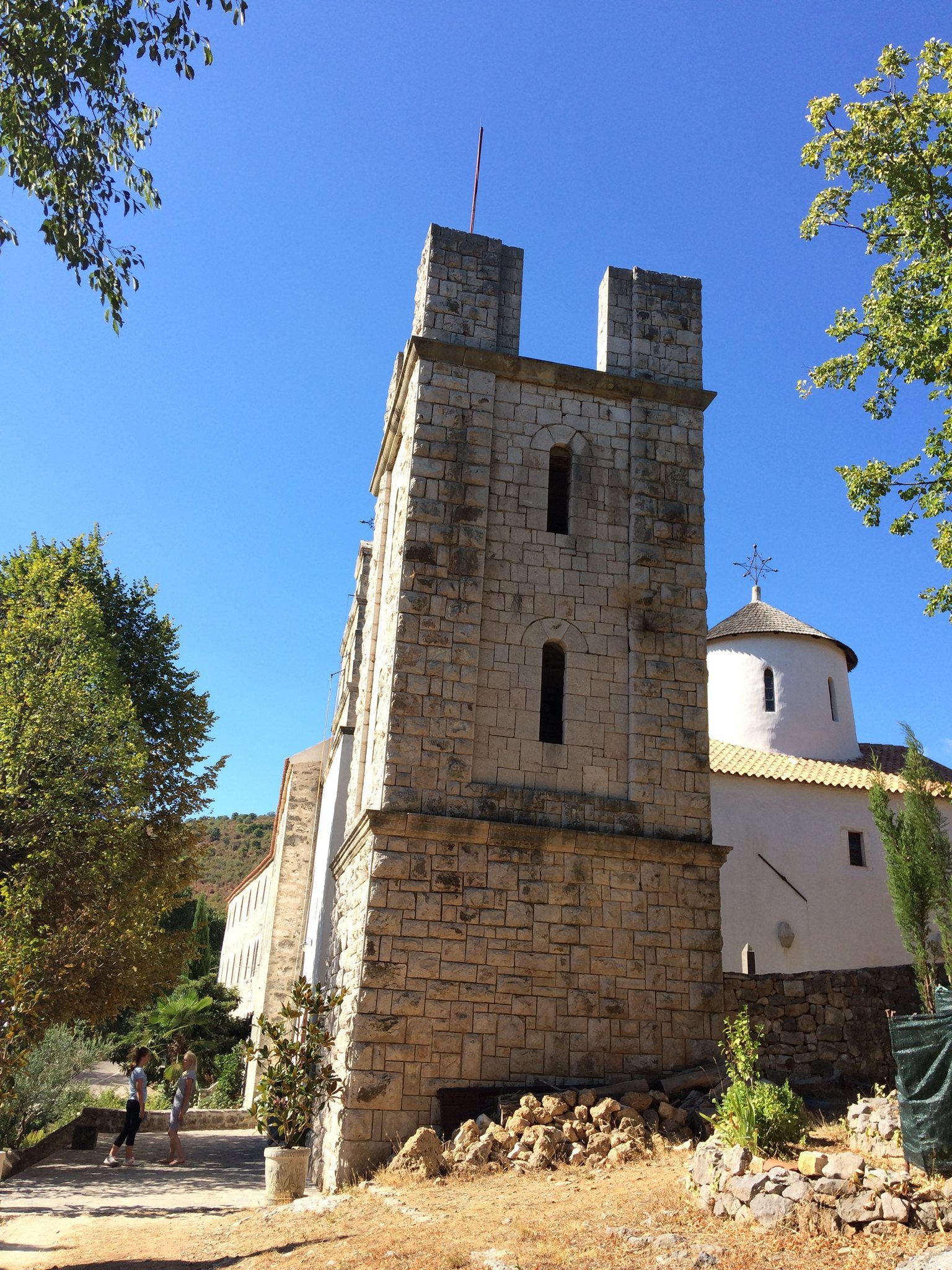
The monastery complex included surrounding konaks, residential or service buildings associated with a monastery. These buildings were destroyed by fire during the Second World War. A large belfry begun in the 1950s remained unfinished and was damaged during the war of the 1990s, as were its bells. After 2000, part of the unfinished belfry was adapted, and a small additional church, or paraklis, was built and painted. The monastery chapel was also damaged during Operation Storm in 1995.
Treasury and archive
The treasury preserves a fragment of the relics of Saint Hierotheus and a reliquary brought from Rmanj Monastery during the Bosnian uprising of 1875. It also contains three antimins, consecrated cloths bearing religious imagery and usually containing a relic for use on an Orthodox altar. One is associated with Patriarch Theodosius of Jerusalem, another with Patriarch Arsenije IV Šakabenta and dated 1743, and the third is a Krupa antimins dated 1739.
Religious and cultural materials in the treasury and archive include numerous liturgical books and vessels, a collection of icons, and books several centuries old. The archive holds 22 Ottoman firmans, official documents issued by Ottoman rulers, including one from Sultan Mustafa II concerning the protection of Krka Monastery. The interior was looted and partly demolished during Operation Storm, but some displaced artefacts were returned in 2010.