Corner Tower in Gdańsk: A Medieval Gothic Defensive Tower
Site at a Glance
- Rating
- 4.8
- Popularity
- Very Low
- Country
- Poland
- Primary era
- Medieval
- External website
- Open
- Eras represented
- Medieval, Modern
- Civilizations
- Crusader, Teutonic Order
- Site type
- Military
- Remains
- Tower
On this page6 sections
History
Corner Tower in Gdańsk is a Gothic brick defensive tower in Poland, built in 1343 as the first tower of the medieval fortifications surrounding the Rechtstadt, the principal historic urban district of the city. Its construction followed permission granted by Ludolf König, Grand Master of the Teutonic Order, a Catholic military-religious order that controlled substantial territory in the eastern Baltic during the medieval period. The cornerstone was laid on 26 March 1343, and the tower’s medieval development continued through the fourteenth century.
Medieval fortifications
By the middle of the fourteenth century, a wall approximately 2,300 metres long enclosed the Rechtstadt on its southern, western, and northern sides. The defensive circuit included numerous towers and gates, with Corner Tower protecting the south-western corner. The fortifications were repeatedly strengthened and altered as the city’s defensive needs changed.
The tower reached its final medieval form in the second half of the fifteenth century. At that time, a fourth city wall was built and closed the structure on the city side, while a smaller tower was added to reinforce the defences. After the construction of the Gdańsk fortress, the older fortifications lost their military function and the additional small tower was demolished. Following the destruction of the Gdańsk Teutonic castle in 1454, Corner Tower became the oldest surviving defensive tower in the city.
Later use and restoration
In 1856–1857, Corner Tower and the adjoining Stadthof, a historic urban complex associated with the tower and nearby fortifications, were converted into the headquarters of the fire brigade. During the Second World War, the roof and city-side wall were destroyed in 1945, and the interior burned out. Stabilisation measures followed, but the eastern section of the wall collapsed during a storm on 5 June 1960.
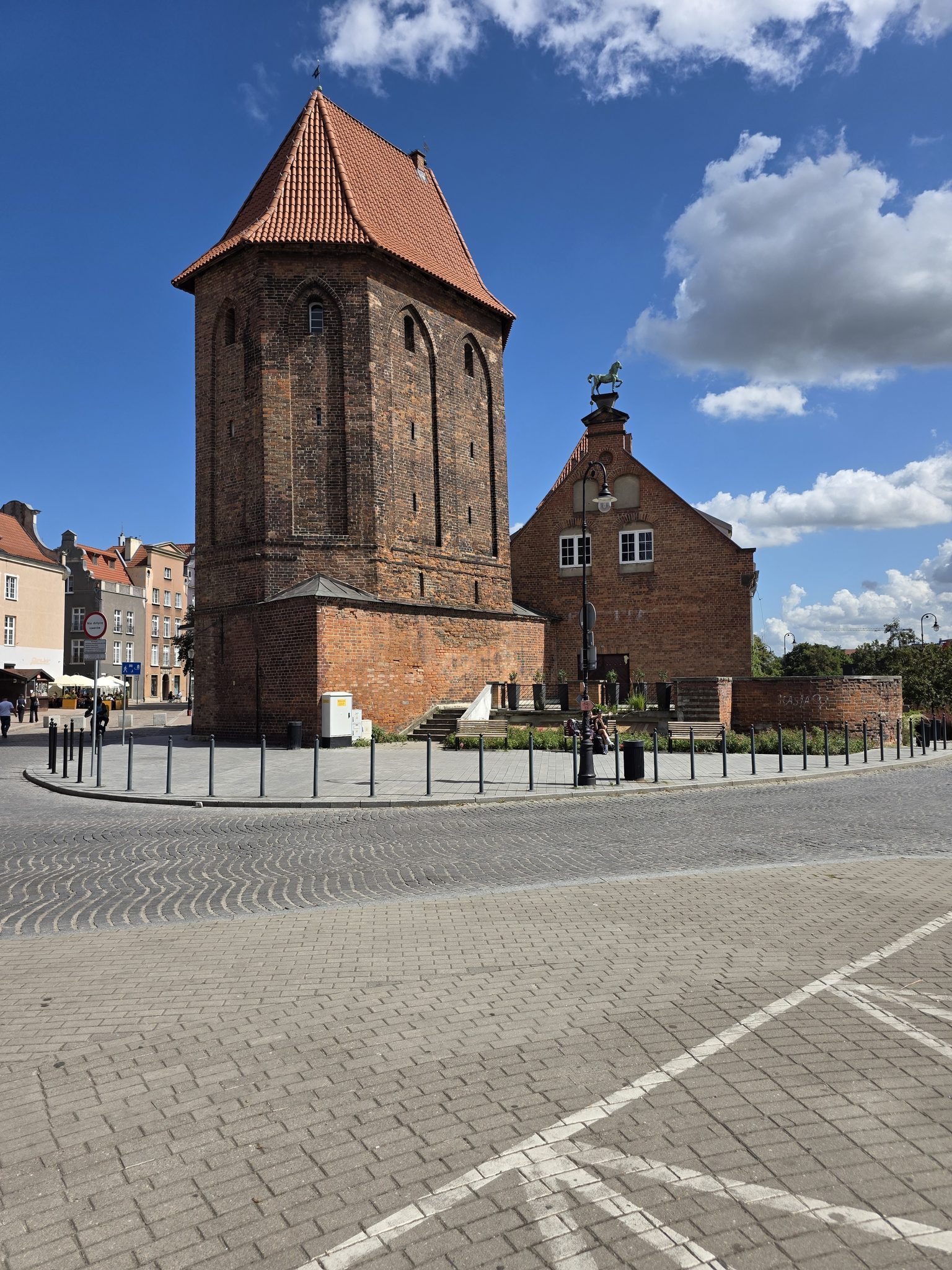
The tower was restored in the early 1960s as an extension of the neighbouring Scout House and is now used by scouts. It was entered in the monument register of the former Gdańsk Voivodeship, now the Pomeranian Voivodeship, under entries dated 18 December 1959 and 7 November 1967.
Remains
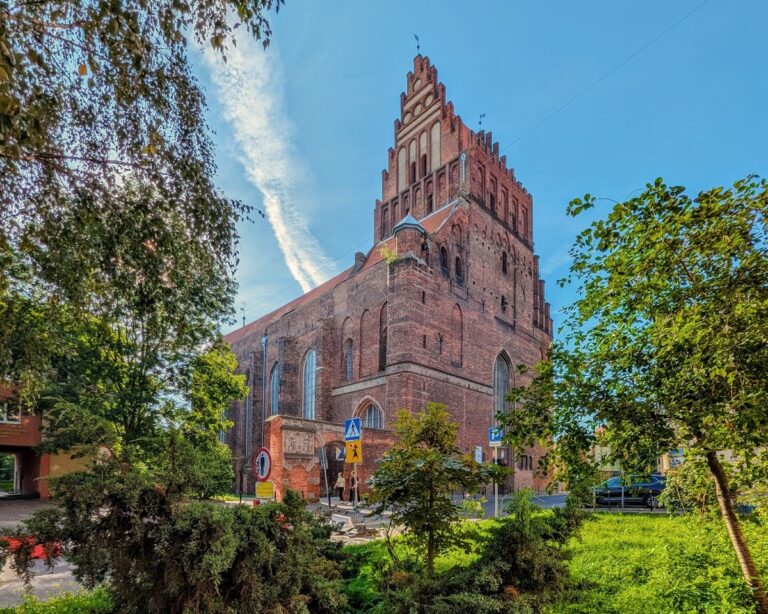
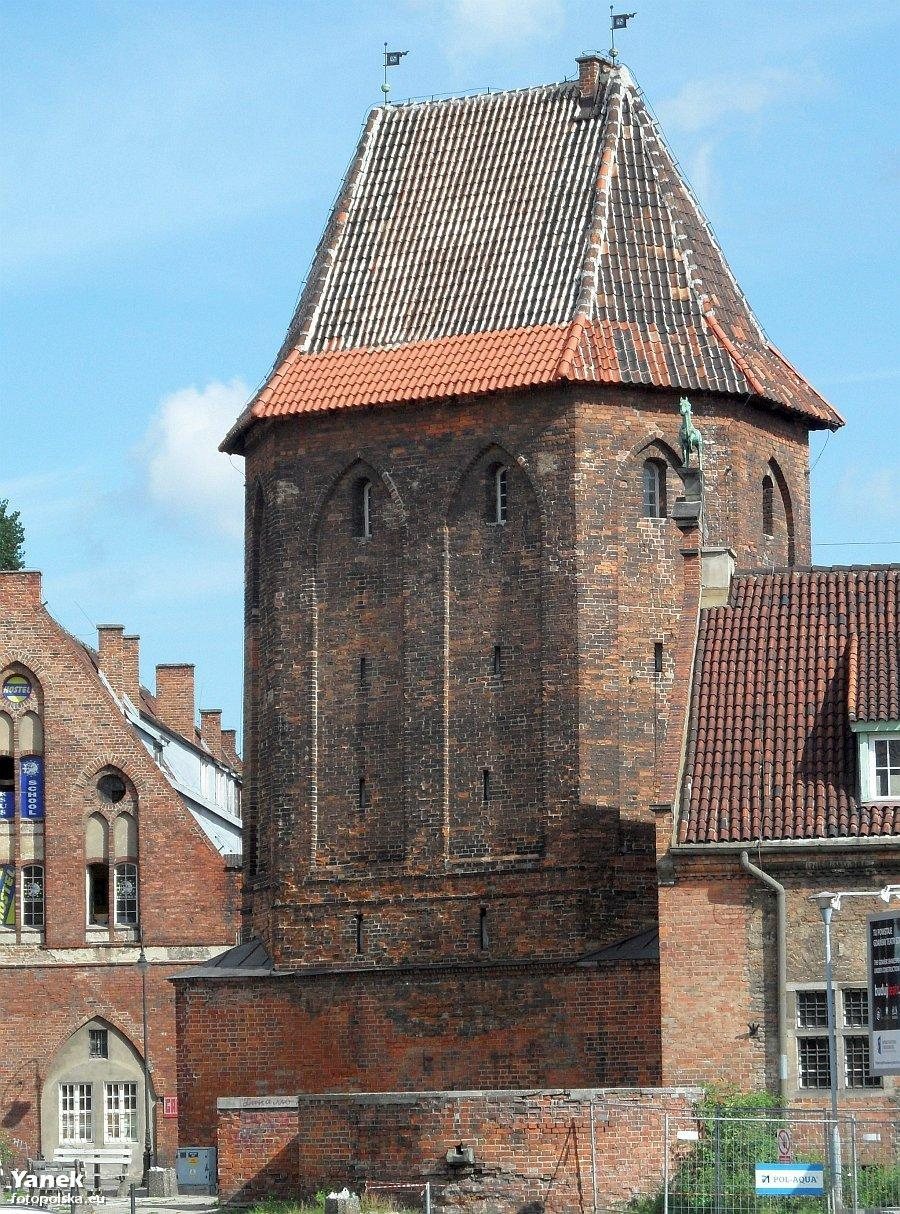
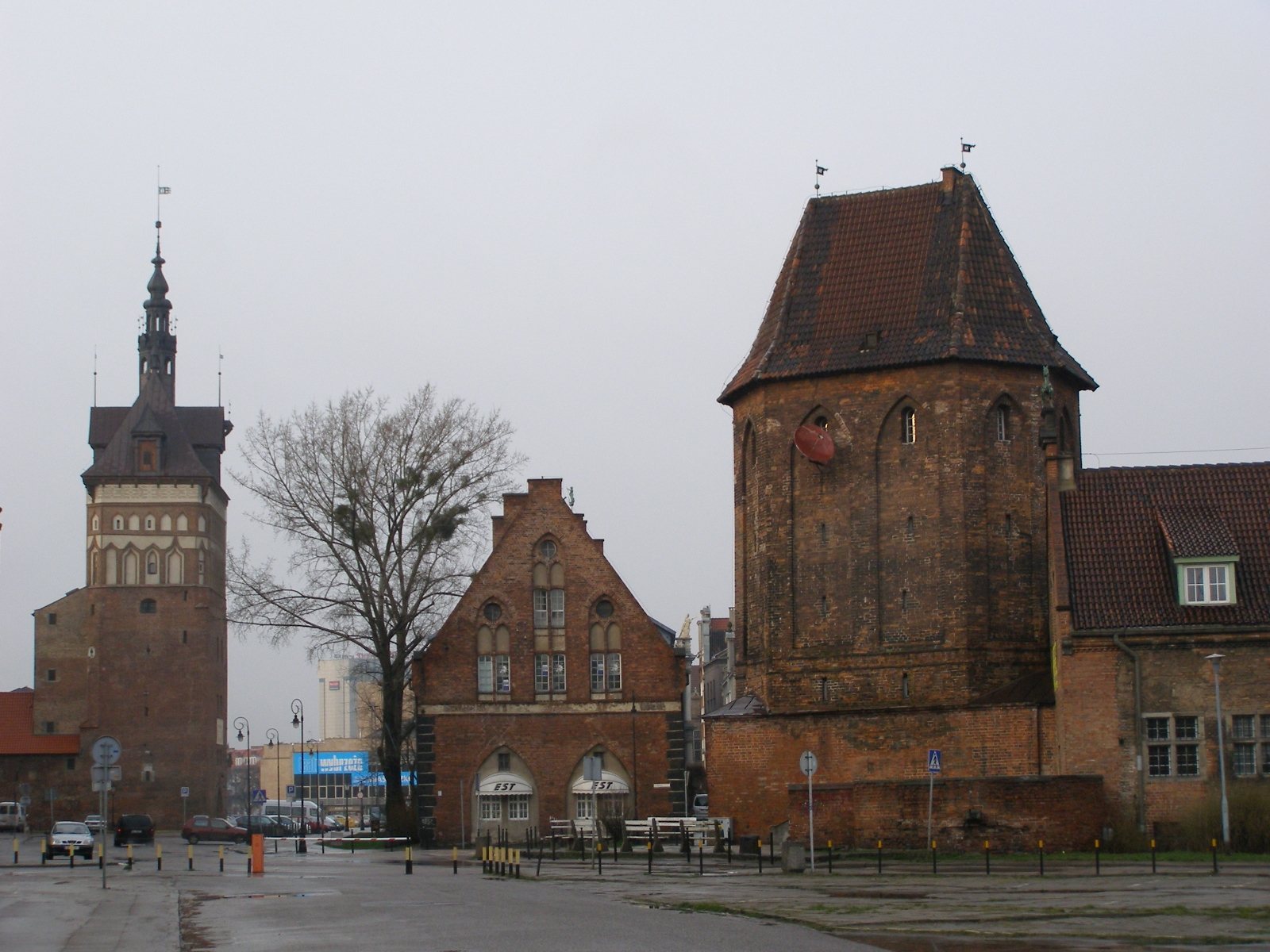
Corner Tower is a five-storey Gothic brick structure, approximately 15 metres high. Its upper section is hexagonal and rises from a rectangular base measuring about 6 by 12 metres. The walls are between 1 and 1.5 metres thick. The tower was originally open toward the city, while its present city-side closure has the plain architectural character of the 1960s restoration.
Corner Tower
The upper storeys have obliquely cut corners. Their decoration includes shallow pointed-arch recesses with openings for firearms. Plastered shields were formerly installed within these arches, a feature not documented for the city’s other towers. A steep hipped or multi-pitched roof covers the structure, and a small shop is attached to its base on the city side.
Stadthof fortifications
The neighbouring Stadthof fortifications included Schultz Tower and Brewery Tower. Their foundations and other remains were exposed after the Second World War. Both towers were reconstructed from the ground up on their historic foundations using historical images, and the reconstructed Schultz Tower is used as a scout hostel.