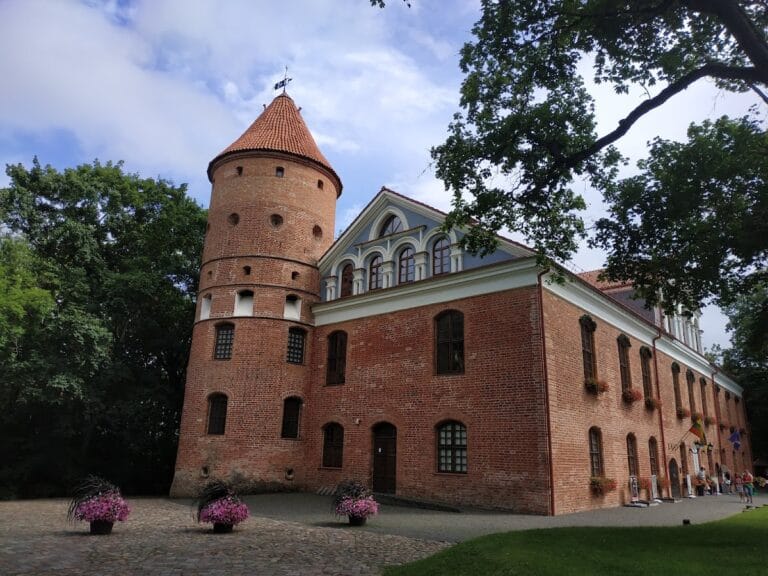
Veliuona Hillforts: A Medieval Fortress Complex in Lithuania
Site at a Glance
- Rating
- 4.8
- Popularity
- Very Low
- Country
- Lithuania
- Primary era
- Medieval
- Eras represented
- Medieval
- Civilizations
- Grand Duchy of Lithuania
- Site type
- Military
- Remains
- Castle
On this page13 sections
History
The Veliuona Hillforts are an archaeological and historical monument complex in Veliuona, Lithuania, established in the medieval period as a fortified centre beside the Nemunas Valley. The complex includes Veliuona I Hillfort, traditionally known as Gediminas’s Grave, its adjoining fortified area called Castle Hill or Tranquility Hill, Veliuona II Hillfort farther west, and the earlier Antkalnė Hillfort to the north. A castle at the site became a repeated target of the Teutonic Order, a German military-religious order that conducted crusading warfare in the Baltic region.
The castle of Junigėda
The castle of Junigėda was built in April 1291 and was renamed Veliuona after 1319. The Teutonic Order attacked it while construction was still under way. Further assaults followed in June 1292, during the winter and in late July 1293, in 1313, in autumn 1314, in 1317, in autumn 1318, in April 1319, and during the winter of 1339. Several of these attacks burned the castle’s outer baileys, fortified areas adjoining and supporting the principal castle.
Veliuona I is traditionally regarded as the place where Grand Duke Gediminas died near Veliuona. Archaeological investigations indicate that a wooden castle stood on this hillfort. The site remained part of the conflict between Lithuania and the Teutonic Order, whose attacks repeatedly damaged its defences.
Destruction and rebuilding
After a four-day siege in August 1348, the Teutonic Order captured and burned the castle. The Lithuanians rebuilt it in 1349, and attacks in 1357 and 1360 failed. In April 1363, Grand Master Winrich surrounded Veliuona after ravaging the castles of New Kaunas and Pieštvė. He established fortified positions beside it and captured the castle on the fourth day with the aid of a siege engine, a machine used to attack fortified structures. The castle was burned and its rampart, an earthwork defensive embankment, was levelled.
The castle was rebuilt once more, but on 8 August 1367 its defenders withdrew and burned it themselves as the grand master and his army approached. A third rebuilding took place in summer 1411, when a garrison of 400 men was left in the castle. This later castle is thought to have stood on the site of the earlier outer bailey, now called Tranquility Hill.
Diplomacy at Veliuona
After its rebuilding, Veliuona became an important meeting place for Grand Duke Vytautas, King Jogaila of Poland, and representatives of the Teutonic Order. Vytautas was a grand duke of Lithuania, while Jogaila was a Lithuanian ruler who also became king of Poland. Their meetings took place from 15 to 17 October 1416, from 13 to 22 October 1418, and from 8 to 11 September 1420.
During another meeting from 8 to 18 May 1423, the parties ratified the Treaty of Melno, the 1422 agreement that settled territorial arrangements between Lithuania, Poland, and the Teutonic Order. The treaty’s western Lithuanian border remained in place until the twentieth century. A monument to Grand Duke Gediminas was later erected beside the hillfort.
Remains
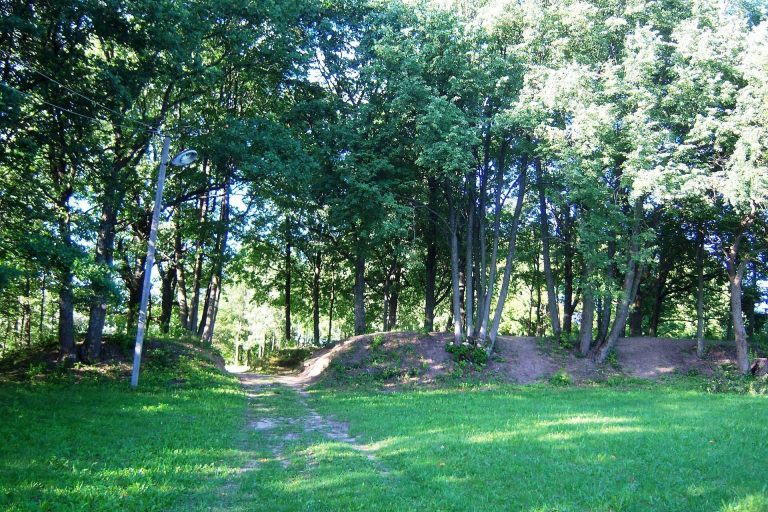
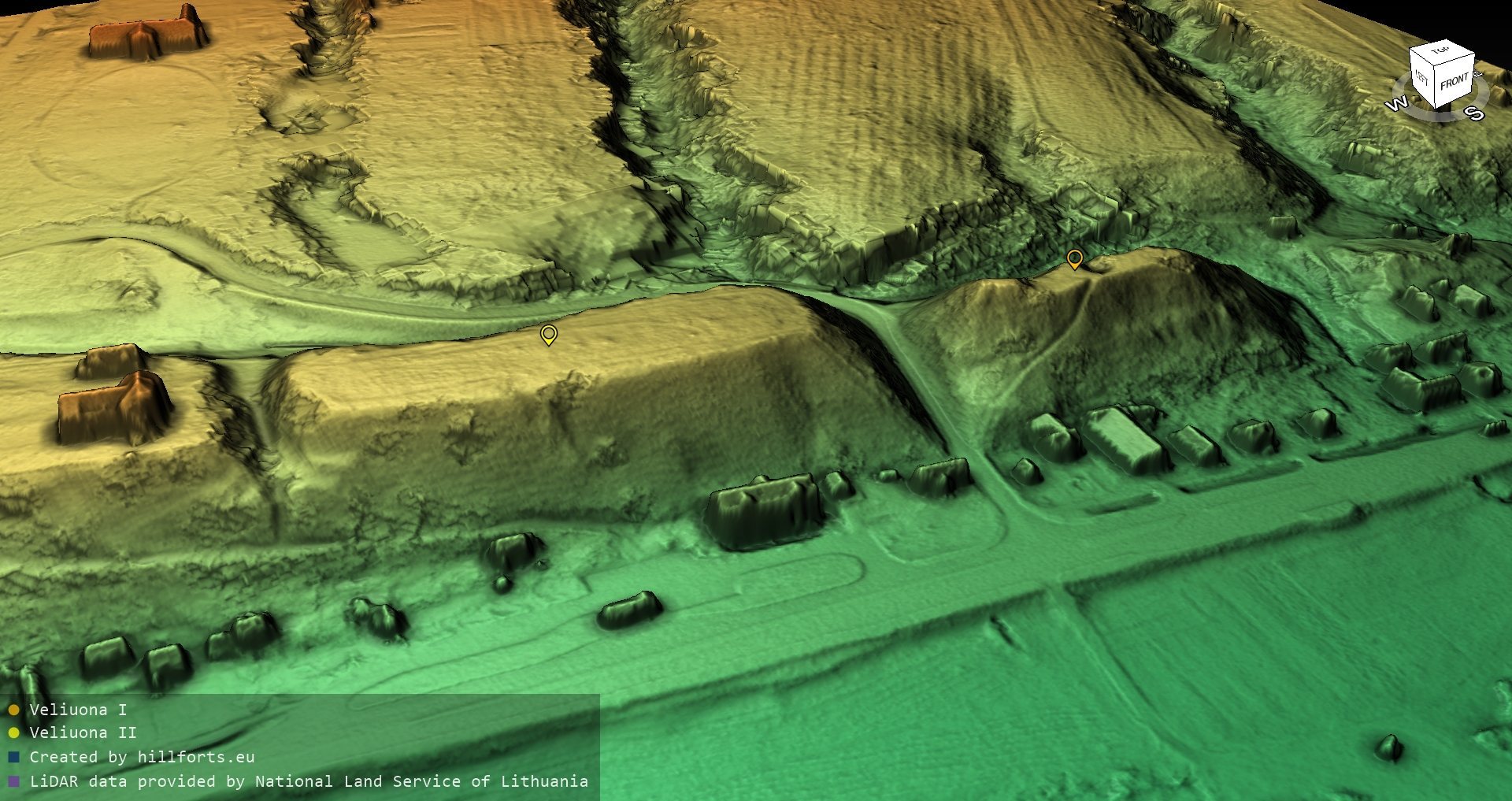
The complex occupies the slope of the Nemunas Valley and consists of several hillforts, elevated platforms, ditches, slopes, and associated fortified areas. The principal features are concentrated around Veliuona I and Castle Hill, while Veliuona II lies approximately 2.7 kilometres to the west and Antkalnė Hillfort lies to the north.
The principal hillforts
Gediminas’s Grave
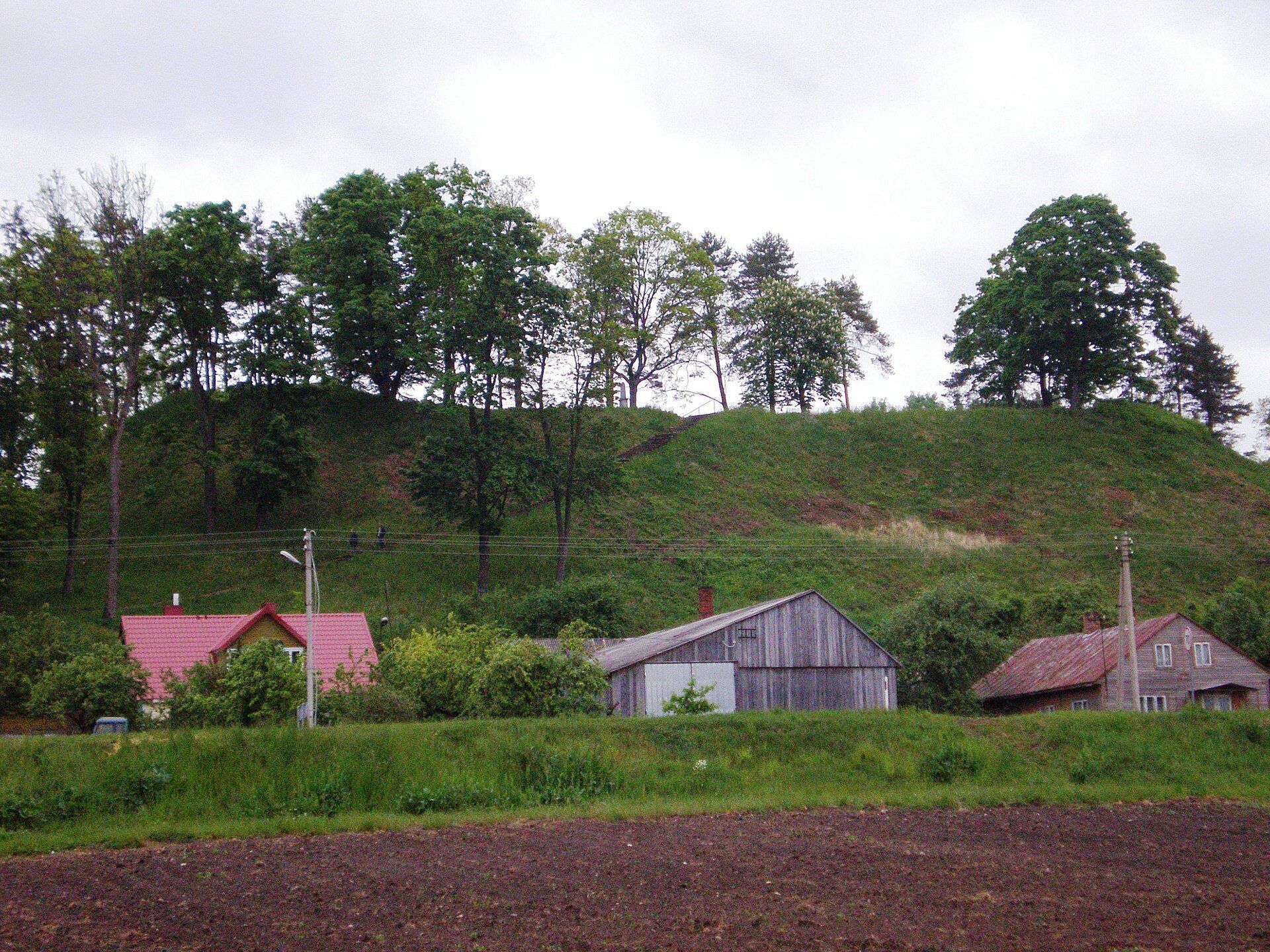
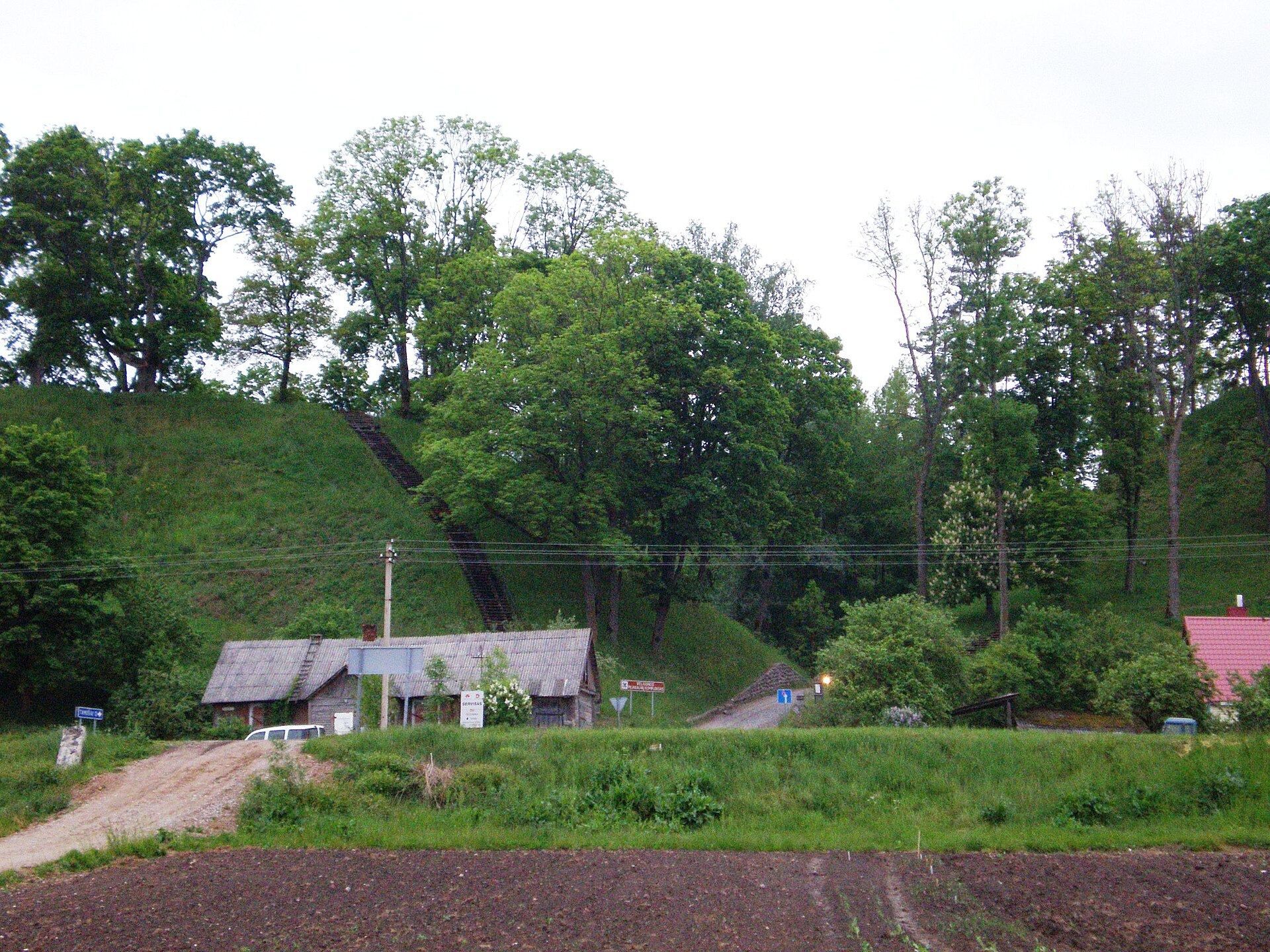
Veliuona I Hillfort, traditionally called Gediminas’s Grave, is associated with the wooden castle that stood at the centre of the medieval conflicts. Its historical identity is also linked to the local tradition that Grand Duke Gediminas died near Veliuona. The hillfort forms one part of the main fortified complex and is separated from Castle Hill by a deep ditch.
Castle Hill or Tranquility Hill
Castle Hill, also called Tranquility Hill, is divided from Gediminas’s Grave by a ditch approximately 17 metres deep. Its steep slope descends about 30 metres toward the Nemunas Valley. The eastern side faces the ditch, while the northern side faces the valley of the Veliuona stream. A broad ditch approximately 4 metres deep separates the hill from the upland to the west.
The summit contains a large platform about 80 metres long and approximately 40 metres wide at its eastern end. Masonry wall foundations were reportedly visible along the northern edge and formerly at the western and eastern ends. Planting an orchard in the early twentieth century disturbed the platform. Archaeological evidence indicates that it may have been the outer bailey of the first hillfort or the location of the masonry castle rebuilt in 1412.
The western upland
The upland extending west and northwest beside the castle is thought to have contained another fortified outer bailey. A church was later built there, and the town developed around it. This area forms part of the wider historical setting of the main hillforts and connects the fortified centre with the later settlement.
Associated hillforts and commemorative features
Pilaitės
Pilaitės, or Veliuona II Hillfort, lies approximately 2.7 kilometres west of Veliuona I. Archaeologists believe that the Teutonic Order erected a two-building castle there in 1337 to blockade Veliuona castle. Archaeological evidence indicates that the Lithuanians soon attacked and burned it.
Antkalnė Hillfort
Antkalnė Hillfort, also known as Giant’s Grave, Naujokai, or Gystėnai Hillfort, lies north of the main complex. It is identified as an earlier hillfort dating from the beginning of the second millennium, placing it before the medieval castle sequence centred on Veliuona I and Castle Hill.
Monument to Gediminas
A monument to Grand Duke Gediminas stands beside the hillfort traditionally called Gediminas’s Grave. It is a commemorative feature associated with the tradition connecting the hillfort with Gediminas’s death near Veliuona.