Veliuonos II Hillfort: A Fourteenth-Century Fortification in Lithuania
Site at a Glance
- Popularity
- Very Low
- Country
- Lithuania
- Primary era
- Medieval
- Eras represented
- Medieval
- Civilizations
- Crusader, Teutonic Order
- Site type
- Military
- Remains
- Castle
On this page11 sections
History
Fourteenth-century stronghold
Veliuonos II Hillfort lies in Veliuona, Lithuania, and dates to the fourteenth century. In 1337, the Teutonic Knights, a medieval Catholic military order active in the Baltic region, built an unnamed castle of two buildings here to obstruct Veliuona Castle. Lithuanians attacked and burned the stronghold soon afterward.
Archaeological investigation
In 1965, Lithuanian archaeologist Adolfas Tautavičius excavated the summit areas and cut two cross-sections through a ditch. The investigation covered 370 square metres.
Remains
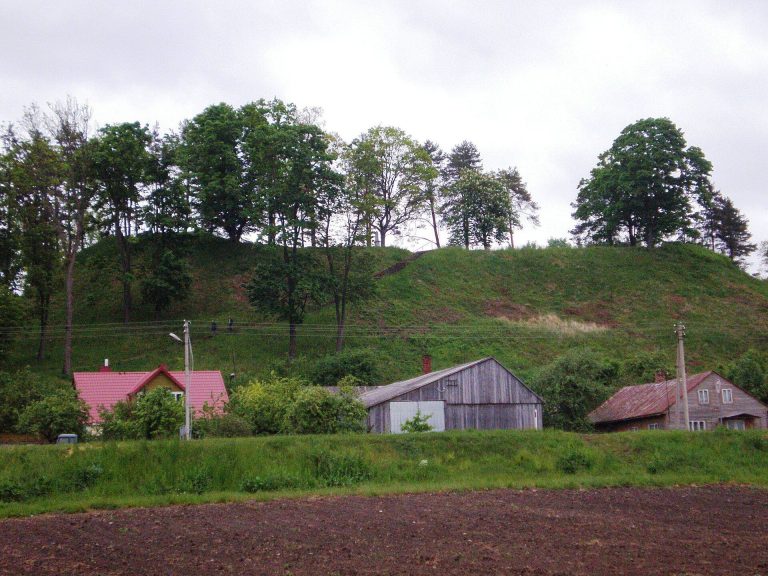
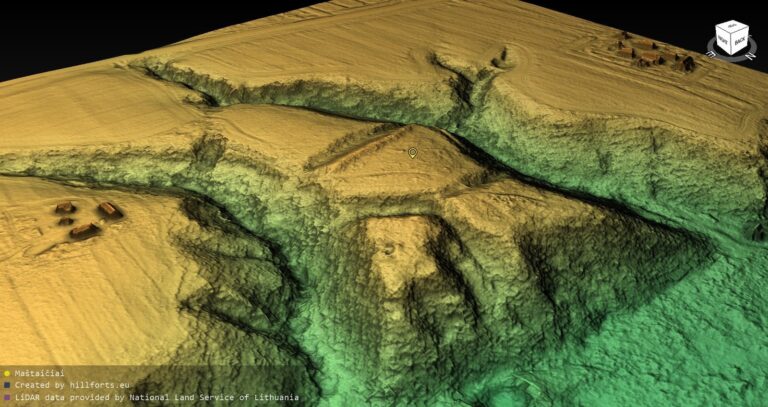
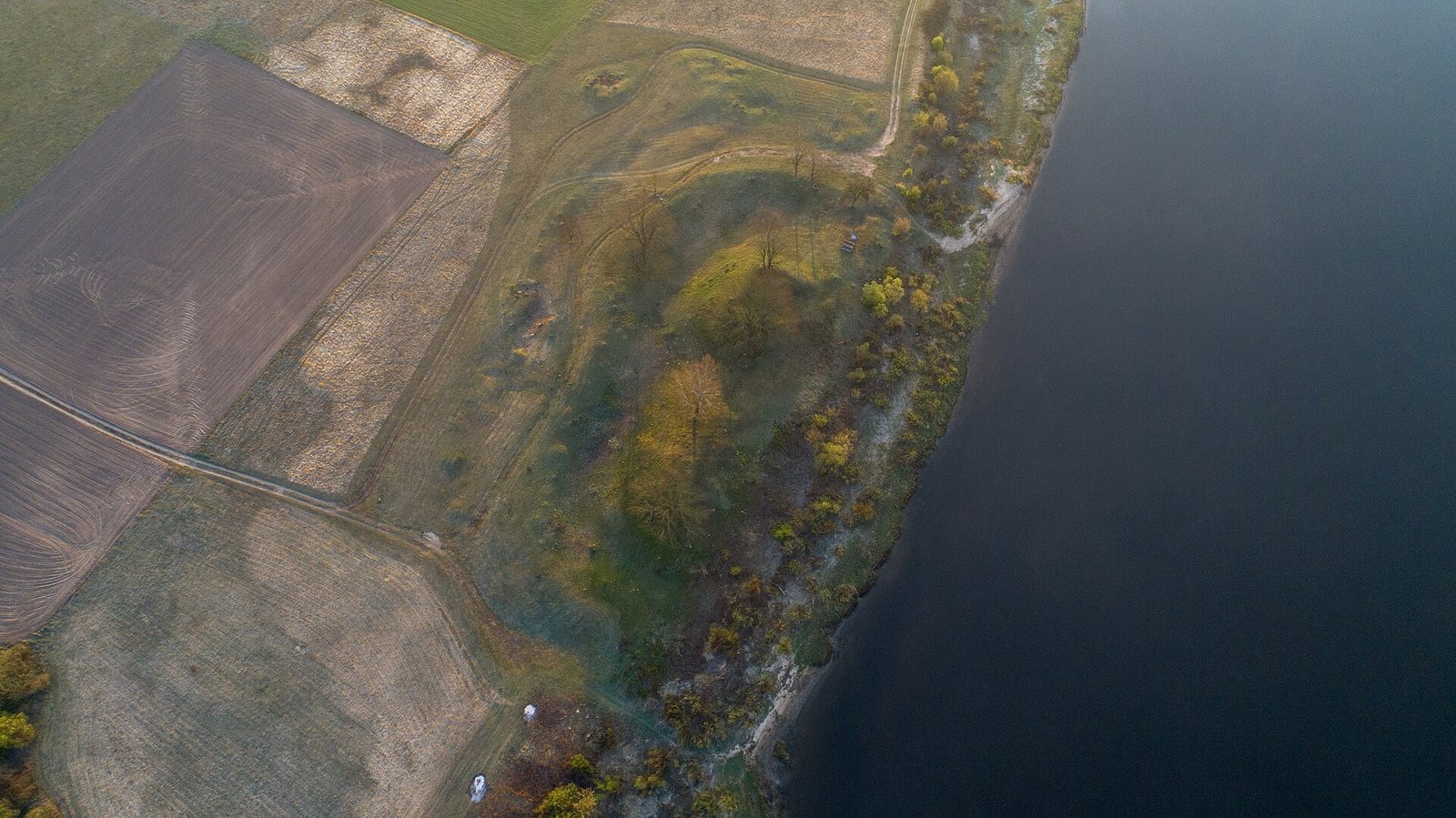
The hillfort occupies a slight rise in the Nemunas Valley, east of the Gystas River’s mouth and 2.65 km west of Veliuona’s first hillfort. Its motte-and-bailey layout has two adjoining mounds: the motte is the principal raised mound, while the bailey is a neighboring fortified area. The site extends 270 m from east to west and reaches up to 120 m in width.
Mounds and defenses
The motte and bailey
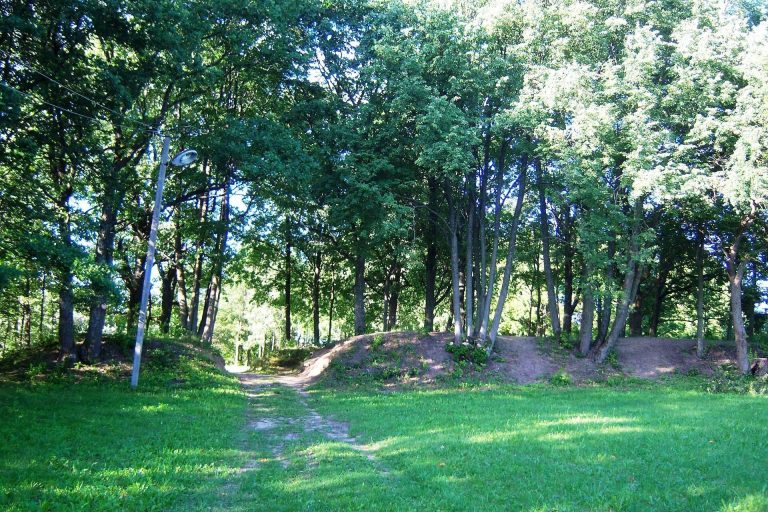
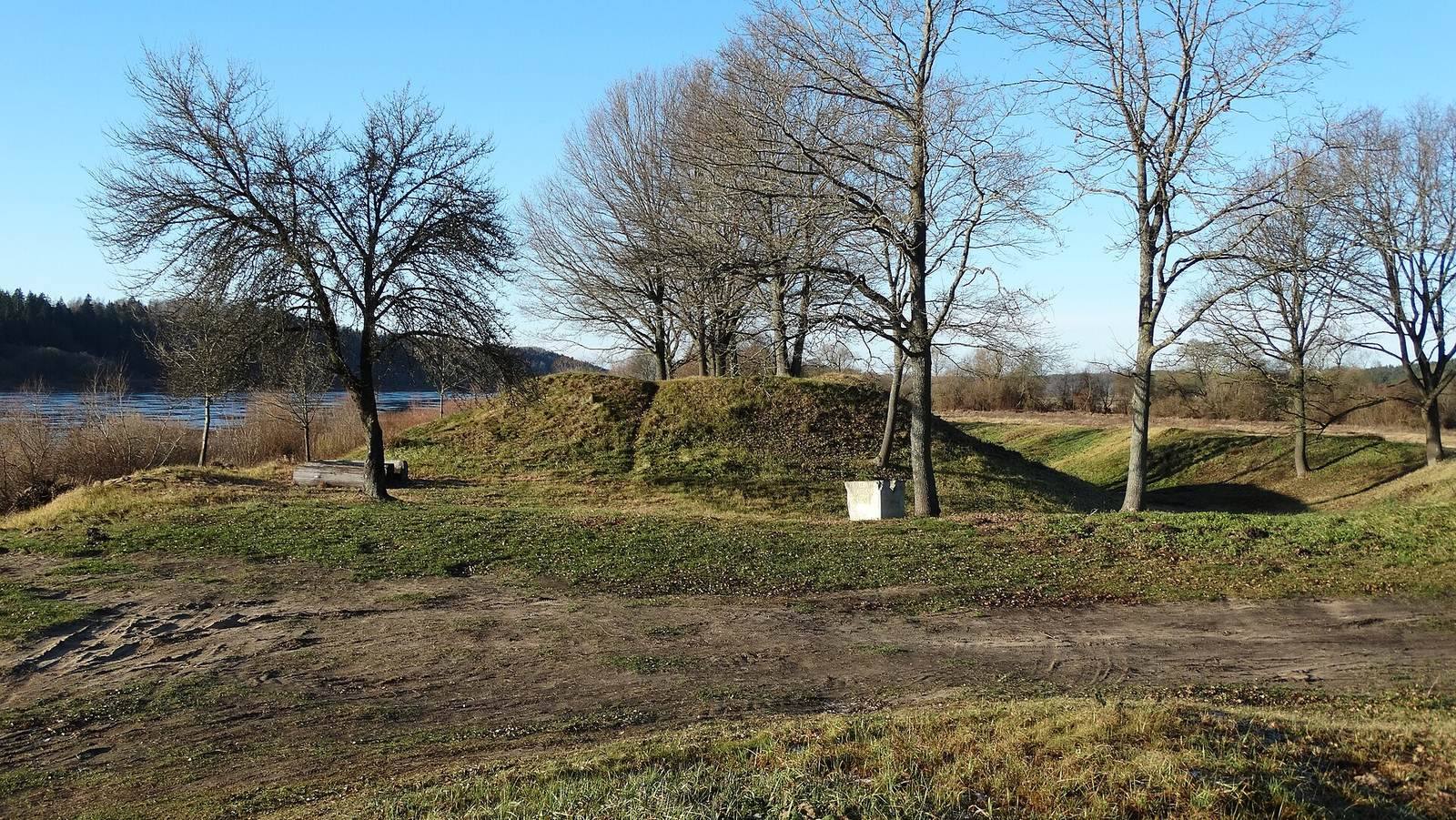
The eastern mound is the motte, and the western one is the bailey. Both had rectangular summit areas, most of which have been eroded away on the south side by the Nemunas. The eastern summit measured 16 by 18 m. A ditch 16 m wide and 4.5 m deep separates it from the western bailey, which was originally 24 by 10 m and now survives at only 7 m in width. Erosion has cut across the bailey along a northeast-to-southwest line. The mounds rise 7–8 m above the Nemunas and have steep sides.
Outer defenses
Ditches and ramparts extended east, north, and west of the mounds. One ditch was 10–11 m wide at its base and 5 m deep. Beyond it stood a rampart 160 m long, 15 m wide, and 1.5 m high, followed by a ditch 9 m wide and 0.5 m deep, then a second rampart 11 m wide and 1 m high. The surface of the rampart between the ditches was strengthened with clay. The encircling ditch measured 9–11 m across and was about 10 m deep from the mound tops and 33.5 m deep from the adjoining field surface. A third ditch and rampart were also present by the late nineteenth century.
Erosion and condition
Flooding has severely damaged the hillfort. The Nemunas has washed away large parts of the mounds and carried rampart material into the ditches. Twentieth-century activity and archaeological work also caused damage. Excavation trenches were left open and are now overgrown with scattered bushes and tall grass.
Excavated structures
Western mound
Excavation on the western mound revealed an occupation layer 1.3 m thick, containing charcoal, stones, brick fragments, and iron objects. Part of a brick oven measuring 2.6 by 0.9 m was found there, along with a rampart at the edge of the summit.
Eastern summit building
On the eastern summit, excavators exposed the north end of a burned building measuring 13 m long and 11–11.5 m wide. Its walls were 1.5 m thick. Log-cabin framing lined the interior, while vertical outer posts, 25–40 cm thick, stood 25–50 cm apart. Nailed horizontal logs joined the posts on the outside, and the exterior was coated with clay. Gravel packed the lower walls to a height of 1.8 m. The 0.9 m gap between the wall elements was filled with logs and rammed clay.
The building had at least two storeys. Its first level was a semi-basement divided into two rooms, and a stove stood on the second floor. Finds among the burned remains included about 900 arrowheads, four crossbow-bolt heads, and more than 900 nails measuring 10–30 cm long. Several stone projectiles were recovered, including four intact examples 23–25 cm in diameter. Two millstones, each 78 cm across and 13 cm thick, were made from rock from the Black Forest. Other finds included iron staples, hinges and fittings, an axe and two small axes, cylindrical locks and keys, a fire striker, knives, a tripod, wheel-thrown pottery, fragments of glass goblets, and part of a bone chess piece.