Boxley Abbey: A Cistercian Monastery in Kent
Site at a Glance
- Rating
- 5
- Popularity
- Very Low
- Country
- United Kingdom
- Primary era
- Medieval
- Eras represented
- Medieval
- Civilizations
- English
- Site type
- Religious
- Remains
- Monastery
On this page15 sections
History
Boxley Abbey is a former Cistercian monastery in the United Kingdom, near Maidstone in Kent, founded around 1146 during the twelfth century. The Cistercian Order was a Western Christian monastic movement shaped by Benedictine traditions and known for communal discipline, regular worship, and comparatively austere practice. Boxley was established at the foot of the North Downs and became a daughter house of Clairvaux Abbey, a major Cistercian monastery in France.
Foundation and Cistercian affiliation
William of Ypres, a Flemish military leader who served King Stephen during the civil-war period known as the Anarchy, founded Boxley with Matilda’s authorization. Matilda, the daughter of Henry I, contested the English succession with Stephen. William brought monks from Clairvaux to establish and maintain the new monastery. The foundation was intended partly to assert independence from the Benedictine monks of St Augustine’s Abbey, Canterbury, rather than serving only as a means of developing land or securing prayers for its founder.
The foundation date is generally placed around 1146, although 1143 has also been proposed. Permanent abbey buildings appear to have been constructed in the mid-twelfth century during the abbacy of Thomas, elected in 1152 or 1153. By the late twelfth century, the complex had been arranged according to the Bernardine plan, the characteristic layout of early Cistercian monasteries around a church and cloister with functional buildings placed in an organized pattern. Boxley later founded Robertsbridge Abbey as a daughter house in 1176.
Ecclesiastical and political connections
Boxley’s abbots participated in matters that extended beyond the monastery. In 1171, the abbot took part in the burial of Thomas Becket, the archbishop of Canterbury whose murder in 1170 had made his burial and developing cult major events in English church history. In 1193, the abbots of Boxley and Robertsbridge travelled to the continent and found Richard I, known as Richard the Lionheart, held captive in Bavaria after the Third Crusade.
In 1223, Pope Honorius III appointed the abbot of Boxley and two other abbots to inspect Benedictine abbeys. The Benedictines considered this Cistercian inspection provocative, and the commission was subsequently replaced. The abbey’s recorded abbots included Thomas, Walter, John, Denis, Robert, John, Simon, Alexander, Henry, Gilbert, Robeit, William de Romenee, John de Heriettisham, Richard Shepey, John Wormsell, Thomas Essex, Robert Rayfelde or Reyfeld, John Byrd, and John Dobbes, who was recorded as the last abbot in 1533.
Pilgrimage and monastic life
Boxley gained importance and prosperity partly through the Rood of Grace, a devotional representation of Christ on the cross. Its figure was believed to move and speak miraculously, making the abbey a destination for pilgrims and giving it an additional association with the Holy Cross of Grace. The monastery also promoted a legend concerning a movable statue of the infant Saint Rumbold, a medieval child saint. According to the legend, only a particularly righteous person could lift the statue. Another object associated with the abbey was a silver-inlaid supposed finger of the apostle Andrew, which was later pawned to a local merchant for eleven pounds.
Relations within the community were not always peaceful. During 1512 and 1513, the abbot appealed to the Crown to arrest four monks whom he accused of rebelliousness. The episode occurred in the final decades of the abbey’s existence, when its religious life continued within a wider English church increasingly affected by the policies of Henry VIII.
Dissolution and later history
Boxley Abbey was closed on 29 January 1538 during the Dissolution of the Monasteries, the process through which Henry VIII’s break with the Catholic Church brought England’s monasteries under royal control. Its annual income was assessed at £208. In 1540, the site and many of its manorial estates were granted to Sir Thomas Wyatt, an English courtier and poet who received former monastic property after the Dissolution.
The Rood of Grace was examined in 1538 by the commissioner Geoffrey Chamber, who found levers and wires controlling its movements. The cross was removed, displayed in Maidstone market, taken to London, and publicly dismantled and burned outside St Paul’s Cathedral during a mocking sermon by John Hilsey, Bishop of Rochester. The alleged miracles are not supported by evidence. The concealed mechanisms have nevertheless been interpreted both as evidence of deliberate deception and as part of a devotional theatrical practice intended for an audience that understood how such performances worked.
After the Dissolution, the west range and the abbot’s house were converted into a residence, while most of the remaining monastic buildings were demolished. The ground plan was excavated in 1971 and 1972. The precinct is protected as a scheduled monument, and Boxley Abbey Barn is a Grade I listed building. The former chapel of St Andrew, associated with the abbey and converted into a house after the Dissolution, was undergoing restoration through the Society for the Protection of Ancient Buildings’ Old House Project in 2024.
Remains
Boxley Abbey occupied a precinct at the foot of the North Downs. Surviving remains include fragments of the church, the cloister ranges, the gatehouse, the precinct wall, the former hospitium, and elements incorporated into Boxley Abbey House. The layout followed a Cistercian church-and-cloister arrangement, although the south range contained an unusual variation in the position of the refectory.
Church and cloister ranges
Abbey church
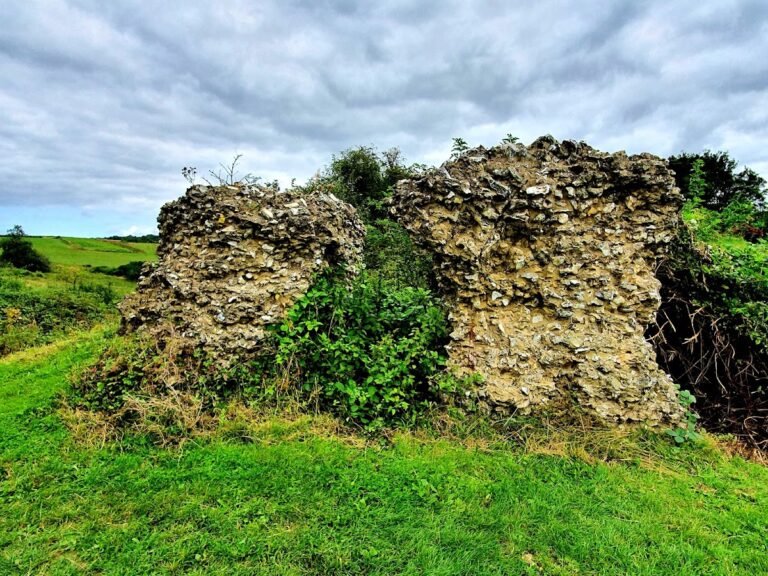
The abbey church was cruciform, meaning that its main body was crossed by transepts, and it had a rectangular east end. Each transept contained three chapels along its eastern side. The surviving fabric is fragmentary, with parts of the nave and aisle walls remaining, together with a doorway in the south aisle. The presbytery, the eastern part of the church reserved for the clergy and principal altar, is marked by clipped yew trees.
Cloister and south range
The cloister, a covered walkway enclosing an open courtyard, lay south of the church. The chapter house and monks’ dormitory occupied the east range. The refectory and calefactory, or heated communal warming room, were in the south range. Unlike the usual Bernardine arrangement, the refectory ran parallel to the southern cloister range rather than at a right angle to it.
The cloister was rebuilt, or at least partly rebuilt, in the late fourteenth century. A surviving contract from 1373 records an agreement between the abbey and the mason Stephen Lomherst. The south range contains the principal surviving cloister-range remains. The former warming room is now used as an outbuilding, while portions of the refectory remain standing.
Precinct and associated buildings
Boxley Abbey House
The west range and abbot’s house were transformed into a residence after the Dissolution. Parts of the former monastic complex survive within Boxley Abbey House, whose main building is predominantly nineteenth-century. These surviving elements preserve the later domestic use of buildings that had originally formed part of the abbey’s western side.
Boxley Abbey Barn
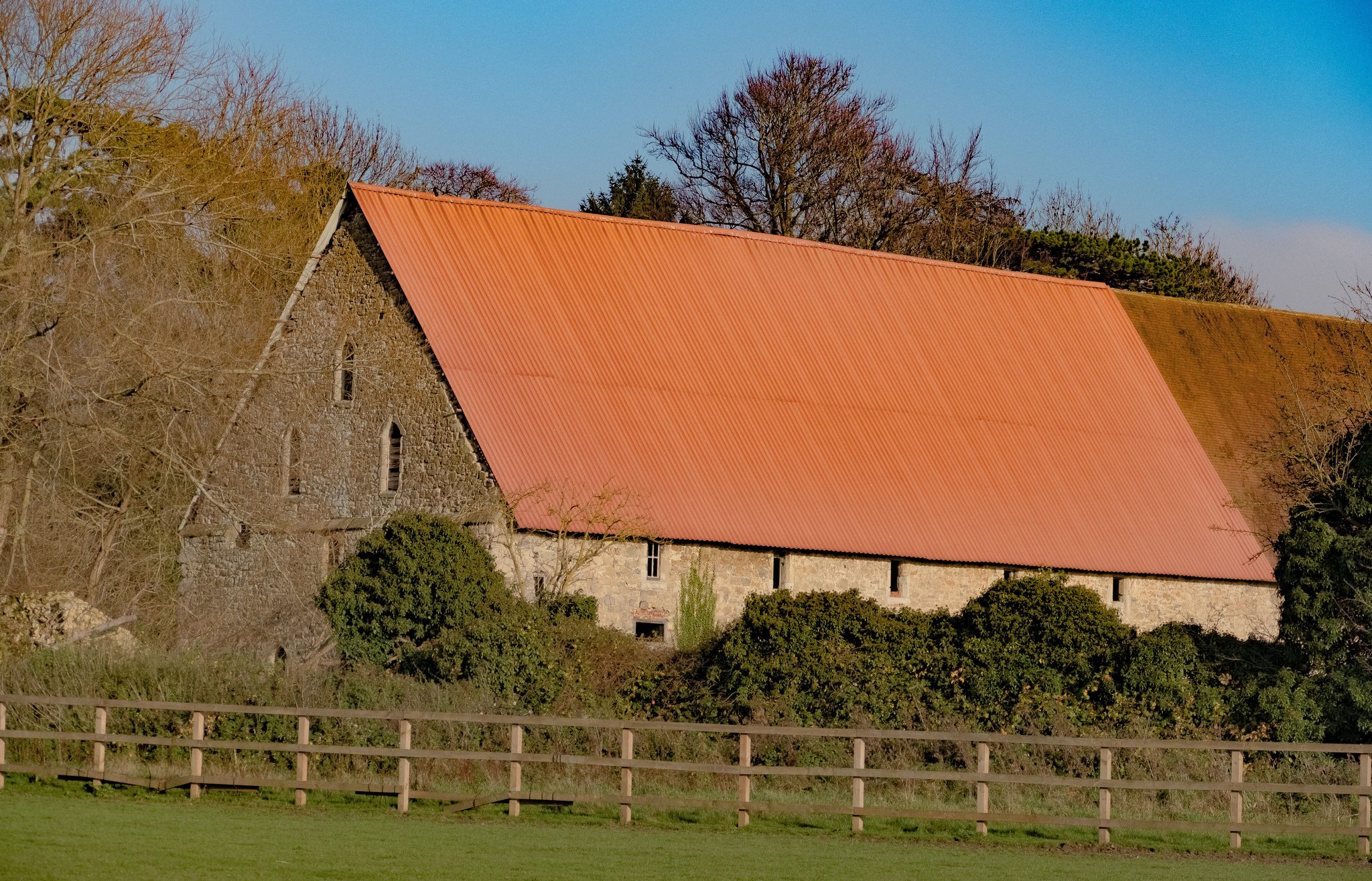
Boxley Abbey Barn is a large stone building of the thirteenth century. It served as the abbey’s hospitium, a monastic guesthouse or hospitality building. The structure survives with a later roof and forms one of the clearest surviving buildings associated with the former precinct.
Gatehouse and precinct wall
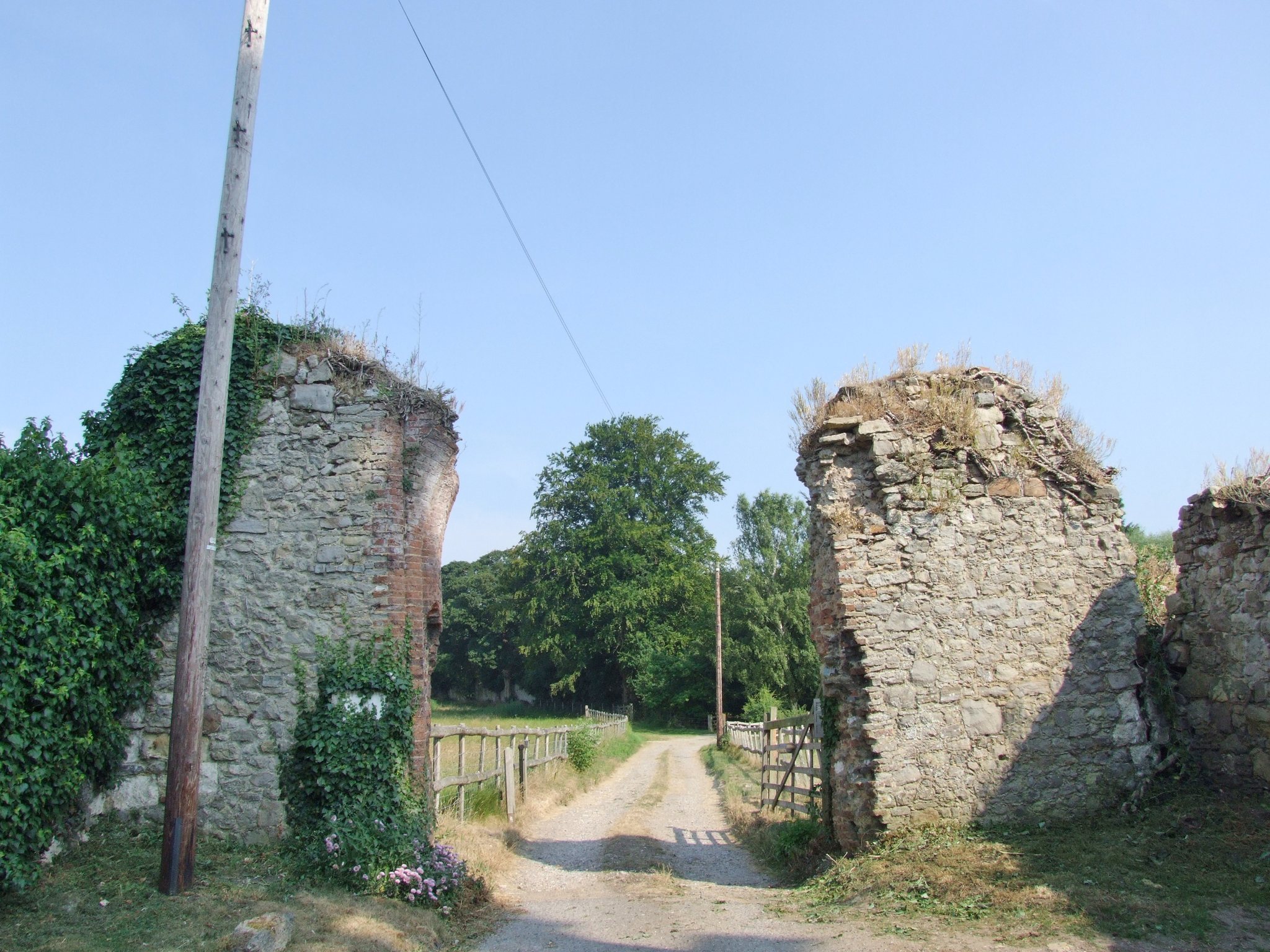
Fragmentary sections of the precinct wall survive around the site. Entry was through a ruined gatehouse, and portions of the gateway and other elements of the precinct remain. Together, these fragments indicate the enclosed character of the monastic complex without preserving the full boundary or entrance structure.
Former chapel of St Andrew
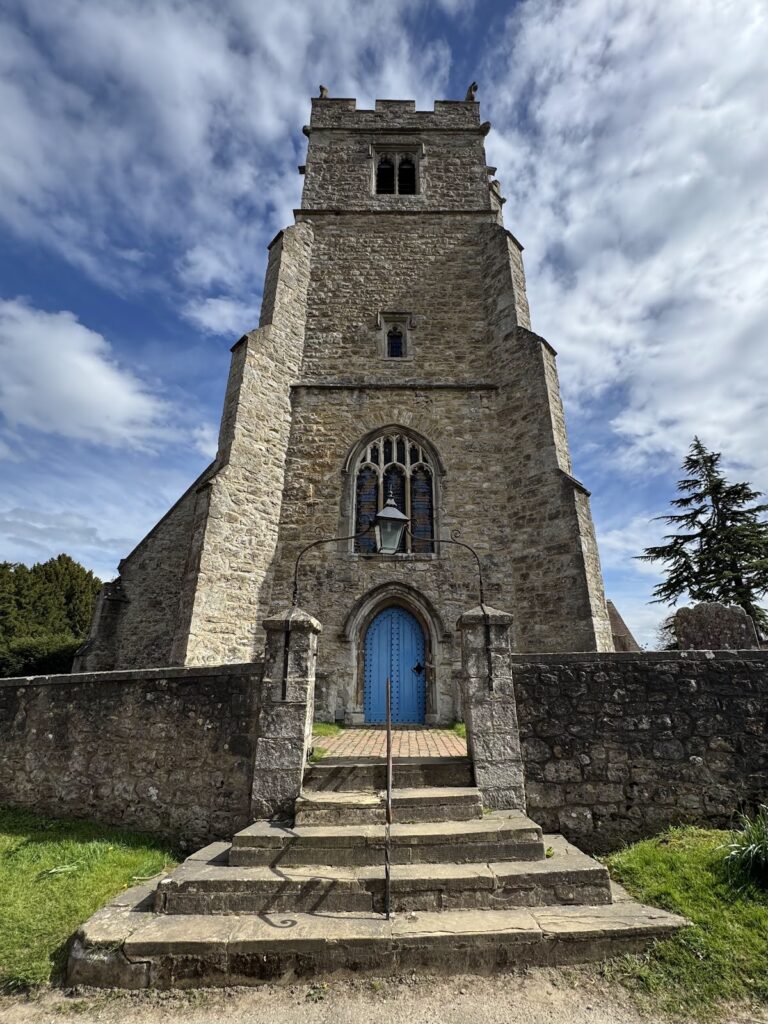
The former chapel of St Andrew was associated with the abbey complex and was converted into a house at the Dissolution. It remains a separate surviving building. Restoration was taking place in 2024 through the Society for the Protection of Ancient Buildings’ Old House Project.
Rood of Grace
The Rood of Grace was a wooden cross with a figure operated by concealed levers and wires so that it could move and speak. The object itself was dismantled and destroyed in 1538. Its historical importance therefore lies in the evidence for its use, the mechanism revealed during the Dissolution, and the competing interpretations of the image as either a fraudulent miracle or a form of religious performance.