Michaeliskonvent: A Late-Medieval Religious Community in Lübeck
Site at a Glance
- Rating
- 4
- Popularity
- Very Low
- Country
- Germany
- Primary era
- Medieval
- External website
- Open
- Eras represented
- Medieval, Early Modern, Modern
- Civilizations
- Holy Roman Empire
- Site type
- Religious
- Remains
- Monastery
On this page12 sections
History
Michaeliskonvent was a late-medieval religious community in Lübeck, Germany, founded as a settlement of the Sisters of the Common Life. Also called the Segebergskonvent, the Sisters’ House at St. Aegidii, or the Grey Sisters’ house, it became the oldest and largest community of the Sisters of the Common Life in the Baltic region. Its religious life followed the Devotio moderna, a movement that emphasized personal devotion, disciplined communal living, education, and religious reading.
Foundation and religious life
In 1397, the Lübeck citizen Berthold Segeberg bought property on Aegidienstraße at the corner of Weberstraße for use as a poorhouse. After his death in 1408, a women’s community formed there under a quasi-monastic rule and the patronage of the Archangel Michael, a chief archangel regarded in Christian tradition as a heavenly protector.
Berthold’s son, the councillor Johann Segeberg, endowed a new building for the community in 1450–1451. With the support of Lübeck Bishop Nikolaus II Sachau, Sisters of the Common Life established their home there. Bishop Arnold Westphal later gave the community a formal order incorporating the Rule of Saint Augustine, a medieval rule of religious life attributed to Augustine of Hippo. The convent was supervised by the Augustinian monastery at Segeberg. A chapel dedicated to Michael was built on the corner property in 1463.
The sisters wore simple grey wool clothing, which gave rise to the name Grey Sisters. The community was directed by a superior known as the mater, moder, rectrix, or regerersche, assisted by twelve officiariae. Its membership initially stood at 30. Bishop Albert II Krummendiek raised the permitted number to 40, and Bishop Dietrich II Arndes later increased it to 50.
Work, foundations, and resources
The convent supported itself mainly by spinning and weaving woollen cloth, earning the sisters the name Wool Sisters. Augustinians in Hildesheim supplied some of their wool. In 1480, the Lübeck council regulated the dimensions and quality of their cloth. Each piece was to measure 20 by 3 cubits and to be produced in three grades, marked with combinations of the double-headed eagle and the Lübeck arms. Three citizens were sworn to supervise the quality and markings.
The community also expanded its religious and economic connections. In 1468, Lübeck sisters founded the Bethlehem convent in Bützow after the superior of the Segeberg house asked the Windesheim reformer Johann Busch to provide a Lübeck sister for the new foundation. In 1469, Heinrich Blome gave the sisters property with its associated rights. In 1511, they were able to lease the Falkenhusen estate from the Hospital of the Holy Spirit.
In 1477, Johann Seifensieder taught the sisters to make white soap. They promised to keep the method secret and not to trade in soap. The community also copied manuscripts on occasion and may have educated girls and provided instruction.
Reformation and later use
The Reformation reached Lübeck in 1531 through Johann Bugenhagen, a leading Protestant reformer who helped organize the movement in northern German cities. The convent was dissolved, and its buildings were first used as an institution for older people. In 1556, Lübeck’s orphanage moved into the complex.
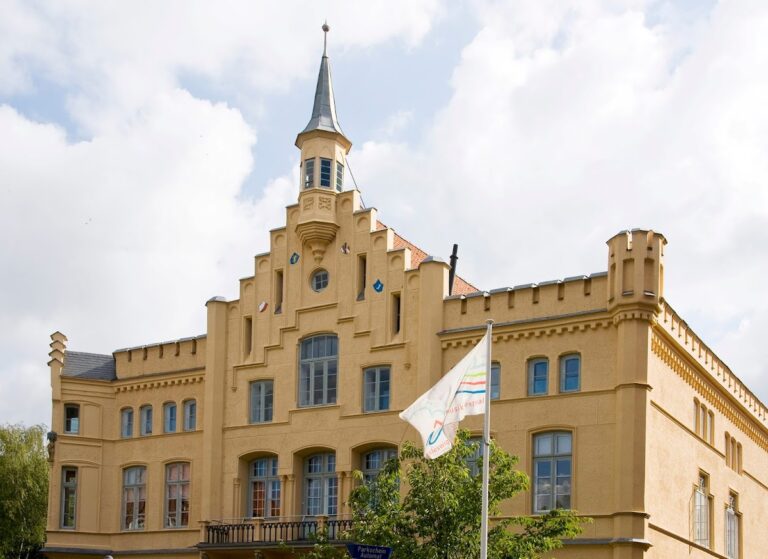
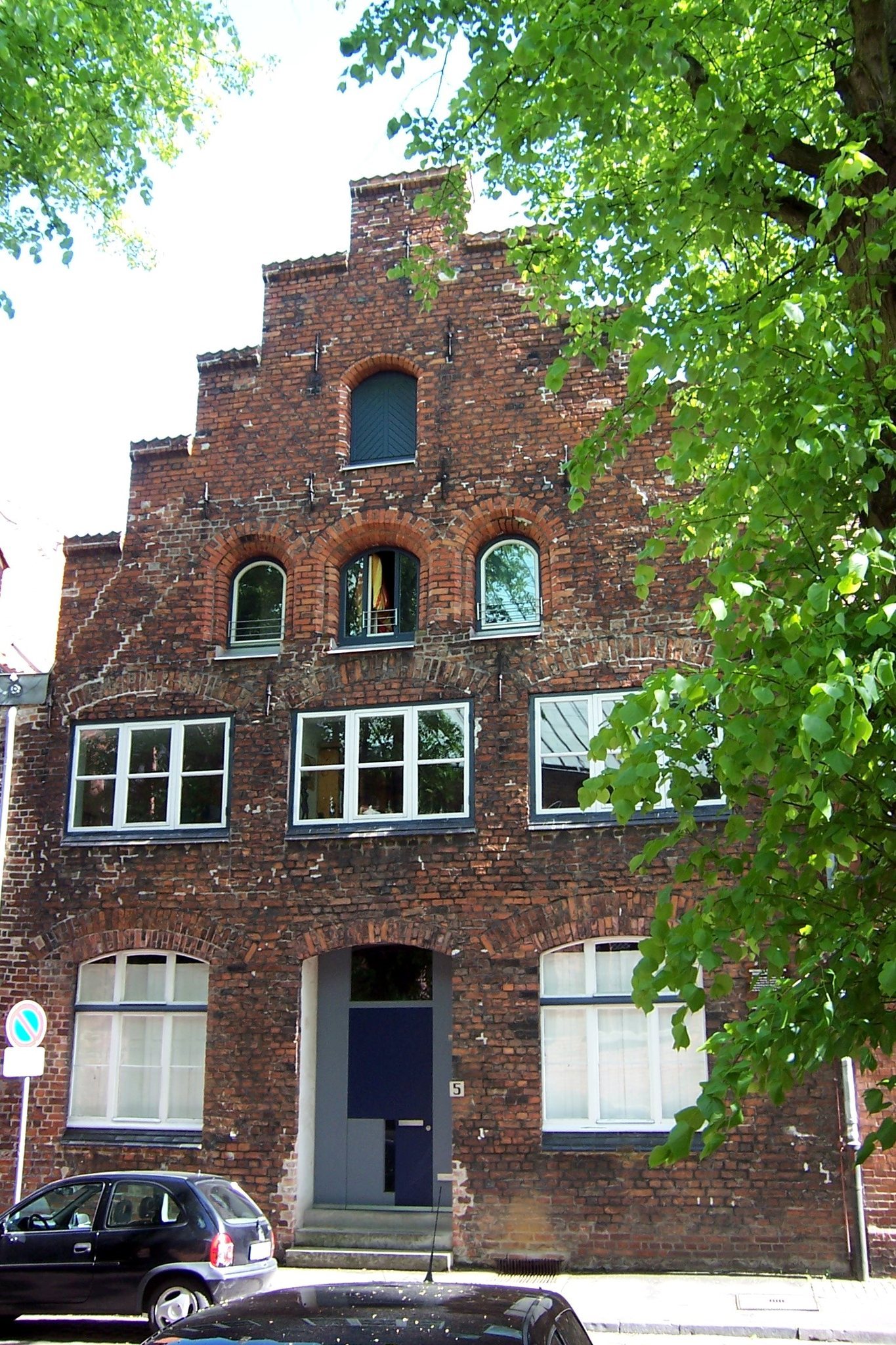
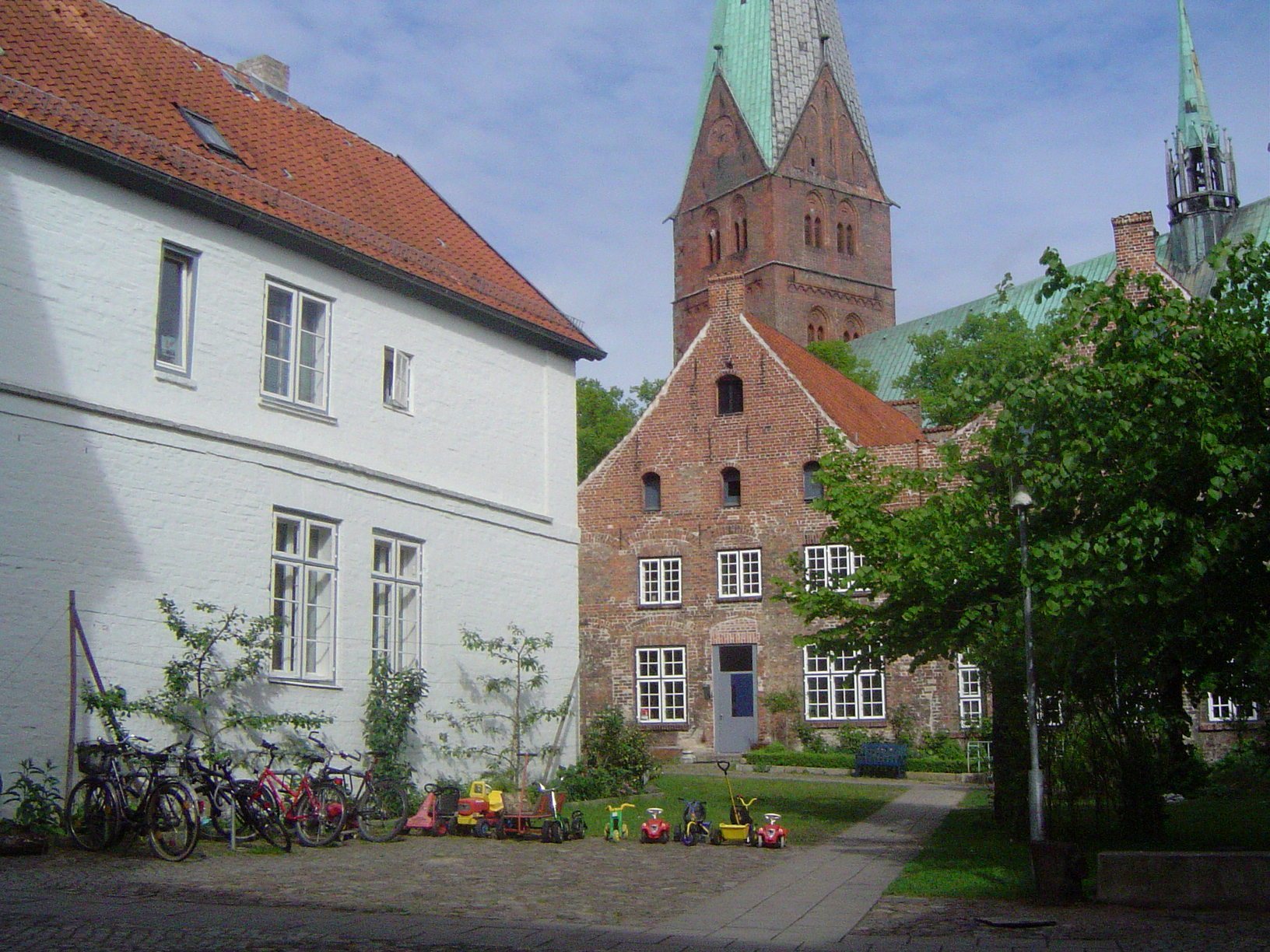
The building was extensively renewed in 1720. This work added a brick stepped gable and strengthened the roof structure. Its interior was substantially altered during the nineteenth century. After serving as a social-welfare office until 1998, the former convent became part of the Aegidienhof Lübeck residential project from 2000.
Library and manuscript heritage
The convent library contained a substantial collection of Middle Low German manuscripts. About 100 surviving volumes have been held by the Lübeck City Library since 1806, while other books were later transferred to institutions in Hamburg, Wolfenbüttel, Harvard, and Saint Petersburg. Two memorial books, from 1463 and 1498, are held by the Archive of the Hanseatic City of Lübeck.
One large composite volume contains 284 leaves with lives of the Church Fathers, sayings attributed to Freidank, and a lament of death. Two manuscripts are among the earliest northern German evidence for the reception of Thomas a Kempis’s Imitatio Christi, a major work of late-medieval devotional literature. Whether the sisters copied books only for their own use or whether the convent also functioned as a centre of book production remains disputed. Several manuscripts associated with the sisters closely resemble books from the convent library.
Remains
Building and surviving decoration
Stepped gable and roof structure
The former convent stands at what is now St.-Annen-Straße 5, on the historic property at the corner of Aegidienstraße and Weberstraße. The building received a brick stepped gable during the extensive renewal of 1720, when its roof structure was also strengthened. The roof beams were dated by dendrochronology, a method that identifies the age of timber through its annual growth rings.
Wall and ceiling paintings
Fragmentary wall and ceiling paintings from the seventeenth and nineteenth centuries survive within the building. They belong to the later history of the convent structure, whose interior underwent extensive alteration during the nineteenth century.
Manuscripts and devotional objects
Manuscript collection
The surviving library material preserves the intellectual and devotional activities associated with the convent. The large 284-leaf composite volume includes religious biographies, Freidank’s sayings, and a lament of death. A Passionary, a collection of saints’ lives, in the Herzog August Library in Wolfenbüttel has marked similarities to a corresponding copy now in the Lübeck City Library. Two copies of a Lübeck Historienbibel, a Bible-related narrative compilation with expanded historical and interpretive material, survive in Lübeck and at Harvard. The Harvard manuscript dates to approximately 1470–1475.
Altarpieces and reliquary
The St. Anne’s Museum holds two altar shrines that formerly stood either in Michaeliskonvent or in the immediately adjacent Aegidienkonvent. One is the Fourteen Holy Helpers’ altar, a winged ensemble dating from about 1500 and dedicated to a group of saints traditionally invoked for protection against illness and other dangers. The museum also holds a smaller Anne shrine from the late fifteenth or early sixteenth century.
A panel acquired by the St. Anne’s Museum in 1999 dates from approximately 1480–1490. It depicts the Madonna with the praying donor Hinrich Lipperade and is attributed to Hermen Rode. A small wooden reliquary chest, a container made to hold or display a religious relic, has also survived in association with the convent.