Kolaba Fort: A Maratha Naval Base off Alibag
Site at a Glance
- Rating
- 4.2
- Popularity
- Medium
- Country
- India
- Primary era
- Early Modern
- Eras represented
- Early Modern
- Civilizations
- Unclassified
- Site type
- Military
- Remains
- Fort
On this page10 sections
History
Kolaba Fort is a fortified maritime base in India, situated off Alibag in Maharashtra. Chhatrapati Shivaji Maharaj, founder of the Maratha kingdom and a promoter of naval power on India’s western coast, strengthened it in 1662. The fort became one of his chief naval stations and was reportedly selected for fortification after the liberation of South Konkan.
Construction and Maratha naval power
Further construction began on 19 March 1680. After Shivaji’s death later that year, his successor, Chhatrapati Sambhaji Raje, completed the work in June 1681. Darya Sarang and Mainak Bhandari were placed in command, and Kolaba became a centre for Maratha attacks on British ships. Chhatrapati Shivaji Maharaj had also captured the fort during the expansion of Maratha power along the coast.
Kanhoji Angre’s base
Under a 1713 treaty with Peshwa Balaji Vishwanath, an influential minister who became the effective head of the Maratha state, Kolaba and several other forts passed to Sarkhel Kanhoji Angre. Sarkhel was a Maratha naval title, and Angre used the fort as his principal base for raids against British shipping.
On 17 November 1721, three English ships of the line under Commodore Mathews attacked Kolaba alongside a Portuguese land force of about 6,000 men. The assault failed, and the British blamed the Portuguese for what they described as cowardice. Kanhoji Raje Angre died at Kolaba Fort on 4 July 1729.
Fire, dismantling, and protection
In 1729, a major fire near Pinjara Bastion, a projecting fortified structure designed to strengthen a wall and provide defensive fire, destroyed many buildings. A second major fire in 1787 destroyed Angre Wada, a traditional mansion or residential compound. In 1842, the British auctioned the fort’s wooden structures and used the resulting stones to build Alibag’s waterworks.
The origin of the name Kolaba remains uncertain. Proposed explanations connect it either with a term referring to a Koli hamlet, associated with a traditional fishing and coastal community in western India, or with a word meaning a neck of land projecting into the sea. The fort is a protected monument under the control of the Indian government.
Remains
Sea fortifications
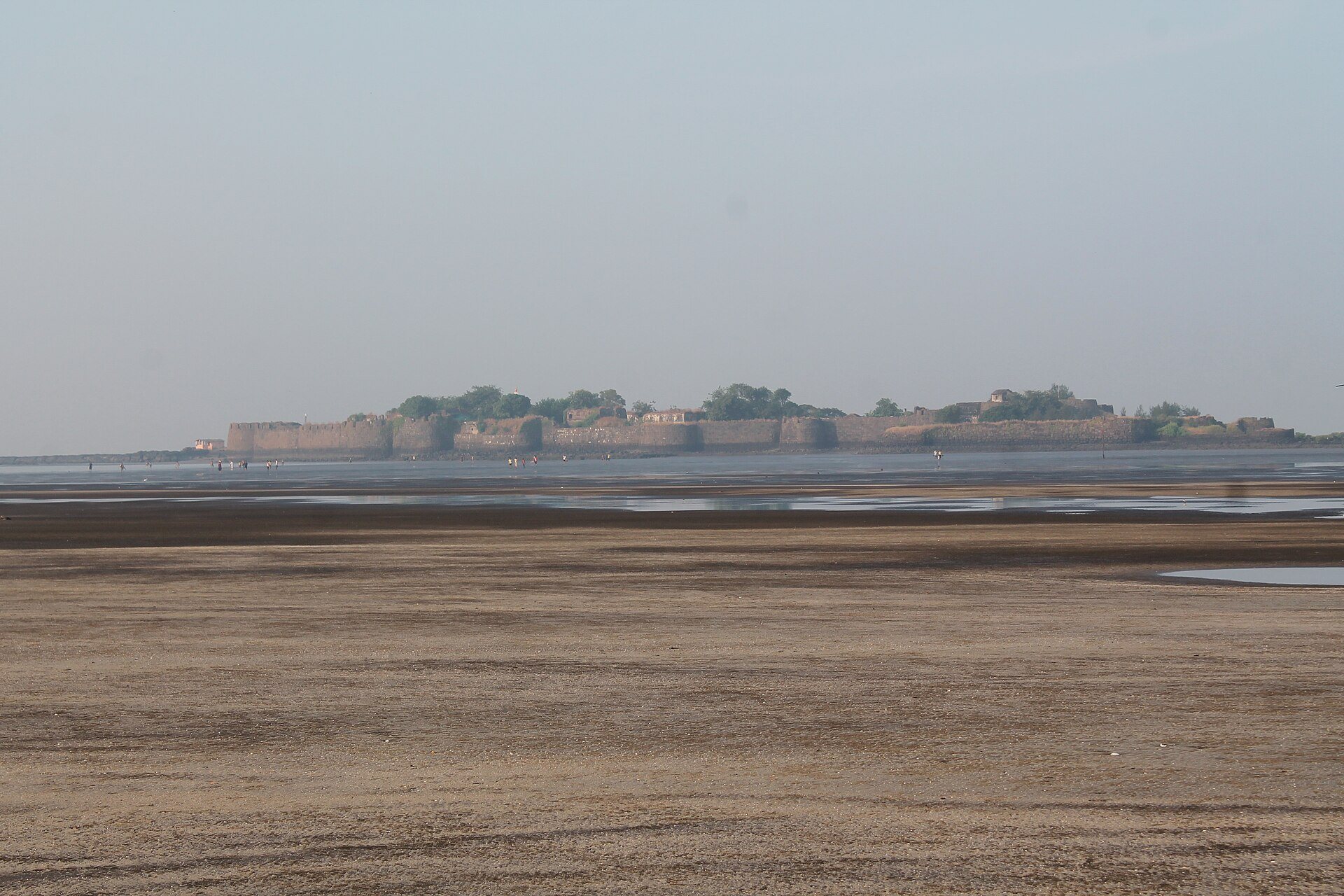
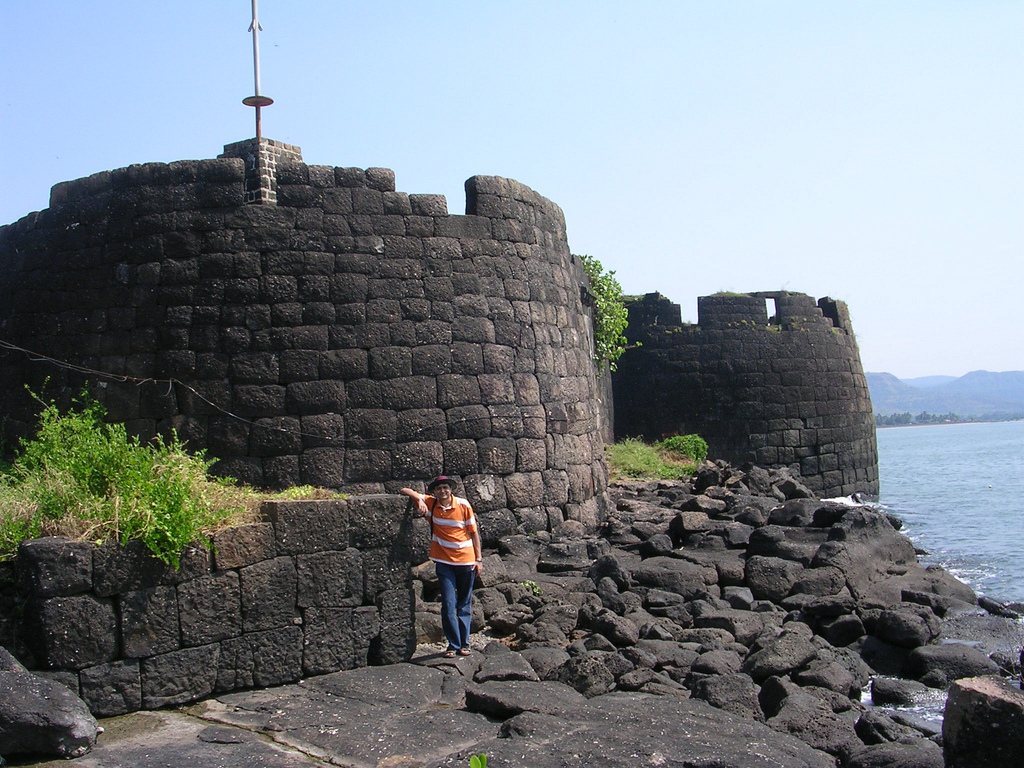
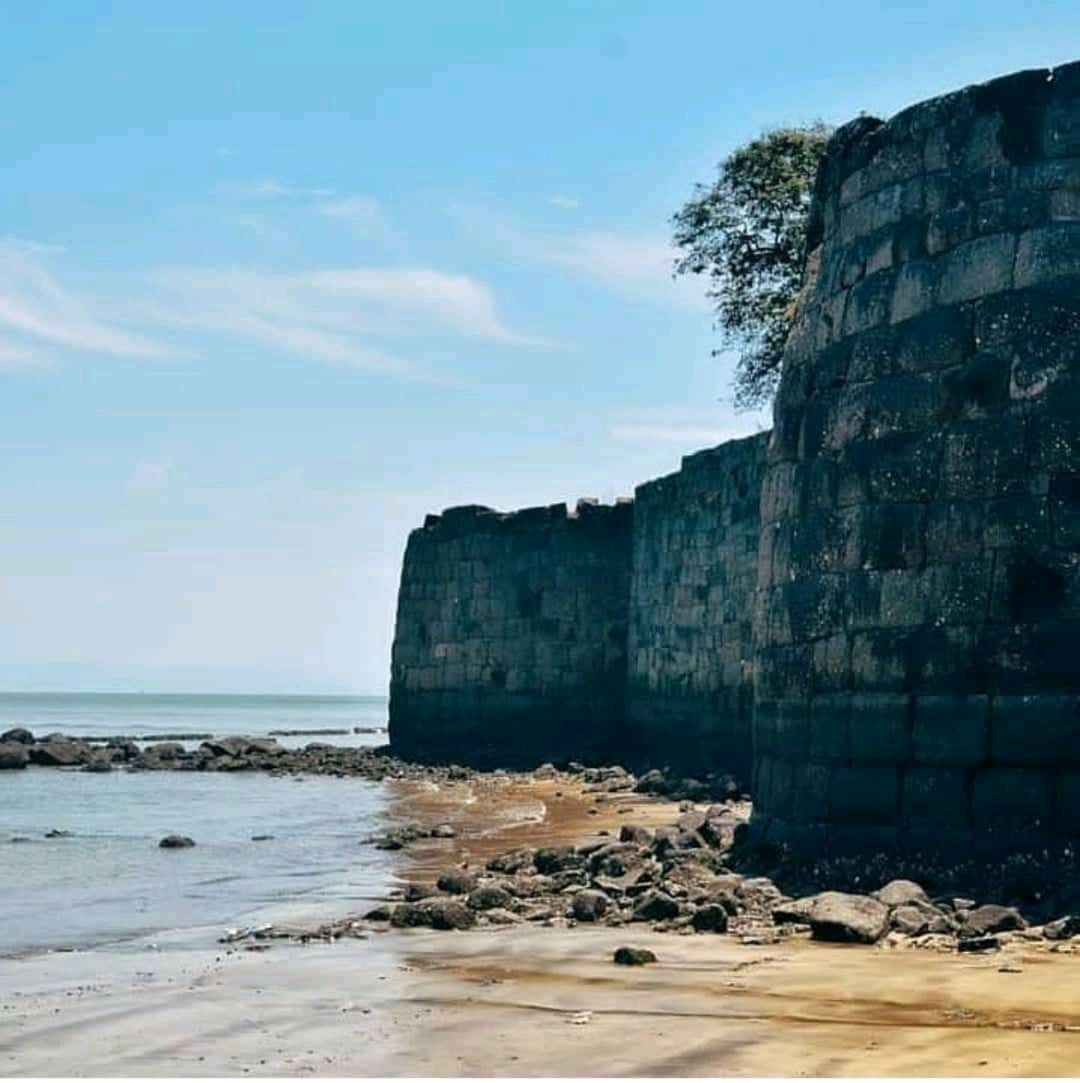
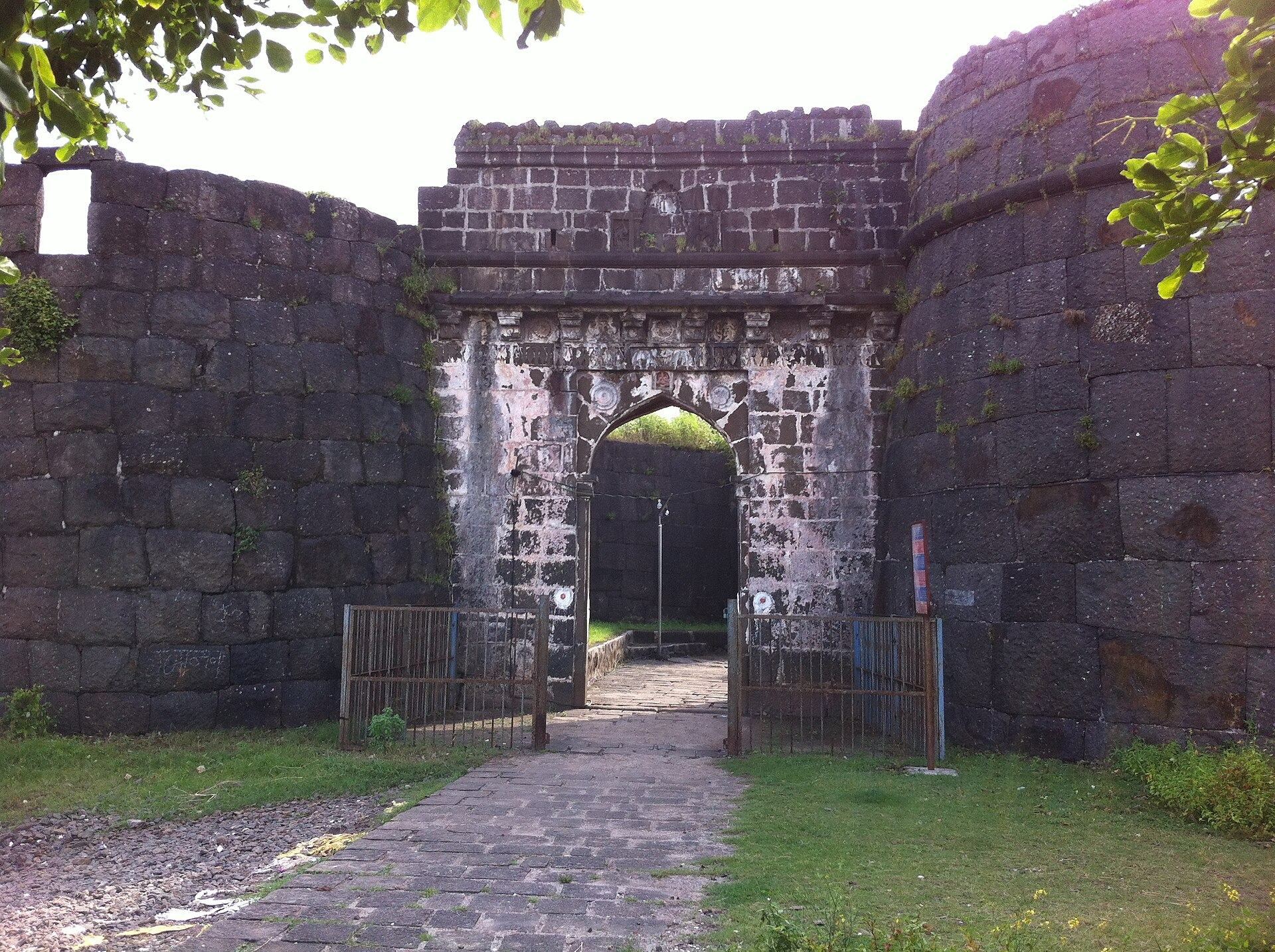
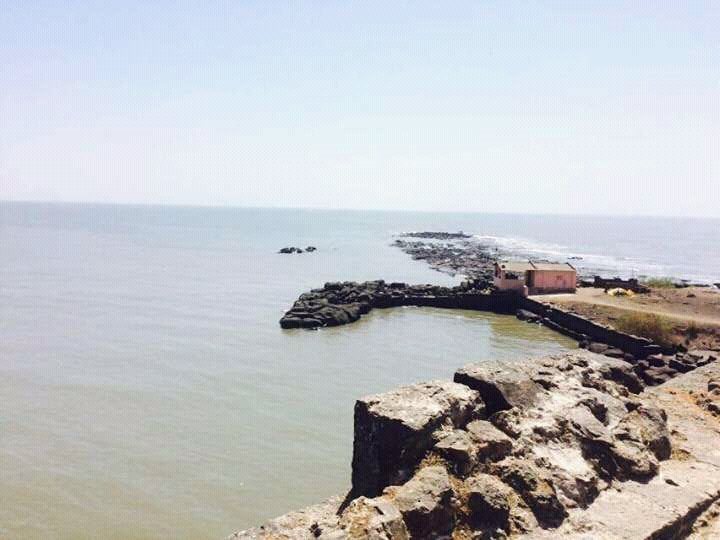
Kolaba Fort stands in the sea about 1 to 2 kilometres from the shore at Alibag, approximately at sea level. Built of stone, it has walls averaging 25 feet in height and two principal entrances. One entrance faces the sea, while the other faces Alibag. Freshwater wells within the fort supplied water in its maritime setting, and the surviving structure is in fairly good condition.
Religious and residential features
Siddhivinayak Temple
The Siddhivinayak Temple was built inside the fort by Raghoji Angre in 1759. Siddhivinayak is an epithet of Ganesha, a major Hindu deity associated with wisdom, prosperity, and the removal of obstacles.
Haji Kamaluddin Shah’s dargah
The fort also contains a dargah, or Muslim shrine commonly associated with the tomb of a revered religious figure, dedicated to Haji Kamaluddin Shah. Houses used by several caretakers form part of the internal remains.
Historic artillery
Two English cannons mounted on wheels stand near the northern wall. Their inscription identifies them as products of Dawson Hardy Field at Low Moor Ironworks in Yorkshire, England, preserving a direct connection with the European naval conflict surrounding the fort.