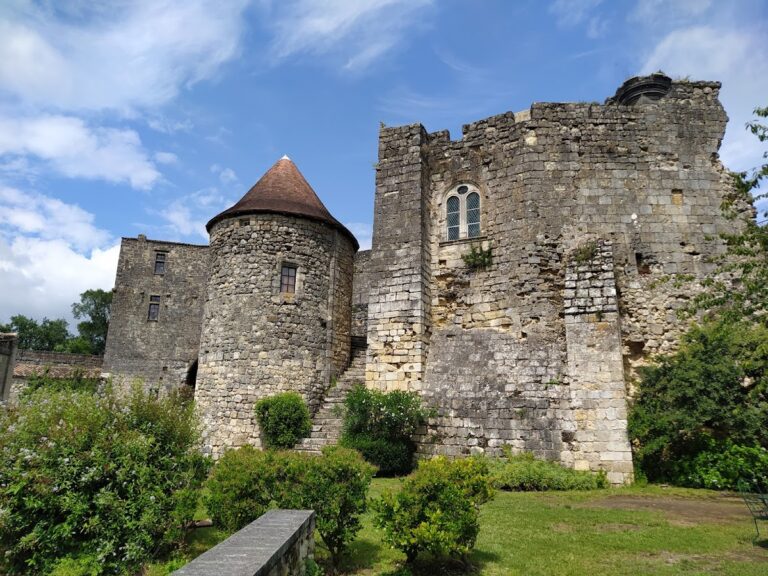
Château Le Grand Verdus: A Fortified Renaissance Manor and Working Wine Estate
Site at a Glance
- Rating
- 4.8
- Popularity
- Low
- Country
- France
- Primary era
- Early Modern
- External website
- Open
- Eras represented
- Early Modern, Modern
- Civilizations
- French
- Site type
- Domestic
- Remains
- Castle
On this page10 sections
History
Château Le Grand Verdus is a fortified Renaissance manor and working wine estate in Sadirac, France. Its present residence dates from 1579, while vines were already growing at the place called Le Grand Verdus by the eleventh century. The property lies in the Entre-deux-Mers region of Gironde, between the Garonne and Dordogne rivers, and its history has remained closely connected with wine production.
Medieval stronghold and Renaissance residence
By the end of the Middle Ages, Le Grand Verdus had become a fortified stronghold. Its first recorded lord was Arnaud de Bonneau, who also owned Château Verdus in the Médoc. His descendants built the current fortified Renaissance manor in 1579 and held the château until the close of the seventeenth century.
In 1846, the estate passed to Pierre Alphonse Deschamps and his wife, Clothilde Le Grix de La Salle. They had no children, so ownership later went to Clothilde’s brother, Charles Le Grix de La Salle. His descendants continue to own the property.
Modern wine production
Philippe Le Grix de La Salle, born in 1920, became the family’s first winemaker shortly after the Second World War. At that time, the estate mainly produced sweet white wine, including wine exported to Germany. In 1973, Philippe left the Créon cooperative winery, removed the white vines, replanted red varieties, and established the Château Le Grand Verdus label.
During the 1970s, Philippe worked with the oenologist Émile Peynaud, a pioneer of modern wine-making, to convert the west wing, probably once a granary, into a vat room. Their later collaboration with Pascal Ribéreau-Gayon further shaped the estate’s wine production. In 1975, Philippe’s son Antoine joined him after training in California with Robert Mondavi. Over the next two decades, father and son expanded the vineyard and international sales, eventually making the estate one of the largest private wine operations in the Bordeaux Supérieur appellation, a regulated Bordeaux wine designation.
Since the 2000s, Antoine’s sons Édouard and Thomas Le Grix de La Salle have managed the property. Édouard oversees viticulture, while Thomas is responsible for winemaking and marketing. White grape varieties were replanted in 2005, and their production later expanded to distribution in more than thirty-five countries.
In 2018, Thomas commissioned the architectural firm Fabre et de Marien to extend the winery with a semi-underground barrel cellar and a new vat room designed to improve maturation conditions. The estate began converting to organic farming in 2020 and received organic certification from the 2023 vintage. It is also developing ecological corridors, hedgerows, fruit trees, and other agroecological measures in experimental vineyard areas.
Today, Château Le Grand Verdus remains a working wine property producing Bordeaux appellation wines and Vin de France wines, the general French designation for wines without a regional geographical indication. In 2023, it produced approximately 600,000 bottles, including 150,000 bottles of white wine, with direct sales in thirty-two countries. Its sixteen wines are organized into seven families and include wines aged in stainless-steel or concrete vats, long-aged wines, single-variety wines, macerated white wine, red wine without added sulfites, blended vintages, and naturally sparkling wine. Since 2012, the estate has also produced a locally brewed organic malt beer fermented with Sauvignon Blanc juice from the property.
Remains
Fortified residence and courtyard
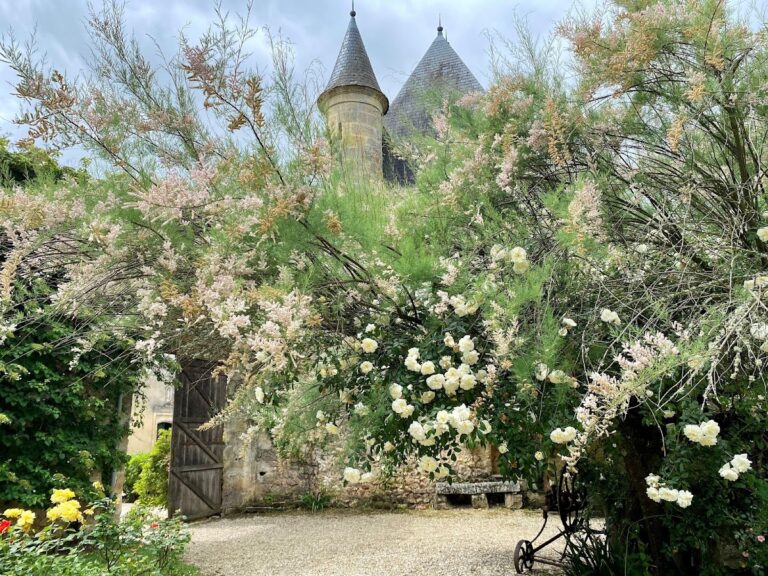
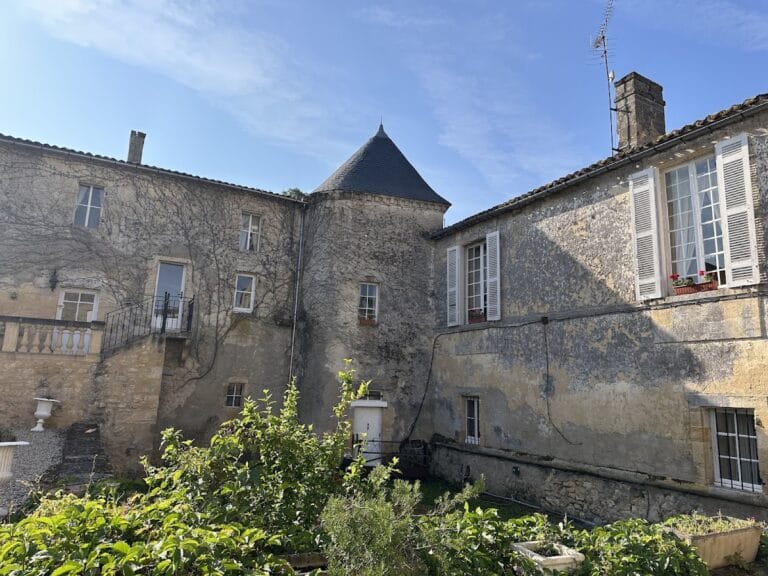
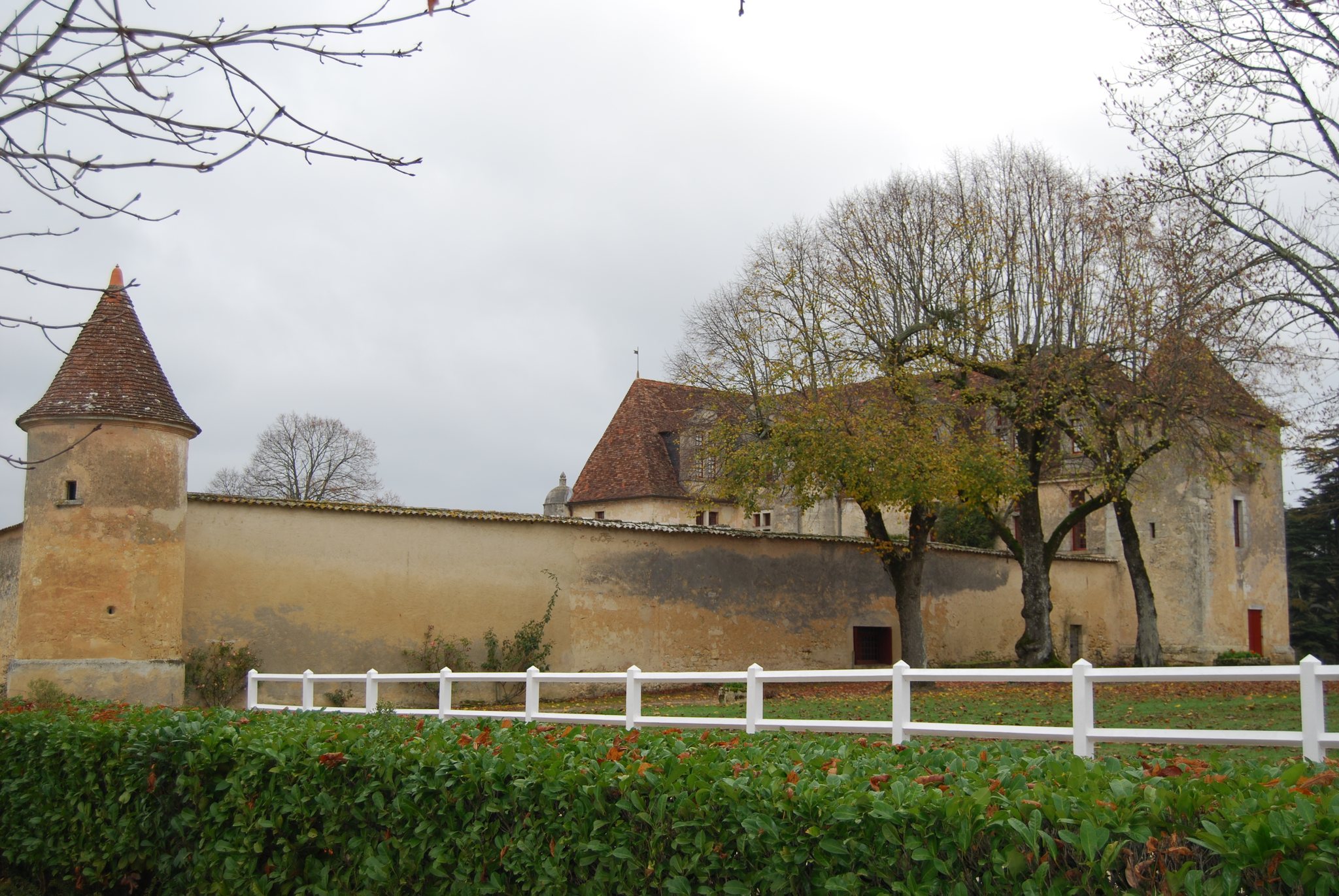
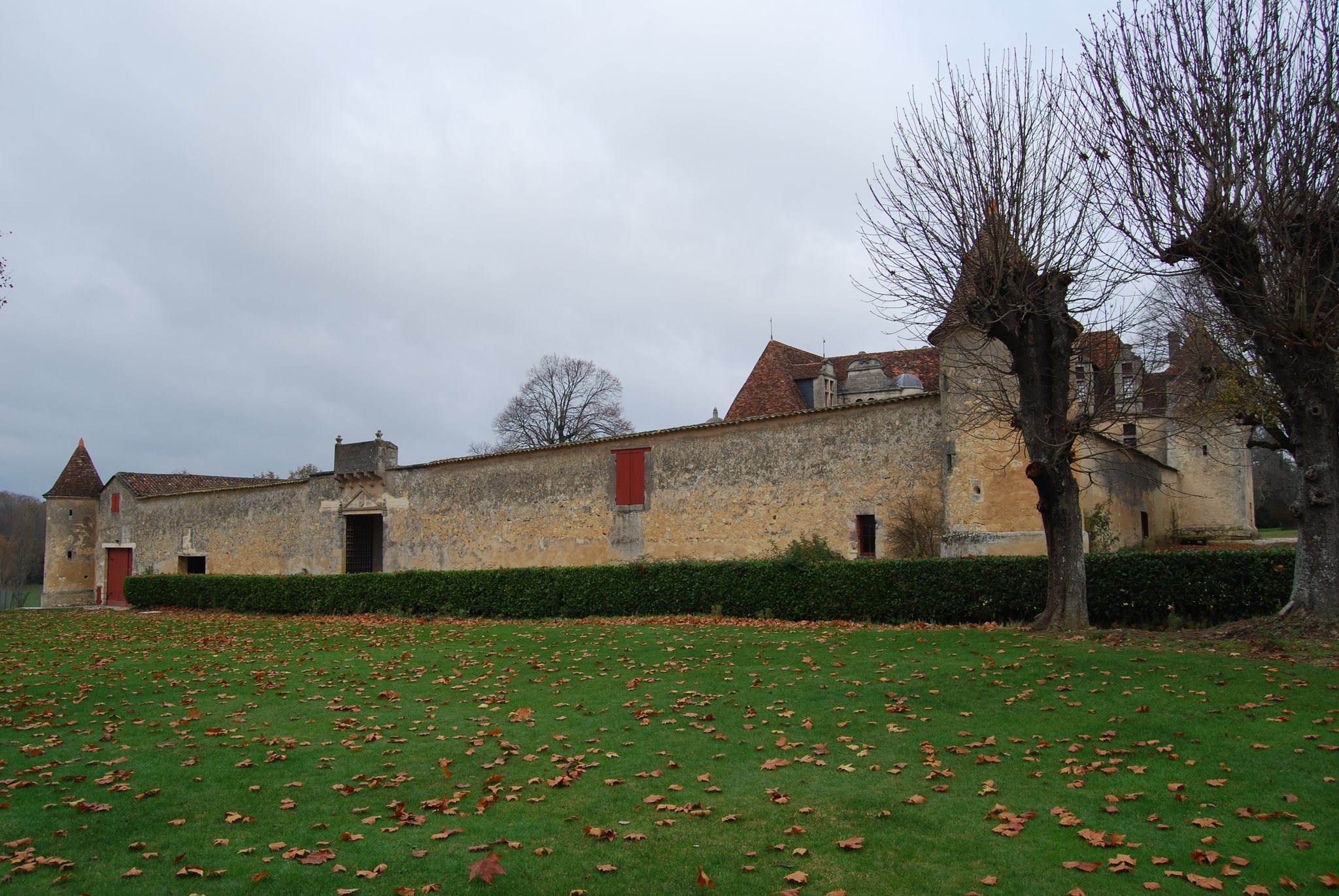
The château forms a quadrilateral defensive enclosure around an interior courtyard. South of the residence, walls serving as ramparts also support the service buildings. Small round towers with pepper-pot roofs occupy the eastern and western corners. The entrance passes through a portal decorated with a triangular pediment and topped by a bretèche, a projecting defensive structure with openings directed towards the ground below.
Main residential block
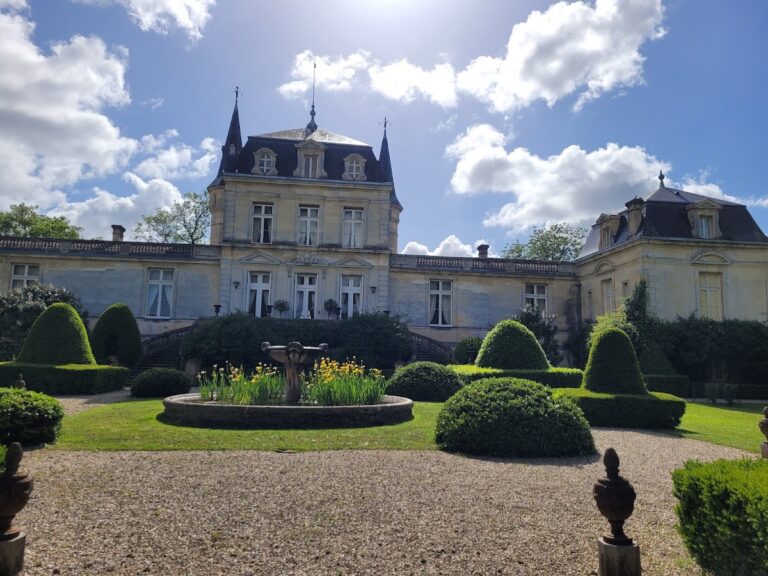
The principal residential block has two storeys beneath a very high roof covered with flat tiles. Two square pavilions flank the façade, and the western pavilion includes a one-storey turret. At the angle formed by the buildings set at right angles, an avant-corps creates a monumental entrance. It is crowned by a pediment with curved and counter-curved lines and accompanied by a two-storey turret.
The rest of the façade contains mullioned windows, which are divided by vertical members, together with simpler bays. Four large dormer windows with small pediments rise above the façade. The château’s façades and roofs were placed on the register of French historic monuments by an order dated 16 June 1978.
Former chapel
The eastern wing contains the former chapel. Its façade is topped by a curved pediment supported by elegant consoles, and the position of the former bell remains visible in the building.
Winery and vineyard landscape
Historic and modern winery spaces
The west wing, probably built originally as a granary, became a vat room during the 1970s. Limited space led to a two-level arrangement, with stainless-steel tanks installed above a bank of concrete tanks. The 2018 extension added a semi-underground barrel cellar for ageing wine in wooden barrels and a new vat room with a metallic form described as resembling a large piece of folded paper.
Vineyard terraces and experimental plots
The estate covers 160 hectares across Sadirac, Bonnetan, and Lignan-de-Bordeaux. Approximately 100 hectares are planted with vines on marked slopes, reaching about 120 metres above sea level, one of the highest points in Gironde. The vineyard forms a mosaic of mainly clay soils with outcropping limestone and a microclimate associated with southern vegetation. New vines are planted at approximately 4,500 to 5,000 plants per hectare.
Red varieties occupy about 80 percent of the vineyard. Merlot represents 60 percent of the total planting, Cabernet Sauvignon 20 percent, Cabernet Franc 19 percent, and Syrah 1 percent. White varieties make up the remaining 20 percent, with Sauvignon Blanc accounting for 65 percent of the white plantings and Sémillon for 35 percent. A small amount of Chenin Blanc has been planted since 2021.
Experimental plots contain Carménère, Petit Verdot, Castets, Malbec, Bouchalès, Mancin, Saint-Macaire, Pardotte, and Jurançon Noir. Soil studies compare grape varieties with different parts of the estate, while agroforestry trials place hedgerows around plots and fruit trees between vine rows. These areas form part of the property’s continuing adaptation of its vineyard and farming practices.