Lipová Castle: A Baroque Noble Residence in Czechia
Site at a Glance
- Rating
- 4.2
- Popularity
- Low
- Country
- Czechia
- Primary era
- Early Modern
- External website
- Open
- Eras represented
- Early Modern
- Civilizations
- Habsburg, Holy Roman Empire, Kingdom of Bohemia
- Site type
- Domestic
- Remains
- Castle
On this page7 sections
History
Lipová Castle is an 18th-century Baroque castle in Czechia, built for the Lipová estate between 1736 and 1756. Its construction was commissioned by Count Leopold Anton Salm-Reifferscheidt, an estate owner and marshal of the Austrian imperial army, after an earlier castle became inadequate.
From the Schleinitz Castle to the Baroque Residence
The earlier Lipová castle was probably built after 1566 by the Schleinitz family, a noble Central European dynasty. Count Salm-Reifferscheidt commissioned the present complex, with construction beginning in either 1736 or 1738 and continuing until 1756. The design is probably attributable to Girolamo Costa, an Italian-born architect active in the project.
The castle retained its original Baroque character. Only minor Classicist alterations were made around the turn of the nineteenth century. Classicism, also called Neoclassical style in many 19th-century contexts, drew on the forms and proportions of ancient Greek and Roman architecture.
Confiscation, Nationalization, and Decline
During the first land reform in 1924, the castle passed from the Thun-Hohenstein family to the Prague lawyer Josef Růžička. German authorities confiscated it in 1938 and converted it into a military hospital. The German Reich later sold the property to the Chomutov branch of Mannesmann, a German steel company, which turned it into a recreation facility later used by SS units. The SS was a major Nazi German paramilitary and security organization.
After the Second World War, the castle was returned to the Růžička family, but the state nationalized it in 1948. It subsequently became a retirement home and later the headquarters of a military garrison, meaning a body of troops stationed in one place. After the garrison departed in 1970, the complex began to deteriorate.
Restitution and Preservation Efforts
Kateřina Ebelová acquired the castle through restitution in 1995. Restitution refers to the legal return of property previously confiscated or nationalized. She sold the damaged property for 700,000 Czech korunas to the Dutch company Obrození, which did not invest in its rescue. Roofs and interior ceilings consequently began to collapse, and a fire caused further roof damage during the 1990s.
In November 2011, the civic association Via Tempora Nova bought the castle for just under two million Czech korunas and began efforts to save it. Initial clearance work started in 2012, removing overgrown trees and shrubs from the courtyard and former park. The work exposed a Baroque fountain whose existence had not previously been known, while a botanist assisted with efforts to restore the park. Lipová Castle is protected as a cultural monument and is also listed among endangered immovable monuments, a category for protected buildings or sites at serious risk of loss or severe deterioration. A tradition of benefit concerts, the Lipová Music Festival, was established at the castle.
Remains
Baroque Castle Complex
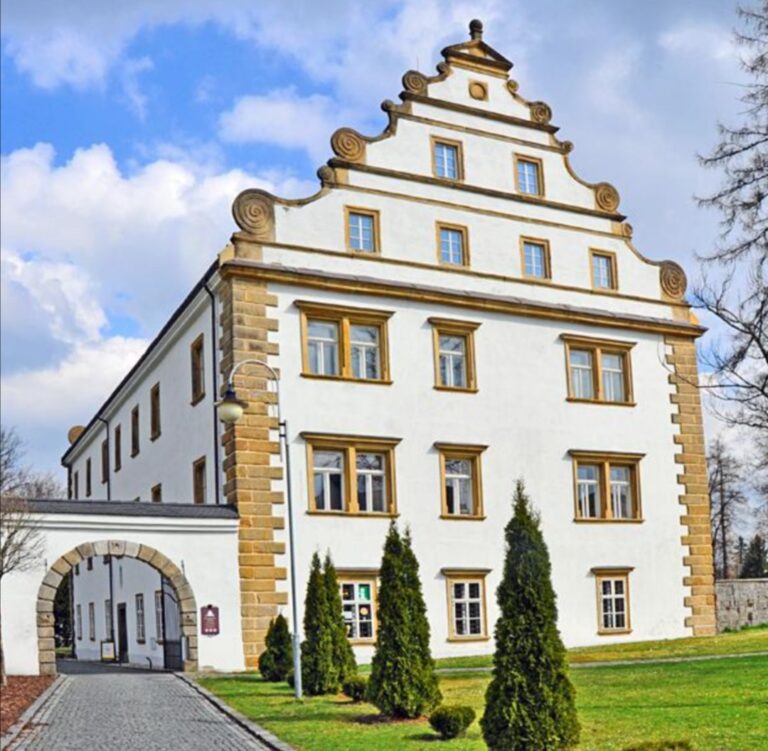
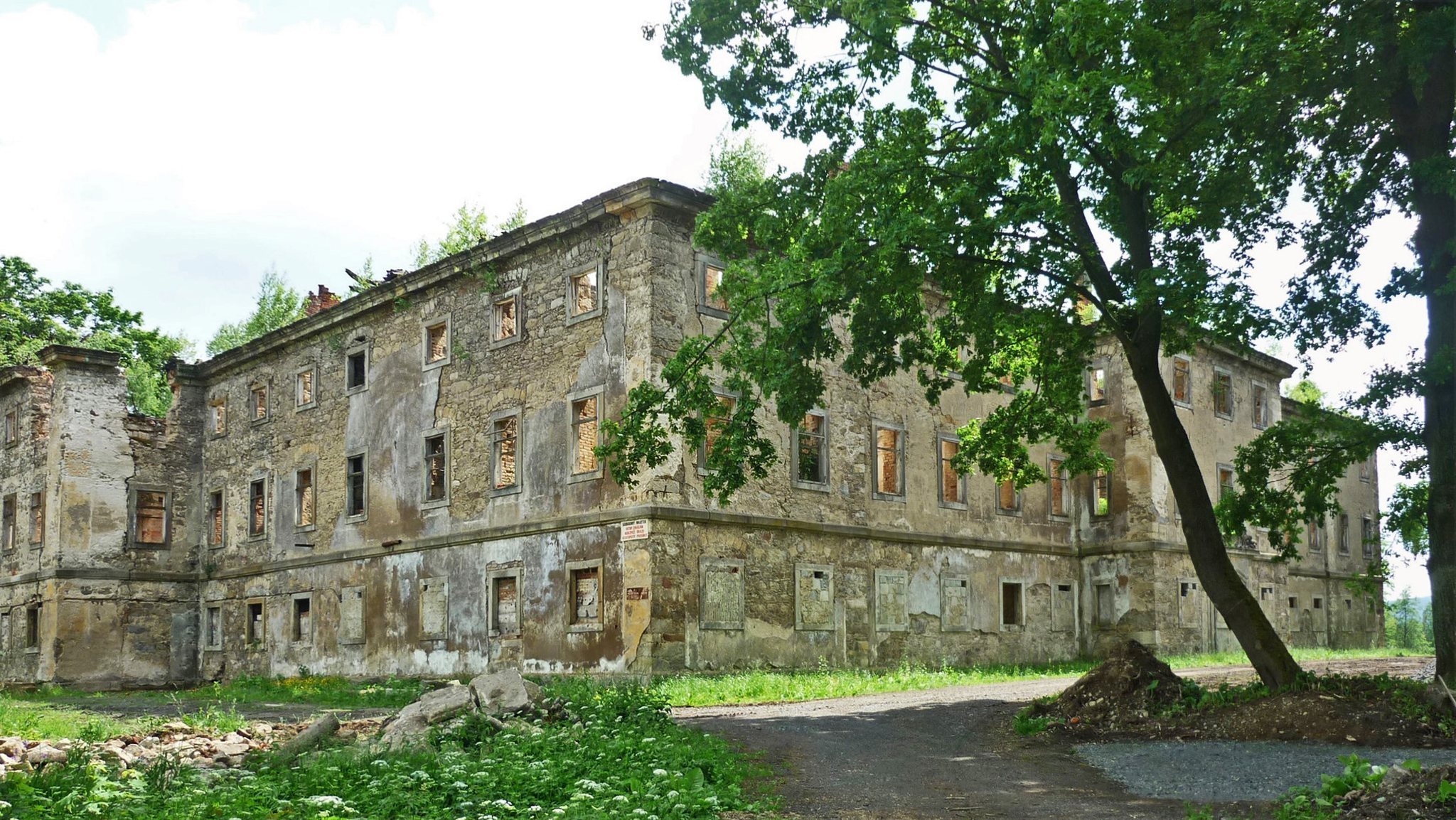
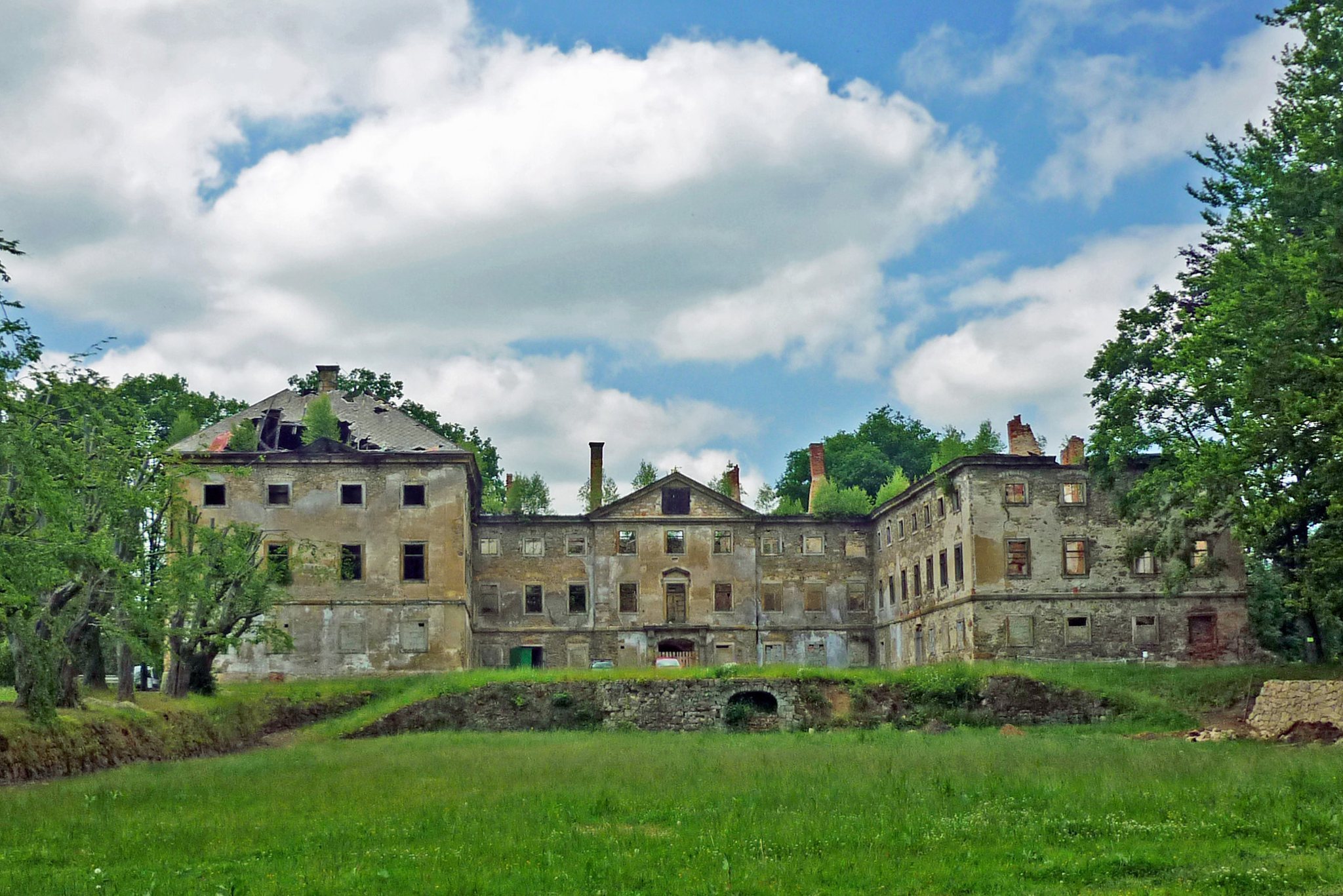
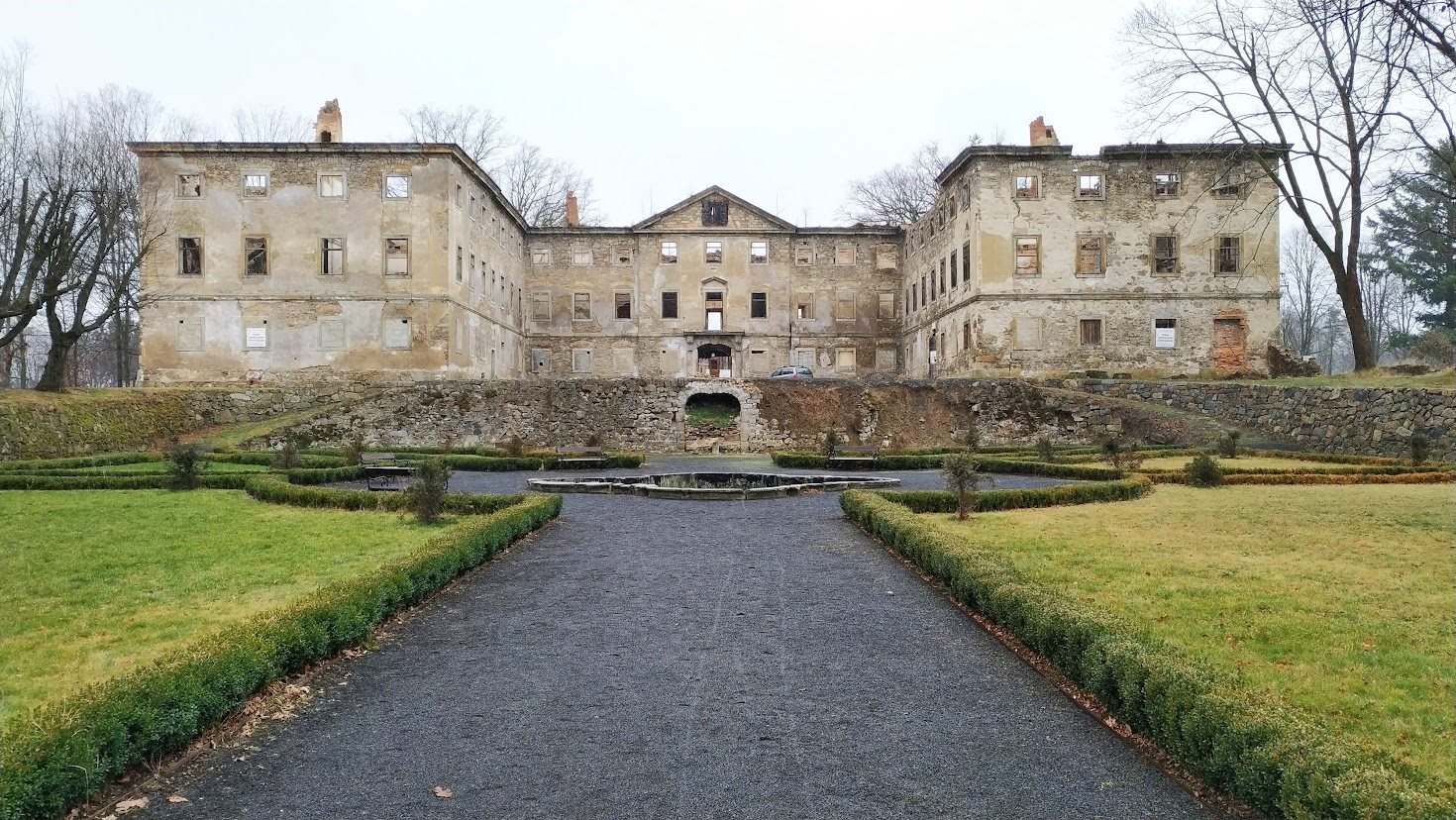
Lipová Castle is a Baroque complex organized around a courtyard and associated with a former park, a pond, an avenue, and a principal façade. The complex includes a northeast wing and a portal bearing a coat of arms. Its surviving scale comprises seven staircases, twelve chimneys, 52 rooms, and 365 windows and doors. Baroque is an early-modern European style known for monumental forms, dramatic spatial effects, and elaborate decoration.
Park and Structural Condition
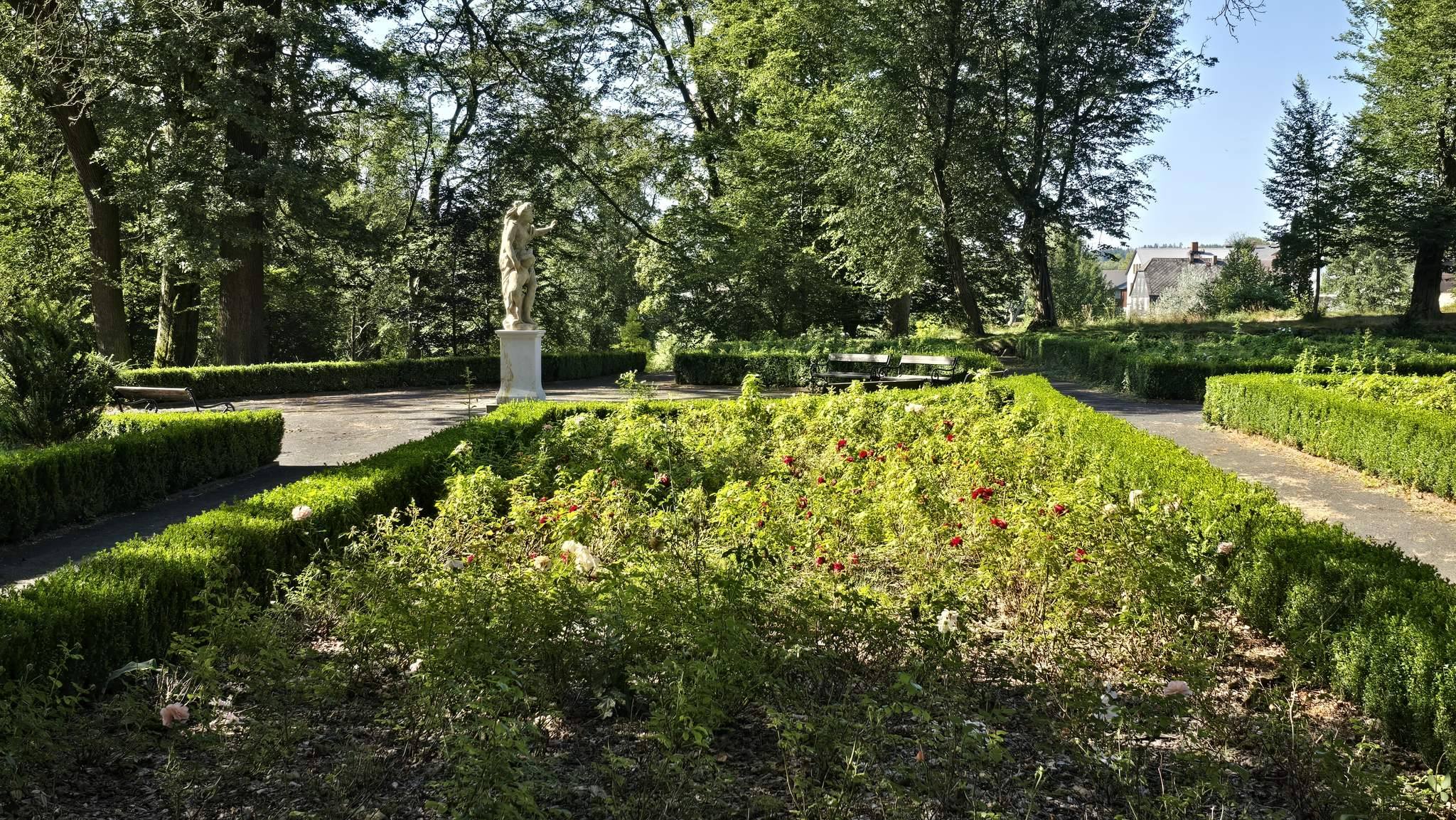
The castle park contains a pond and was heavily overgrown before the clearance campaign of 2012. Removing trees and shrubs from the courtyard and park revealed the Baroque fountain, after which restoration efforts focused on the park. The castle’s Baroque roofs and roof trusses have collapsed, and some interior ceilings also fell after the complex was left to deteriorate. Photographic documentation from 20 May 2020 showed the castle still without a roof and without substantial structural rescue work having been completed.