Fort Chambly: A French Colonial Fortification in Canada
Site at a Glance
- Rating
- 4.6
- Popularity
- Low
- Country
- Canada
- Primary era
- Early Modern
- External website
- Open
- Eras represented
- Early Modern
- Civilizations
- French
- Site type
- Military
- Remains
- Fort
On this page9 sections
History
Fort Chambly is a French-built fortification in Canada, at Chambly on the Richelieu River, founded in 1665 as Fort Saint-Louis. Captain Jacques de Chambly of the Carignan-Salières Regiment, a French army regiment sent to New France to strengthen the colony and fight the Iroquois, built it near the Chambly rapids. The fort formed part of a chain of five French strongpoints and supply posts extending along the Richelieu toward Lake Champlain, an important route into New France.
French Foundations and Early Garrisons
The first fort supported French expeditions against the Agniers, a French name for an Iroquois group. A winter campaign in 1666 ended in failure, while an autumn expedition destroyed five Agnier villages. That campaign helped lead to a peace agreement in 1667. Most of the Carignan-Salières soldiers returned to France afterward, but a small garrison remained at Fort Saint-Louis until about 1674, after which the fort was probably abandoned.
Pierre de Saint-Ours Deschaillons commanded the position from 1679 to 1686. When conflict with the Iroquois resumed in 1680, independent companies of French colonial troops and militia were stationed there. Around 1690, a second wooden fort replaced the first. An accidental fire destroyed that structure in November 1702, and a third wooden fort was built afterward. By then, the installation was known as Fort Chambly.
The Stone Fort and the French Defensive System
During the War of the Spanish Succession, Governor Philippe de Rigaud de Vaudreuil ordered the wooden defenses replaced with stone between 1709 and 1711. The new masonry was intended to withstand artillery and a possible British attack. The design and construction are attributed to Josué Boisberthelot de Beaucours, while Gaspard-Joseph Chaussegros de Léry is also identified as the engineer for this phase.
Josué Boisberthelot de Beaucours directed major improvements between 1718 and 1720, producing the defensive form represented by the present reconstruction. For many years, Fort Chambly was a principal position in the French chain along the Richelieu, an important invasion route into New France. Its military role declined after Fort Saint-Frédéric was built in 1731 and Fort Saint-Jean in 1748. Fort Chambly remained in use, but was converted into a warehouse and a rallying point for troops.
British and American Occupations
The fort was reoccupied and refortified during the Seven Years’ War, the global conflict from 1756 to 1763 that included the struggle between France and Britain for control of much of North America. On 4 September 1760, a British force of about 1,000 men and several artillery pieces approached Fort Chambly. French commander Paul-Louis Dazemard de Lusignan surrendered with roughly fifty men after the British used nearby inhabitants as human shields and threatened to kill the garrison if it resisted.
British forces held the fort until 20 October 1775, when American troops captured it during the American invasion of Canada. The Americans evacuated in spring 1776 while retreating toward Fort Ticonderoga and burned the buildings. British forces regained control in June 1776 and subsequently repaired the fort.
During the American Revolutionary War, British forces held Continental Army prisoners at Fort Chambly, including Colonel William Stacy, until the conflict ended. The fort also became the place where James Livingston raised the 1st Canadian Regiment to support the American campaign in Canada. The regiment received its formal designation in November 1775, was recognized by the Second Continental Congress in January 1776, and was disbanded in 1781.
Later Military Use and Preservation
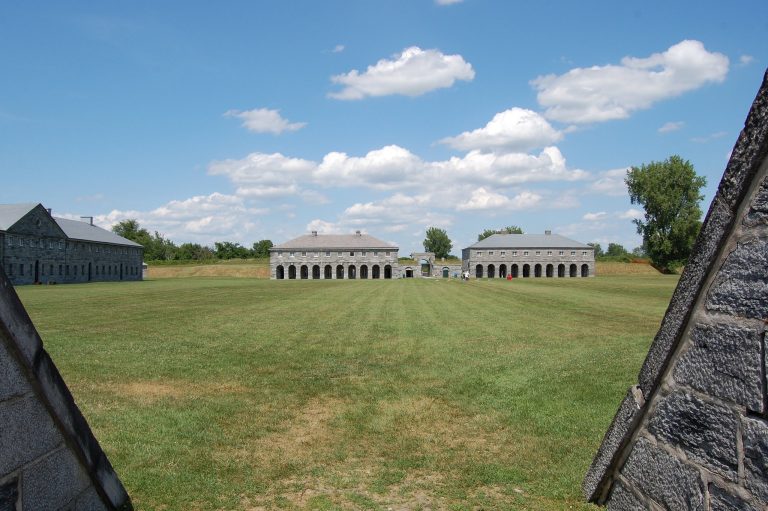
At the beginning of the War of 1812, the British developed an extensive military complex at Fort Chambly. British possession continued until the end of that conflict. The fort was later poorly maintained and was reoccupied during the Fenian Raids of the 1860s, nineteenth-century incursions by Irish nationalist organizations against British targets in British North America. By the late nineteenth century, it had fallen into ruin.
Joseph-Octave Dion, a native of Chambly, began efforts to save and restore the ruined fort in 1881. He wrote newspaper articles about it, obtained Canadian government funding, lived at the fort for nearly thirty-five years, and died there. After his death, the property was placed in the care of Parks Canada, the federal agency responsible for national historic sites. The Canadian government later assumed responsibility for its maintenance and recognized its cultural and historical importance.
Extensive archaeological excavations between 1965 and 1985 revealed evidence that helped establish and restore the fort’s 1718–1720 appearance. Fort Chambly was designated a National Historic Site of Canada in 1920. Parks Canada maintains it as a historical and interpretive site concerned with the military and social history of the Richelieu Valley from 1665 to 1760.
Remains
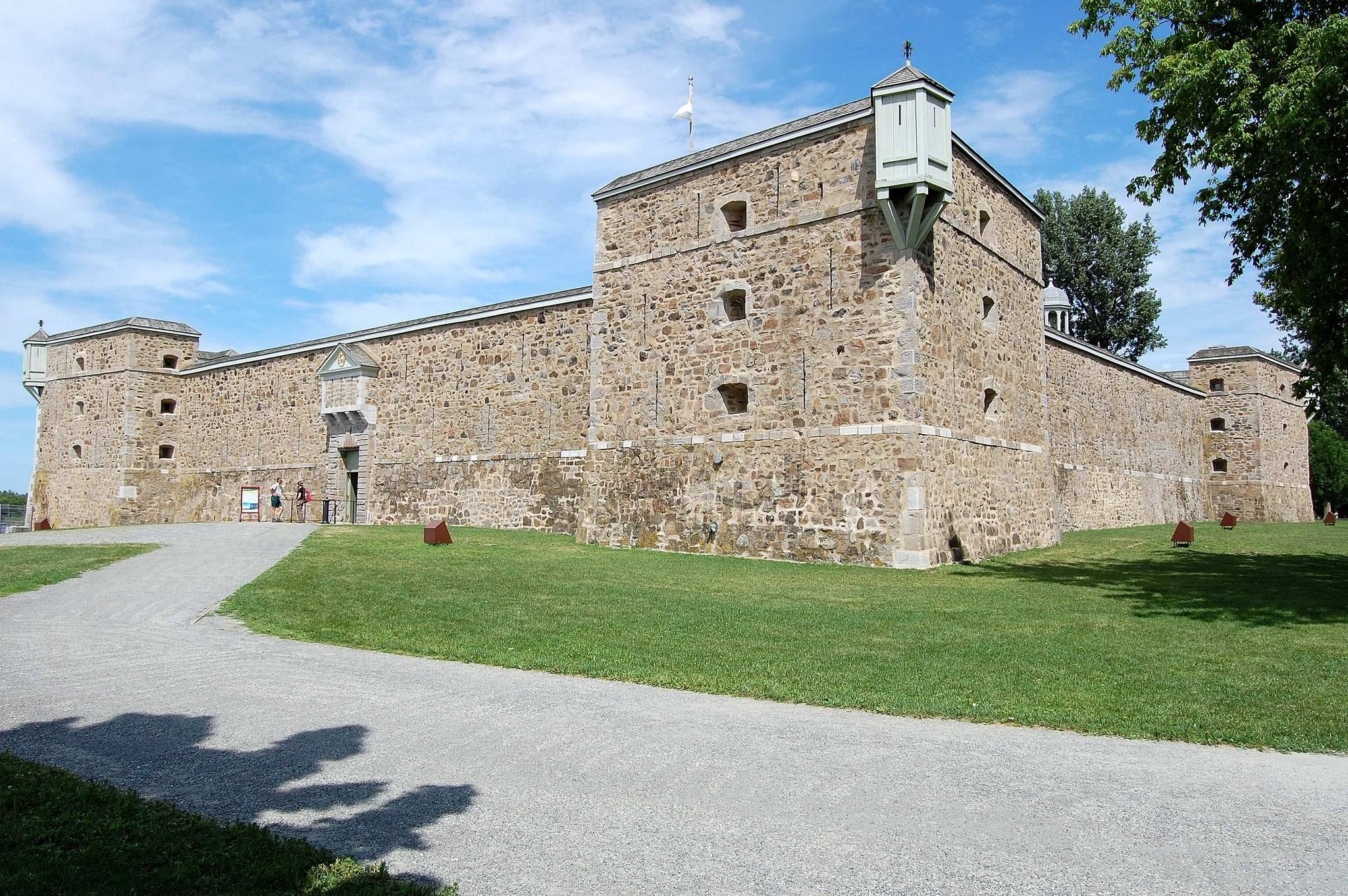
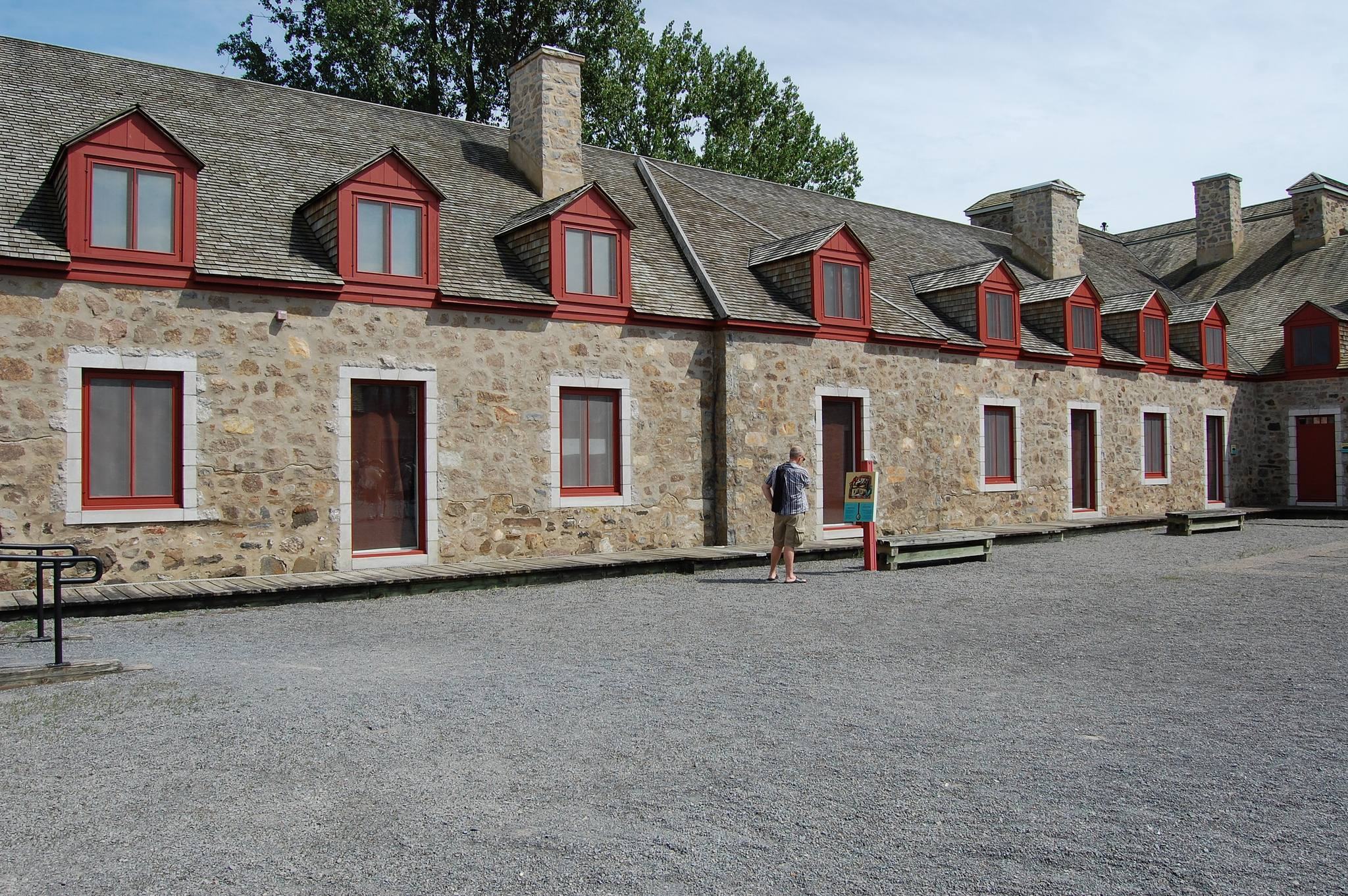
Fort Chambly stands on the west bank of the Richelieu River at the foot of the Chambly rapids, within a site covering approximately 48,000 square metres. The present complex is a reconstructed quadrangular, bastioned stone fortification. Bastions are projecting defensive platforms positioned at the corners of a fortification. The design reflects the principles of Sébastien Le Prestre de Vauban, the leading French military engineer of the late seventeenth and early eighteenth centuries, whose system emphasized regular bastioned plans, strong walls, and defenses adapted to artillery warfare.
Defenses and Earlier Fortifications
Stone Fort
The principal surviving material form is the substantial stone structure built to replace the wooden palisades between 1709 and 1711 and improved between 1718 and 1720. Its quadrangular plan and bastioned defenses represent the final French phase of the fort. Archaeological excavations conducted from 1965 to 1985 supplied physical evidence for reconstructing this appearance, and the complex is maintained as a reconstructed fort.
Wooden Predecessors
The first Fort Saint-Louis was a wooden enclosure measuring 144 feet on each side. A single gate opened through wooden palisades approximately 15 to 20 feet high, while buildings inside the enclosure provided accommodation for soldiers and space for storage. The third wooden fort, built after the fire of November 1702, had a palisade approximately 12 feet high. The later stone fort replaced these wooden defenses with masonry intended to withstand artillery.