Villers-Bettnach Abbey: A Cistercian Monastery in France
Site at a Glance
- Rating
- 4.3
- Popularity
- Very Low
- Country
- France
- Primary era
- Medieval
- Eras represented
- Medieval, Early Modern
- Civilizations
- Duchy of Lorraine, Holy Roman Empire
- Site type
- Religious
- Remains
- Monastery
On this page13 sections
History
Villers-Bettnach Abbey is a former Cistercian monastery in France, founded in the early 1130s, usually dated to 1134, in the Romanesque period. The Cistercians were a Catholic monastic order that stressed communal prayer, austerity, and manual work. As a daughter house of Morimond Abbey, one of the order’s principal foundation houses, Villers-Bettnach remained within the Cistercian order until its dissolution in 1790.
Foundation and early development
The founder was a monk and abbot of Morimond who became Villers-Bettnach’s first abbot. Different traditions identify him as Henri of Carinthia or Heinrich von Spanheim. He initially held the abbacy of Villers-Bettnach together with that of Morimond. Simon I, Duke of Lorraine, provided the land, which had formerly belonged to ducal estates inherited from the royal fisc, meaning property held by the monarch.
The abbey stood in the Duchy of Lorraine, within the German Bailiwick and the office of Sierck, while its ecclesiastical jurisdiction belonged to the Diocese of Metz. A bailiwick was an administrative district governed by a bailiff, and an office was a local administrative jurisdiction. The first abbots were German-speaking, and Germanic influence predominated among the monks during the twelfth and thirteenth centuries.
Its secluded position in a forested valley offered the solitude sought for monastic life while keeping the community relatively close to Metz and Thionville. By 1134, the monastery was an organized community centered on a small, dark Romanesque chapel dedicated to Saint Catherine. Catherine de Schambley and her husband, Hugues Blanchard, greatly enlarged the abbey’s original endowment. They were buried at Villers-Bettnach, and the abbey received the pond that still bears the name Blanchard Pond.
Wealth and expansion
Gifts from rulers, the bishops of Metz, and other benefactors made Villers-Bettnach one of the wealthiest abbeys in Lorraine. Around 1210, Luccarde of Leiningen, widow of Simon II, Count of Saarbrücken, and her brother-in-law Henri, the first Count of Deux-Ponts, granted land on the edge of the Warndt Forest for a hospital. The hospital was founded in 1214 at the site of the present Church of Saint Nicholas in L’Hôpital.
The abbey also extended its institutional network. Its daughter houses included Viktring in Carinthia, founded in 1142; Eußerthal in the Palatinate, founded in 1148; Wörschweiler, founded in 1171; Zagreb, established in the later thirteenth century; and Pontifroy in Metz, founded in 1323. Zagreb’s affiliation remains uncertain, while Cambron Abbey in Belgium is only doubtfully regarded as a daughter house.
Between the sixteenth and eighteenth centuries, the monastery established numerous villages on its surrounding lands. Its possessions also included a grange, an agricultural or economic estate, with salt pans at Marsal, as well as town houses in Metz and Sierck-les-Bains.
Destruction, dissolution, and later use
The monastery was laid waste in 1552. A new church was built between 1724 and 1729, but the French Revolution brought the abbey’s dissolution in 1790. The buildings and grounds were then converted to agricultural use. Surviving structures were later acquired by the town of Boulay-Moselle, which established a convalescent home there.
The former abbey was classified as a French historic monument on 28 March 1905. The site is now cared for by the Association des Amis des Sites de St-Hubert.
Remains
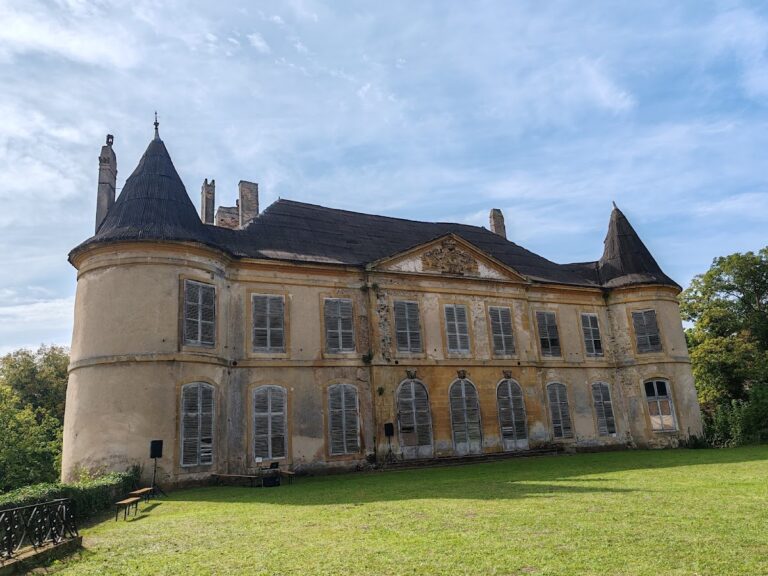
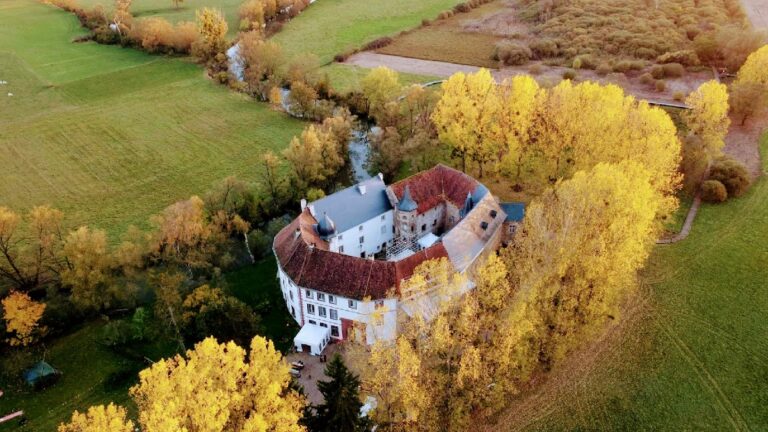
The surviving buildings and ruins occupy a small side valley of the Canner valley, within a forested massif. They stand on a small hill beside a stream, about 22 kilometres northeast of Metz. The cloister lay north of the church, while the conventual buildings stood to the church’s left.
Church and monastic layout
Thirteenth-century church
The surviving remains of the thirteenth-century church belong to a six-bay vaulted hall church. Its plan included a projecting transept, the cross-arm that intersects a church’s main body, and a polygonal apse, the many-sided eastern end of the building.
Monastic buildings
The cloister formed the covered passage around the monastic courtyard on the north side of the church. The conventual buildings occupied the opposite side of the church’s layout, preserving the principal spatial organization of the abbey complex.
Chapels, gateway, and landscape features
Chapel of Saint Catherine
The Chapel of Saint Catherine incorporates, or stands above, a building dating from the twelfth century. Its windows are described as triple windows, linking the surviving chapel with the early history of the monastery’s religious buildings.
Peasants’ Chapel
The seventeenth-century Peasants’ Chapel, also known as the Chapelle des Humbles, survives and is used as a parish church.
Portail Coislin
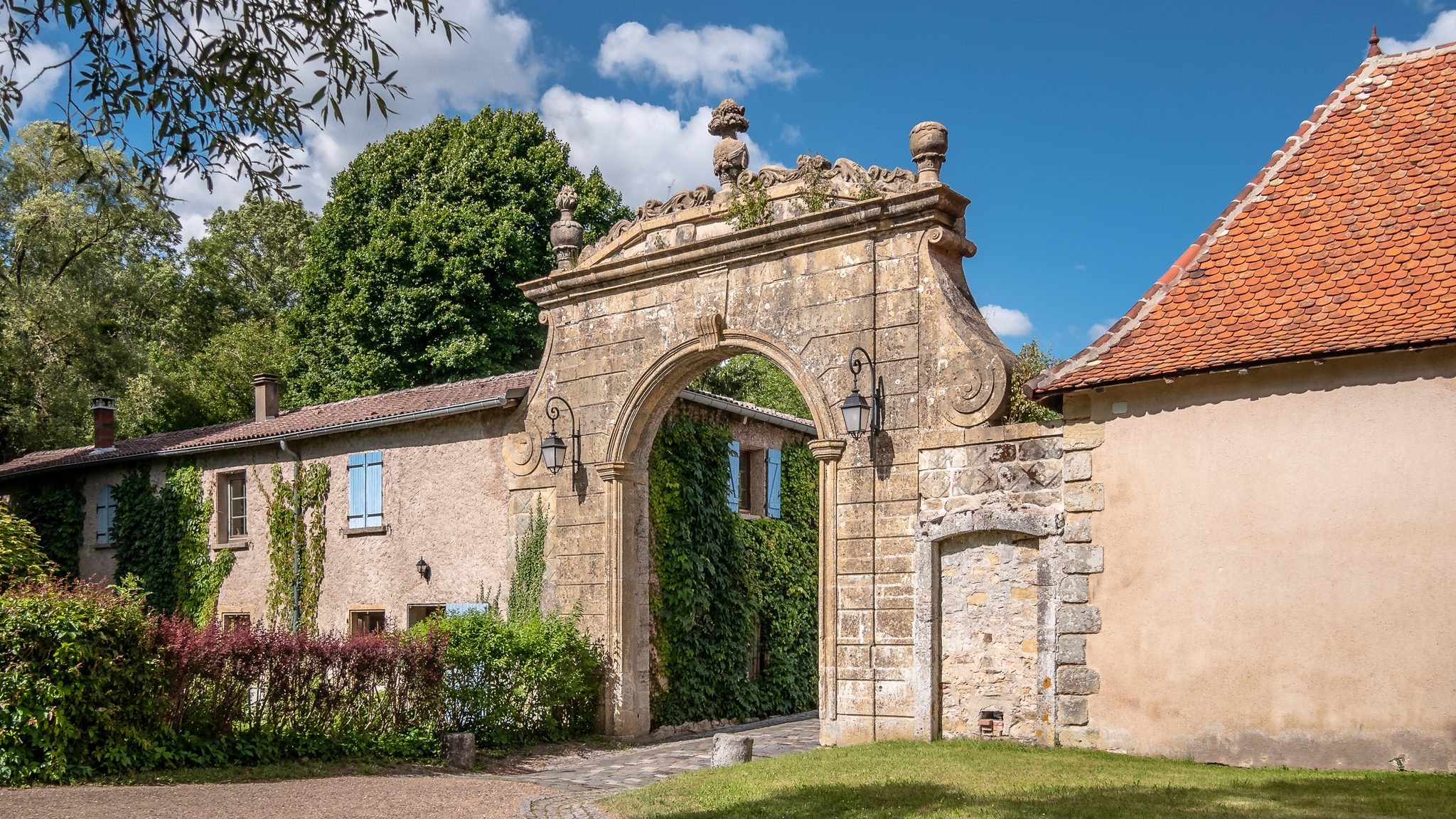
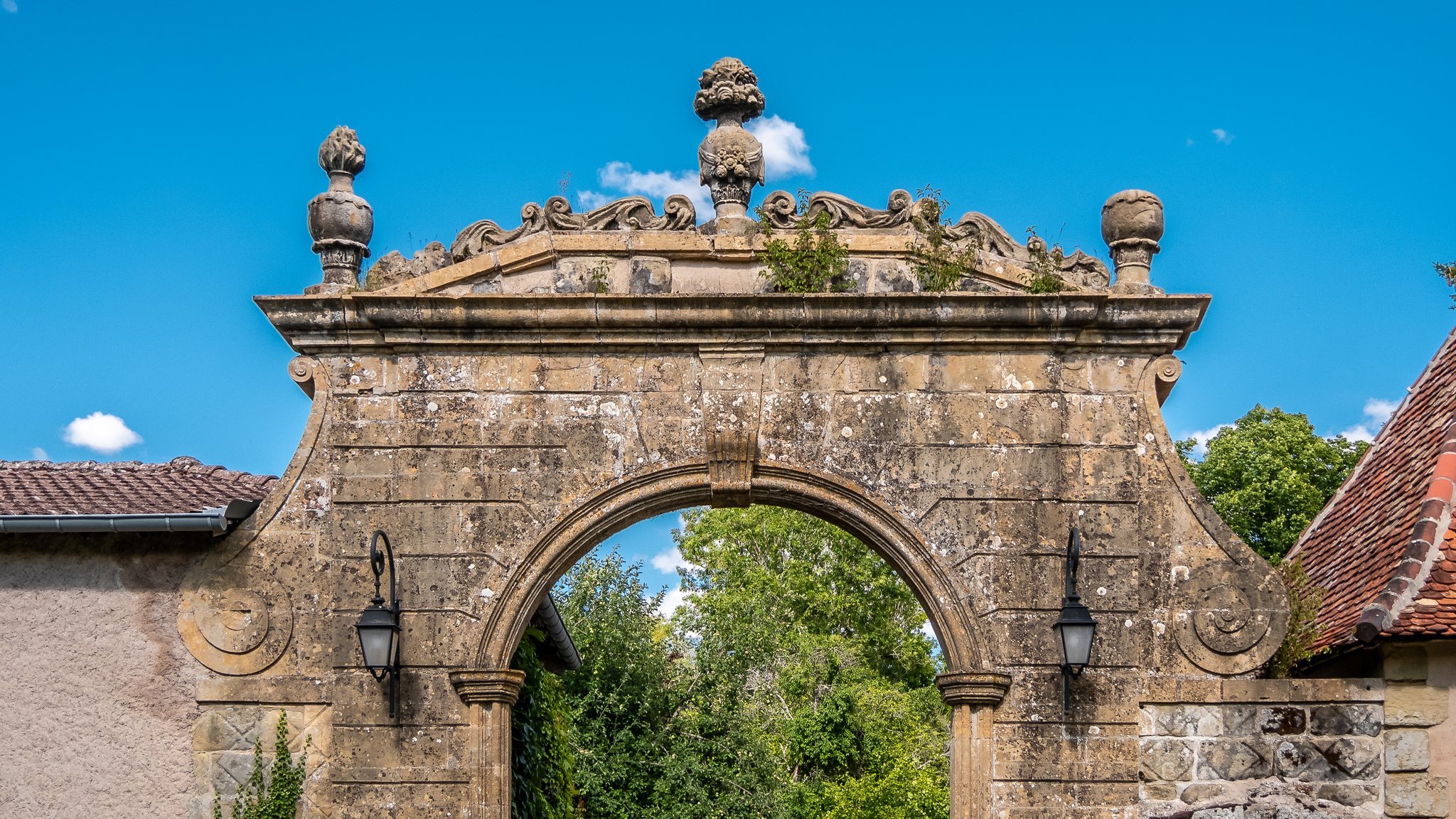
The monumental Portail Coislin is an entrance gateway dating from the seventeenth century. It remains among the surviving architectural elements of the former abbey.
Blanchard Pond
Blanchard Pond remains an associated landscape feature of Villers-Bettnach. The abbey received it through the endowment made by Catherine de Schambley and Hugues Blanchard, whose benefaction enlarged the monastery’s original estate.