Badenburg: A Pleasure Palace for Bathing in Nymphenburg Park
Site at a Glance
- Rating
- 4.6
- Popularity
- Low
- Country
- Germany
- Primary era
- Early Modern
- External website
- Open
- Eras represented
- Early Modern
- Civilizations
- Electorate of Bavaria, Holy Roman Empire
- Site type
- Domestic
- Remains
- Palace
On this page8 sections
History
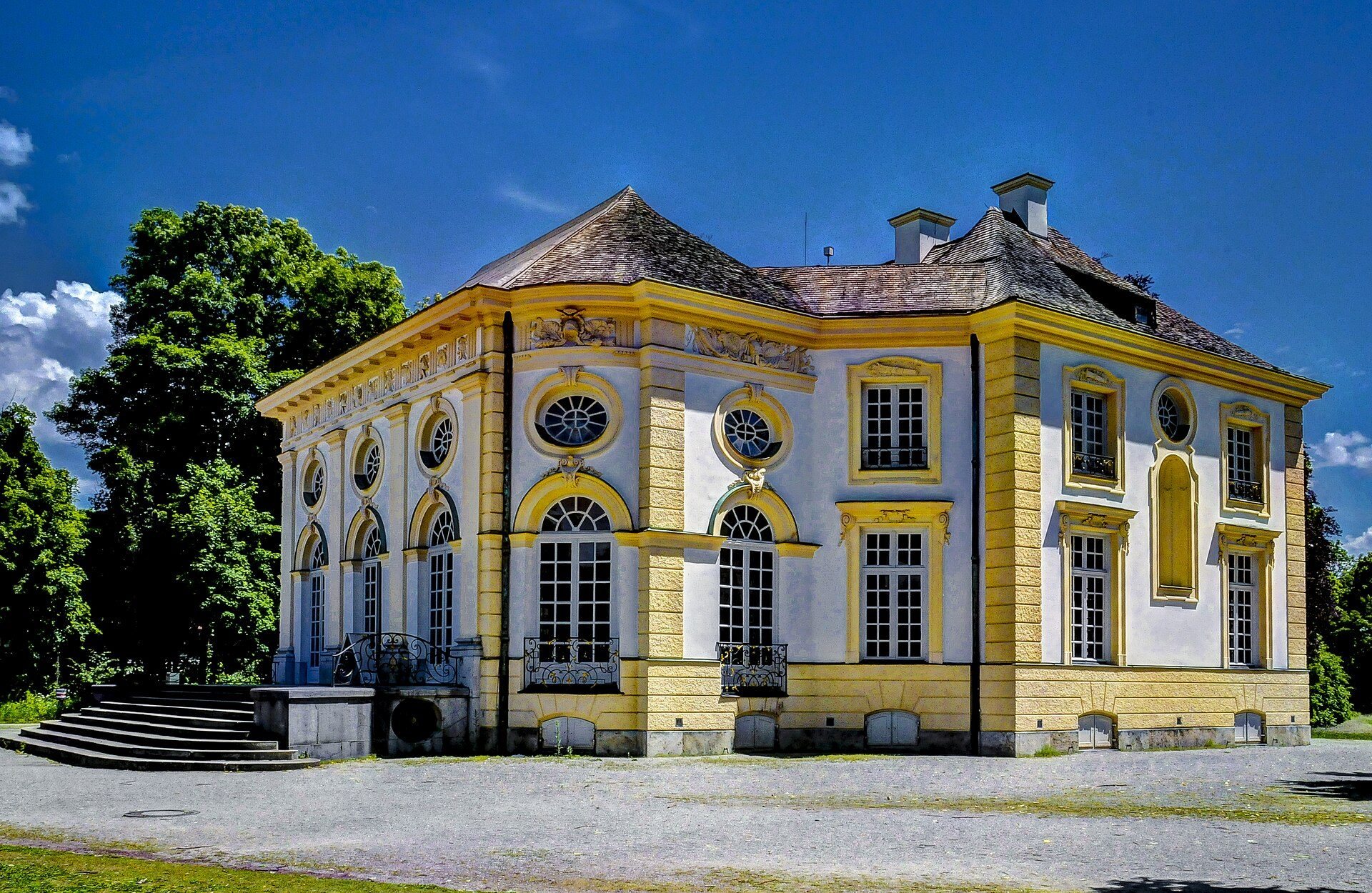
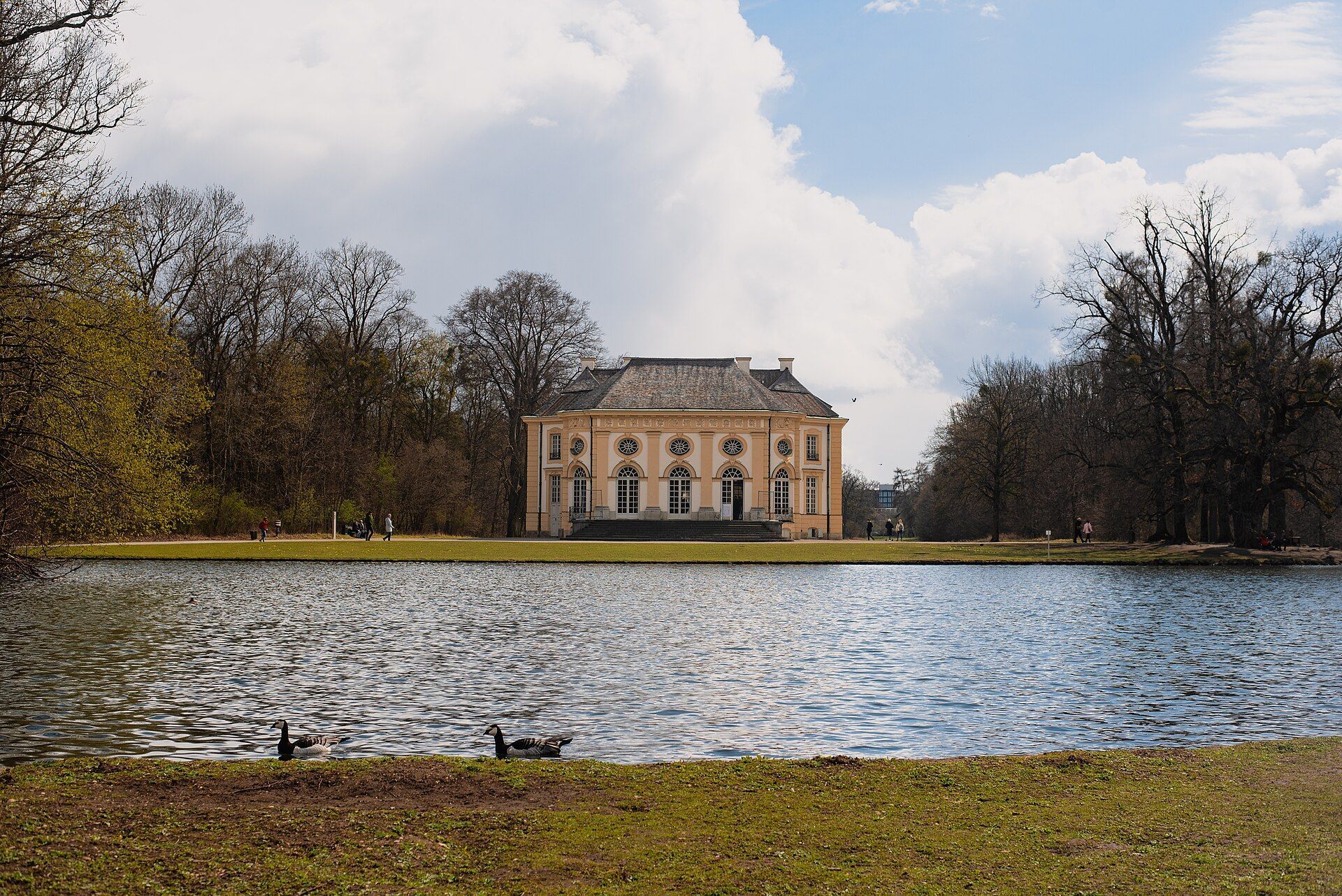
Badenburg is a pleasure palace in Germany, located in Munich’s Nymphenburg Park and built between 1718 and 1722 by Joseph Effner for court leisure and bathing. Designed primarily for recreation rather than government, it is described as the first large European building in centuries created exclusively for this purpose. Its plan brought together a ballroom, an electoral apartment, and a large bathing hall.
Construction and court use
Joseph Effner, a German architect and court building official serving the Bavarian court, designed Badenburg as a specialized bathing residence. The building combined private rooms with ceremonial and recreational spaces, giving bathing a central place within a court pleasure palace.
War damage and restoration
Badenburg was severely damaged by bombing during the Second World War. Its ceiling fresco by Jacopo Amigoni was destroyed in 1944. Restoration in 1983 and 1984 reconstructed the wooden-shingle roof and the ochre-yellow exterior. In 1984, a copy by Karl Manninger replaced the lost fresco.
In 2022, authentic seating furniture returned to the elector’s bedroom after almost a century. The restored set contains six pieces dating from the mid-eighteenth century.
Remains
Palace layout and interiors
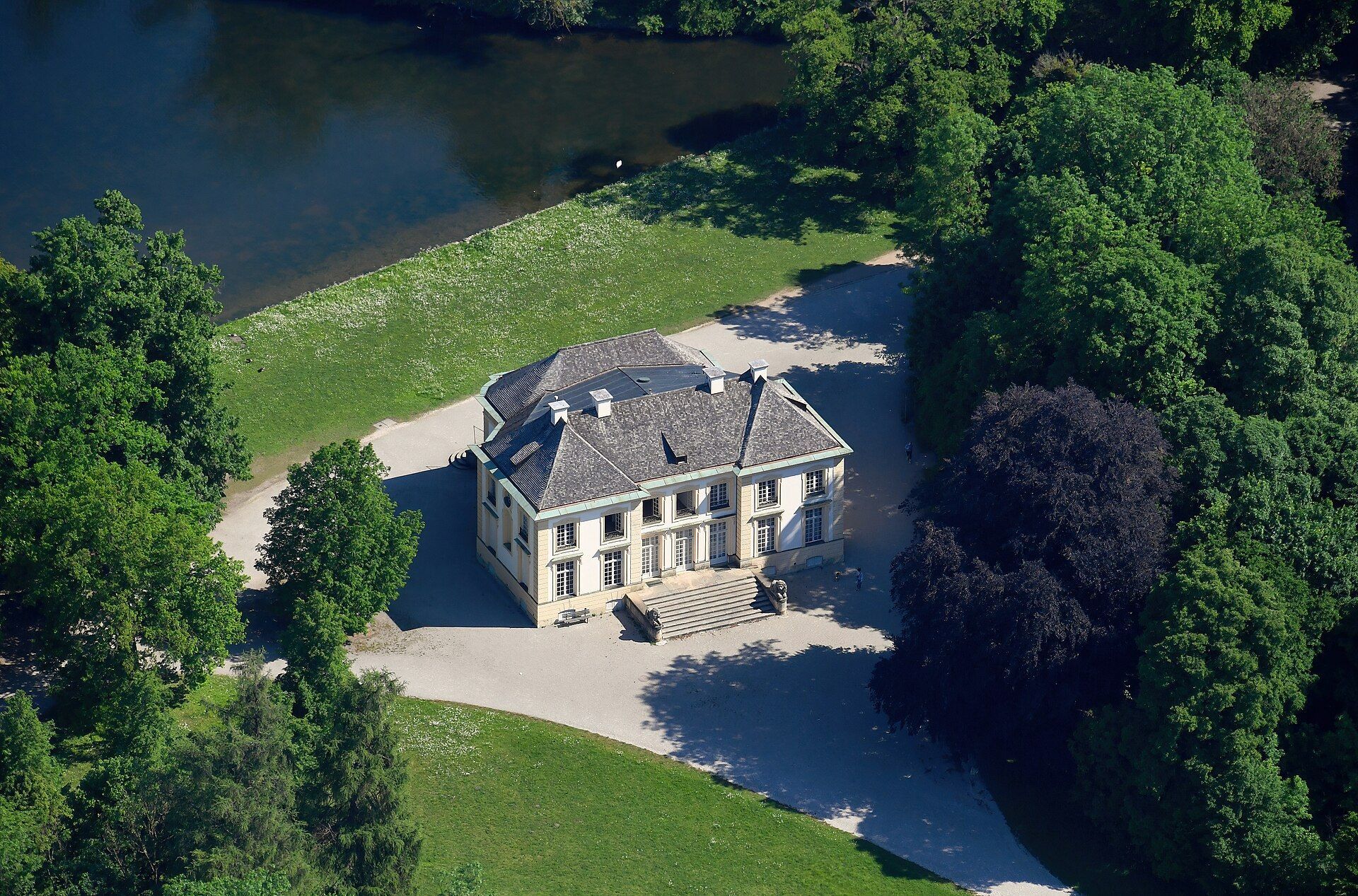
Badenburg stands at the southeastern end of the larger lake in the southern part of Nymphenburg Park. Two exterior stairways enter the building. A southern stairway provides access from the meadow valley, while a broad northern stairway opens the spacious hall toward the lake. On the ground floor, the bath occupies the southwest, the bedroom lies in the southeast beside a writing cabinet and dressing room, and a central game room connects with the hall.
Decorative rooms
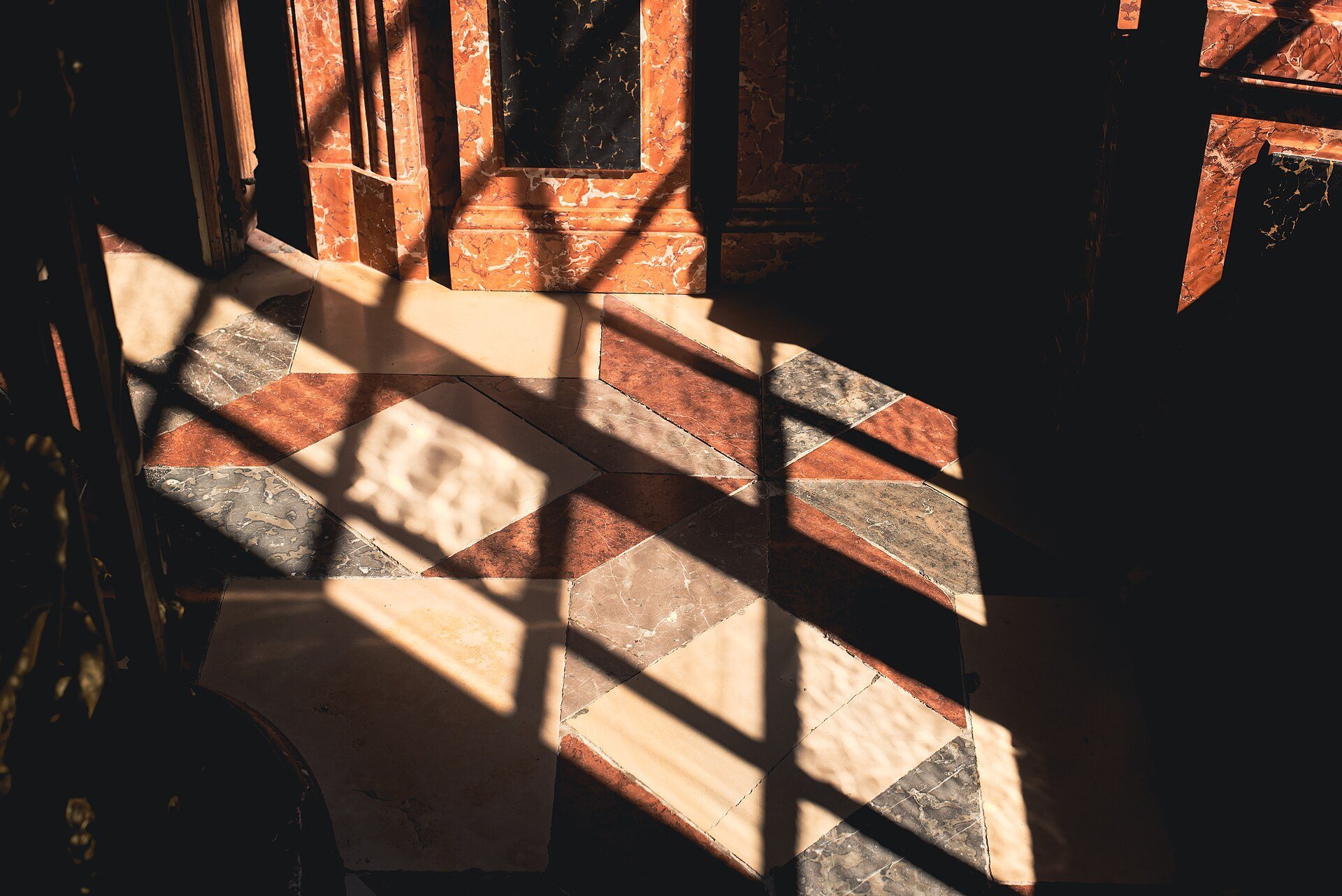
The hall contains festive decorative work by Charles Dubut. Three rooms have Chinese wallpapers. Two show scenes of everyday life in East Asia, while the third presents plants, birds, and butterflies in pink and green. The hall also contains two fountains with gilded hollow lead statuettes of children of Triton riding dolphins that spout water. Guillielmus de Grof made these casts in 1722.
Bathing hall
The bathing room extends across the basement and ground floor and is almost entirely occupied by the pool. The pool measures 8.70 by 6.10 metres, reaches 1.45 metres in depth, holds 80,000 litres, and is lined with Dutch tiles. The bathing gallery has stucco-marble facing and an ornamental wrought-iron railing made by Antoine Motté. Nymphs and naiads decorate the ceiling, while the basement contains the installations for heating the water. With an area of more than 50 square metres, the pool was regarded in its period as an exceptional artistic and technical achievement.
Lakeside landscape
Badenburg forms part of a designed landscape organized around the lake on its southern shore, which is named Badenburger See after the building. The lake provides views toward Badenburg and the Apollotemple, a small temple-like structure dedicated to Apollo on a peninsula in the same water. The southern stairway is flanked by two lion sculptures, probably installed around 1769. Charles de Groff made them from Regensburg green sandstone, and they were formerly painted white. The stairway leads toward Löwental, a broad meadow valley ending at a ha-ha, a sunken wall or ditch that separates areas without blocking the garden view.