Ōtaka Castle: A Japanese Hilltop Castle in Nagoya
Site at a Glance
- Rating
- 3.5
- Popularity
- Low
- Country
- Japan
- Primary era
- Medieval
- External website
- Open
- Eras represented
- Medieval, Modern
- Civilizations
- Unclassified
- Site type
- Military
- Remains
- Castle
On this page11 sections
History
Ōtaka Castle is the ruin of a Japanese hilltop castle in Nagoya, Japan. Its construction date is unknown, but it existed by the Nanboku-chō period, a fourteenth-century era of rival imperial courts and political conflict. The castle stood in former Ōdaka Village in Chita District, Owari Province, and later became strategically important during the Sengoku period, the age of competing regional warlords.
Early Lords and the Mizuno Clan
During the Nanboku-chō period, Ikeda Yoritada served as castellan under Toki Yoriyasu, the military governor of Owari. In the Eishō era, the castle was reportedly held by Hanai Bichū-no-kami. Control then passed to Mizuno Tameyoshi and his son Mizuno Tadamori. This Tadamori was a different person from Mizuno Tadamori, the son of Mizuno Tadamasa. The Mizuno clan continued to control Ōtaka during the Tenbun era, when the castle was under the authority of Oda Nobuhide.
Imagawa and Oda Rivalry
In 1548, forces sent by Imagawa Yoshimoto attacked Ōtaka Castle on his orders but failed to take it. Their commander, Nonoyama Masakane, was killed. After Oda Nobuhide died, Yamaguchi Noritsugu, the lord of Narumi Castle, brought Ōtaka and Kitsukake Castle to the Imagawa side.
Oda Nobunaga responded to the Imagawa threat by building the Marune and Washizu fortresses in 1559. Yoshimoto then ordered Asahina Terukatsu to strengthen Ōtaka Castle. In 1560, the siege was broken, and Udono Nagateru took responsibility for the castle’s defense.
The 1560 Provisioning Mission
On the night of June 11, 1560, Matsudaira Motoyasu, later known as Tokugawa Ieyasu, brought provisions to Ōtaka Castle and replaced Udono Nagateru as its defender. Motoyasu was then serving the Imagawa. After learning that Yoshimoto had been killed at the Battle of Okehazama, the battle in which Oda Nobunaga defeated the Imagawa leader, Motoyasu withdrew to Okazaki Castle and began the move toward independence from the Imagawa. Ōtaka Castle subsequently returned to Oda control.
The date of the provisioning mission is not entirely uniform in historical accounts, which place it in 1558, 1559, or 1560. It may have taken place shortly after the castle came under Imagawa control. The castle was abandoned soon afterward.
Later Residence and Preservation
In 1616, Shimizu, a hereditary senior councillor of the Owari Domain, established a residence on the former castle site. The Shimizu family occupied it for successive generations before selling the residence in 1870.
A nearby Sōtō Zen temple, belonging to a major branch of Japanese Zen Buddhism, was founded in 1556 by Mizuno Daizen, lord of Ōtaka Castle. He established it to commemorate his father, Mizuno Tadauji, who was also known as Izumi-no-kami or Tōkurō Chikamori.
Ōtaka Castle was designated a National Historic Site in 1938. In 1944, the castle ruins and the detached Marune and Washizu fortress sites received a collective National Historic Site designation. The former castle is now preserved as Ōtaka Castle Ruins Park.
Remains
Castle Enclosures and Defenses
Inner Bailey
The surviving layout includes the inner bailey, the castle’s principal enclosed area, together with a second bailey, an earthen bridge, and a dry moat. A dry moat is a defensive ditch without water. The castle formerly used double moats and earthen ramparts as part of its defenses.
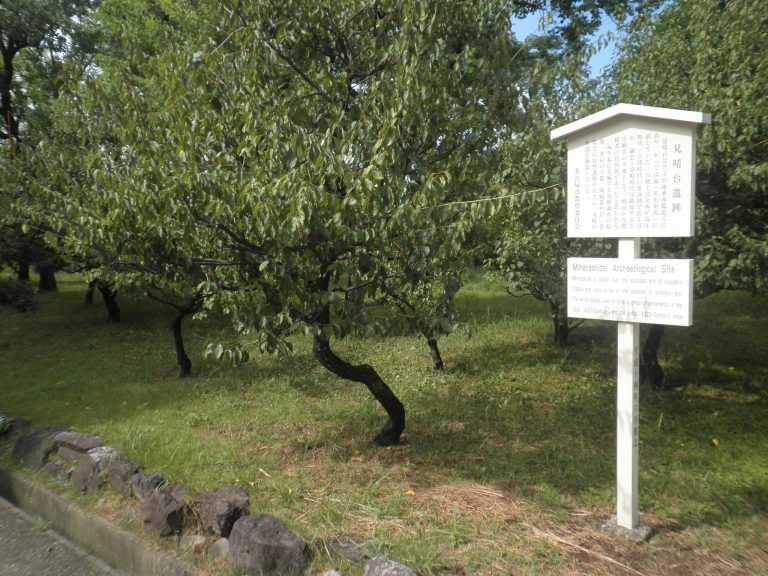
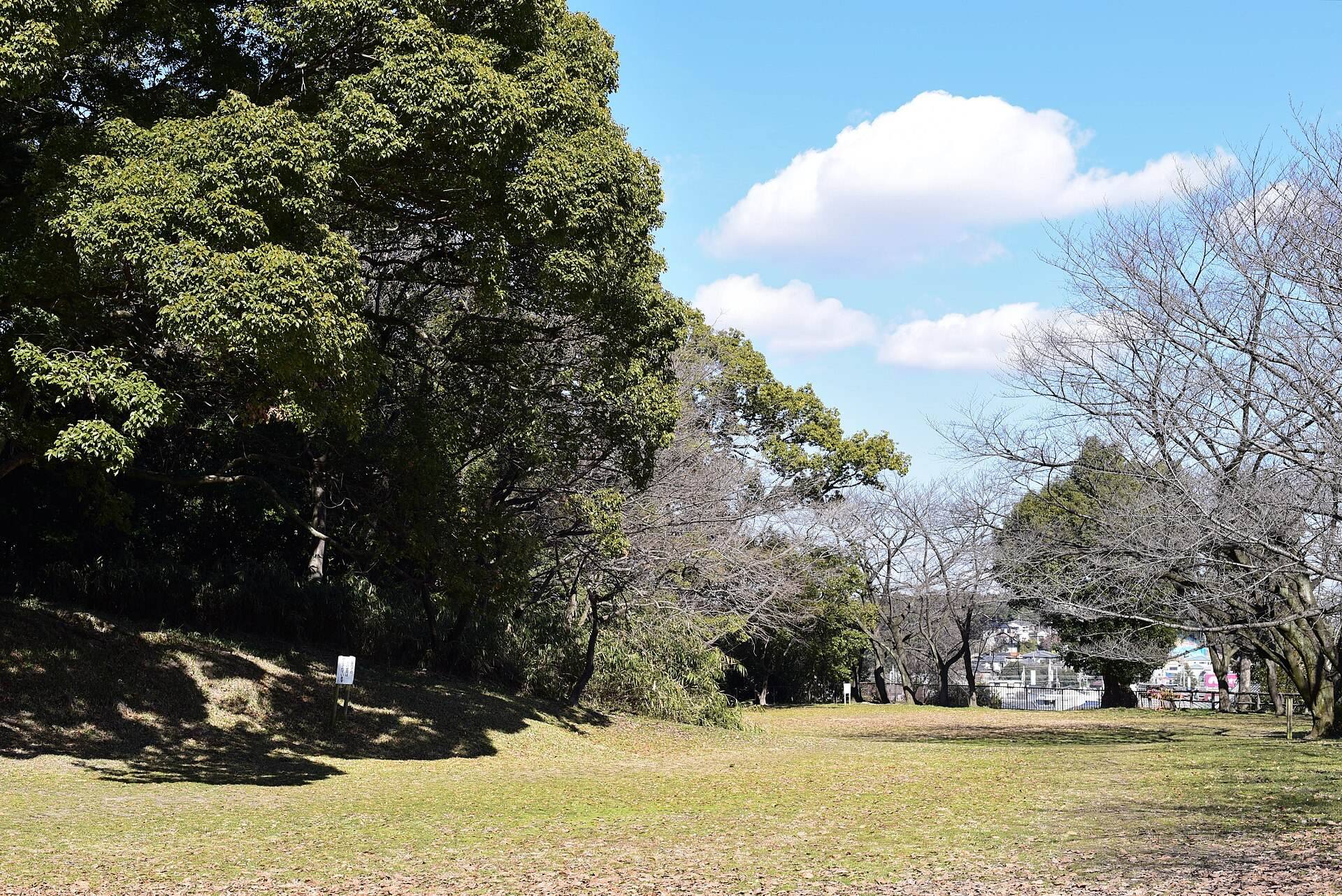
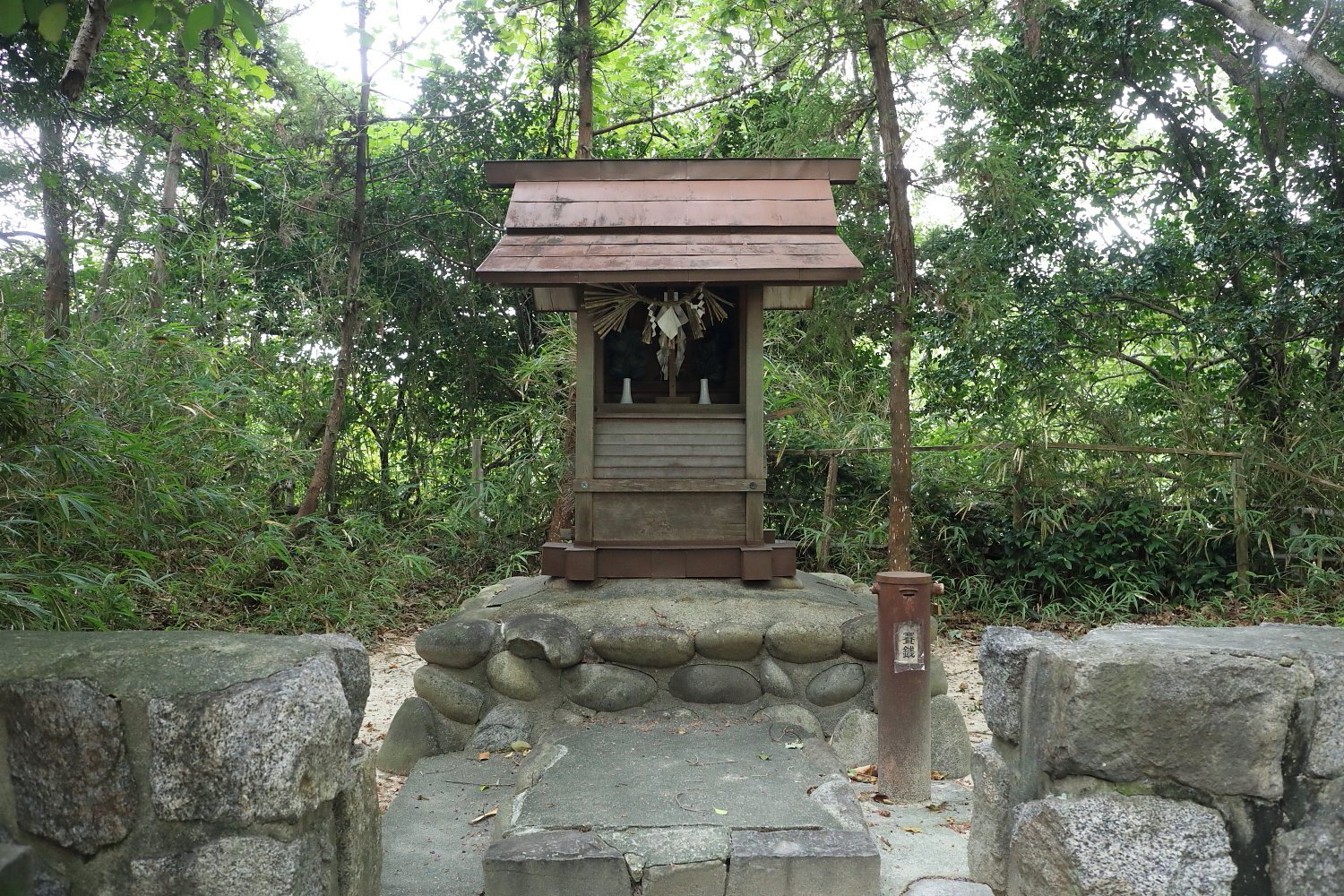
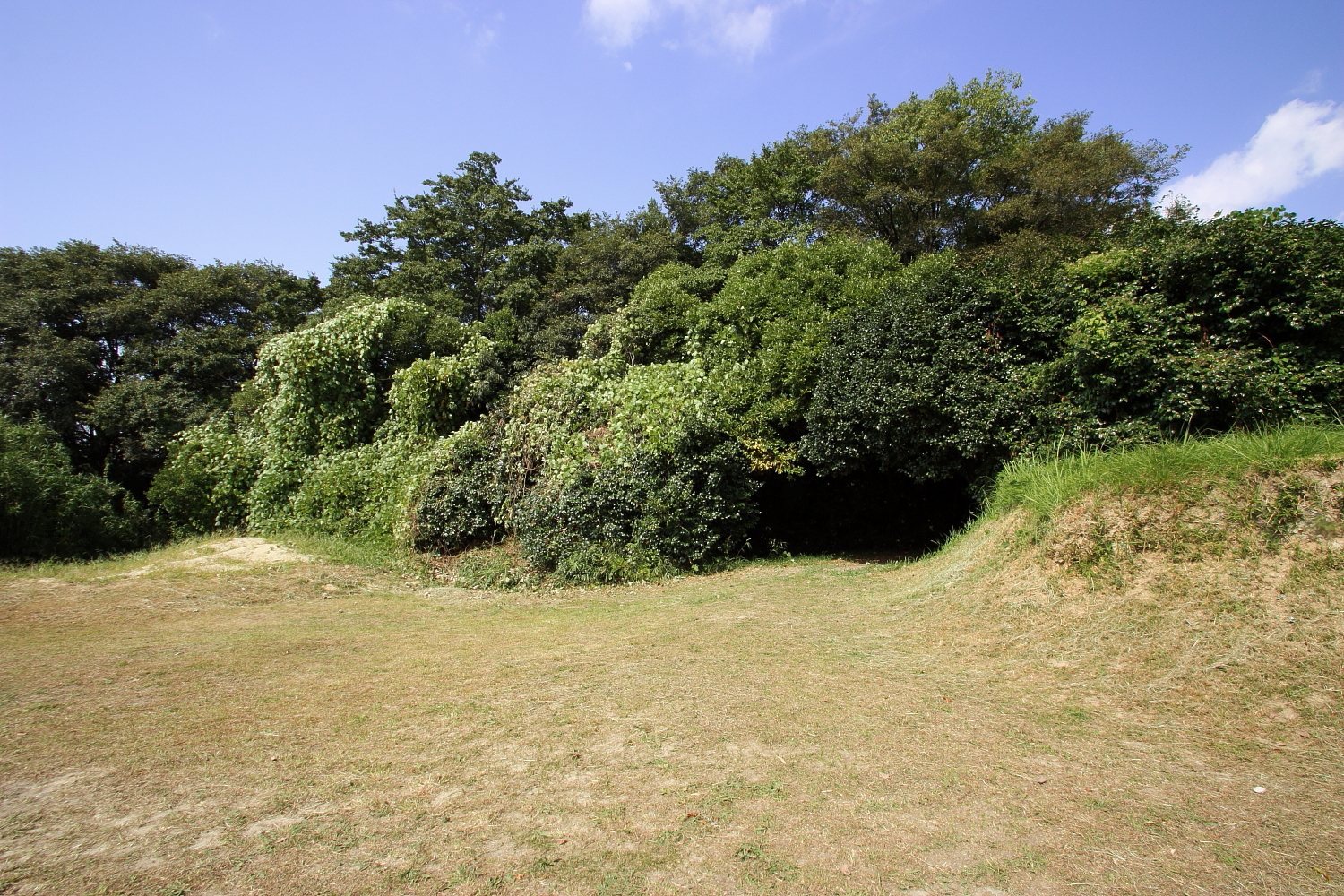
The inner-bailey site is maintained as a wooded park. Its ground is covered by grass, fallen leaves, and other vegetation, and cherry trees bloom there in spring. A slightly elevated corner is identified as the site of the castle tower. The small Shinto shrine Shiroyama Hachiman-sha now occupies this area, alongside a castle-site monument erected in 1907.
Second Bailey and Lower Enclosure
The second-bailey enclosure survives as an archaeological remain. A further enclosure lies below it, while an earthen embankment remains along the left side of the approach. From the second-bailey site, the locations of the Marune and Washizu fortresses can be seen.
Earthen Bridge and Dry Moat
The earthen bridge forms a raised earth crossing between castle precincts and survives with the dry moat as part of the preserved castle fabric. Together with the inner and second baileys, these features express the main surviving arrangement of the former hilltop stronghold.
Historic Site Markers
A stone monument marking the historic site stands at the entrance to the park. Another monument, erected in 1907, occupies the elevated area associated with the castle tower. The surviving ruins are maintained within the public park as the physical remains of Ōtaka Castle.