Vsetín Castle: A Renaissance Castle and Regional Museum
Site at a Glance
- Rating
- 4.6
- Popularity
- Low
- Country
- Czechia
- Primary era
- Modern
- External website
- Open
- Eras represented
- Medieval, Early Modern, Modern
- Civilizations
- Habsburg, Holy Roman Empire, Margraviate of Moravia
- Site type
- Domestic
- Remains
- Castle
On this page10 sections
History
Vsetín Castle is a Renaissance castle in Vsetín, Czechia, built during the first decade of the seventeenth century on the foundations of a medieval fortress. Its first recorded mention dates from 1610, when Lukrecie Nekšovna of Landek and her second husband, Albrecht of Valdštejn, were its owners. The earlier fortress had stood there since the first half of the fifteenth century.
From medieval fortress to aristocratic residence
The castle became involved in the upheavals of the Thirty Years’ War, the major European conflict fought from 1618 to 1648. In the Vsetín region, the war included the Wallachian uprising, during which the castle served as a centre for the insurgents. The Battle of Vsetín took place before its gates in 1644 and effectively brought the uprising to an end.
The Hungarian Illésházy family later held the Vsetín estate and altered the castle several times during the eighteenth century. A fire in 1708 left only the walls. Repairs to the abandoned and burned building began in 1719. Two years later, Franz Palmer, an official of Count Mikuláš Illesházy, prepared a detailed description of the castle. It explained that the building was not the count’s permanent representative residence, but was used temporarily and mainly accommodated the administration of the estate and its officials.
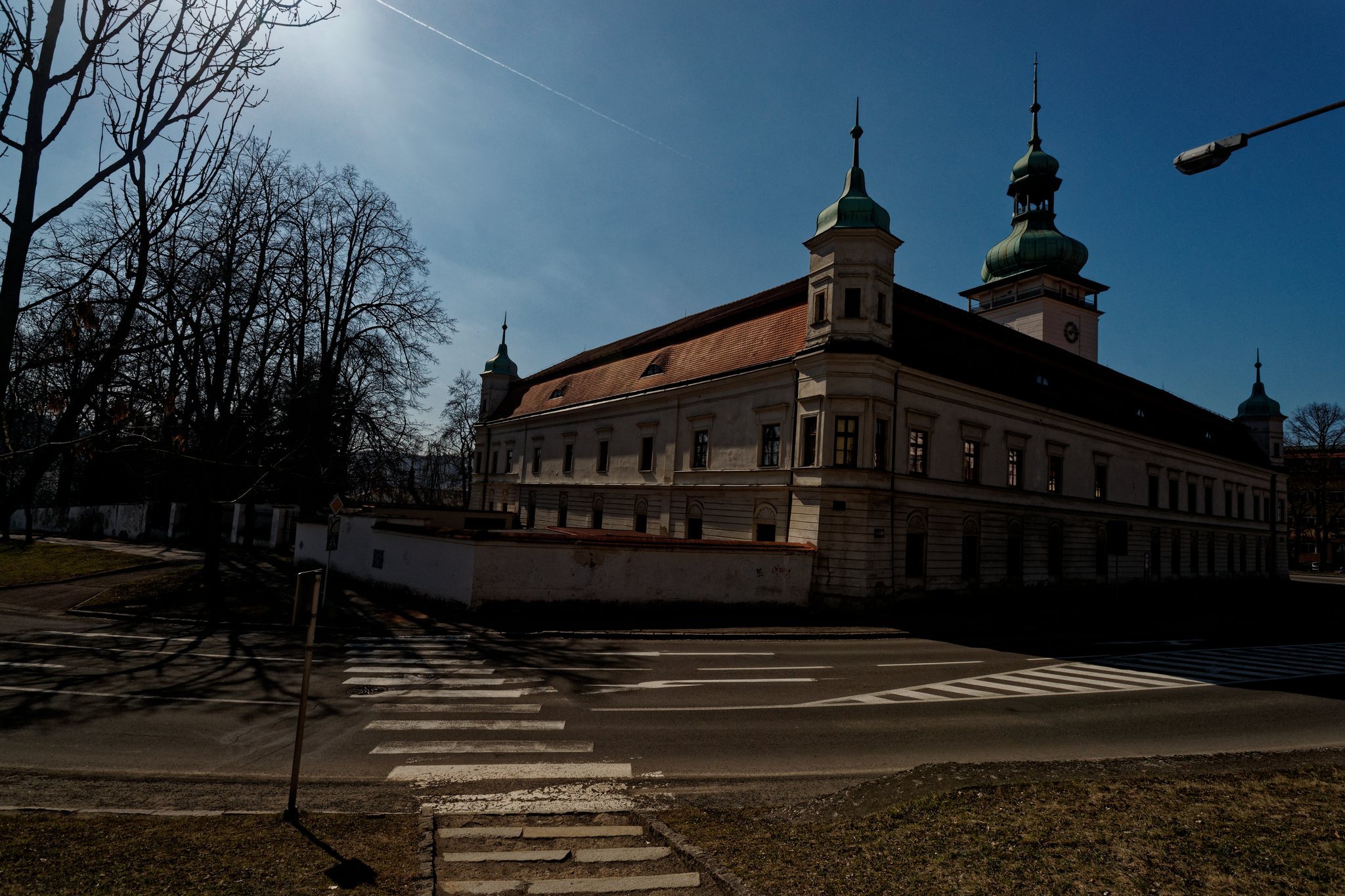
The tower clock was repaired in 1740, and further work followed. This later phase apparently included the construction of the mansard roof over the castle wings. A mansard roof has two slopes on each side, with the lower slope steeper than the upper one. The building acquired its present Classical and Empire appearance in 1833–1834 under its last aristocratic owner, Josef of Wachtler. Empire style was the early nineteenth-century form of Neoclassicism associated with formally ordered architecture.
Fire, private ownership, and state administration
The Thonet family became the castle’s new owners and repaired it in 1890. At least one member of the family lived there. In 1915, a fire destroyed the entire roof, including the roof of the tower, and the castle remained in a near-ruinous condition for almost ten years. After prolonged discussions with the heritage authorities, it was repaired to its pre-fire condition, while the interior was adapted to modern requirements. The tower roof was repaired in 1924.
Marie Baťová and her son Tomáš became the last private owners in 1938. In 1948, the town acquired the Lord’s Garden, the park surrounding the castle, the Lower Lord’s Garden, and the orchard garden. The castle entered national administration in 1949, a postwar state system in which property was managed by the government. Several institutions occupied the building until 1963.
Restoration and museum use
A major general repair took place from 1967 to 1974. The castle was ceremonially opened on 9 May 1975 during celebrations of the thirtieth anniversary of the country’s liberation. After 1989, restitution, meaning the legal return of confiscated or nationalized property to former owners or their heirs, returned the castle to Tomáš Baťa. He donated it to the town in 1993.
The castle became the seat of the Museum of the Valašsko Region, established by the Zlín Region. Renovation in 2014–2015 renewed the interiors, created modern storage facilities, removed dangerous conditions affecting selected property, and installed new electrical and data networks. It also created new permanent and short-term exhibition spaces. The museum reopened the castle in November 2015 after a nineteen-month reconstruction, with a multidisciplinary presentation devoted to the history and personalities of Valašsko, its industrial and applied-art traditions, and its folk customs.
The historical exhibitions examine Wallachian colonization and pastoral sheep raising, the Wallachian rebellions and brigandage, the industrial revolution in Vsetín during the second half of the nineteenth century, and the Protectorate and resistance movement in the Vsetín region during the Second World War. The Protectorate was the German-occupied administration established in the Czech lands during that conflict.
One exhibition presents Josef Sousedík as a twentieth-century Vsetín inventor, entrepreneur, politician, patriot, factory founder, contributor to the construction of the Zbrojovka arms-manufacturing enterprise, and participant in the anti-Nazi resistance. Ethnographic displays cover annual and family customs in Valašsko, or Moravian Wallachia, together with household production such as whetstone making, frame knitting, hosiery making, form-based binding, toy production, and the manufacture of traditional curved knives.
Remains
Castle setting and architectural form
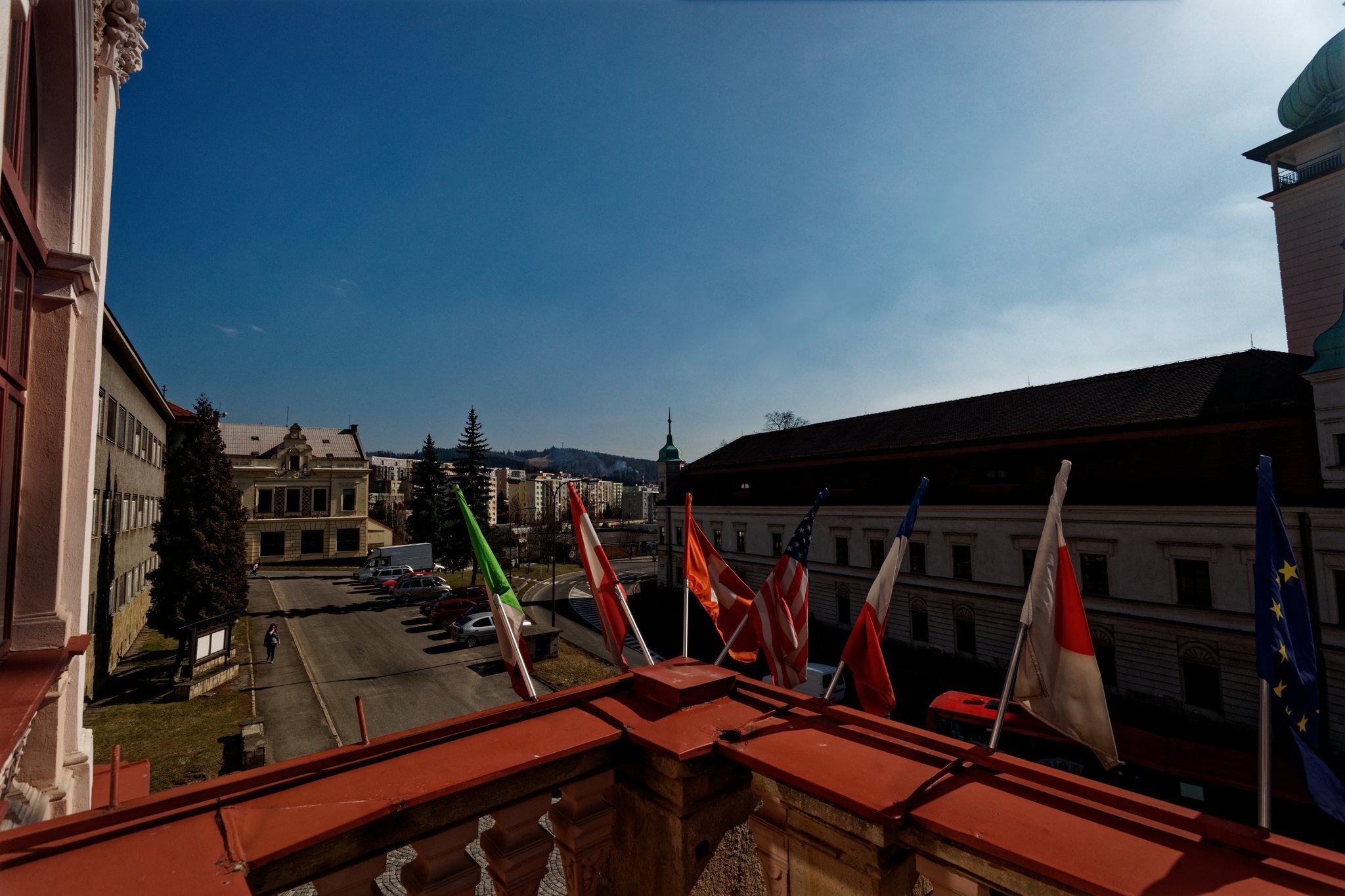
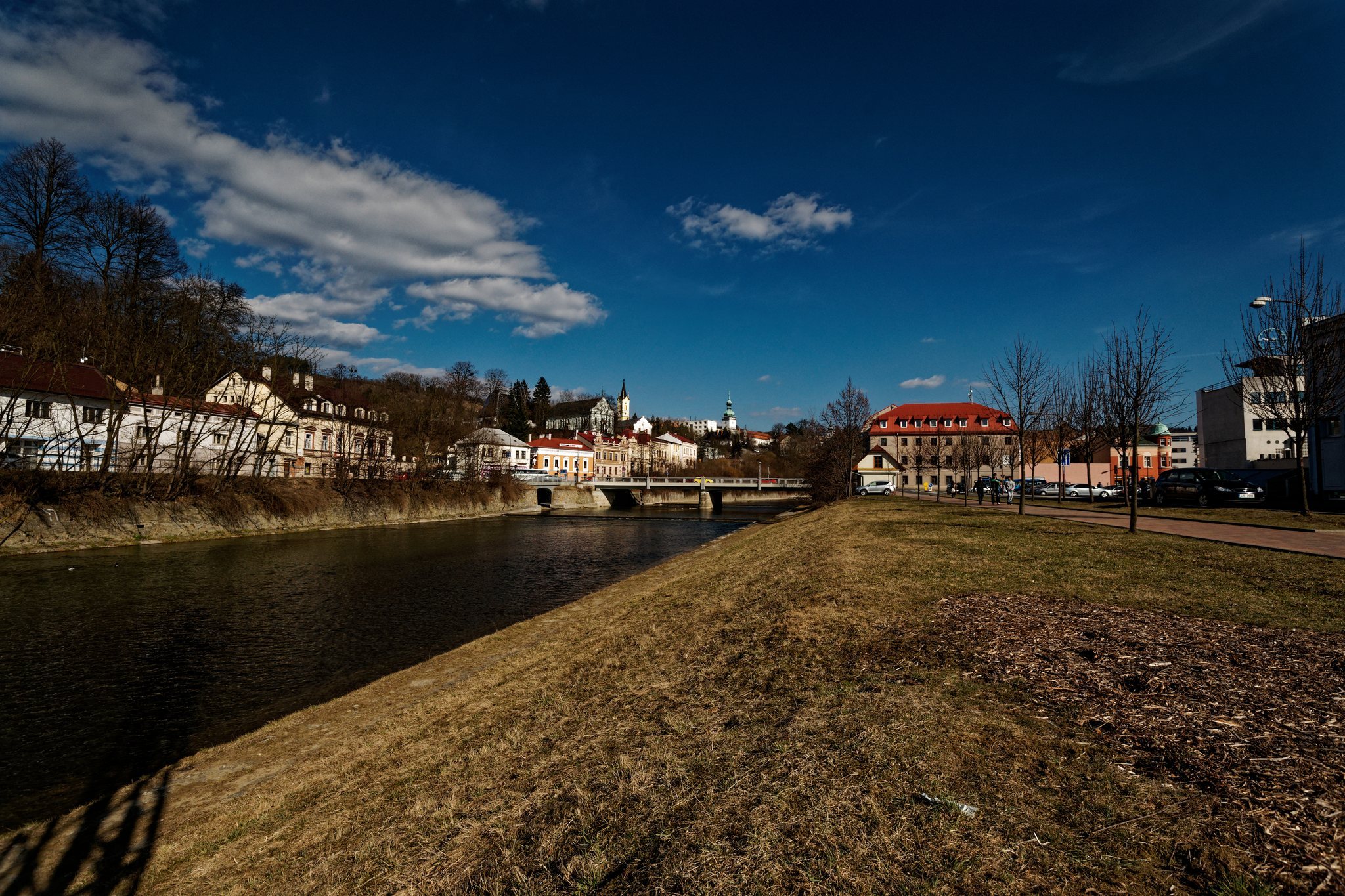
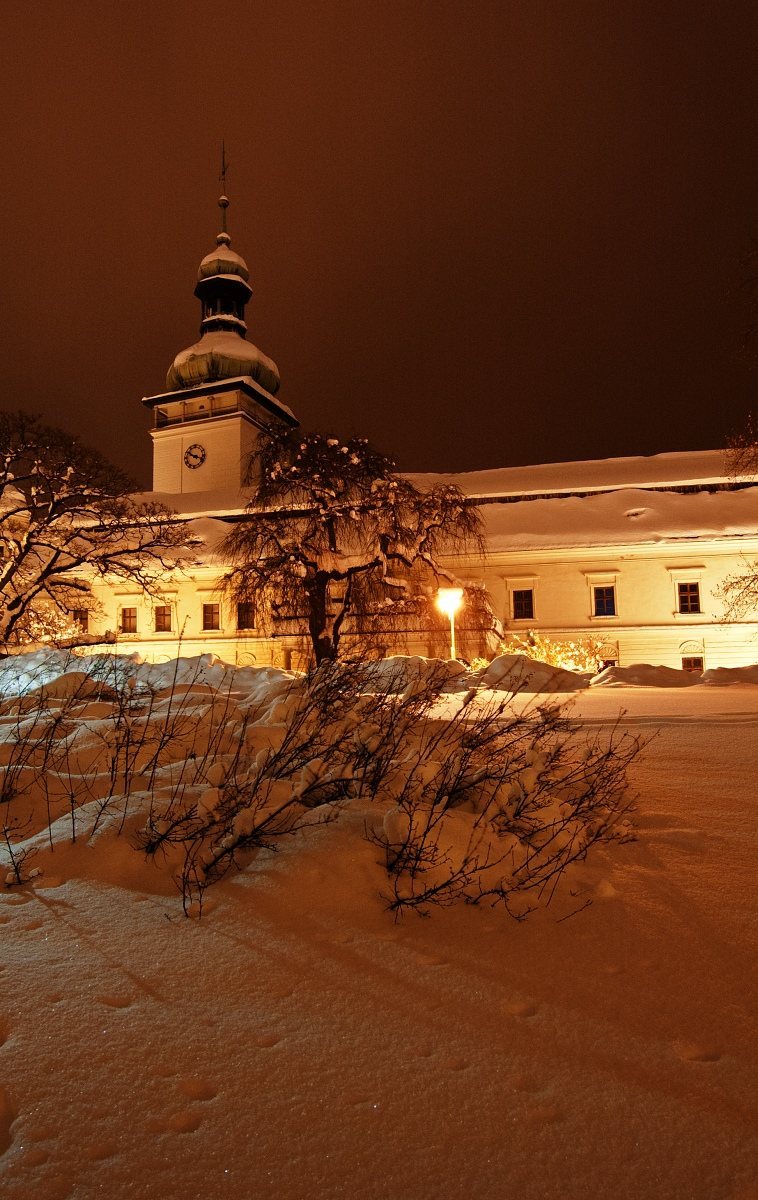
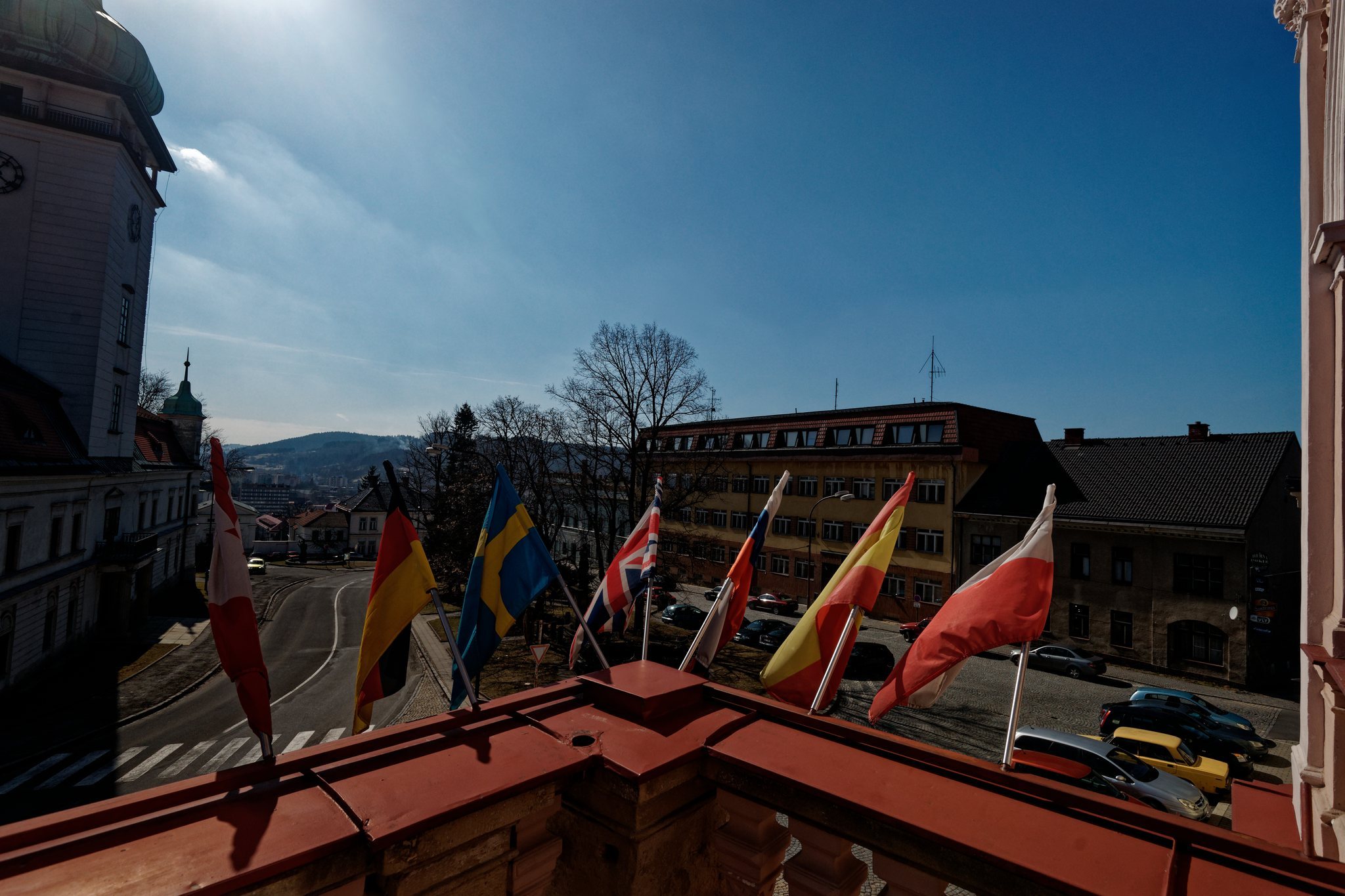
Vsetín Castle stands in the centre of the old town square on a high terrace above the right bank of the Bečva River. The Renaissance building is arranged around an internal courtyard surrounded by arcades, sequences of arches supported by columns or piers. A prominent white tower forms part of the extensive complex, while the wings are covered by mansard roofs. The surviving building retains the Classical and Empire character acquired in the nineteenth century.
Interior displays
The first upper floor contains nine exhibition halls distributed among three wings. Illuminated coloured partition walls, modern display technologies, scenic installations, and interactive elements shape the presentation of the museum’s collections. The 2014–2015 reconstruction renewed these interiors, added new storage rooms, upgraded electrical and data infrastructure, refurbished service areas, and adapted the Marble Hall for exhibition use.
Knights Templar display
The cellar contains a replica of a knights’ hall devoted to the history of the Knights Templar and their activity in the Vsetín area. The Knights Templar were a medieval Catholic military order founded to protect pilgrims and support the Crusader states.
Bentwood furniture collection
A separate display traces the history of bentwood furniture production in the region. Bentwood furniture is made by steaming and shaping wood into curved forms. The exhibition contains 52 pieces, ranging from a Boppard chair from the 1830s to the Split chair from 2015. It presents production associated with the local firms Brothers Thonet, J. and J. Kohn, and Thonet-Mundus. Bentwood furniture was manufactured in Vsetín for more than sixty years, with production ending during the economic crisis in 1932.
Banknote collection
The castle corridors contain an exhibition of banknotes from around the world drawn from the private collection of JUDr. Libor Bureš.