Suvarnadurg Fort: A Maratha Naval Defence Fort in India
Site at a Glance
- Rating
- 4.3
- Popularity
- Low
- Country
- India
- Primary era
- Early Modern
- Eras represented
- Early Modern
- Civilizations
- Unclassified
- Site type
- Military
- Remains
- Fort
On this page12 sections
History
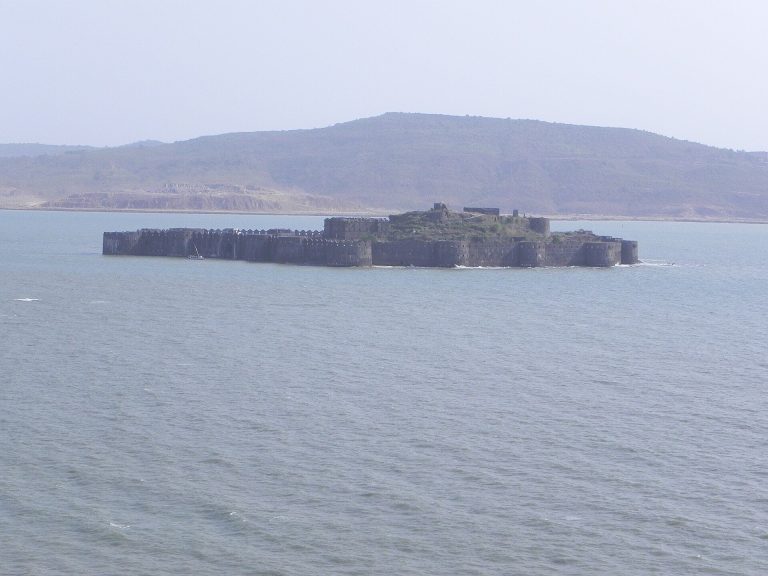
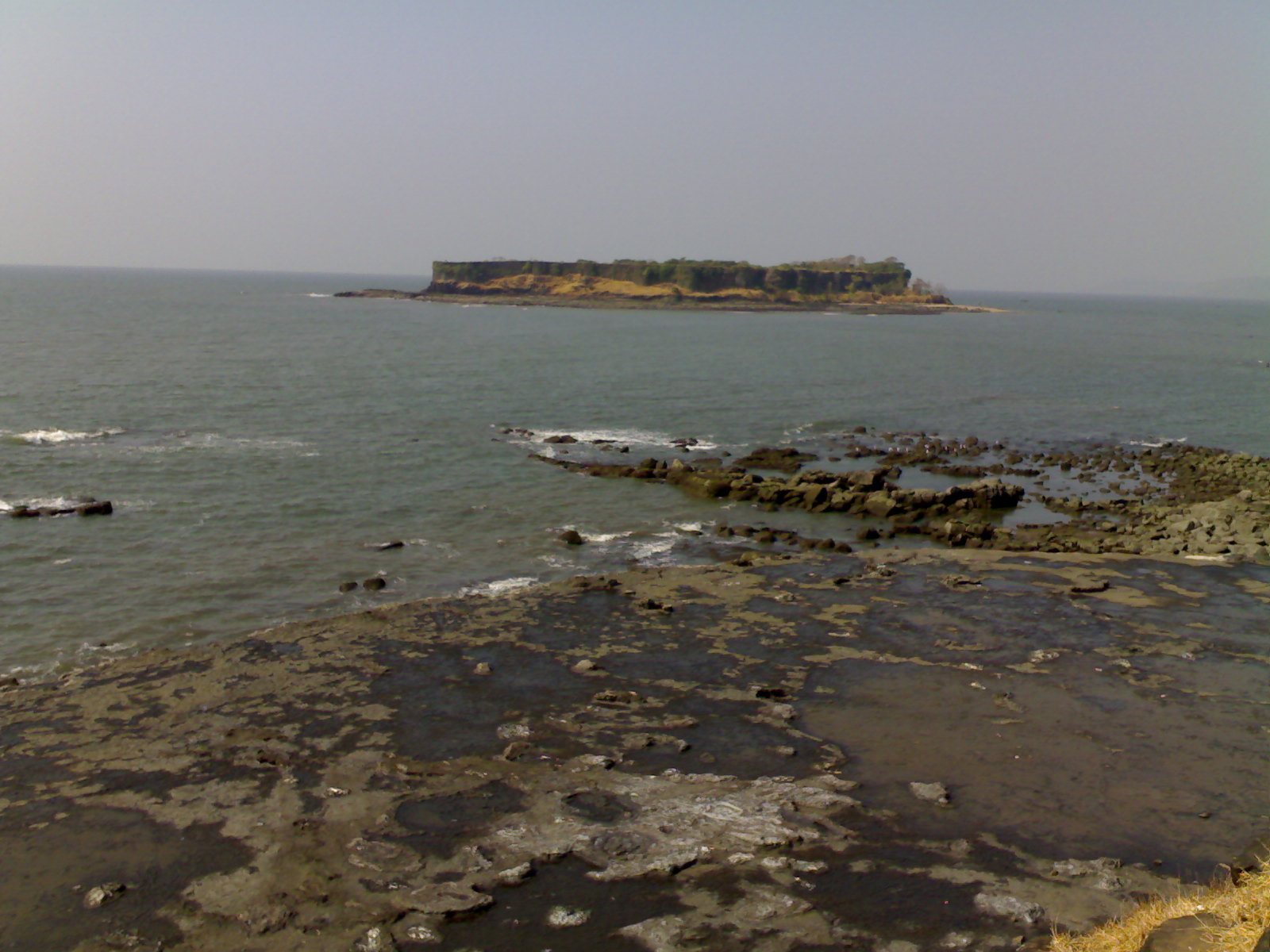
Suvarnadurg Fort is a seventeenth-century island fort in India, near Harnai in Maharashtra, built for naval defence by the Adil Shahi dynasty and also credited to Chhatrapati Shivaji Maharaj in 1660. Its position in the Arabian Sea supported defence against European colonial powers and local chieftains, while a shipbuilding facility served the fort’s maritime role.
The island and mainland defences
Kanakadurga, a land fort at the base of the Harnai headland, was established as a strategic link to the sea fort. Bankot, Fategad, and Gova on the mainland are conjectured to have functioned as lookout and defensive positions against attacks from land. Suvarnadurg and Kanakadurga were formerly joined by a tunnel, but the passage is now defunct.
The Angre naval base
The Angre family strengthened Suvarnadurg, established its shipyard, and created a large warship fleet to defend the Konkan coast against the British, French, and Dutch East India companies. Kanhoji Angre, the leading admiral of the Maratha navy in the early eighteenth century, stationed his fleet at Suvarnadurg in 1696. The Peshwas, the chief ministers who became the effective leaders of the Maratha state, had appointed him admiral in 1698.
In 1713, Shahu Raja formally handed Suvarnadurg to Kanhoji Angre, together with 26 forts and their dependent villages, in return for his continued allegiance to Shivaji’s family stronghold. After Kanhoji’s death, Tulaji Angre made the fort the centre of his power. His conflict with the Peshwas led to a joint Peshwa-British campaign. The siege lasted from 25 March to 2 April 1755, and British Commodore William James captured the fort on 12 April before formally transferring it to the Peshwas. The British received control of Bankot as compensation for their assistance, while the Peshwas retained Suvarnadurg.
From Peshwa control to British capture
In 1802, Bajirao Peshwa tried to take refuge at Suvarnadurg while being pursued by the Holkars, but he fled to Vasai. On 4 December 1818, a British force commanded by Captain William captured the fort. The surrounding forts then also came under British control, ending Peshwa rule at Suvarnadurg.
Suvarnadurg is now a protected monument and is controlled by the Government of Maharashtra. In 2025, it became part of the UNESCO World Heritage serial property Maratha Military Landscapes of India under cultural criteria (iv) and (vi), after having appeared in the property’s 2021 tentative-list nomination.
Remains
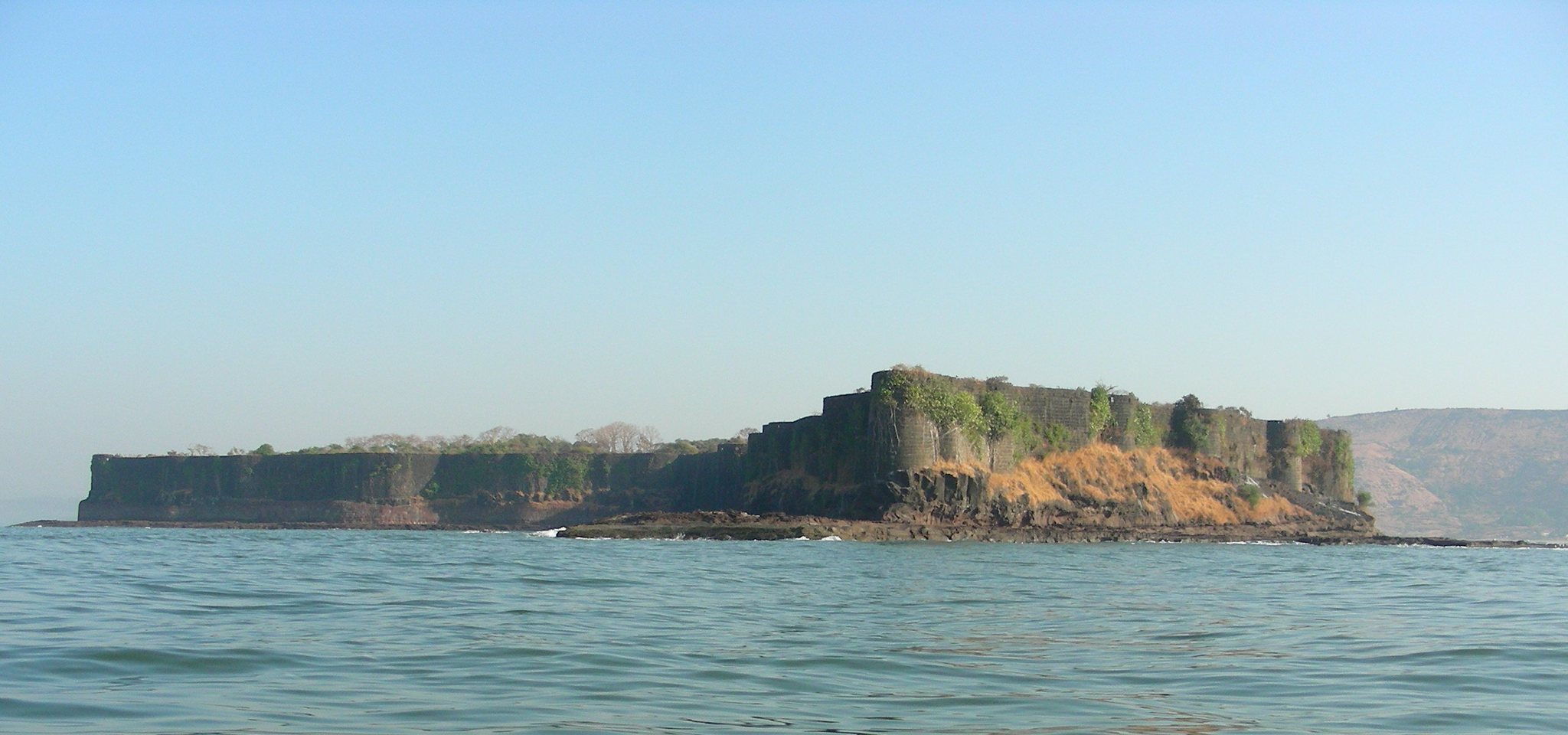
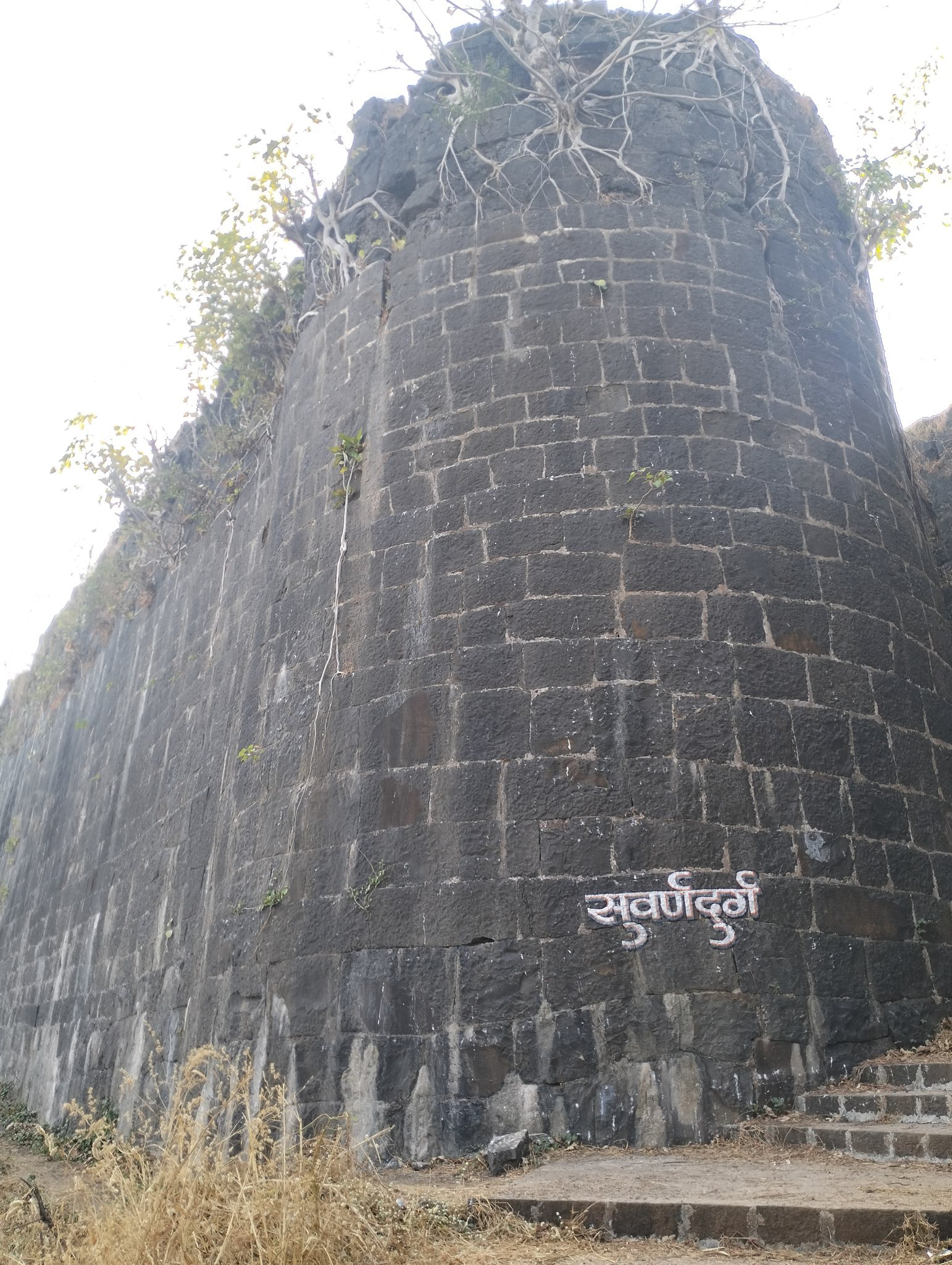
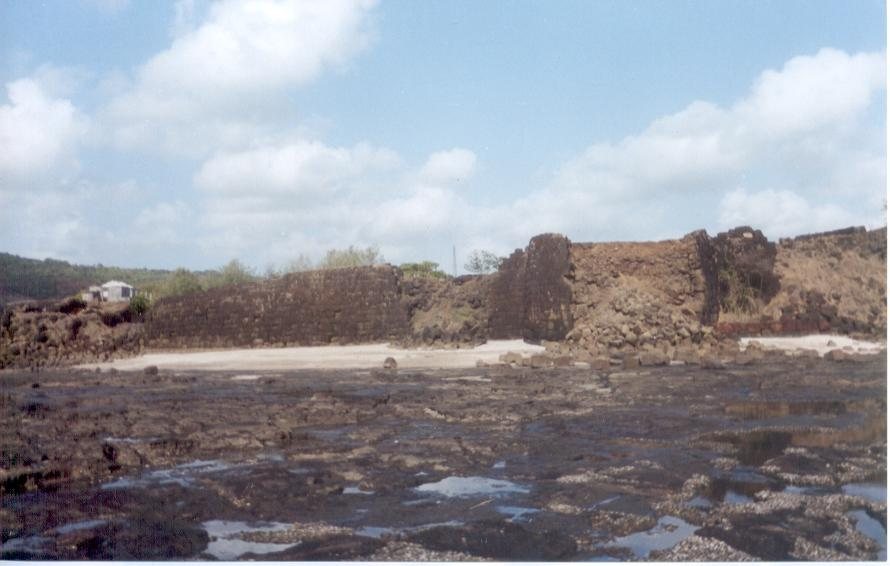
Suvarnadurg occupies a rocky island about 1.6 kilometres from the mainland and covers approximately 8 acres, or 3.2 hectares. The island tapers southward, where Kanakadurga is clearly visible across the water. A dry moat, meaning a defensive ditch without water, surrounds the fort. Much of the walling was cut directly from exposed island rock, while other sections use large square stone blocks measuring about 3.0 to 3.7 metres across.
Walls and entrances
Eastern entrance
The eastern Mahadarwaja, or Great Gate, faces the mainland. It is also described as a postern wall above the high-tide level. The entrance is reached through a narrow opening locally called the devdis and is now blocked by thorny vegetation. A carving of Hanuman appears on the wall at the main entrance, while a carved turtle is set into one of the leading steps.
Western sea gate
The western Chor Darwaja, or Thieves’ Gate, faces the sea, and steps lead upward into the fort from it. Its surface carries carved figures of a tiger, an eagle, and elephants. The island has no landing jetty, so arrival takes place on the sandy shore, with movement across the precinct easiest at low tide.
Interior structures and water supply
Bastions and central buildings
Numerous bastions, projecting fortifications used for observation or fire along the walls, strengthen the perimeter, and some contain small built-in rooms. The central area includes two granaries and a deteriorated building. Numerous foundation plinths indicate the former positions of palaces, while a stone building has been identified as an ammunition magazine. Fifteen old guns have been located within the fort.
Tanks, ponds, and wells
Several sources supplied potable water, including tanks, ponds, and wells. Many dry out during summer, but a stepwell, a water structure reached by descending steps, retains a plentiful supply.
Kanakadurga
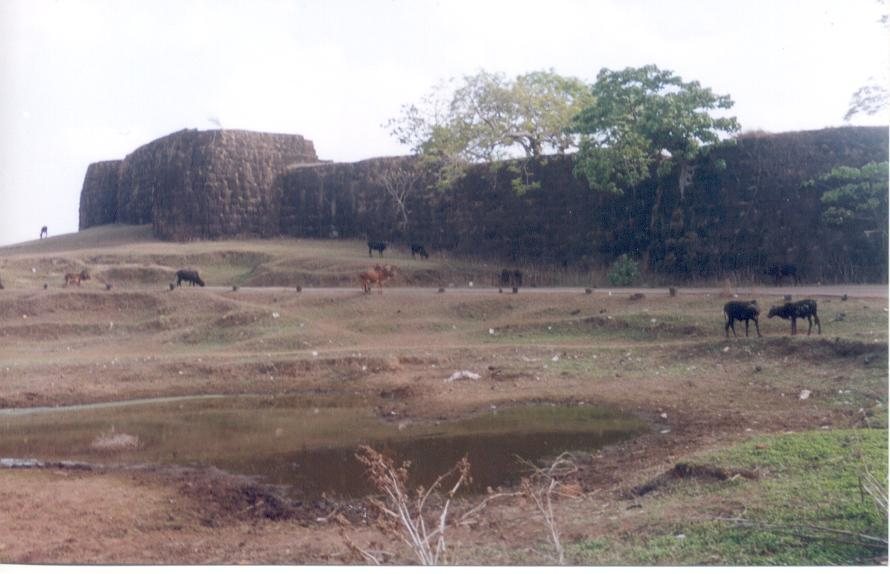
Kanakadurga is a separate mainland fort on the headland beside Harnai port, projecting into the sea. It covers about 0.25 hectares and is reached by a flight of steps. Now largely ruined, it retains several water tanks, two dilapidated bastions placed at opposite ends, a lighthouse on elevated ground, and a caretaker’s residence. The fort formerly served as a military camp. Nine water ponds remain, with abundant supplies. Eight are separated by stone walls, while the ninth lies somewhat farther west.