Schmiddeg–Vigyázó Mansion in Nagyberki: An Aristocratic Country Residence
Site at a Glance
- Rating
- 4
- Popularity
- Very Low
- Country
- Hungary
- Primary era
- Early Modern
- External website
- Open
- Eras represented
- Early Modern
- Civilizations
- Habsburg, Hungarian
- Site type
- Domestic
- Remains
- Manor House
On this page8 sections
History
Schmiddeg–Vigyázó Mansion in Nagyberki, Hungary, is an aristocratic country residence built by Count Kristóf Niczky in 1760. Such a mansion could serve both as a family home and as an administrative center for an estate, while also providing a setting for seasonal leisure, hunting, and hospitality. The associated granary had been built in 1756. The Niczky family lived in Vienna and used the Nagyberki estate mainly for hunting and summer stays.
The Niczky and Schmidegg Families
In 1772, Anna Mária Niczky married Count László Schmidegg and inherited the Nagyberki estate through her mother. The Schmidegg family subsequently took up residence in the mansion. After Count László Schmidegg died in 1816, his son, Count János Schmidegg, assumed control of the estate. He neglected the property and accumulated debts. Before his death, he sold part of the estate to his relative Pál Csapody, requiring that his widow, Mária Petheő of Alsószát, and their ten-year-old son, Count Kálmán Schmidegg, retain the right to live in the mansion for the rest of their lives.
Count József Schmidegg died in 1837 and was buried in the market town of Nagyberki. Pál Csapody respected the residence agreement, but later neglected the estate and incurred further debts. After Csapody died, his nephew, Count Károly Schmidegg, inherited the property. Following seven unsuccessful years of efforts to restore its finances, Károly Schmidegg placed the estate up for auction.
The Vigyázó Estate
Count Sándor Vigyázó of Bojár purchased the Nagyberki estate at auction in 1862 for 285,000 forints. He revitalized the estate, renovated the mansion, and repaired the agricultural buildings. He and his family usually visited for only several weeks during the summer or for hunting. His wife, Baroness Zsuzsanna Podmaniczky, planned the planting of the surrounding park, including trees, ornamental shrubs, and clipped hedges.
Count Ferenc Vigyázó died without a male heir. Following his father’s will, he left his entire fortune to the Hungarian Academy of Sciences, Hungary’s principal national learned institution. The bequest included the Nagyberki mansion, other country mansions, 23,000 cadastral acres of land, two Budapest rental buildings, valuable furniture, collections, paintings, and a 17,000-volume library. It also included rare codices and 431 valuable fifteenth-century incunabula, books printed in Europe before 1501. More than 60 of these books had previously been kept in the mansion.
War, School, and Archive
During the Second World War, Soviet forces occupied the mansion. A motorized unit was stationed there, wounded soldiers from the fighting around Nagybajom were brought there after hospital treatment, and pilots rested in the building while awaiting orders. Between the granary and the old cemetery, soldiers cut down a row of trees, leveled the ground, and made an improvised airfield for their biplanes.
After the Soviet withdrawal, local villagers removed the movable property that had survived in the mansion. The building was later nationalized, repaired, and converted into a state elementary school. It served pupils from Csom, Kisberki, Mosdós, and Szabadi. Kercseliget joined the school district in 1960, followed by Attala and Kapospula during the 1960s, and Baté and Kaposkeresztúr in 1966. Enrollment ranged from 320 to 355 pupils.
The school occupied the mansion for two decades. By the end of the 1960s, the building had seriously deteriorated and its facilities no longer met educational requirements. A structural assessment led local state, party, and civic organizations to support construction of a new school. The new building received its technical handover in October 1978.
The mansion was then taken over by the Somogy County Archives, the regional public archive responsible for preserving historical records from Somogy County. After renovation, its Department of the Socialist Era moved into the building and was later renamed the Department of Modern History. The archives occupied the mansion continuously from 1980. Renovation was directed by SOMOGYTERV with assistance from the National Monument Inspectorate, the state body responsible for supervising the protection and restoration of historic monuments. The building has been closed since the department moved to a renovated school building in Kaposvár in 2015. The mansion is a protected historic monument, and the park is protected as a nature-conservation area. Ownership and management of the park remained with the municipality of Nagyberki.
Remains
The Mansion
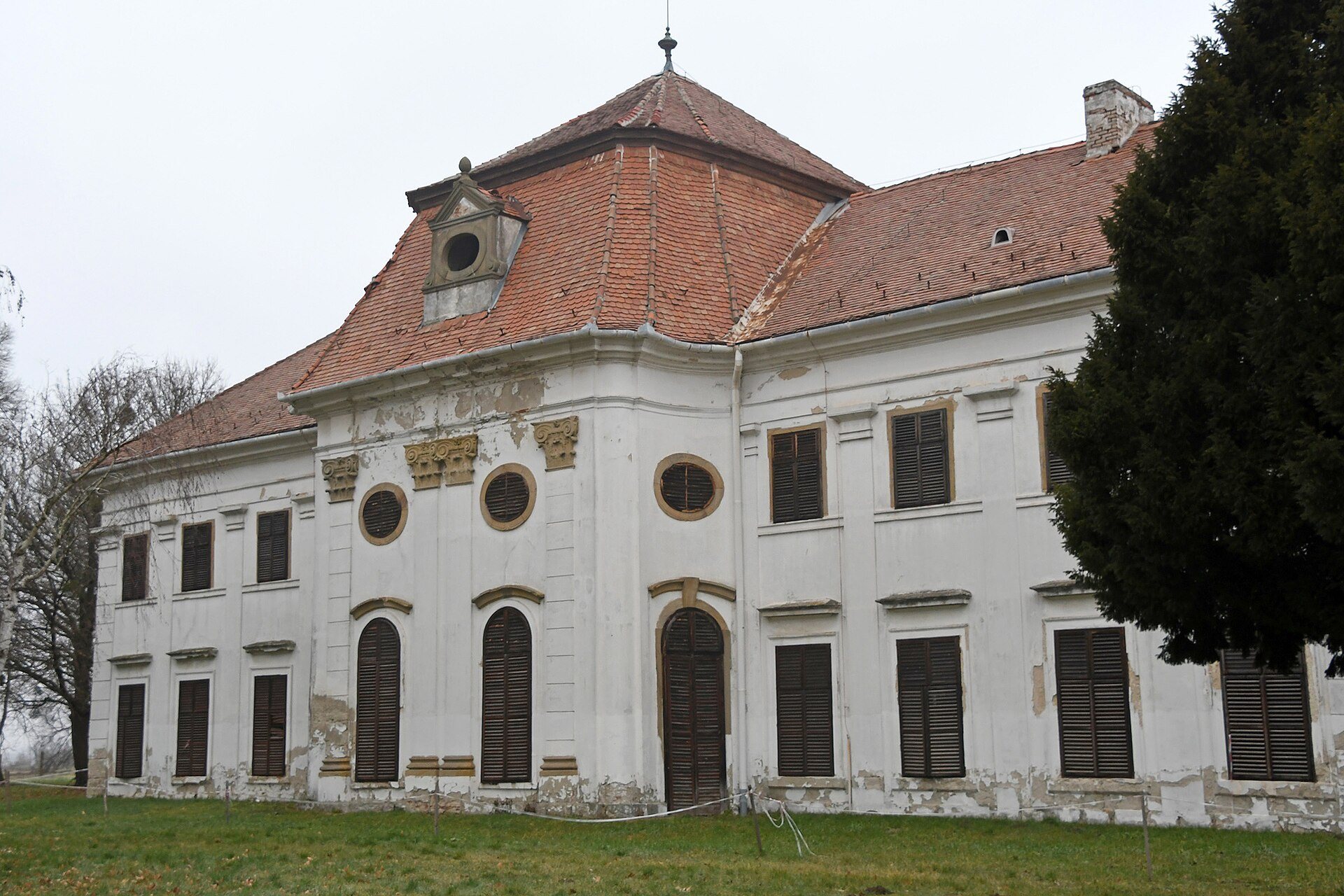
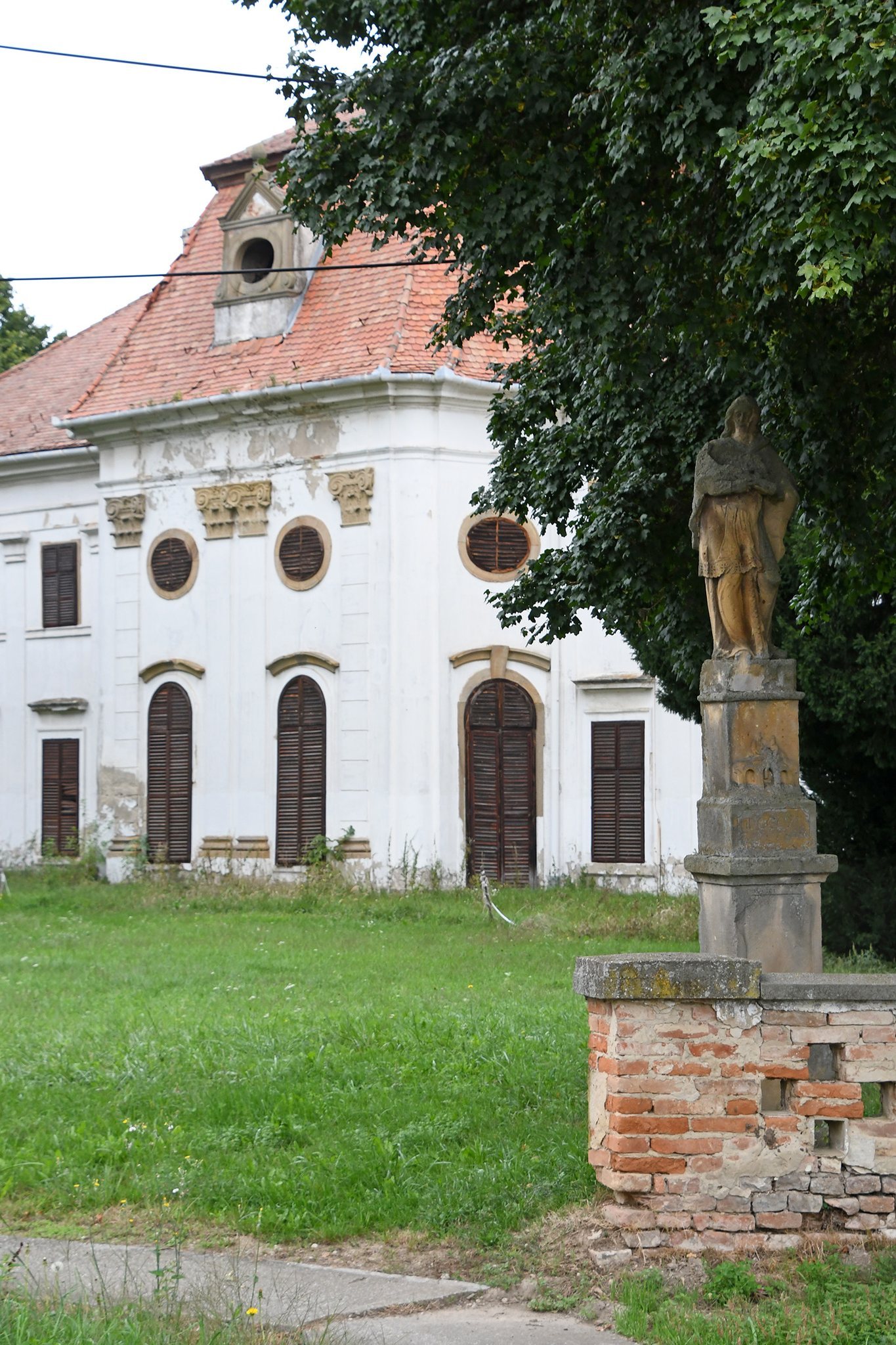
The mansion stands separately within the park as a single-storey building with a shallow U-shaped plan and very short wings. Its symmetrical facade has a projecting central section crowned by a mansard, while the ends of the wings widen outward. Cellars extend beneath the building. The mansion covers approximately 1,100 square metres.
The principal decorated room occupies two levels, a ground floor and an upper floor, and contains wall paintings. These interior features form part of the surviving architectural character of the residence, whose later use as a school and archive followed substantial changes in function.
The Park
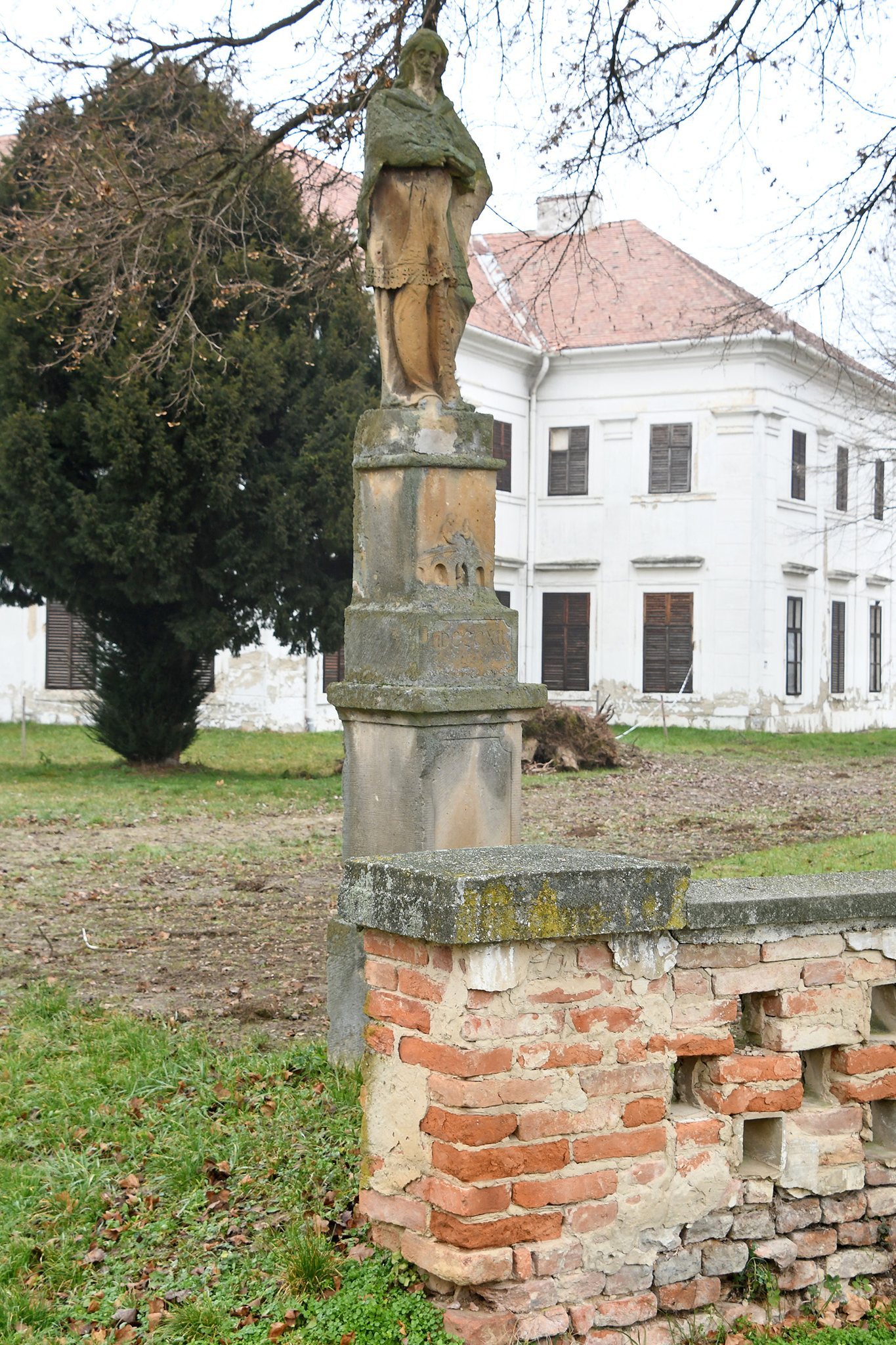
The surrounding park covers about 2 hectares. Its surviving vegetation includes old plane trees, Norway spruces, common pagoda trees, black walnut trees, horse chestnuts, arborvitae, birches, and tamarisks. Only a few rare tree and shrub species remain. The park also contains a cultural center owned by the Nagyberki municipality and a sculpture of Saint John of Nepomuk.
The Granary
The former granary, built in 1756 as part of the estate, is an associated protected monument. It is now substantially ruined or effectively destroyed.