Svislač Castle: An Old Rus Frontier Estate-Castle in Belarus
Site at a Glance
- Rating
- 4.7
- Popularity
- Very Low
- Country
- Belarus
- Primary era
- Medieval
- Eras represented
- Medieval
- Civilizations
- Unclassified
- Site type
- Military
- Remains
- Castle
On this page13 sections
History
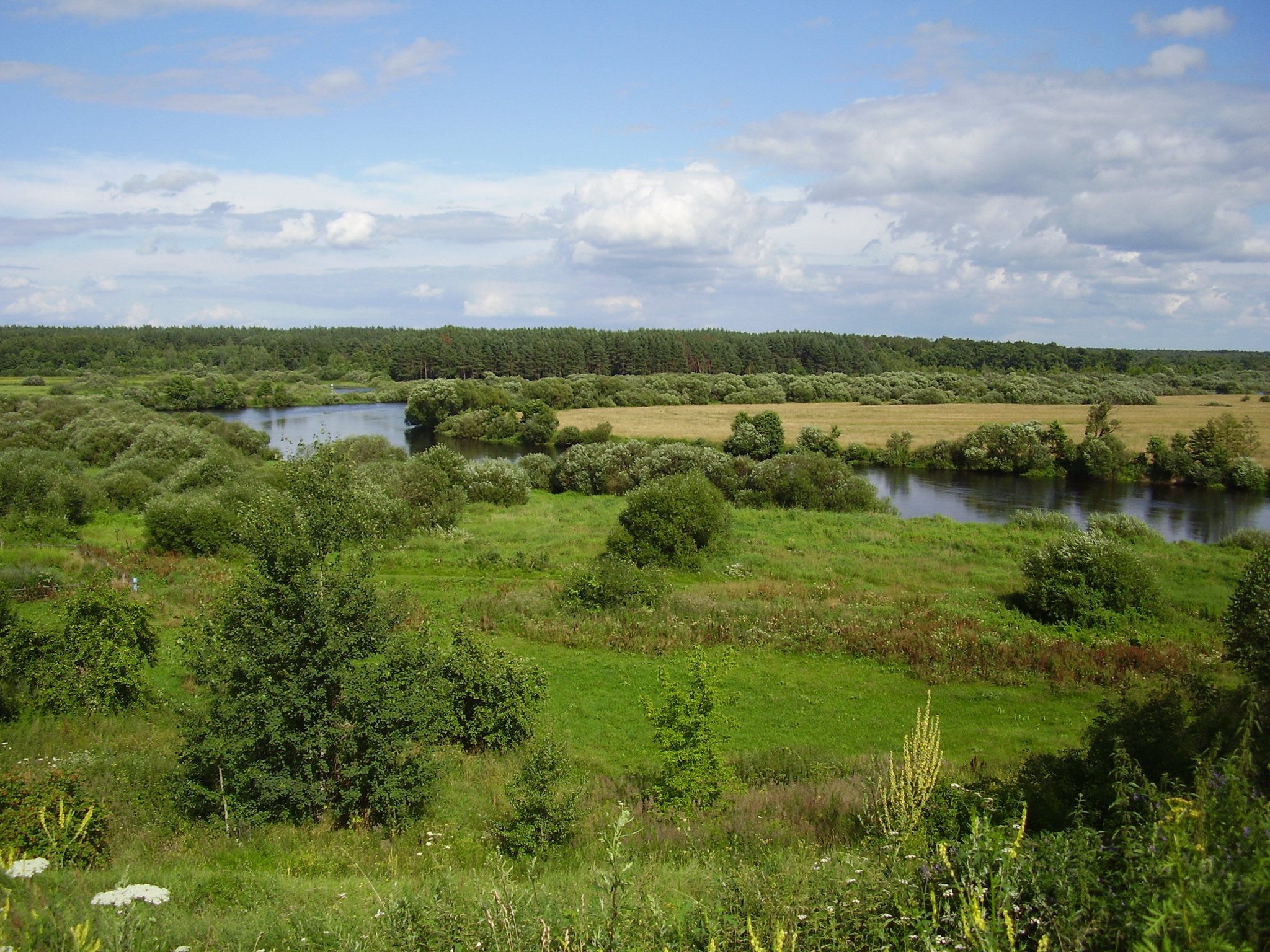
Svislač Castle is an archaeological hillfort in Belarus, near the village of Svislach in the Osipovichi district, on the right bank of the Byarezina River at its confluence with the Svislach River. The site began functioning during the Early Iron Age, and was later revived as a fortified frontier estate in the eleventh and twelfth centuries. Its development reflects several phases of settlement, from early Iron Age occupation to an Old Rus feudal estate associated with the medieval Duchies of Svislach and Minsk.
Early settlement and the medieval revival
The lower cultural horizon contains material dating from the sixth century BC to the first century AD. Finds from this phase include an iron pin with a five-shaped curl, an iron knife, slag, a stone grain-grinder, and fragments of stroked pottery. These remains show that the promontory was used during the Early Iron Age, when fortified elevated settlements formed part of the region’s wider pattern of occupation.
Material from the third quarter of the first millennium AD indicates a later phase of activity. During the eleventh century, the surrounding area was intensively settled within a Dregovich milieu. The Dregoviches were an East Slavic tribal group associated with parts of central and western Belarus. Svislač Castle was resettled during the eleventh and twelfth centuries, apparently in connection with the activities of Gleb Vseslavich, the prince of Minsk active around the late eleventh and early twelfth centuries.
At this stage, the hillfort was revived as a fortified frontier point. Boundary-related place names around the site support this interpretation, while the later settlement appears to have developed no earlier than the late fourteenth or fifteenth century. The castle is therefore understood as a frontier center rather than simply as an ordinary village settlement.
The estate-castle in the Old Rus period
Svislač Castle is interpreted as a classical feudal estate-castle of the Old Rus period. The Old Rus period refers broadly to the medieval history of the eastern Slavic lands associated with Kyivan Rus and its successor principalities. Elite goods, imported objects, weapons, equestrian equipment, strong defenses, and specialized bone-carving all point to a high-status settlement. Its small enclosed area and the animal-bone assemblage, dominated by wild species, further support the interpretation of an elite estate.
Initially, the castle served as the center of the Duchy of Svislach, a medieval East European principality. It later belonged to the Duchy of Minsk and, from the fourteenth century, to the Grand Duchy of Lithuania, a major medieval and early-modern state that incorporated much of present-day Belarus and Lithuania. The site subsequently came into the possession of the Radziwiłł family, a prominent aristocratic dynasty of the Grand Duchy of Lithuania and the Polish-Lithuanian Commonwealth. One of its notable owners was Bogusław Radziwiłł.
The thirteenth-century destruction
The Galician-Volhynian Chronicle first mentions a prince of Svislach, Iziaslav, in 1256, during a campaign by Danylo of Halych against the Yotvingians. Danylo was a ruler of the medieval principality of Halych-Volhynia, while the Yotvingians were a Baltic people who lived in areas near present-day Belarus, Lithuania, and Poland. The domain associated with Iziaslav can be connected with this hillfort because another identifiable Svislach in the relevant region is not known, although the identification remains interpretive.
Archaeological evidence places the destruction of the estate-castle in the mid-thirteenth century. Mongol-associated artifacts and a fire-destruction layer occur in the stratigraphy, a sequence of archaeological deposits used to establish the order of occupation and destruction. The event has been connected either with Burundai’s campaign against Lithuania in 1258 or, less securely, with the Mongol campaign against the Chernihiv lands in 1239. Burundai was a Mongol commander active in the thirteenth century. An otherwise unrecorded attack remains another possibility.
Archaeological investigation
The first archaeological investigations in the Svislach region took place in 1892, when U. Zavitnevich examined the Berezina basin and described part of the Svislach River. His work focused on burial mounds rather than excavation of the hillfort. Local investigations continued in the 1920s under A. Niemtsau, and researchers from the Institute of History of the Belarusian Academy of Sciences carried out archaeological reconnaissance in 1926 with local assistance.
The 1926 work classified regional monuments as hillforts, open settlements, and burial-mound groups. Researchers described and mapped three hillforts, collected pottery from two others, and identified archaeological cultures ranging from the Neolithic or possibly Bronze Age to pre-Slavic hillfort and Slavic traditions. Work in the region resumed in the 1960s, with a reconnaissance expedition at Svislač Castle in June 1962 and excavations in 1969, 1970, and 1971. The investigations were intended to examine Early Feudal-period sites in the former Duchy of Minsk. Study of the monument resumed in the 2000s.
Remains
Hillfort setting and defenses
Promontory and enclosed platform
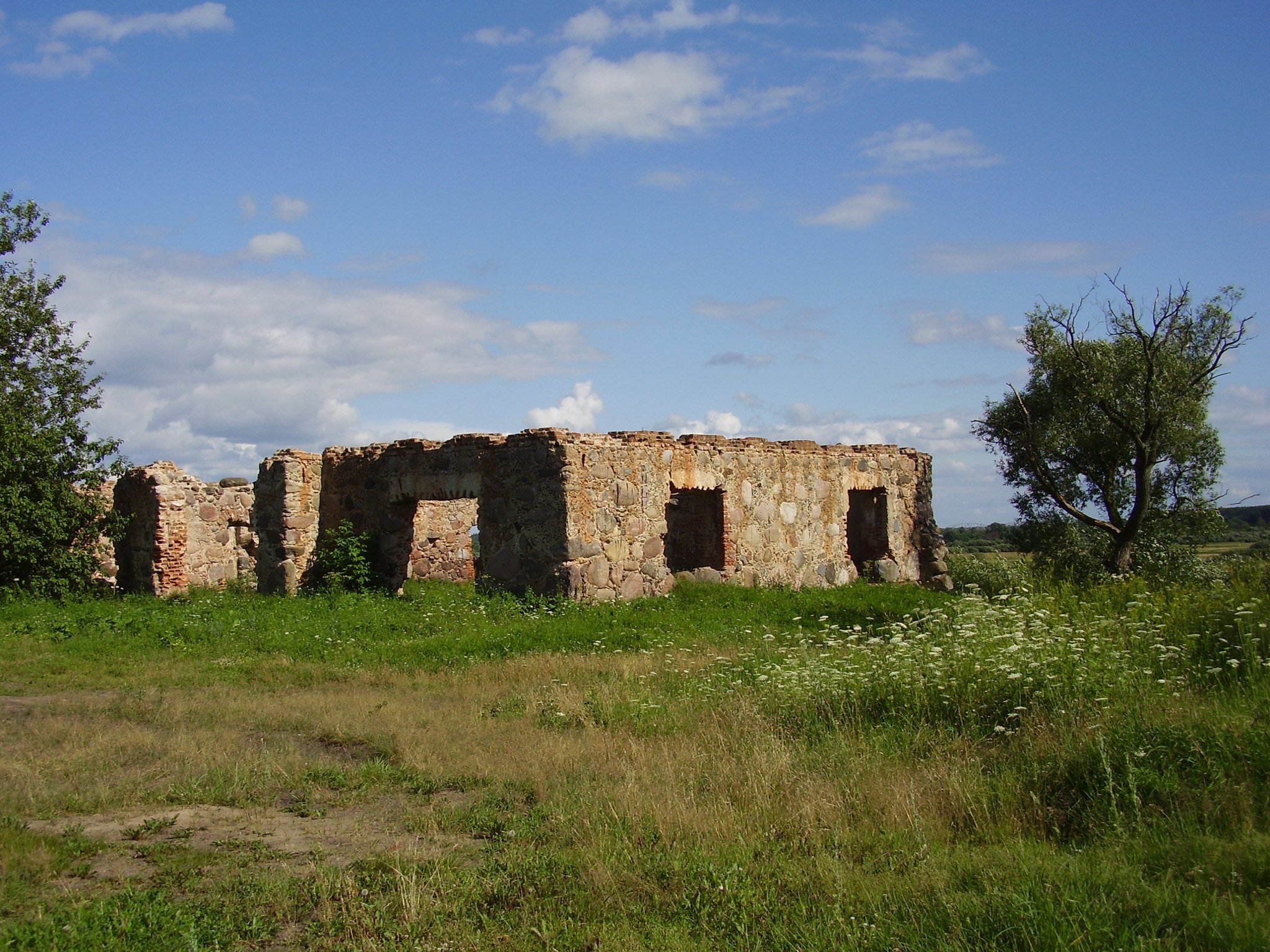
The hillfort occupies a promontory overlooking the meeting of the Byarezina and Svislach rivers. Steep slopes approximately 10 to 12 metres high protect the south, west, and east sides. The enclosed platform is roughly triangular and measures about 70 by 70 metres. Earlier descriptions characterize the elevation as steep, with a surface that slopes slightly toward the southwest.
Ditch, rampart, and entrance
The northern, landward side is defended by a ditch about 2 metres deep and 13 to 17 metres wide. Behind it stands a rampart approximately 2.2 to 2.5 metres high and about 8 to 9 metres wide at its base. The entrance passes through a break in the landward rampart. A wooden bridge formerly crossed the ditch from the northwest.
The rampart consists of loose yellow sand reinforced internally with timber. Excavation revealed log-built frameworks or laid logs within the earthwork. The defensive ditch and rampart are attributed to the late eleventh or early twelfth century. Later enlargement of the hillfort probably damaged part of the rampart, and the original extent of the eastern defenses remains uncertain.
Occupation layers and archaeological material
Early Iron Age remains
The Early Iron Age material comes from the lower cultural horizon. It includes an iron pin with a five-shaped curl, an iron knife, slag from metalworking, a stone grain-grinder, and fragments of stroked pottery. Together, these objects indicate domestic activity, craft production, and food processing during the earliest known phase of the site.
Medieval estate assemblage
Excavations also produced iron and bronze objects, glass, bone artifacts and bone-working blanks, pottery, slate spindle whorls, whetstones, tools, household objects, ritual objects, clay and glass vessels, and metal and glass ornaments such as beads and bracelets. Weapons and equestrian equipment form part of the assemblage associated with the medieval fortified estate.
The quantity of finished bone objects and unfinished blanks indicates specialized bone-carving. Imported and other non-local materials point to economic connections with cities and regions of Old Rus, especially Kyiv, as well as with Byzantium and the Black Sea region. These finds give the small fortified enclosure the material character of an elite estate rather than a settlement devoted solely to local production.
Later disturbance
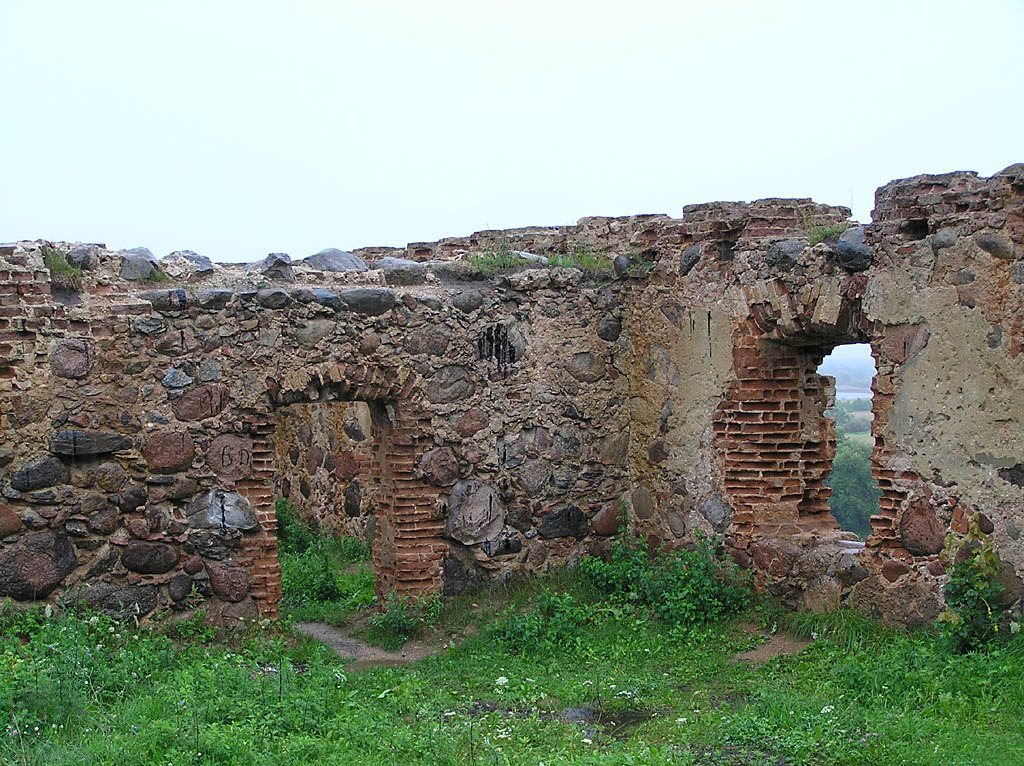
By the early twentieth century, pits had disturbed the entire surface of the hillfort, while Polish trenches dating from 1919 to 1920 cut into its edges. A manor estate had previously occupied the enclosure, and refuse from recent decades covered parts of the area. Pottery collected from the site included handmade vessels associated with the pre-Slavic hillfort tradition and wheel-made pottery, adding to the evidence for the site’s long and complex occupation.