Nymphaeon of Olympia: A Roman Water Installation in Greece
Site at a Glance
- Rating
- 4.8
- Popularity
- Low
- Country
- Greece
- Primary era
- Classical
- Eras represented
- Classical
- Civilizations
- Roman
- Site type
- Civic
- Remains
- Fountain
On this page11 sections
History
The Nymphaeon of Olympia is a monumental Roman water installation in Greece, built in the mid-2nd century AD, probably around AD 153–160. Herodes Atticus, a wealthy Greek intellectual and civic benefactor of the Roman imperial period, financed and commissioned it after Olympia’s water shortage became especially severe during the summer Olympic Games. The existing wells and short conduits could not meet the needs of the crowds, while Roman baths and the sanctuary’s growing international attendance placed further pressure on the available supply.
Construction and religious dedication
Before the Nymphaeon was built, athletes, trainers, administrators, and spectators obtained water from wells, rainfall, limited conduits from the Kladeos, and water carried to the sanctuary. The new monument formed the terminal distribution structure of a larger gravity-flow system. An aqueduct brought water from an elevated source east of or beyond Olympia, where it entered a cistern before being distributed through the sanctuary.
Herodes Atticus dedicated the fountain and its water installation to Zeus in honor of his wife, Regilla, who held the office of priestess of Demeter. The monument also honored the imperial family and Herodes Atticus’s own household, expressing his close relationship with the Roman imperial house. Its water supply served the sanctuary, the playing fields, the baths, and the swimming pool.
Later use and archaeological interpretation
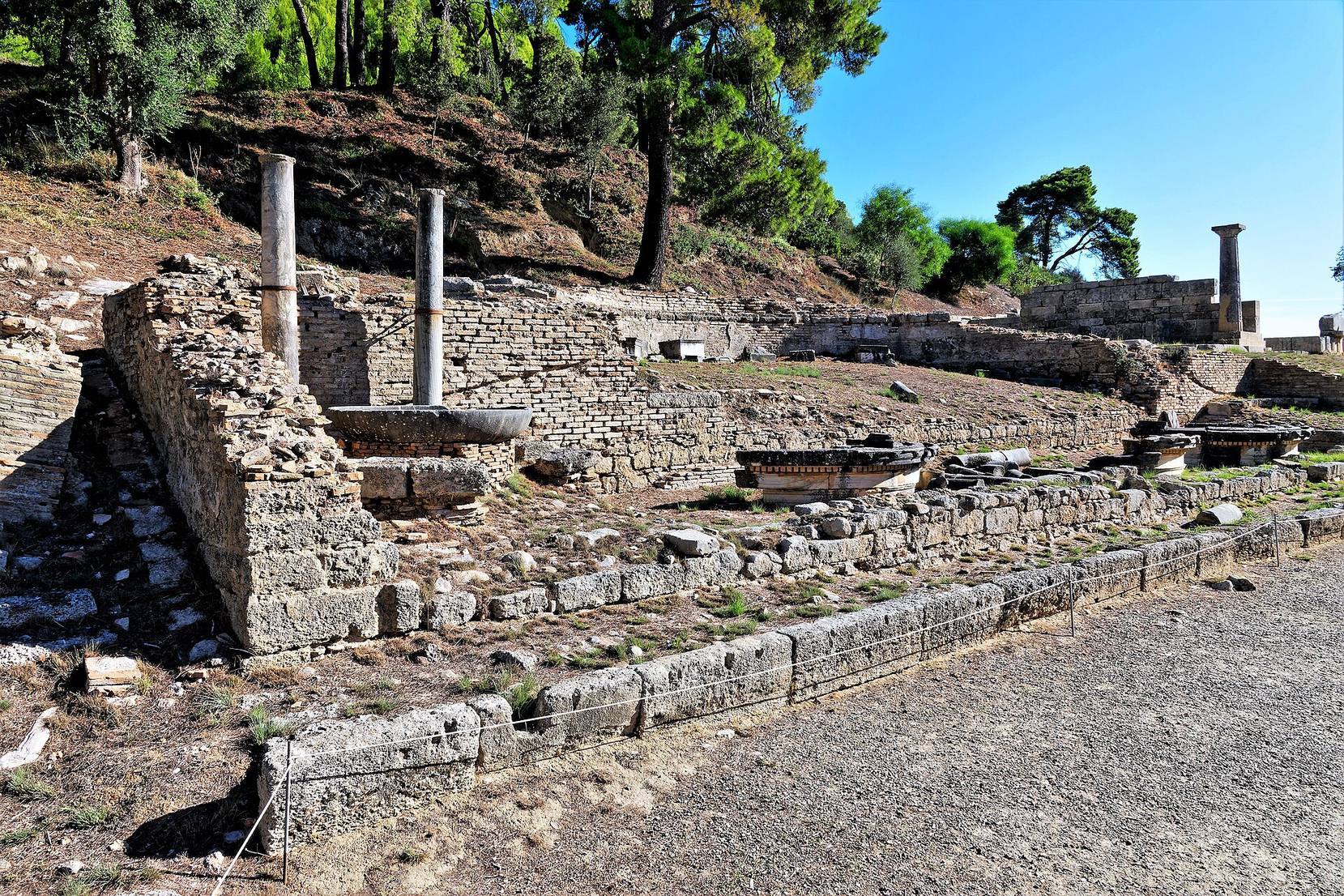
Parts of the Nymphaeon were reused in the 4th century AD, when the nearby workshop of Pheidias was converted into a Christian basilica. The monument was excavated in 1877–1878, and the results were published in 1892. It was first understood as an exedra, a semicircular architectural feature, and as a spring-capture structure because the aqueduct had not yet been recognized. Later investigation identified the large cistern and the brick aqueduct tunnel entering from the east.
The Nymphaeon forms part of the Archaeological Site of Olympia, which was inscribed as a UNESCO World Heritage Site in 1989.
Remains
Monumental facade and water basins
The Nymphaeon stood on the northern side of the Altis, the sacred precinct of Olympia, near the foot of Mount Kronos. It lay between the Temple of Zeus and the Treasury Terrace, west of the Metroon and north of the Temple of Hera. Its south-facing facade combined a monumental architectural display with the practical distribution of water. The structure was approximately 33–34 metres wide and rose roughly 13–17 metres high. It was built of brick faced with marble.
Apsidal wall and sculpture
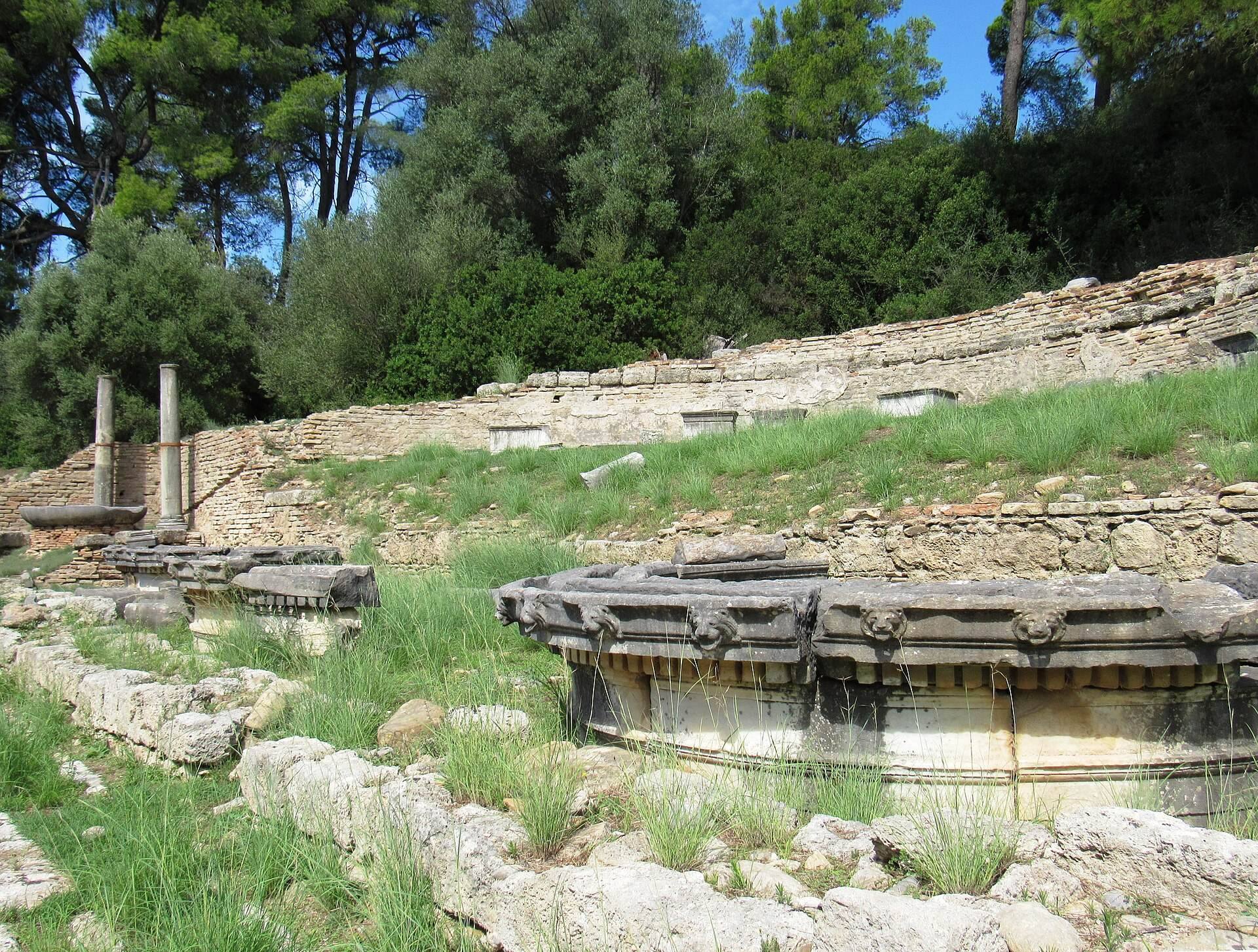
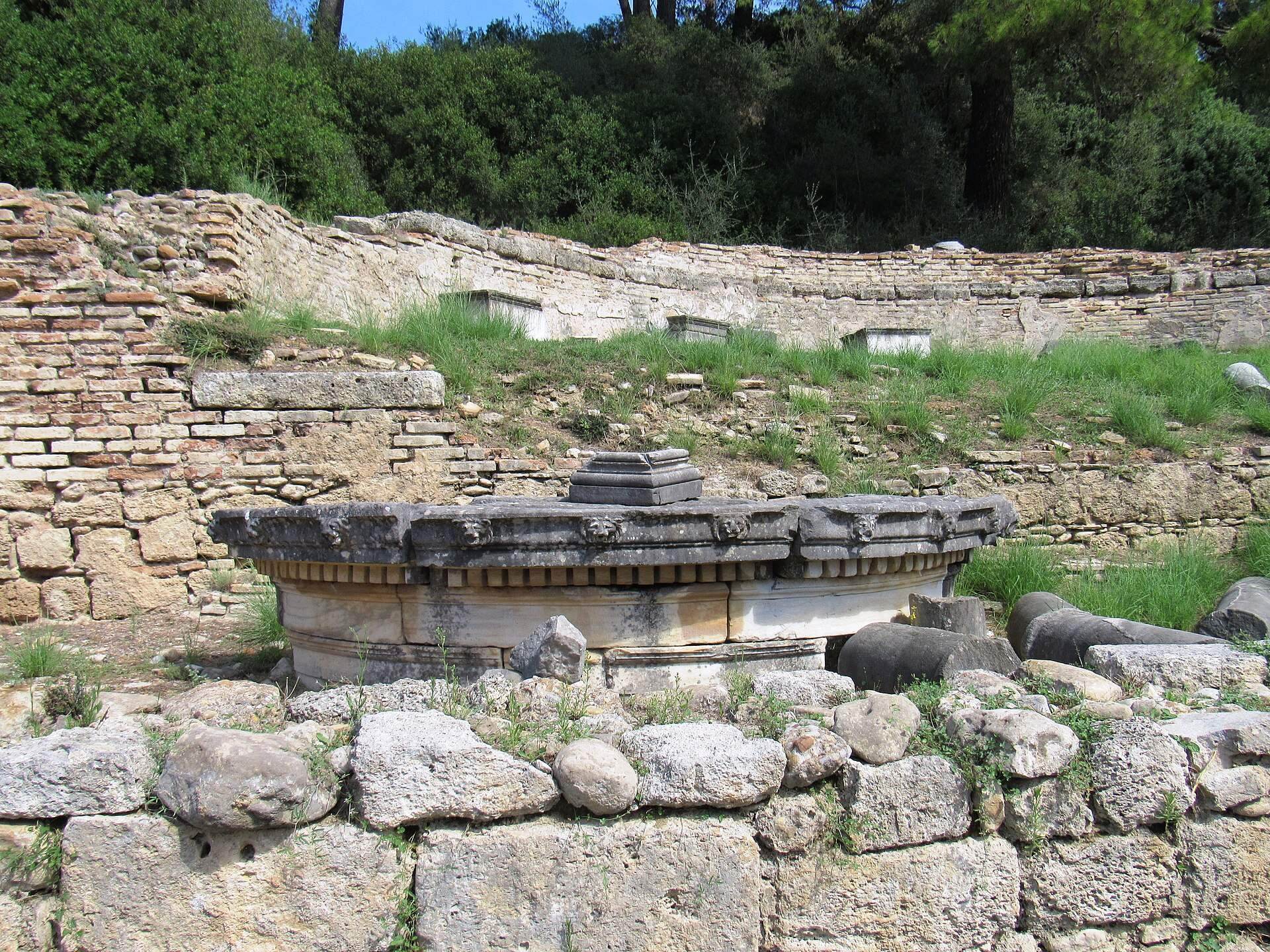
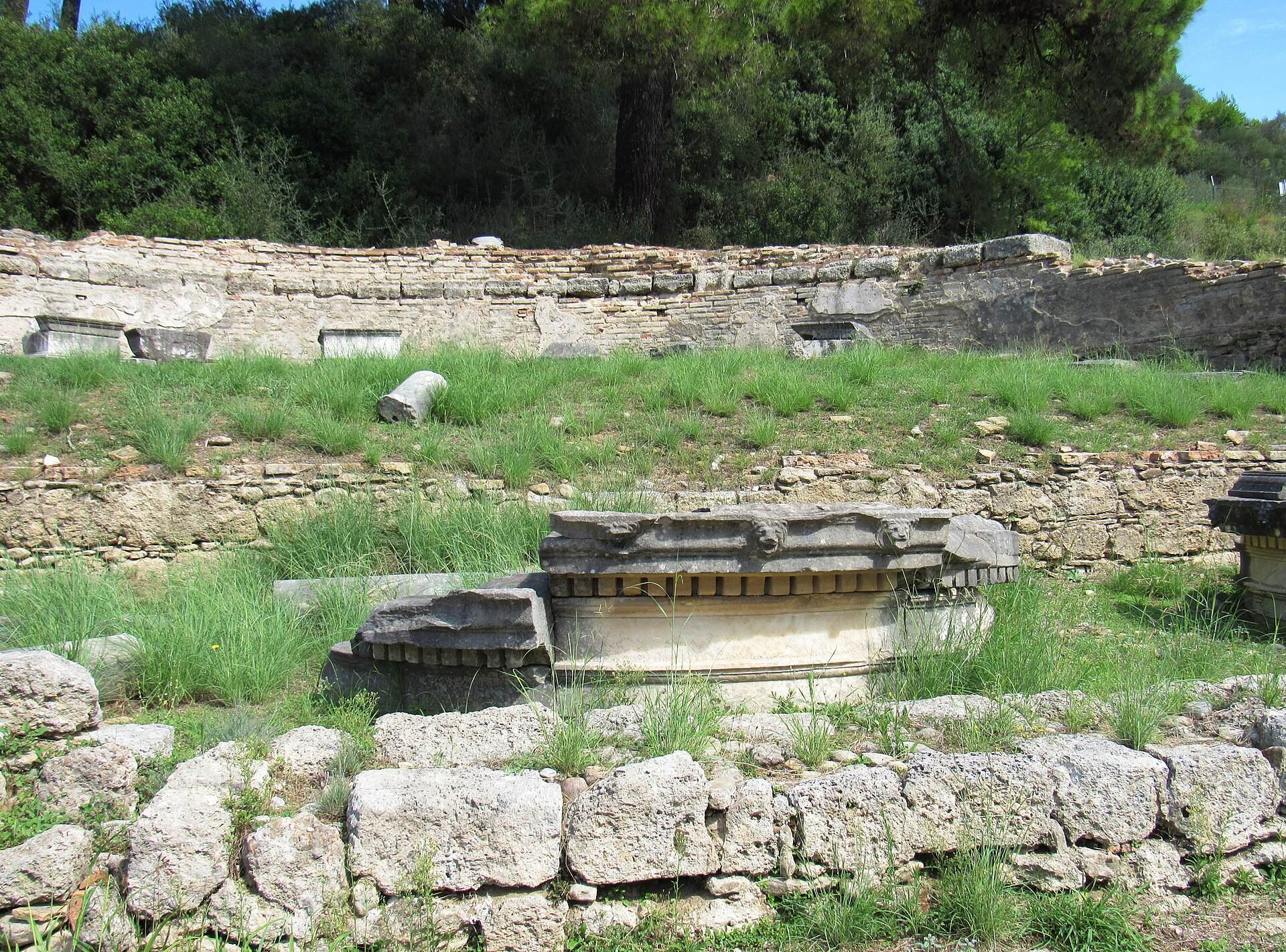
The principal structure was a semicircular apsidal wall approximately 16.6 metres across, with two levels of statue niches. Its sculptural program included Zeus, Herodes Atticus, Regilla, members of the Herodian family, and members of the imperial family. The imperial figures included Hadrian, Antoninus Pius, and Marcus Aurelius. Herodes Atticus presented the imperial relatives, while Elis presented the statues of Herodes and his family.
Basins and gargoyles
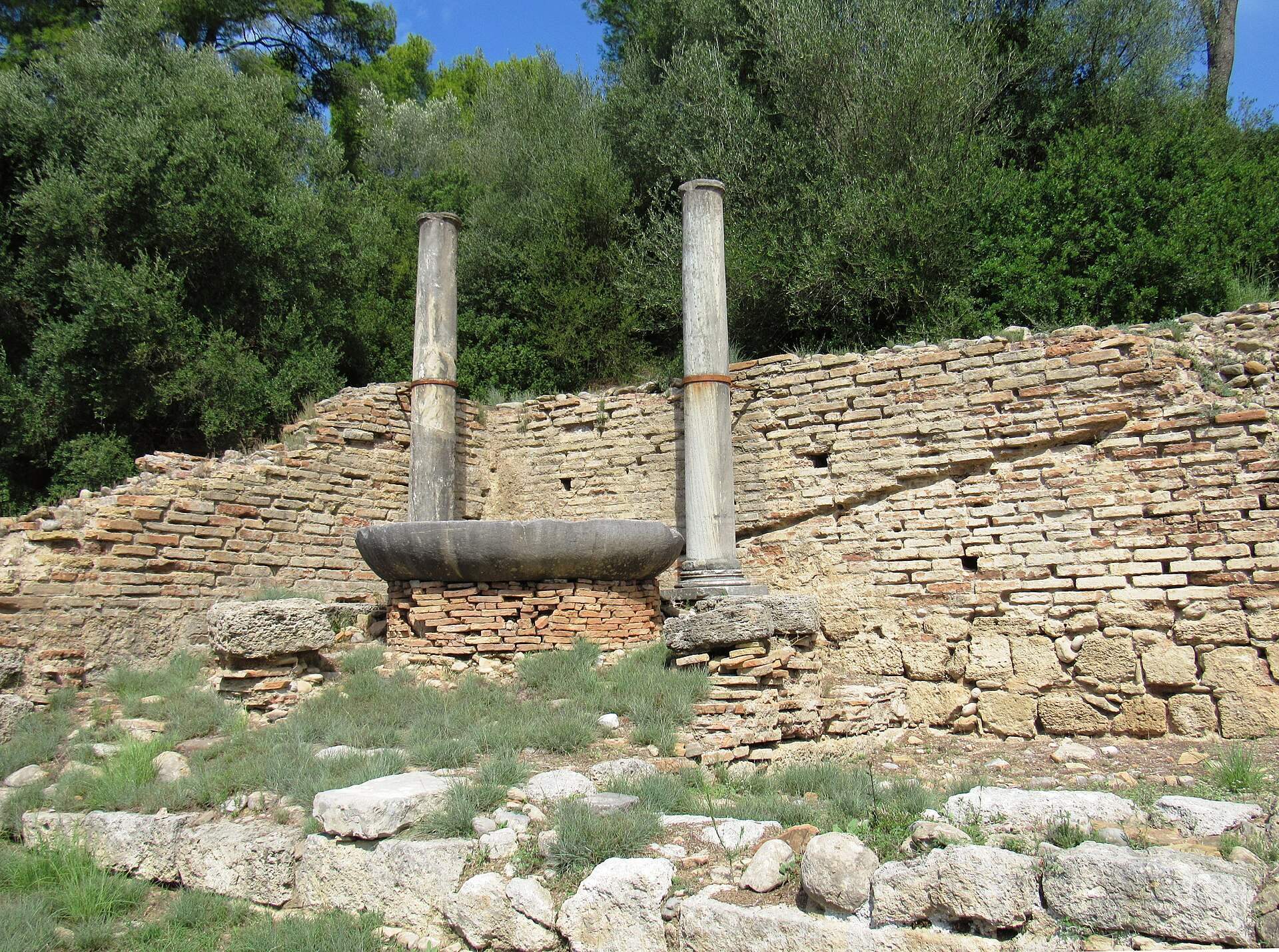
A semicircular upper basin stood in front of the apsidal wall and received water from the aqueduct. Five marble lion-head gargoyles discharged water from it into a lower rectangular basin measuring approximately 21.9 metres long and about 3.4–3.8 metres wide. A marble bull stood between the two basins, with its head facing east. An inscription on its back recorded Regilla’s dedication of the water and installation to Zeus.
Eighty-three additional gargoyles carried water from the lower basin into an external distribution channel. From there, pipes and open channels conveyed water to different parts of the sanctuary and the stadium. Publicly accessible troughs extended around the sanctuary, while concealed pipes ran within walls. Visitors could drink directly from the troughs with small drinking bowls.
End kiosks
A small circular Corinthian-style kiosk, or naiskos, stood at each end of the lower basin. Each structure was approximately 3.8 metres in diameter, contained a miniature fountain, and housed a statue. One statue represented Herodes Atticus; the identity of the other is given as Antoninus Pius or Marcus Aurelius.
Aqueduct and surviving fabric
Brick aqueduct tunnel
The aqueduct entered the monument through a brick tunnel that ran eastward through the base of the hill and along the Treasury Terrace before turning into the hillside. Its visible section was approximately 88 metres long. The cistern stood at about 50 metres elevation, while the entrance to the hill was about 55 metres. A buttressed wall supported the tunnel, maintaining its stability and controlling the downward gradient needed for the water to flow.
Present remains and sculpture
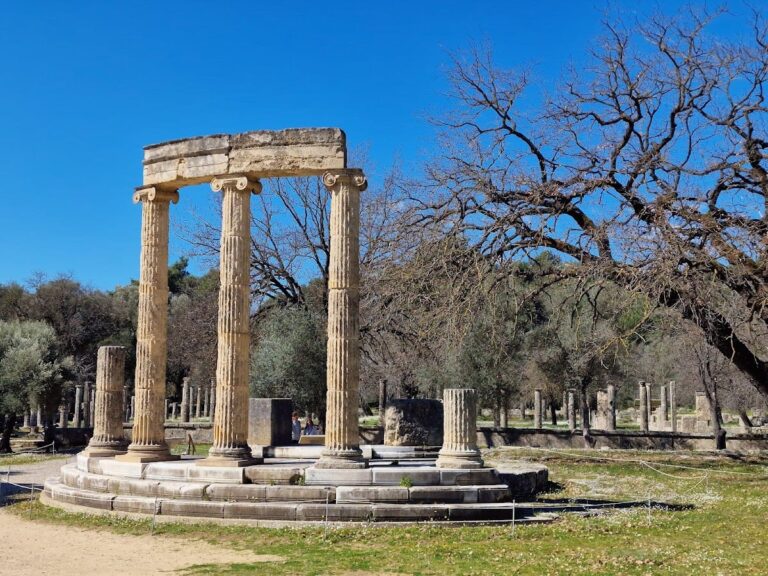
The Nymphaeon is poorly preserved, with foundations, partial columns, and some restored columns surviving. Many statues remain at least in fragments. The marble bull is among the best-preserved sculptural elements, while the excavated statues are housed in the Archaeological Museum of Olympia.