Bozhedomka Church: A Seventeenth-Century Orthodox Church in Yaroslavl
Site at a Glance
- Rating
- 4.6
- Popularity
- Very Low
- Country
- Russia
- Primary era
- Early Modern
- External website
- Open
- Eras represented
- Early Modern, Modern
- Civilizations
- Russian
- Site type
- Religious
- Remains
- Church
On this page9 sections
History
Bozhedomka Church is an Orthodox church in Yaroslavl, Russia, built by the Yaroslavl Diocese between 1670 and 1678 in the seventeenth-century Russian tradition. Its foundation is dated to 1678, and its construction was financed by Semyon Astafiev Luzin, a wealthy merchant known as a “tsar’s guest.” Dedicated to the Vladimir Icon of the Mother of God, the church was established beside a communal burial place and became one of Yaroslavl’s distinctive pre-Petrine monuments.
The Cemetery Church
A wooden church stood beside the road from Uglich to Yaroslavl by 1601. Its existence is recorded by a silver-worked altar cross made that year for the Vladimir altar at a poorhouse burial site through public donations. The name Bozhedomka comes from the traditional communal burial place known by that term. Vagrants and people who had drowned were placed there, with their bodies kept until spring rather than buried immediately. Funeral rites were then held once a year, on the seventh day after Easter. Such places were traditionally viewed as ominous and impure.
The existing stone church replaced the earlier wooden building. Its cemetery role was affected by a Senate decree of 1771, which prohibited these burial sites for sanitary reasons and required burials outside towns. Yaroslavl’s general plan of 1778 incorporated the cemetery church into a planned residential quarter. In response, Governor Alexei Melgunov ordered a new cemetery outside the city at Vspolye in 1779, beside the Uglich road.
Parish Development in the Nineteenth Century
During the nineteenth century, the church’s former cemetery function was forgotten and it became a parish church. A heated church dedicated to the Intercession of the Mother of God was built south of the Vladimir Church in 1821 with donations from parishioners. A stone chapel connected with the Vladimir parish followed outside the city on the Uglich road in 1880. The parish expanded rapidly and had more than 720 parishioners at the beginning of the twentieth century, including 420 townspeople and residents of the villages of Ostashinskaya and Froltsevo.
Revolution, Soviet Closure, and Restoration of Worship
On 18 July 1918, during the suppression of the Yaroslavl Uprising, Red Army soldiers entered the church and shot the priest Gennady Zdorovtsev. He was canonized in 2000 as one of the new martyrs. Soviet authorities closed the churches of the Vladimir parish in 1929. The former Intercession Church was radically rebuilt for offices, while the Vladimir Church became a warehouse for chemical substances. This industrial use damaged the preservation of the historic building.
In early 1992, Nikolai Kobychev, a former Russian Orthodox priest who had joined the Russian Orthodox Church Abroad, founded a community in Yaroslavl that entered that church’s Suzdal Diocese. Local authorities transferred the Vladimir Church to the community on 28 July 1992. Kobychev later left the Russian Orthodox Church Abroad with Valentin Rusantsov in 1994 and 1995 and became a cleric of the non-canonical Russian Orthodox Free Church, later re-registered as the Russian Orthodox Autonomous Church. On 10 June 1999, the building was transferred under a gratuitous-use agreement to the parish of the Vladimir Icon in that church’s Suzdal Diocese.
After Kobychev died on 20 July 2016, the territorial administration of the Federal Agency for State Property Management terminated the use agreement. An arbitration court ruled that the church belonged to the Russian Federation and ordered the parish to leave on 21 November 2016. The court held that the preservation agreement protected the building as a cultural monument rather than authorizing its religious use.
Bailiffs delivered the enforcement order on 11 May 2017, sealed the doors, and inventoried the property for transfer to the diocese. In June, Leonid Kovenkov broke the seals and re-entered the building, prompting representatives of the diocese to report the incident to the police and bailiffs. In summer 2017, the Federal Agency for State Property Management lawfully transferred the Vladimir Church to the Russian Orthodox Church. Metropolitan Panteleimon of Yaroslavl and Rostov appointed Priest Alexei Morozov rector on 2 August 2017, and on 5 January 2018 he conducted the church’s minor consecration. Bozhedomka Church is a federally significant cultural-heritage object of the peoples of the Russian Federation.
Remains
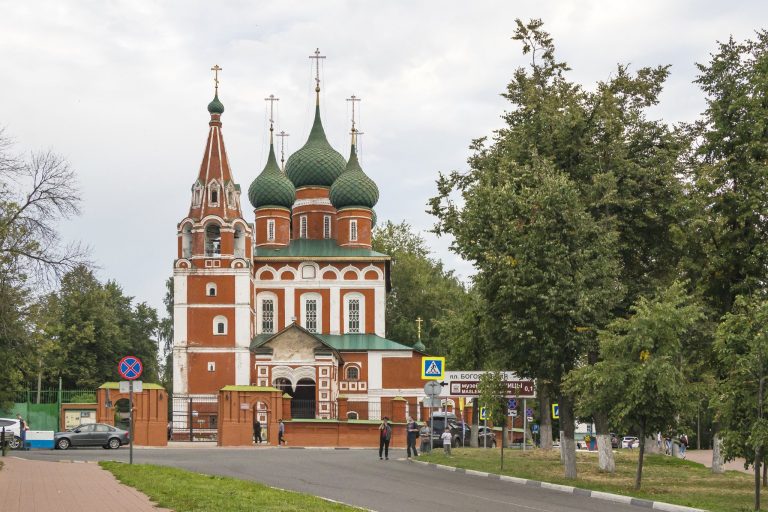
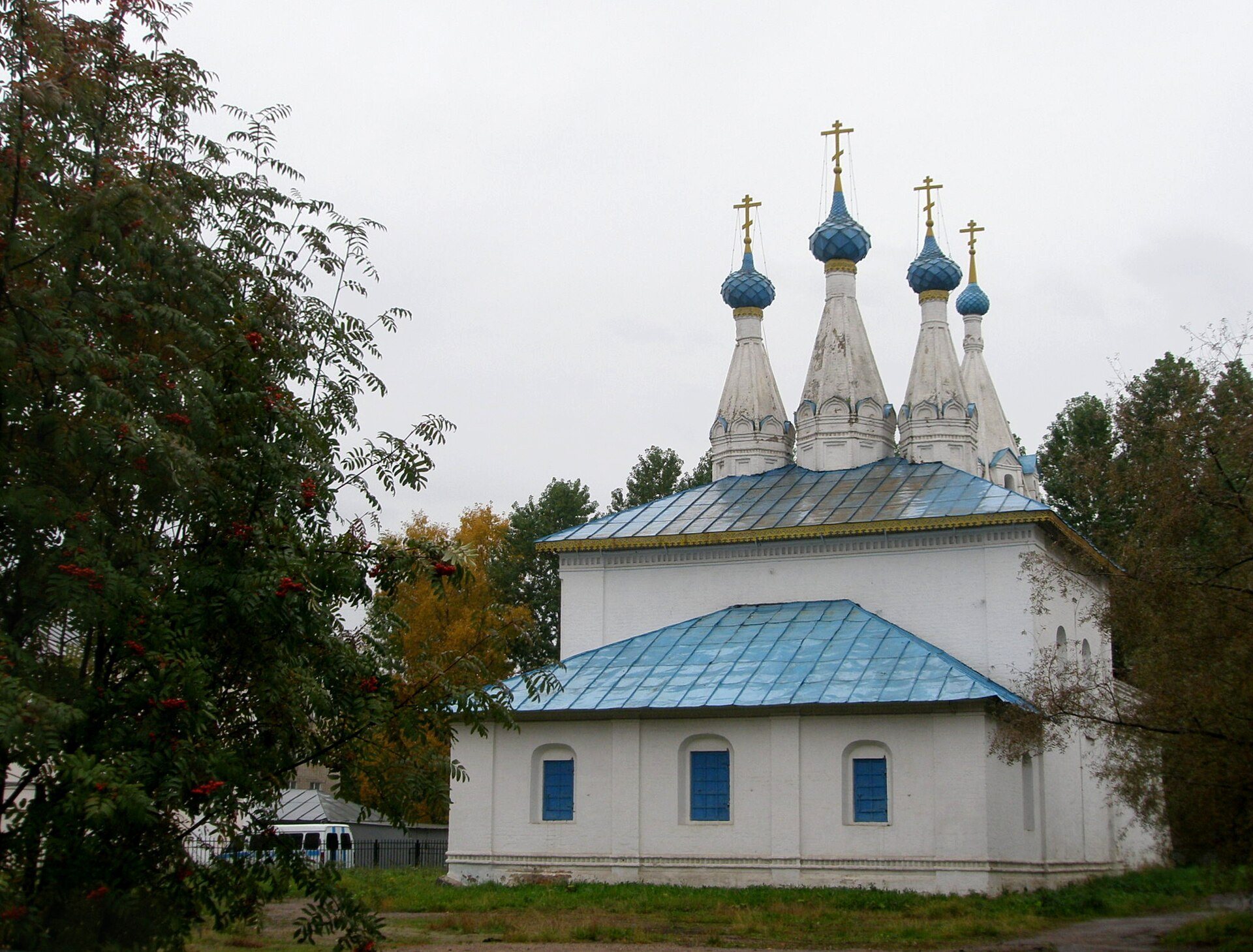
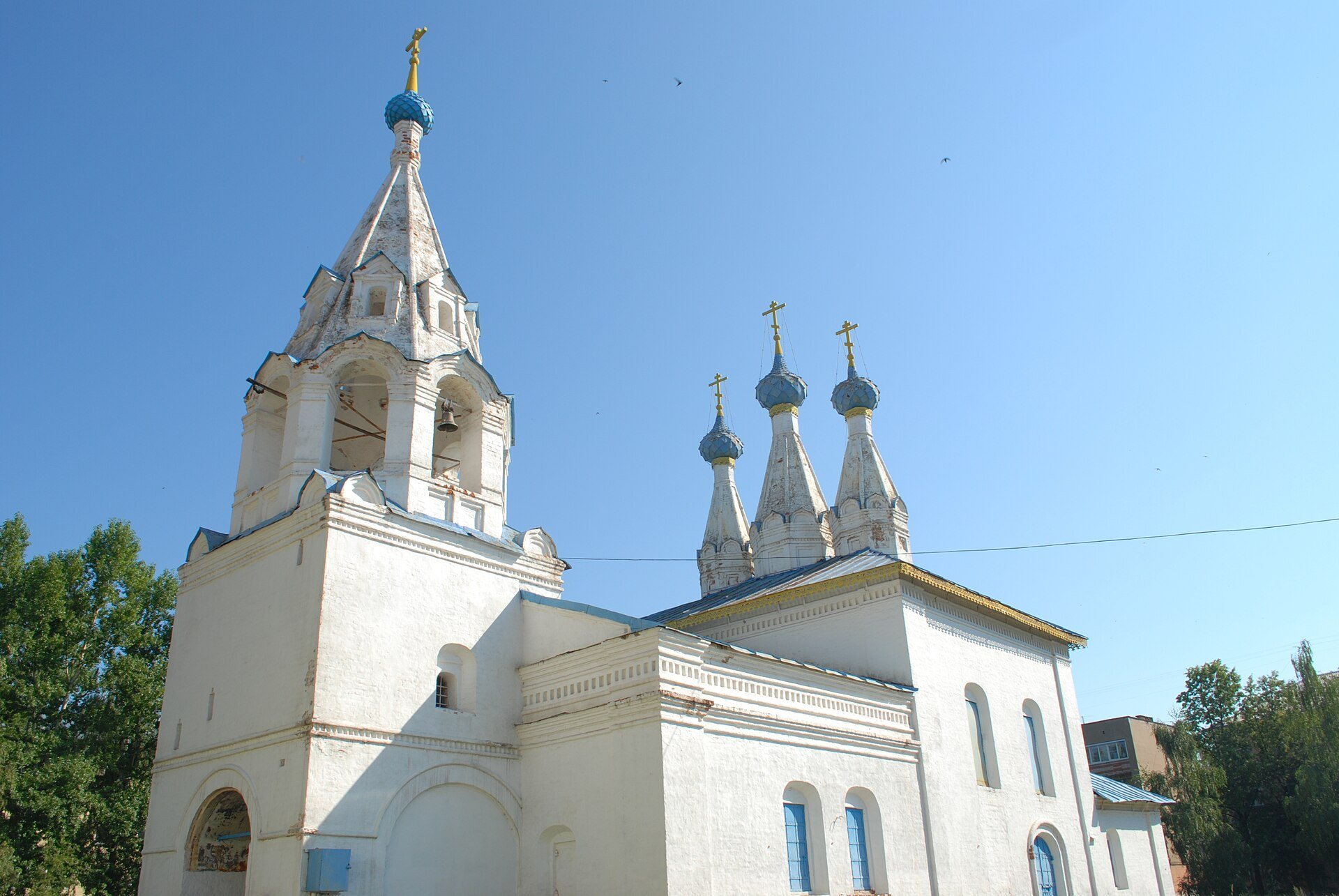
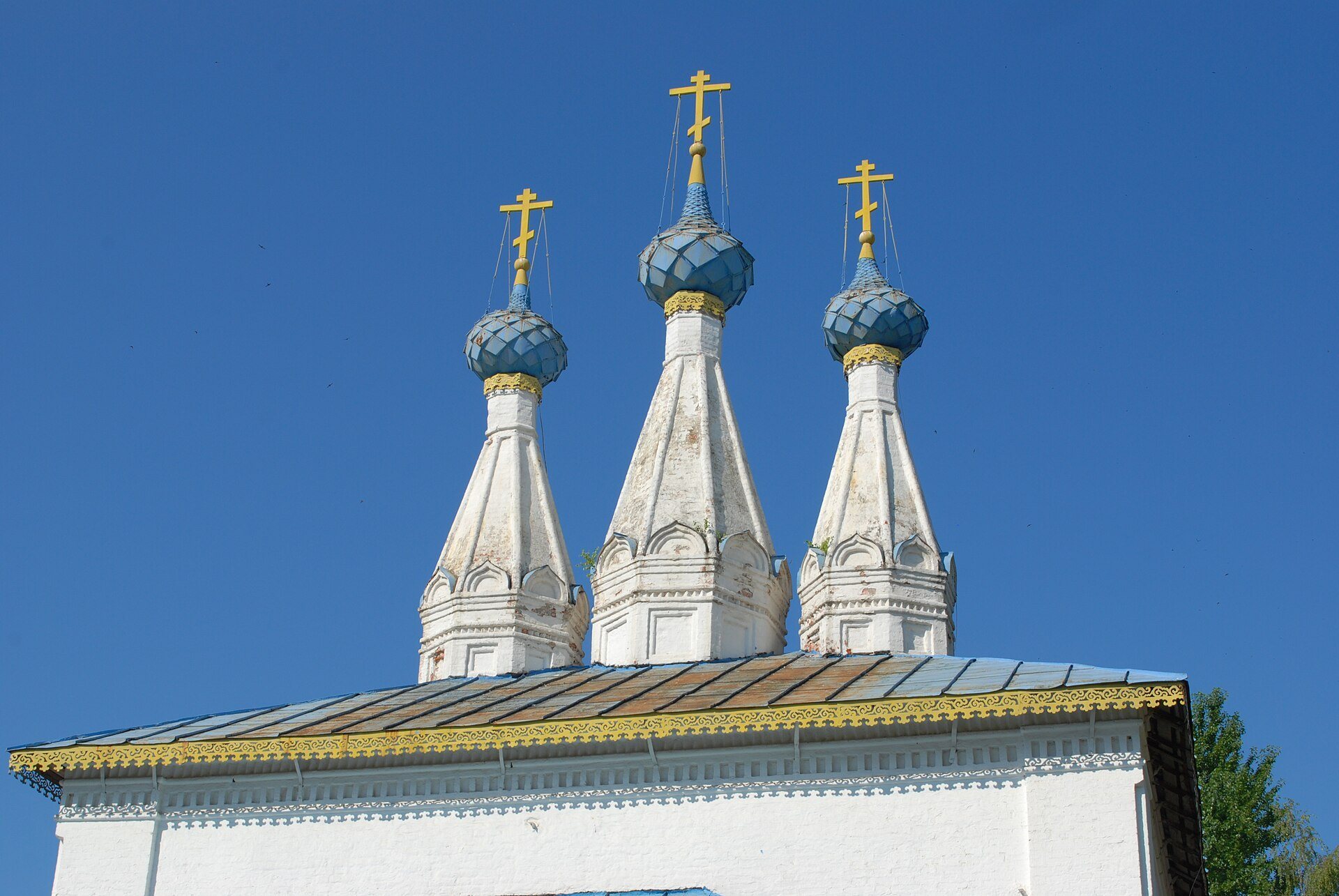
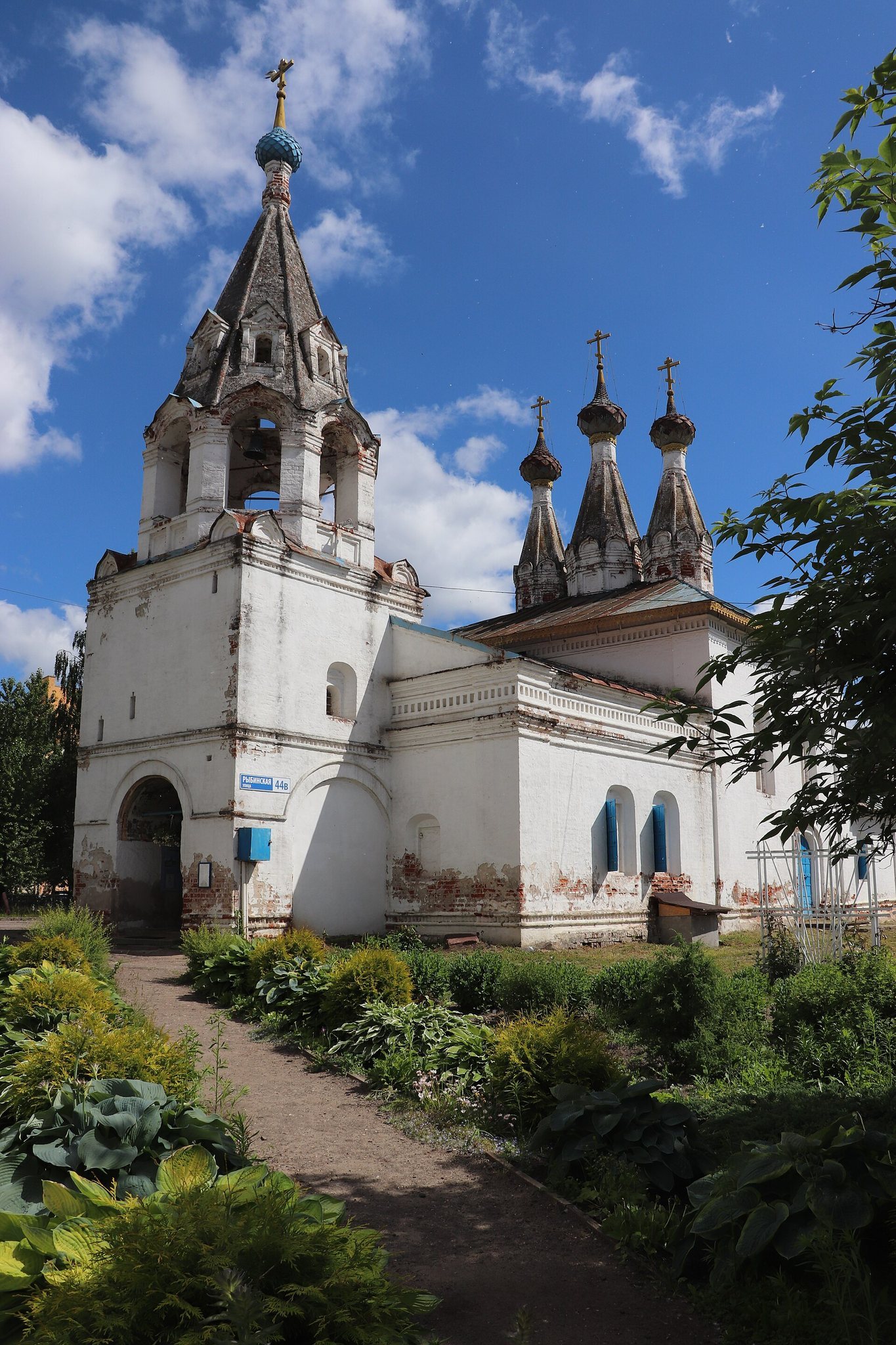
Bozhedomka Church is a pillarless refectory-type building, an unusual form in Yaroslavl. Its elongated main volume runs along a north-south axis, giving particular emphasis to the eastern and western facades while creating more interior space for worship. Three small blind tent roofs rise in a row above the main volume like burning candles. A tent-roofed church is crowned by a steep pyramidal roof rather than a conventional dome. This form conflicted with Patriarch Nikon’s seventeenth-century restrictions on churches considered non-canonical. Bozhedomka Church is the only pre-Petrine tent-roofed church in Yaroslavl and one of the last three-tent churches in pre-Petrine Russian architecture.
The Vladimir Church
The altar is rectangular, and a narthex, or entrance hall, occupies the western side. A low tent-roofed bell tower rises above it. The building has sparse decoration, consistent with its original role as a cemetery church serving poor people. Fresco paintings dated to 1691 were renewed several times and are now concealed beneath whitewash. The period when the building served as a chemical warehouse adversely affected the survival of its historic fabric.
Associated Parish Buildings
Intercession Church
The heated Intercession Church was built south of the Vladimir Church in 1821. It was a single-domed Classical building with a tall, three-tiered bell tower ending in an elegant spire. Later alterations removed the dome and bell tower and added a second storey, changing the building substantially. It is used as offices.
Uglich Road Chapel
A stone chapel affiliated with the Vladimir parish was built outside the city on the Uglich road in 1880.