Cottonera Lines: Malta’s Outer Fortification Circuit
Site at a Glance
- Rating
- 4.7
- Popularity
- Very Low
- Country
- Malta
- Primary era
- Early Modern
- Eras represented
- Early Modern, Modern
- Civilizations
- British, Knights Hospitaller
- Site type
- Military
- Remains
- Wall
On this page27 sections
History
The Cottonera Lines are a seventeenth-century outer fortification circuit associated with Birgu and Cospicua in Malta. Built under the Order of Saint John, a Catholic military-religious order that ruled Malta, they formed part of the ambitious Civitas Cotonera project planned after 1669. The scheme was intended to create a fortified town and defensive line capable of sheltering up to 40,000 people and their animals during a siege.
From the Santa Margherita Lines to Civitas Cotonera
The Cottonera Lines were built on higher and more outward ground than the earlier Santa Margherita Lines, also called the Firenzuola Lines, which enclosed Bormla, the historic name of Cospicua. Work on the Santa Margherita fortifications had begun around Bormla in 1638, but financial difficulties soon halted construction and left the project unfinished.
In 1669, fears of an Ottoman attack intensified after the fall of Candia, then under Venetian rule, to the Ottoman Empire. Plans were consequently made for a new fortified city and an outer defensive line. The proposed city was named Civitas Cotonera after Nicolas Cotoner, the reigning Grand Master of the Order of Saint John. The Italian engineer Antonio Maurizio Valperga designed the project and also worked on the Floriana Lines and other fortifications around the Grand Harbour.
Civitas Cotonera was originally conceived as a separate fortified town between the Cottonera Lines and the Santa Margherita fortifications, rather than as part of present-day Cospicua or Birgu. Earlier plans connected the area of the Cottonera and the Three Cities, meaning Birgu, Cospicua, and Senglea, with the wider territory known as Birmula.
Construction and incomplete works
Construction of the new city and the conversion of the earlier fortifications into the Santa Margherita castle began in 1670. On 28 August that year, Nicolas Cotoner laid the foundation stone of St. Nicholas Bastion. The work was interrupted by an outbreak of plague, which placed further pressure on the Order’s limited finances. After Cotoner died in 1680, the larger project was shelved.
By 1680, the main enclosing circuit, or enceinte, was largely complete and parts of the ditch had been excavated. Important outer works, including the cavaliers, ravelins, glacis, and covertway, remained unfinished. A cavalier was a raised defensive platform, while a ravelin was a detached work placed in front of a curtain wall. A glacis was a sloping bank outside the fortifications, and a covertway was a protected passage along the outer edge of the defensive works.
During the early eighteenth century, efforts were made to complete the defences. Instead of following Cotoner’s plan for a central castle, the Santa Margherita fortifications were continued as a defensive line. Gunpowder magazines were built in St. James Bastion and St. Clement’s Bastion, and Fort San Salvatore was constructed on San Salvatore Bastion in 1724. The lines were completed during the 1760s, although the ditch remained unfinished and the planned outworks and cavaliers were never constructed.
Blockade, British alterations, and later use
During the French blockade of 1798–1800, French forces held the Cottonera Lines. Maltese insurgents opposing French rule built an entrenchment around the Cottonera and other harbour fortifications. An entrenchment was an additional defensive work intended to strengthen a position or provide another line of resistance. Nearby batteries and lookout posts, including Tal-Borg Battery and Windmill Redoubt, were also constructed, while French forces bombarded the Maltese at Żabbar.
During the nineteenth century, the British altered the incomplete system. They built St. Clement’s Retrenchment, which linked the Cottonera Lines with the Santa Margherita Lines, and constructed Fort Verdala on the site intended by Cotoner for his central castle. In the 1870s, Valperga Bastion, St. Paul Curtain, St. Paul Gate, and a church dedicated to St. Francis De Paule were demolished for a new road and the Għajn Dwieli tunnel, which formed part of an extension of the Malta Dockyard. St. Paul Bastion was also connected with the Corradino Lines during the nineteenth century.
The fortifications remained in military use from the seventeenth into the twentieth century and were involved in the military history of the 1798–1800 blockade. They were included in Malta’s Antiquities List in 1925. Their surviving circuit reflects the original seventeenth-century plan together with later defensive, military, transport, and urban alterations.
Remains
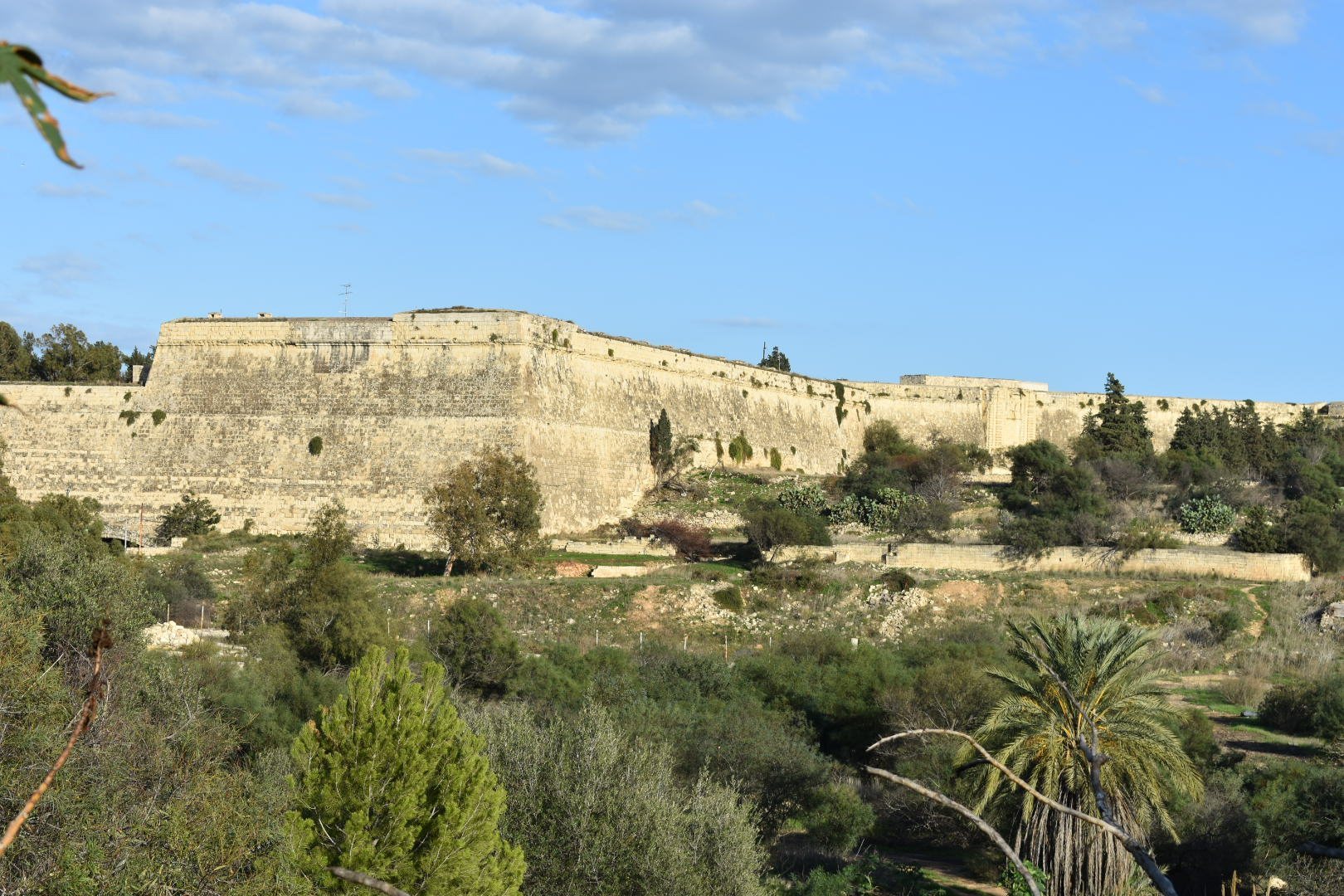
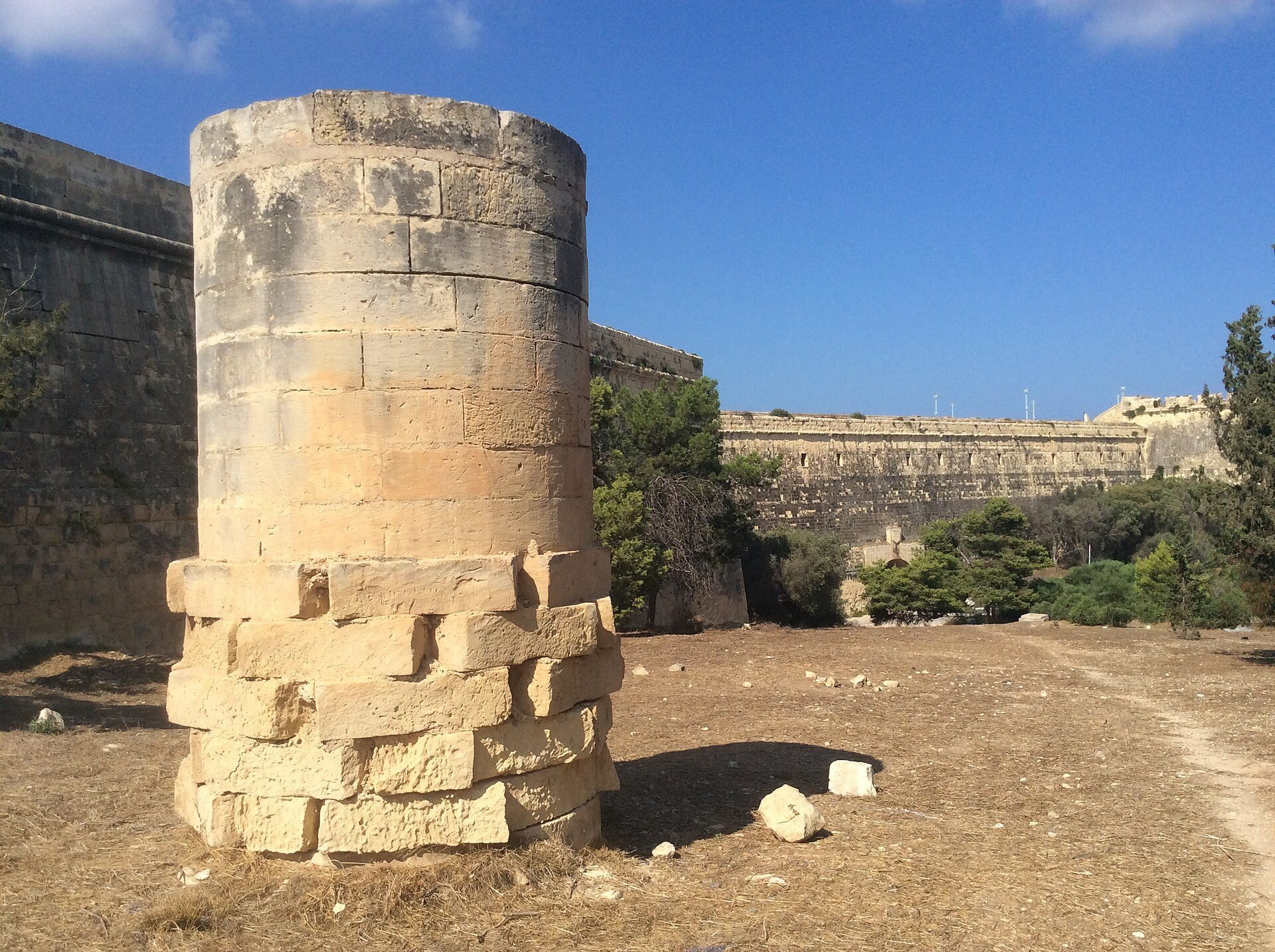
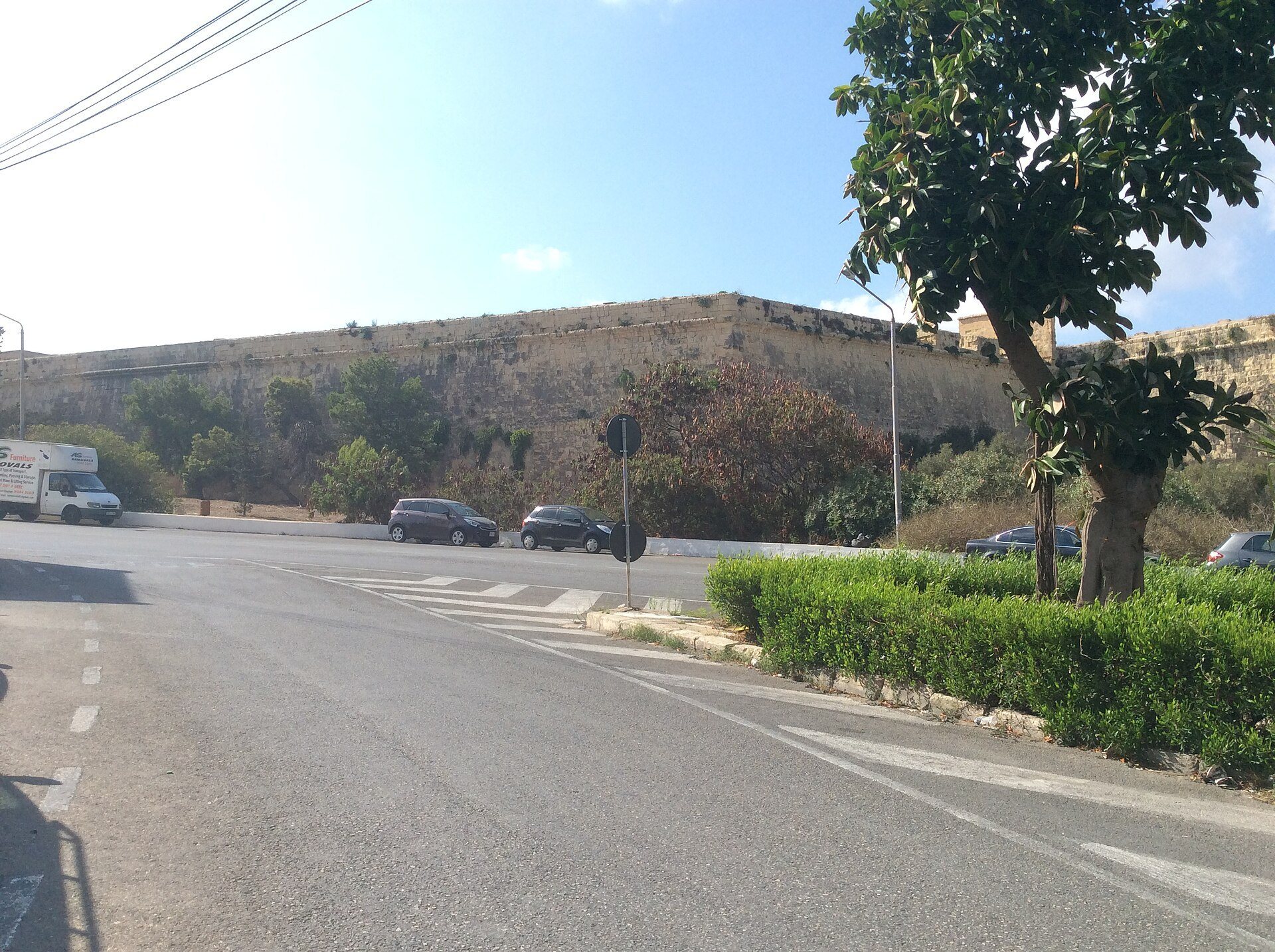
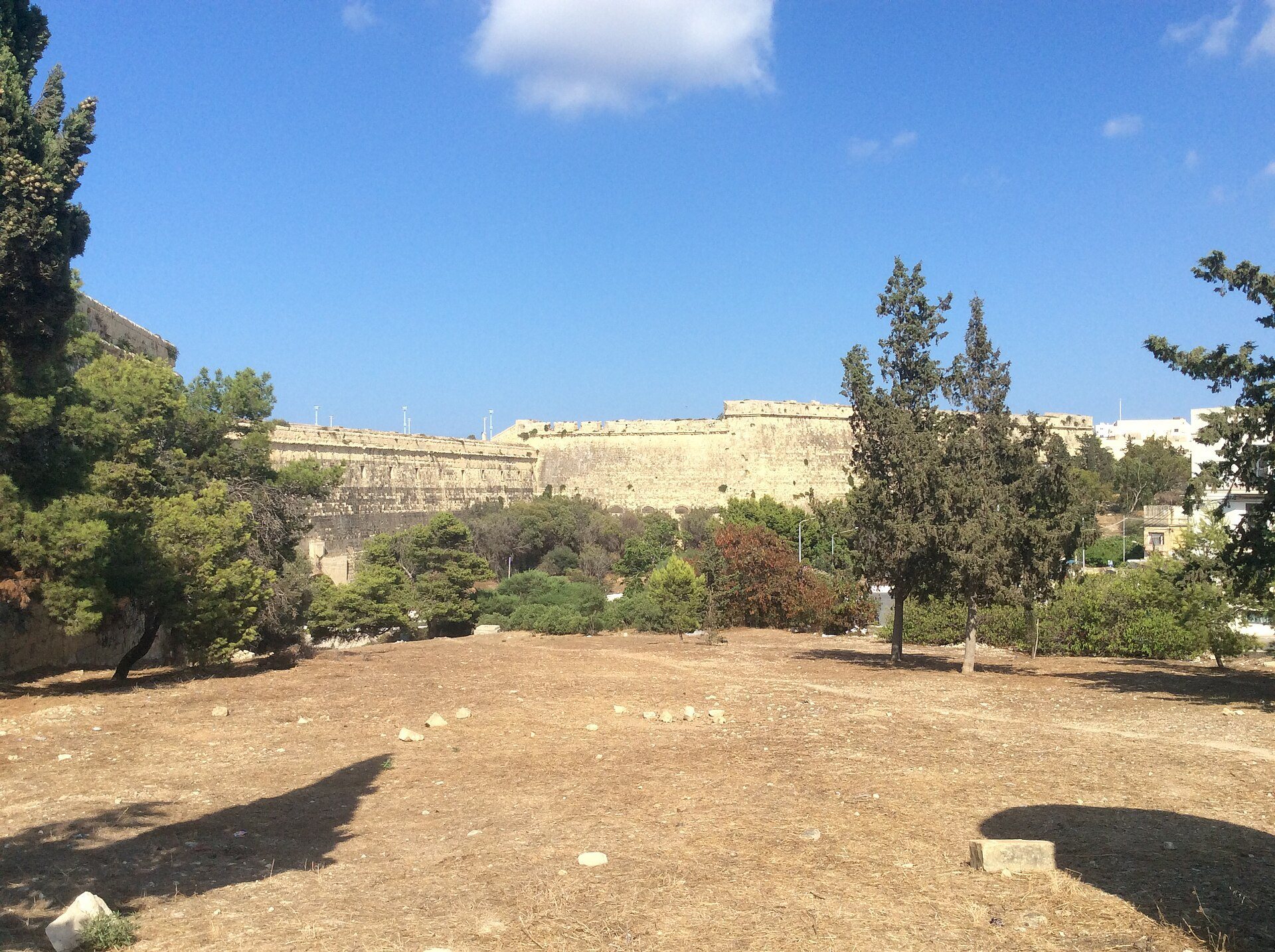
The Cottonera Lines form a limestone circuit of bastions and curtain walls extending clockwise from Kalkara Creek to French Creek. A bastion is a projecting fortified platform designed to provide fire along adjoining walls, while a curtain wall is the section linking two bastions. Much of the circuit survives, although individual sections were demolished, damaged, substantially altered, or incorporated into later structures. The section from St. Laurence Demi-Bastion to Notre Dame Curtain lies within Birgu, while the section from Notre Dame Bastion to St. Paul Bastion lies within Cospicua.
From Kalkara Creek to Notre Dame Bastion
St. Laurence Demi-Bastion
St. Laurence Demi-Bastion links the Cottonera Lines with the Birgu Land Front, the fortified landward side of Birgu. It has two tiers. The lower part was damaged during the Second World War, while the upper part now houses a school.
San Salvatore Curtain and Gate
San Salvatore Curtain connects St. Laurence Demi-Bastion with San Salvatore Bastion. It contains San Salvatore Gate and two modern breaches. The curtain wall forms part of the continuous defensive line between the two projecting works.
San Salvatore Bastion and Fort San Salvatore
San Salvatore Bastion is pentagonal in plan and was strengthened by Fort San Salvatore, built on the bastion in 1724. This later fortification is an example of a retrenchment, an additional internal or rear defensive work intended to strengthen the main line.
St. Louis Curtain and Gate
St. Louis Curtain lies between San Salvatore Bastion and St. Louis Bastion. Its blocked-up St. Louis Gate remains within the curtain wall.
St. Louis Bastion
St. Louis Bastion is a pentagonal work containing a Second World War machine-gun post, a nineteenth-century cemetery, and a private orchard. These later uses occupy space within the earlier defensive structure.
St. James Curtain and Gate
St. James Curtain connects St. Louis Bastion with St. James Bastion. The curtain contains the blocked-up St. James Gate.
St. James Bastion
St. James Bastion is pentagonal and contains a gunpowder magazine. The magazine was later converted into a chapel, and the bastion now forms part of the grounds of St. Edward’s College.
Notre Dame Curtain and Gate
Notre Dame Curtain extends between St. James Bastion and Notre Dame Bastion. It contains Notre Dame Gate, the principal entrance of the lines, together with two modern breaches. The curtain was originally protected by a ditch and a tenaille, a low angular outwork positioned in front of a fortification.
Notre Dame Bastion
Notre Dame Bastion is a pentagonal bastion containing a nineteenth-century redoubt, an independent defensive work positioned within the larger fortification system.
Central and eastern sector
Unnamed Curtain and St. Clement’s Retrenchment
An unnamed curtain wall extends from Notre Dame Bastion to St. Clement’s Bastion. During the nineteenth century it was extensively altered and incorporated into St. Clement’s Retrenchment, which connects the Cottonera Lines with the Santa Margherita Lines. The wall is protected by a tenaille.
St. Clement’s Bastion
St. Clement’s Bastion is pentagonal and was extensively changed when it became part of St. Clement’s Retrenchment. It contains a demi-bastioned retrenchment, a gunpowder magazine, and a Second World War anti-aircraft battery with a control station and four concrete emplacements.
St. Clement’s Curtain and Gate
St. Clement’s Curtain lies between St. Clement’s Bastion and St. Nicholas Bastion. Its walled-up St. Clement Gate remains within the curtain wall.
St. Nicholas Bastion
St. Nicholas Bastion is a pentagonal work containing a casemated battery and a barrack block. A casemate is a vaulted or otherwise protected chamber used for artillery, storage, or accommodation. The bastion was also the location where Nicolas Cotoner laid the foundation stone in 1670.
St. Nicholas Curtain
St. Nicholas Curtain, also known as Polverista Curtain, links St. Nicholas Bastion with St. John Bastion. It contains a modern arched opening.
St. John Bastion
St. John Bastion is pentagonal and contains a casemated battery and a Second World War machine-gun post. Housing estates were built in its piazza during the 1960s. In fortification terminology, a piazza is an open interior area or parade space within a bastion.
St. John Curtain and Gate
St. John Curtain connects St. John Bastion with St. Paul Bastion. Its walled-up St. John Gate forms part of the surviving curtain wall.
St. Paul Bastion
St. Paul Bastion is pentagonal and contains casemates that were later converted into barracks. A twentieth-century tunnel allowing vehicles to reach the Three Cities cuts into the base of the bastion. During the nineteenth century, the bastion was also connected with the Corradino Lines.
Demolished western works
St. Paul Curtain and Gate
St. Paul Curtain lay between St. Paul Bastion and Valperga Bastion. It contained St. Paul Gate, also known as Porta Haynduieli. Both the curtain and gate were demolished during the 1870s for the dockyard extension and associated road works.
Valperga Bastion
Valperga Bastion was a large demi-bastion at the western end of the circuit. It was demolished during the 1870s to make way for the dockyard extension.