Tvrz Štěměchy: A Gothic Water-Protected Fortress in Czechia
Site at a Glance
- Rating
- 4.5
- Popularity
- Very Low
- Country
- Czechia
- Primary era
- Medieval
- External website
- Open
- Eras represented
- Medieval
- Civilizations
- Holy Roman Empire, Kingdom of Bohemia, Margraviate of Moravia
- Site type
- Military
- Remains
- Castle
On this page9 sections
History
Tvrz Štěměchy is a Gothic water-protected fortified residence in Czechia, probably founded in the thirteenth century by the Hecht family of Rosice. It served as the seat of an estate in Štěměchy, while the settlement itself is first mentioned in 1279. The earliest written reference to the fortress dates from 1378, when Adam of Štěměchy assigned his wife Luneta a dowry of 100 kop, a historical Central European unit of account whose value varied by time and place.
The Hecht family and the Heraltice estate
In 1386, Jošt Tluksa of Božejov sold the village and fortress to Petr Hecht of Rosice, the highest burgrave of Vranov Castle. A highest burgrave was a senior official responsible for the administration and defence of an important castle or territory. Petr resided in Heraltice, and the transfer made Štěměchy part of the Heraltice estate.
After Jošt Hecht of Rosice was mentioned in 1407, the fortress passed to Vzňata. His tenure lasted only a few months during the growing conflict between the Hecht family and the Valdštejns of Rokštejn. In 1408, Hynek of Valdštejn attacked and damaged the fortress. Legal disputes followed, and the property was returned to the Hechts, who rebuilt it.
Fifteenth-century conflicts and changing ownership
The Hecht family died out in 1453. King George of Poděbrady then took possession of its property and granted it to Přemek, Duke of Teschen, who also owned nearby Předín. Oldřich of Miličín acquired the fortress in 1464 and supported George of Poděbrady in the conflict with Matthias Corvinus, the fifteenth-century king of Hungary and Croatia and a major rival of the Bohemian king.
In 1468, forces loyal to George of Poděbrady fought those of Frederick III of Austria, a Habsburg ruler who was also supported by Matthias Corvinus. After the royal forces were defeated, Štěměchy and its fortress passed to Jindřich Hradský of Telč, a supporter of Matthias Corvinus.
Following Matthias Corvinus’s death, the fortress and village were returned to Přibík of Miličín, the son of Oldřich of Miličín. Přibík resided in Heraltice. In 1505, his successor, Oldřich II of Miličín, sold the fortress to the Valdštejns, transferring Štěměchy to the Brtnice estate.
Loss of its residential role
At the end of the sixteenth century, the fortress ceased to serve as a residence and subsequently fell into ruin. Its position on the Haberská route, a historic regional road linking Bohemia and Moravia from Kolín to Znojmo, connected the estate to an important overland route. The surviving remains are protected as a cultural monument.
Remains
Enclosure and water defenses
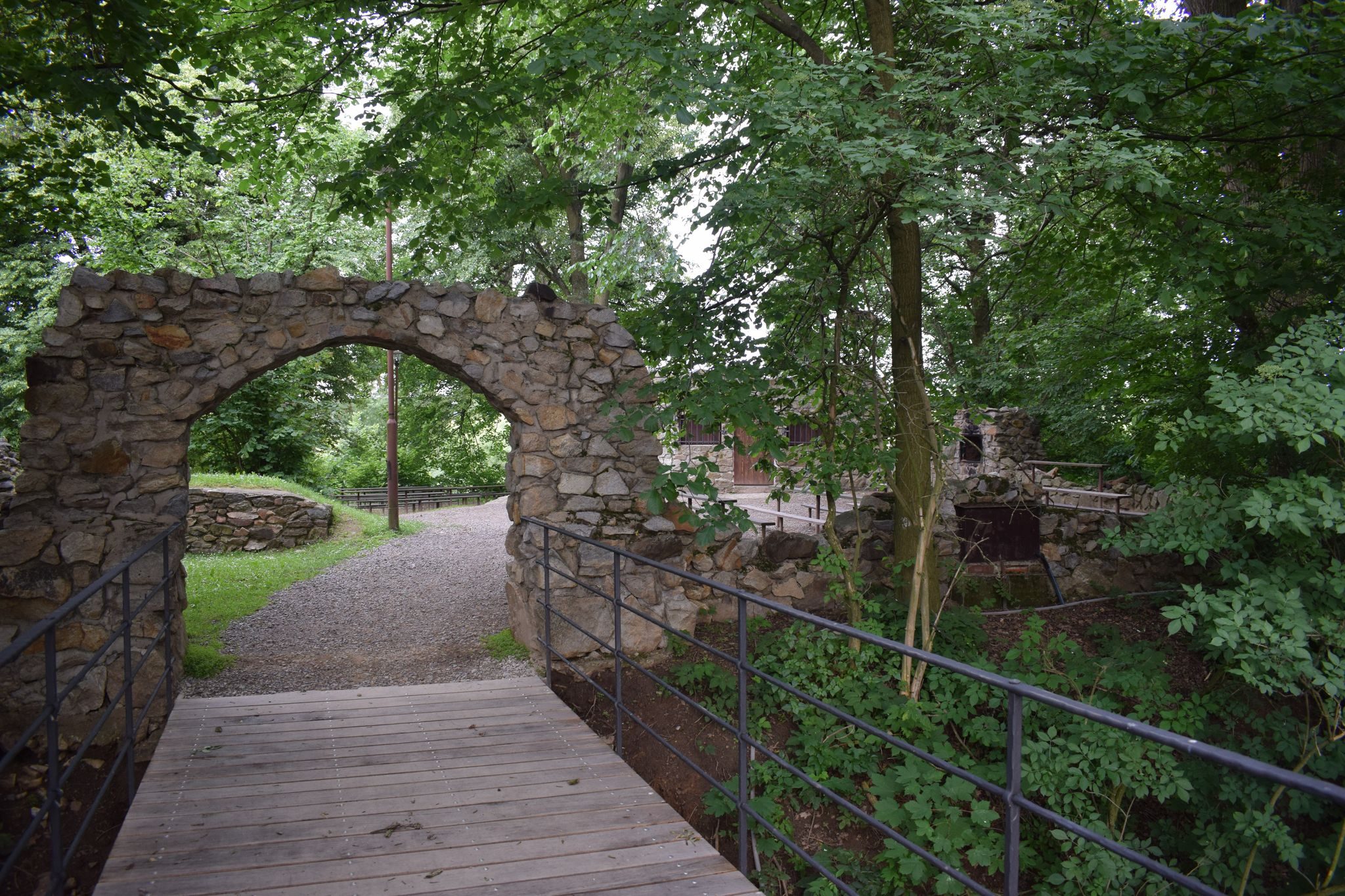
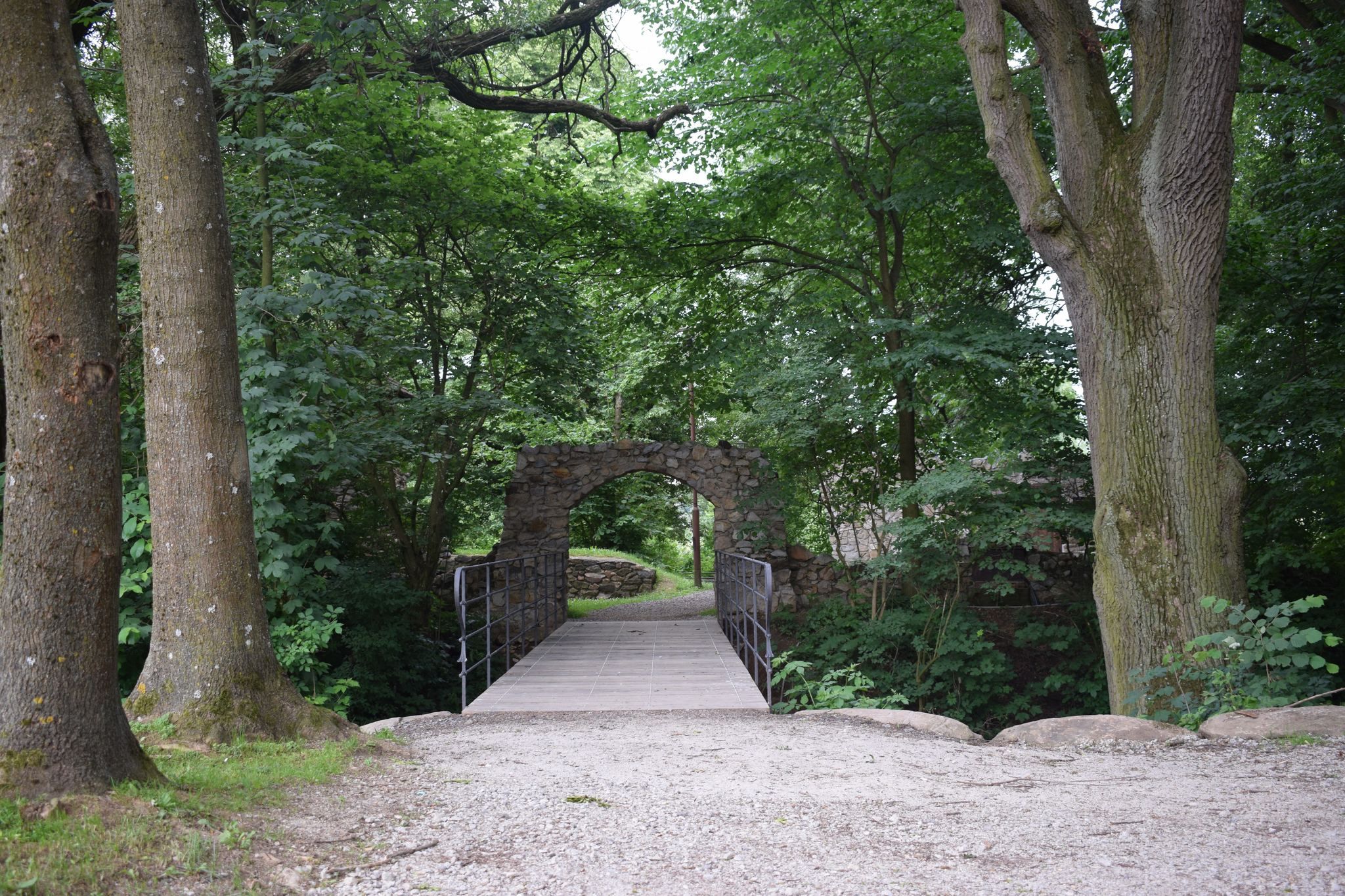
The fortress occupied the lowest flat part of Štěměchy, at the eastern edge of the village near the former manor court. Its roughly circular plan measured about 45 to 50 metres across. Two water-filled moats partly enclosed the site. Each was approximately 12 to 14 metres wide and 8 metres deep, supplied by a system of ponds above the fortress. A high dam stood nearby, while farm buildings belonging to the adjoining court were situated above the fortress.
Towers
Residential tower
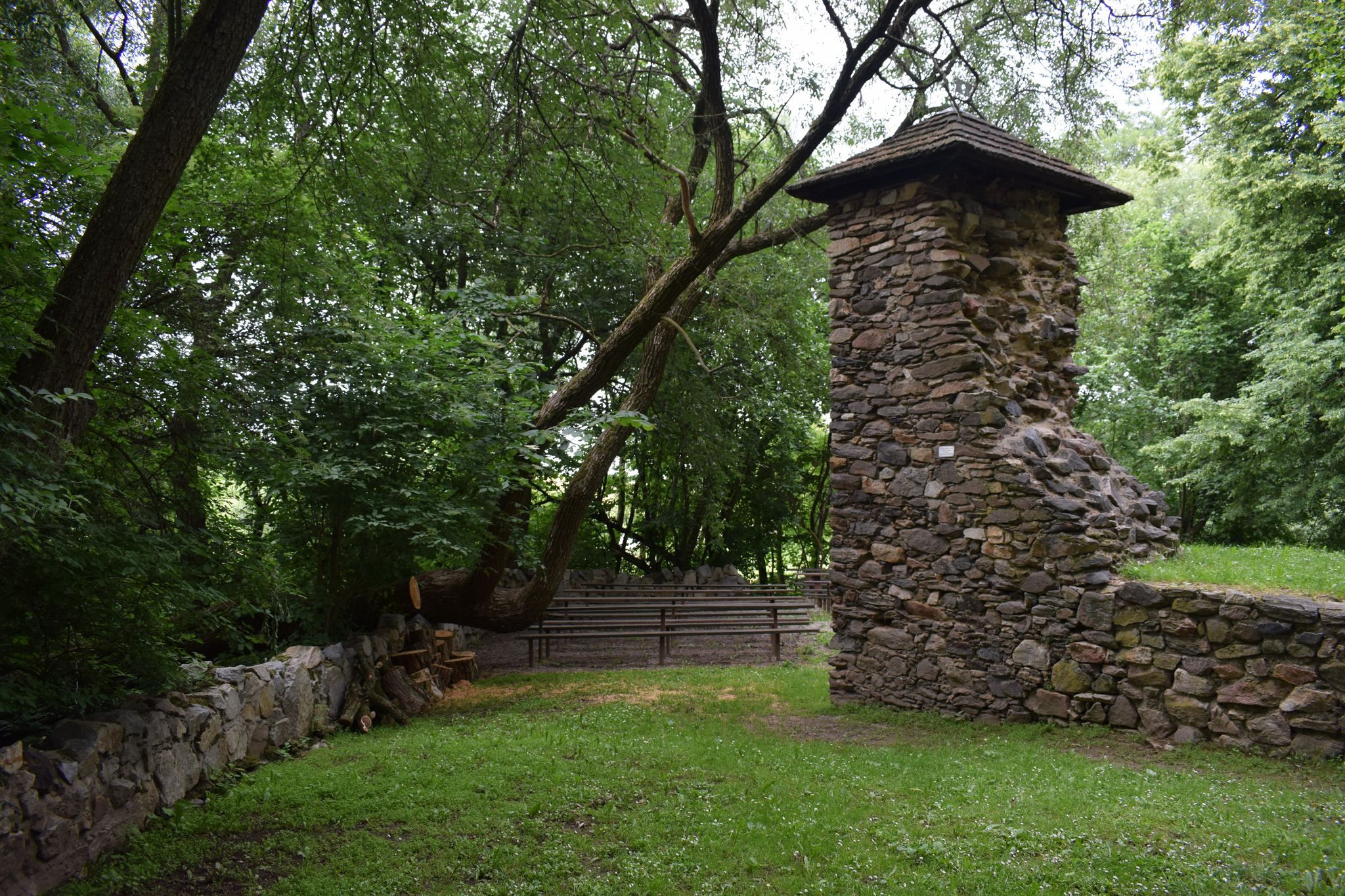
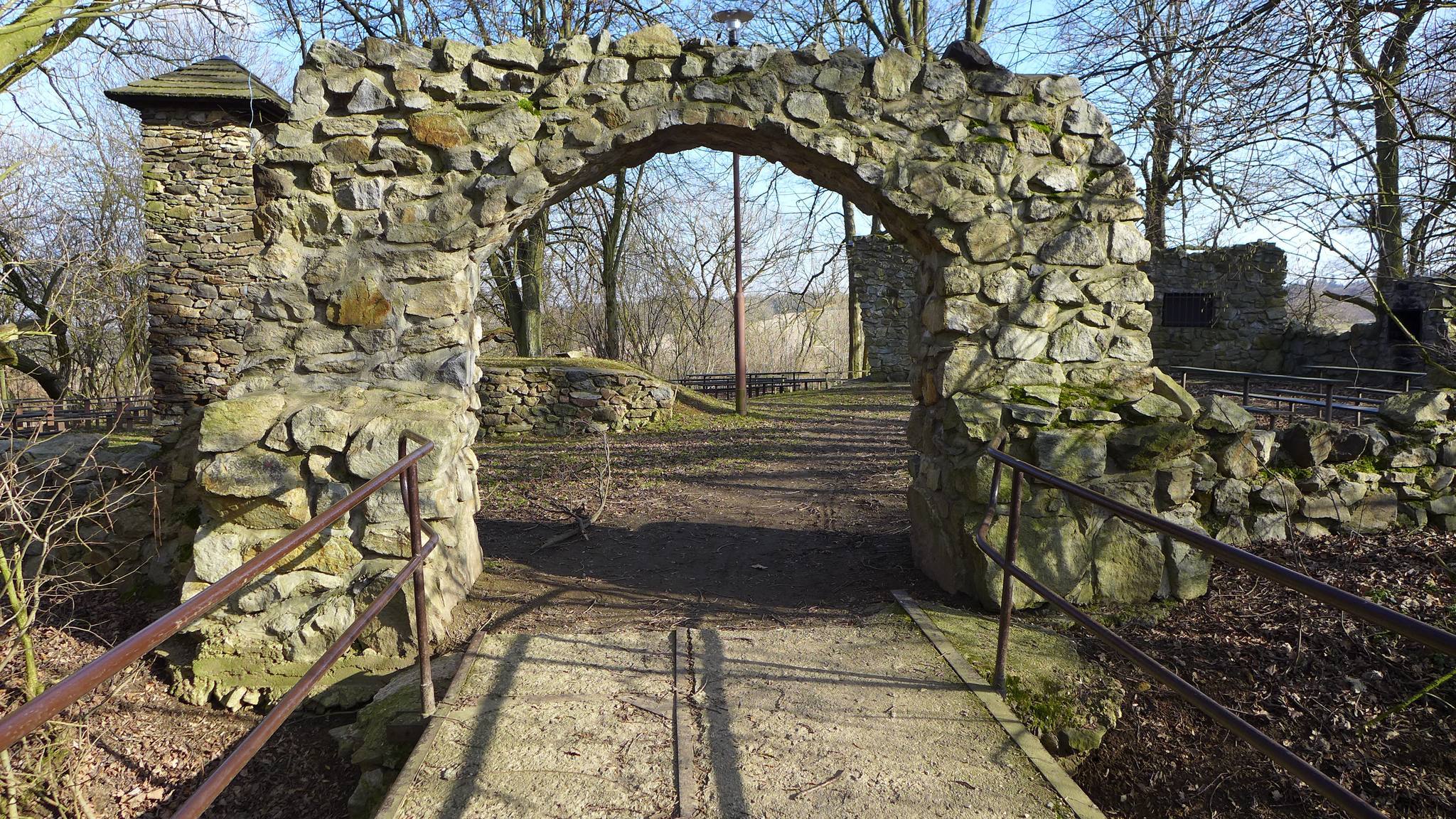
A trapezoidal tower formed part of the perimeter walls. Its longest side measured 7.1 metres, and it probably rose through several storeys as a residential tower. Above-ground masonry survives, but the former tower was later replaced by a shelter in an insensitive alteration.
Defensive tower
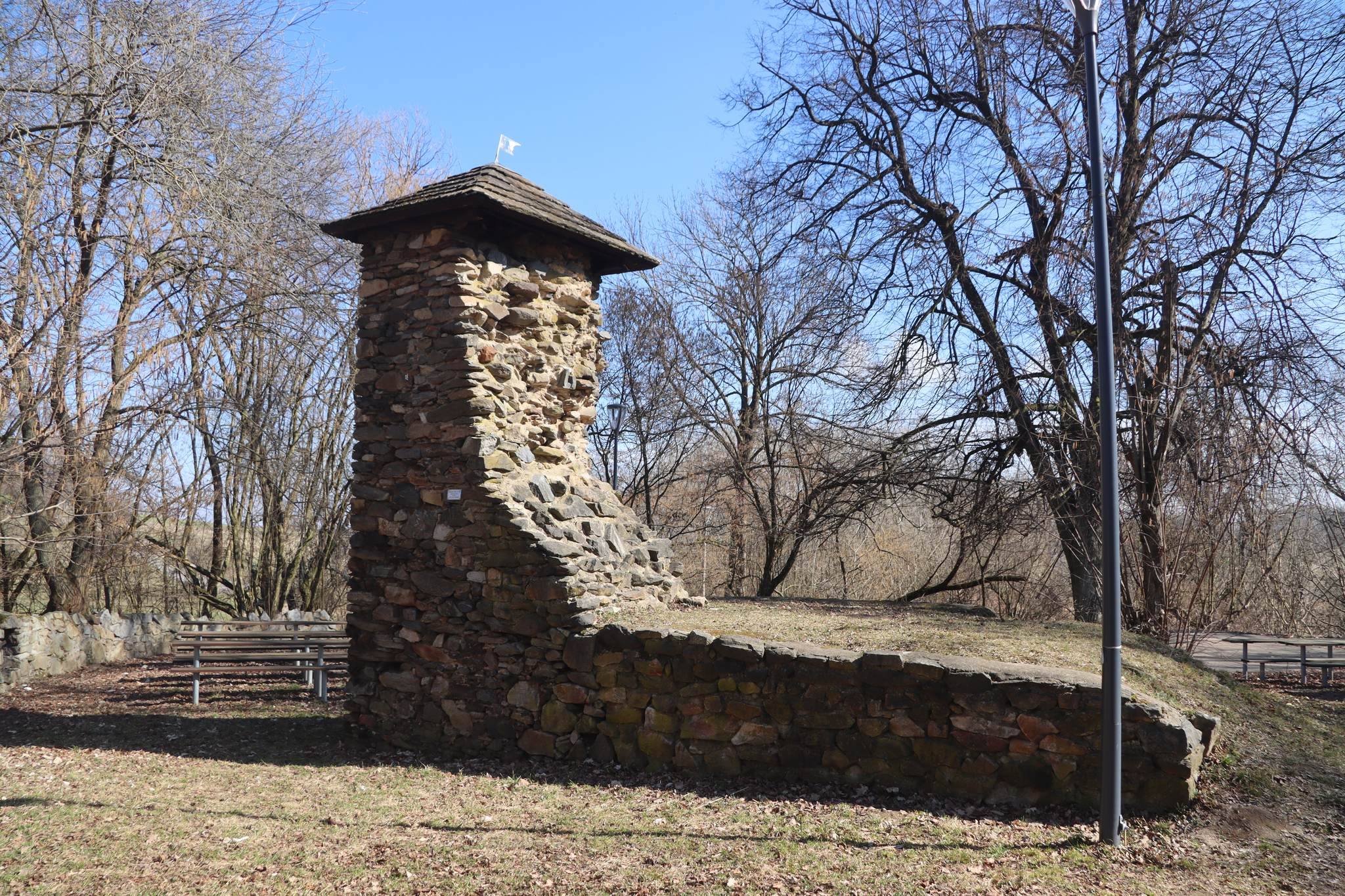
A second tower stood at the centre of the circular enclosure. It served a defensive purpose and was surrounded by a broad rampart. Part of this guard tower remains above ground, providing one of the visible elements of the former fortified residence.