Žemaičių Kalvarijos piliakalnis: A Nationally Significant Hillfort in Lithuania
Site at a Glance
- Rating
- 4.6
- Popularity
- Very Low
- Country
- Lithuania
- Primary era
- Medieval
- External website
- Open
- Eras represented
- Classical, Medieval
- Civilizations
- Unclassified
- Site type
- Military
- Remains
- Fort
On this page10 sections
History
Žemaičių Kalvarijos piliakalnis is a nationally significant hillfort in Lithuania, located in Žemaičių Kalvarija. Dating from the first millennium to the thirteenth century, it occupies a defensible promontory above the meeting of the Varduva and Pagardenis rivers. The site is associated with the old castle of Gardai and with the first chapel of the Gardai parish, which was dedicated to Saint John.
Gardai and the Curonian lands
The hillfort is traditionally identified with a Curonian castle mentioned in a charter dated 5 April 1253. The document concerned the division of the southern Curonian lands between the Livonian Order, a medieval Catholic military order that controlled territories in the eastern Baltic, and the Bishop of Courland. Curonians were a western Baltic people whose lands included parts of present-day western Lithuania and Latvia. The identification of the castle at Gardai with the site remains an attribution rather than a documented certainty.
The hillfort has also been known by the names Varduva Hill, St John’s Hill, Kalvarija, and Gardai. Local traditions describe the steep hill as having been formed when pagans brought and piled up earth at the command of their leader. They also say that sacrifices were burned there and that a cemetery was established on the hill after paganism disappeared.
Transformation into a Christian devotional site
The hillfort was altered in 1637–1639, when the Žemaičių Kalvarija Stations of the Cross were established across it. The Stations of the Cross are a Christian devotional sequence commemorating episodes of Jesus Christ’s arrest, suffering, and crucifixion, usually represented by chapels or images. This work affected the northern slope and the summit, adding a later religious use to the earlier fortified landscape.
Archaeological investigation and protection
Exploratory archaeological investigations took place in 1903 under Liudvikas Kšivickis and in 1964 through the Institute of Lithuanian History. Bronius Dakanis examined a 4-square-metre area beside the southern chapel steps in 2004, while isolated archaeological finds were recovered in 2008. The hillfort is protected as a monument of national significance.
Remains
Hillfort and earthworks
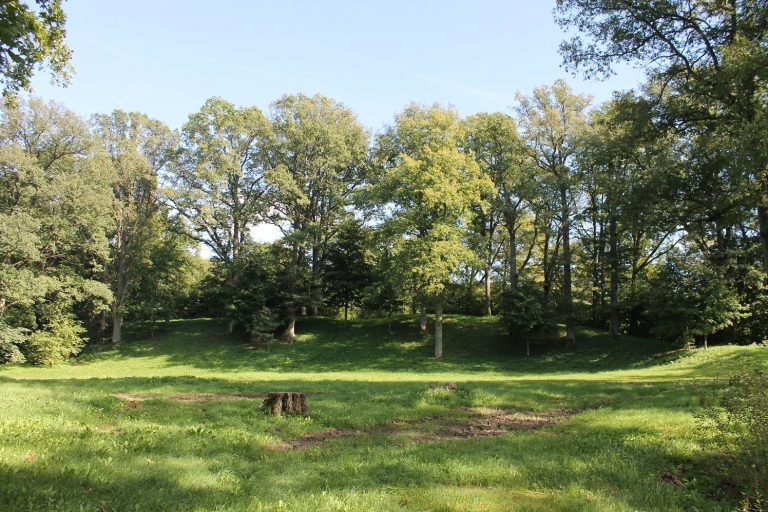
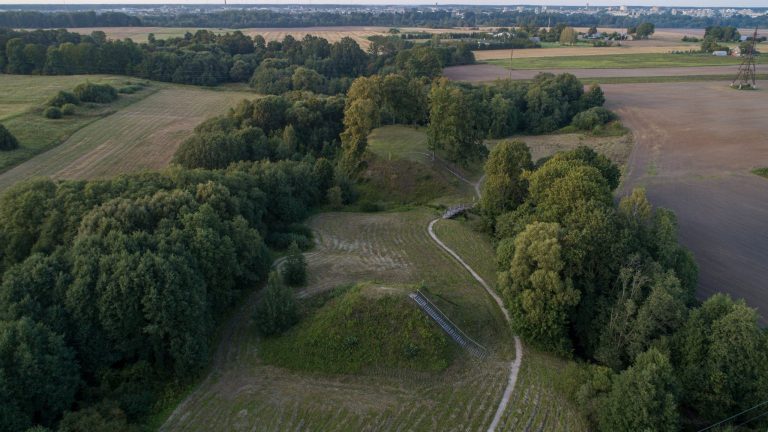
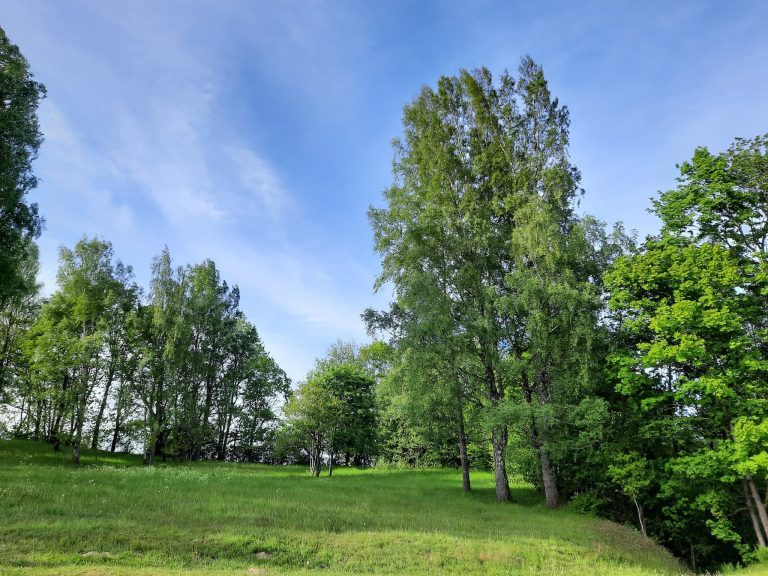
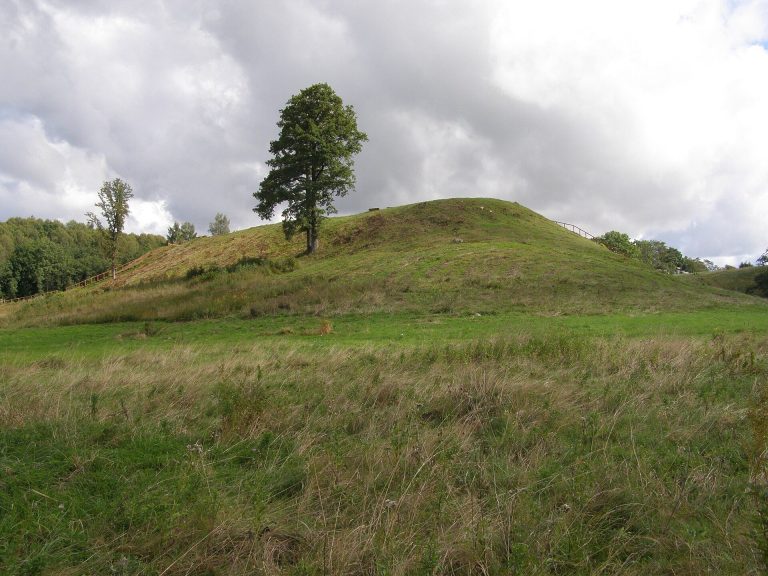
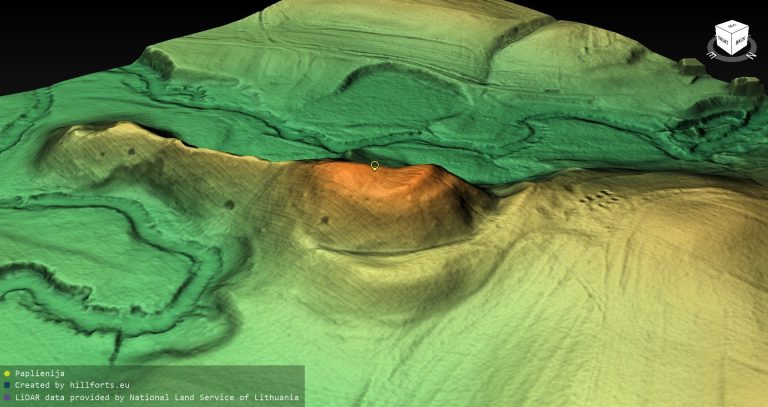
The hillfort occupies higher ground on the right bank of the Varduva River, where that river meets the Pagardenis, also called the Kedronas. Its grass-covered summit forms an elongated quadrilateral about 40 by 35 metres, aligned from north to south. The eastern side lies 2.5 metres below the rest of the summit. Along the southern edge, a 35-metre-long embankment rises 2 metres and extends 28 metres in width. A ditch was dug beyond it, although the ditch has since filled in. The surrounding slopes are steep and about 12 metres high, with several trees on the western slope.
Stations of the Cross structures
Chapels
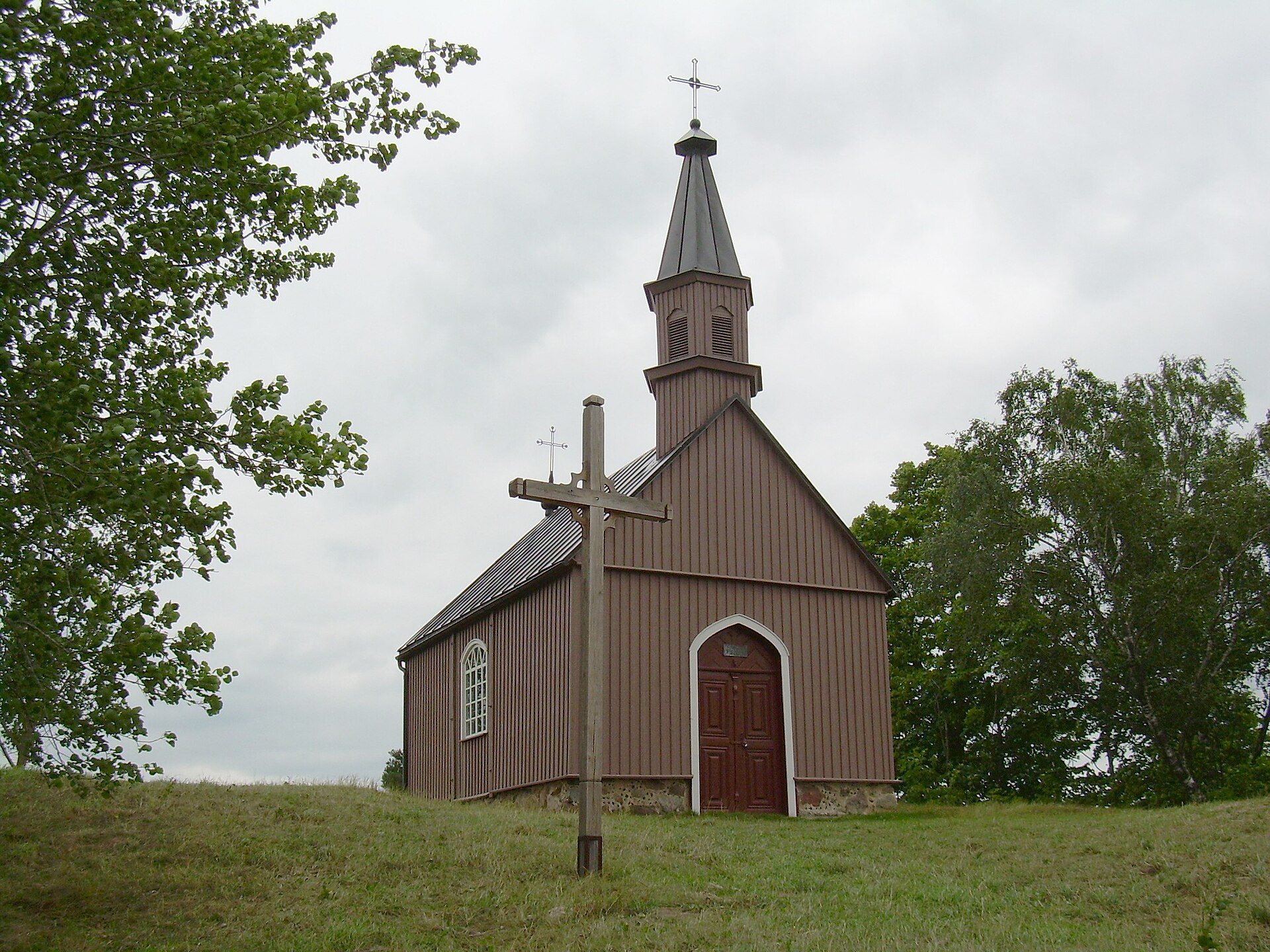
A masonry chapel for the fourth Station, “The Lord Jesus Is Arrested,” stands at the northern end of the summit. A wooden chapel for the fifth Station, “Jesus Prays in the Garden of Olives,” occupies the southern embankment. The path leading to the chapels has damaged the northern slope.
Arrest of Christ sculpture
A masonry sculpture depicting the arrest of Christ also stands on the southern embankment. Together with the chapels, it forms part of the Christian devotional arrangement established on the hillfort in the seventeenth century.
Settlement and cemetery
A settlement covering about 0.5 hectares lies northeast of the hillfort, across the Varduva River. Handmade pottery has been found there. A cemetery dated to the ninth through thirteenth centuries is located approximately 250 metres north of the hillfort and was investigated in 2002.
The 2004 excavation beside the southern chapel steps produced a fragment of wheel-thrown pottery decorated with horizontal lines. This find provides material evidence from the summit area alongside the earthworks and later chapels.