Hadâmbu Monastery: A Fortified Moldavian Monastic Complex in Romania
Site at a Glance
- Rating
- 4.8
- Popularity
- Medium
- Country
- Romania
- Primary era
- Early Modern
- External website
- Open
- Eras represented
- Early Modern, Modern
- Civilizations
- Ottoman, Principality of Moldavia
- Site type
- Religious
- Remains
- Fortified Monastery
On this page14 sections
History
Hadâmbu Monastery is a Romanian Orthodox monastery in Romania, founded in 1659 in Schitu Hadâmbului, Iași County, by Iani Hadâmbul, a Greek boyar and former cellarer. Prince Gheorghe Ghica donated the land at Dealul Mare in the Iași forests in February of that year. The monastery’s main historic church was dedicated to the Nativity of the Virgin Mary and continued the religious use of an earlier skete dedicated to Saint Nicholas.
Foundation and seventeenth-century development
A stone inscription above the church entrance states that Iani Hadâmbul renewed and built the church on 8 September 1659. The monastery took its name from its founder and developed as a fortified complex during the second half of the seventeenth century. Its defensive construction reflected the danger posed by Ottoman and Tatar raids against monastic communities. The skete was plundered in 1661 and again in 1671.
From its foundation, Hadâmbu was placed under the authority of the Patriarchate of Jerusalem, one of the senior patriarchates of the Eastern Orthodox Church. Patriarch Chrysanthus Notaras later placed it under Saint Sabbas Monastery in Iași. From about 1734, documents describe Hadâmbu as a dependent establishment of Galata Monastery. After administration passed to a trusteeship, the church was repaired in 1780.
Administration, abandonment, and revival
Several generations of Greek monks lived at Hadâmbu until December 1863, when Prince Alexandru Ioan Cuza promulgated the law that secularized monastic estates. The monks were required to leave, and the complex remained abandoned for more than seventy years.
In the early twentieth century, the historian N. A. Bogdan found a ruined church, substantial enclosing walls pierced by firing openings, and a rough bell tower. During the 1930s, Nicolae Iorga also described a severely degraded complex, including a damaged shingle roof and a surrounding wall. The monastery was refounded in 1937, when Romanian monks settled there under the hieromonk Iov Mazilu, a monk who was also an ordained priest. They repaired the church roof and vault and strengthened parts of its walls with brick.
Twentieth-century closure and post-1990 expansion
Hadâmbu was dissolved again under Decree No. 410/1959. When the art historian Vasile Drăguț visited in 1976, he described a fortified complex characteristic of seventeenth-century Moldavian architecture, with a small church, an entrance tower that also served as a bell tower, and ruined ancillary buildings.
The monastery reopened in 1990 under the abbot Protosinghel Nicodim Gheorghiță, appointed by Metropolitan Daniel Ciobotea of Moldavia and Bucovina. After reopening, the community expanded its landholding through nearby purchases, eventually possessing about five hectares. New construction added a church, guesthouse, abbot’s residence, holy-water structure, church shop, museum, livestock farm, water tank, three wells, and a new enclosure wall.
A major fire on 22 January 2003 destroyed 28 monastic cells and a storage building containing books and church objects. A seventeen-year-old assistant sacristan, Nicușor Leuca, died in the fire. The highly venerated icon of the Virgin Mary was the principal reported exception to the losses. Investigators initially attributed the fire to an overheated chimney without adequate thermal protection. Icy conditions, a difficult forest road, and the steep slope delayed the arrival of firefighting vehicles.
The old church was subsequently reconsolidated and received a new Moldavian-style roof, iconostasis, and baldachin, a canopy placed over an important sacred object. The bell tower was also strengthened. The church was reconsecrated on 11 October 2009, marking 350 years since its documentary attestation. Hadâmbu is listed in Romania’s National Register of Historic Monuments, with the protected historic ensemble comprising the Nativity of the Virgin Mary Church, the seventeenth-century entrance tower, and the seventeenth-century enclosure wall.
Remains
Historic fortified enclosure
Enclosure wall and corner towers
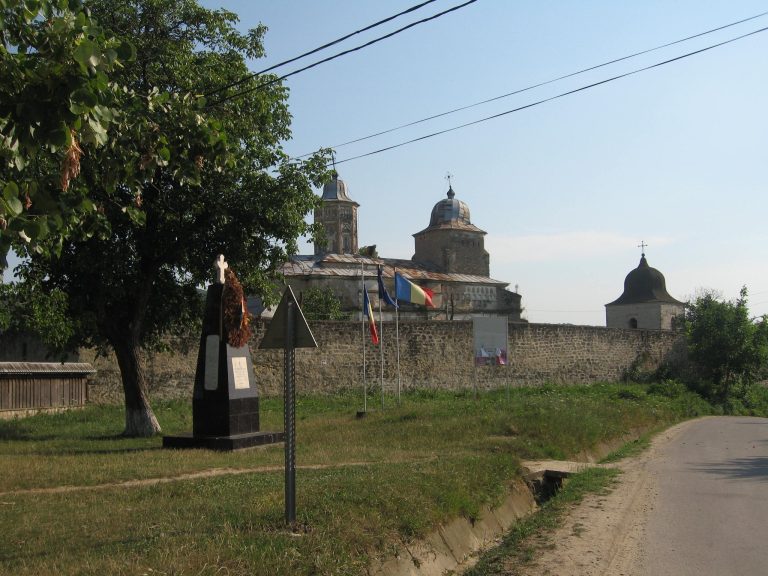
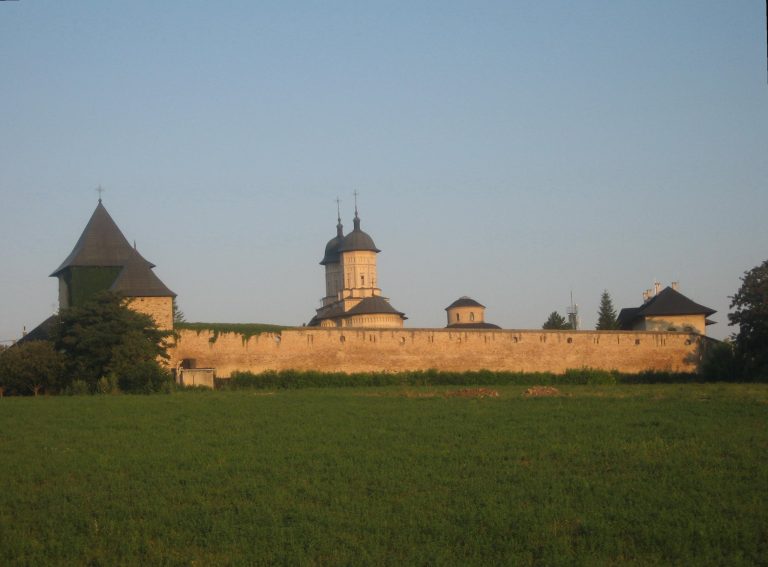
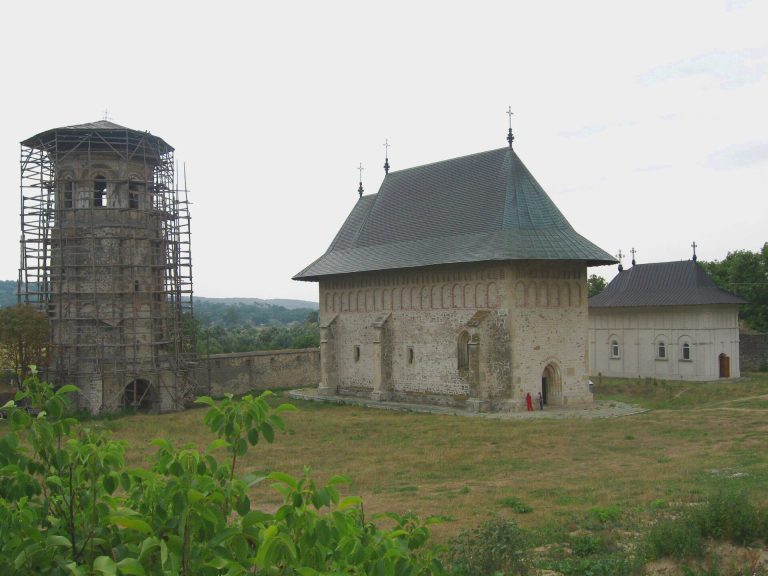
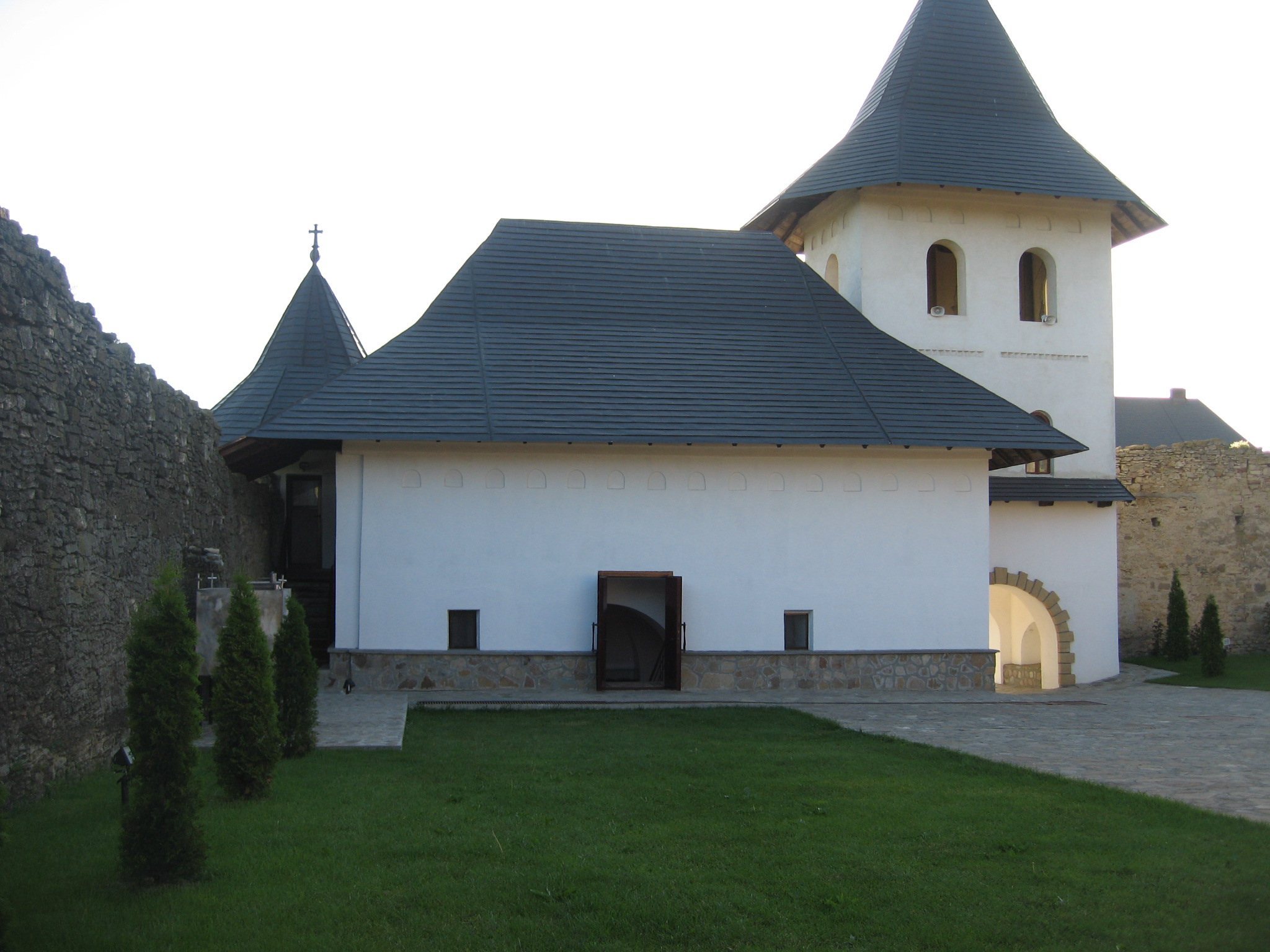
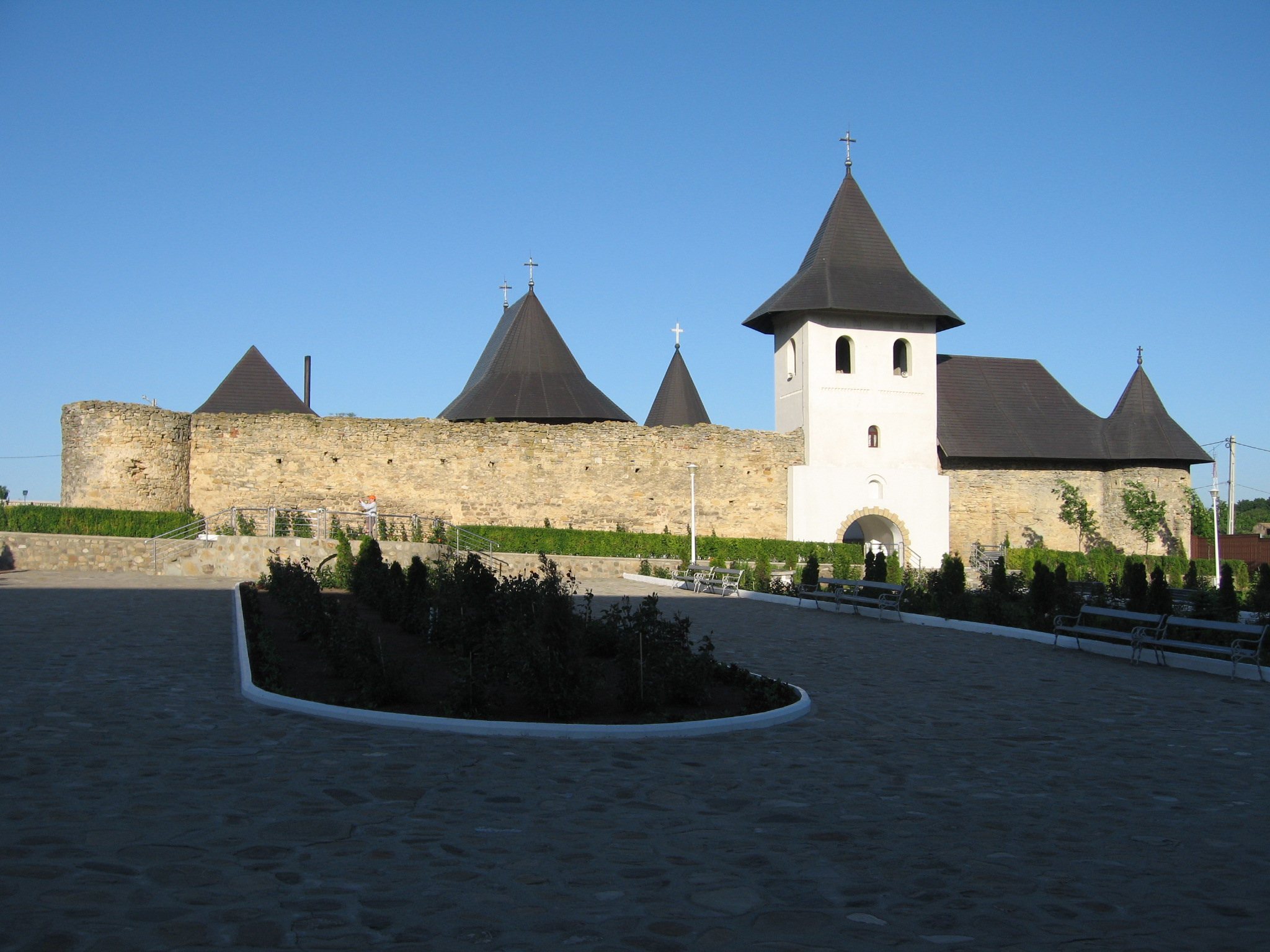
The historic complex is arranged as a fortified rectangle built chiefly of quarry stone. Its enclosing wall contains loopholes, or firing openings, and circular corner towers or turrets associated with defensive construction. The wall and its surviving relationships with the church and entrance tower preserve the character of a seventeenth-century Moldavian monastic stronghold.
Entrance and bell tower
The entrance tower served both as the gateway into the monastery and as its bell tower. It belongs to the seventeenth-century enclosure and remains one of the principal elements of the protected historic ensemble. The older complex also included the former abbot’s residence and other ancillary buildings.
Churches and sacred furnishings
Nativity of the Virgin Mary Church
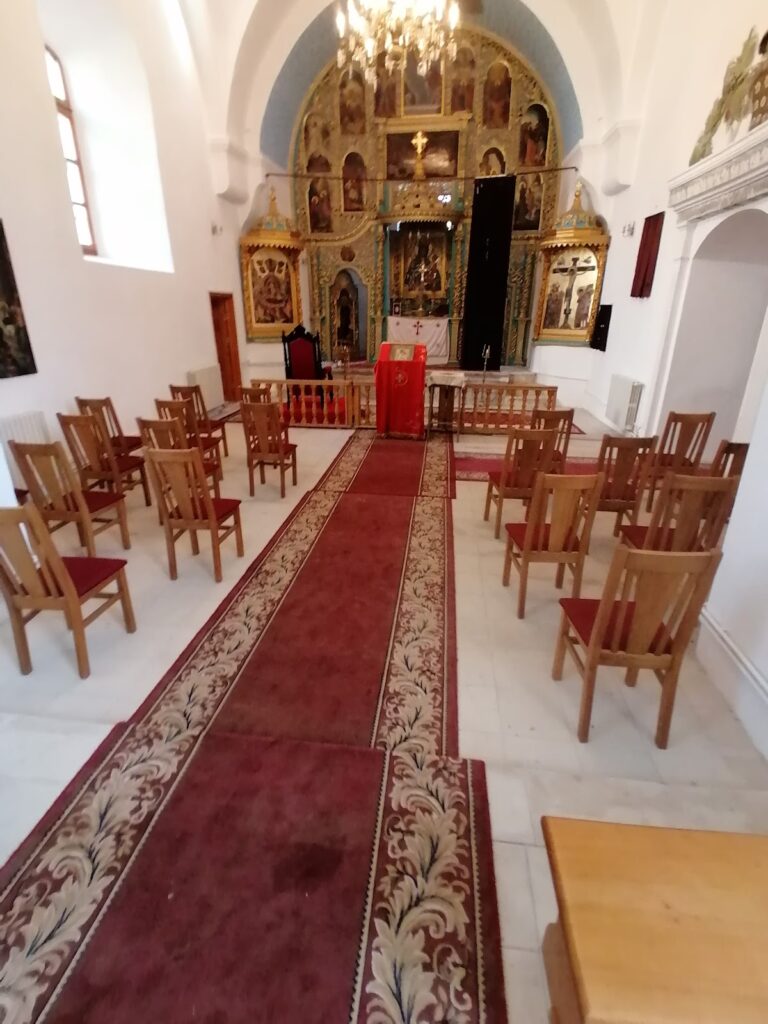
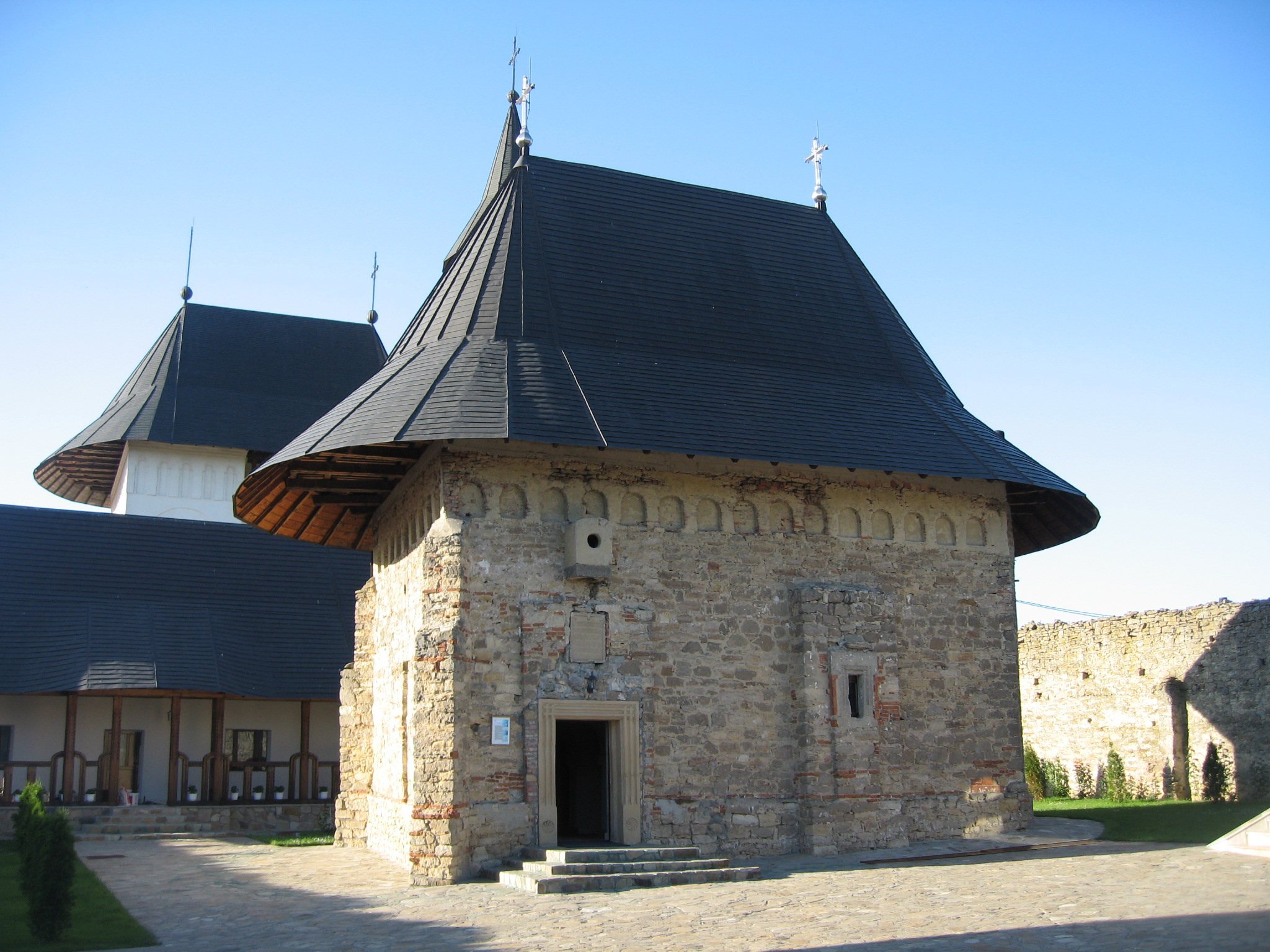
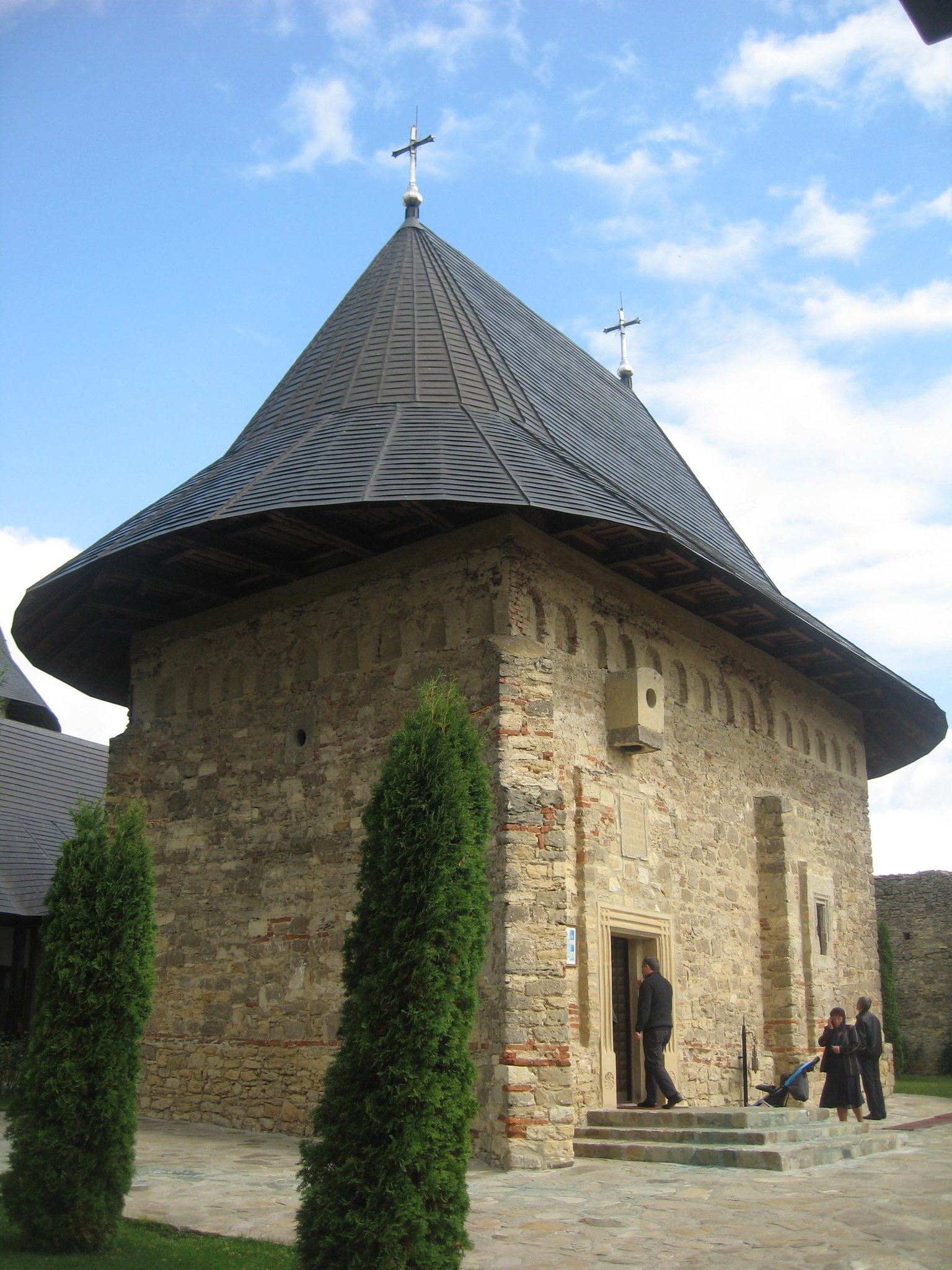
The old Nativity of the Virgin Mary Church is a small stone building with a mixed plan adapted to the fortified setting. Its walls are decorated with Gothic-style framing, while its rough construction and defensive openings connect it to the wider enclosure. Repairs after the 1937 revival strengthened parts of the walls with brick. Following the 2003 fire, the church received a new roof in the Moldavian tradition, a new iconostasis, and a baldachin for the revered icon. Its bell tower was consolidated at the same time.
Protection of the Virgin Mary Church
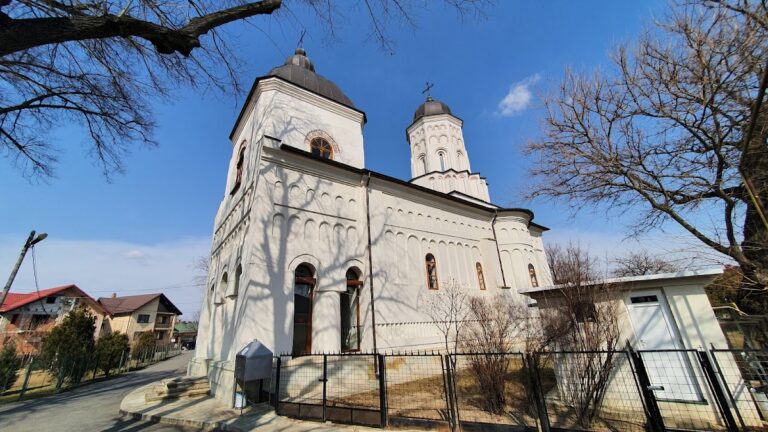
The newer Church of the Protection of the Virgin Mary is much larger than the historic church and stands at the summit of Dealul Mare. It was built in the traditional Ștefanian style, the Moldavian architectural tradition associated with the reign and patronage of Stephen the Great and his successors, and was consecrated on 8 September 2008. Its basement chapel is dedicated to Saint Nicholas, whose feast is celebrated on 6 December.
The newer church has a marble floor made from Rușchița marble processed in workshops at Holboca in Iași County. Its interior was painted in fresco, a technique applying pigments to fresh plaster, first by the Bucharest professor Vasile Buzuloiu and later by his pupil Vasile Gheorghiță. Both churches contain painted decoration and church furniture.
Venerated icons and bells
Hadâmbu preserves a highly venerated icon of the Virgin Mary with the Child, regarded as miraculous. The priest Octavian Zmău of Roman painted it in 1938, and the hieromonk and abbot Iov Mazilu donated it to the skete. After the skete closed in 1960, the icon remained hidden for 32 years and was found in the former iconostasis after the monastery reopened in 1992.
The icon was later covered with a silver revetment made by Ion Contfaș of Târgu Neamț. Its gold crowns, decorated with rubies, sapphires, and emeralds, were donated by the Amariei family of Piatra Neamț. Gold leaf and a glass screen protect the icon. Repeated reports associate it with miraculous myrrh or tears, including a report that the Virgin’s right eye wept on Epiphany in 1992, reports of myrrh from her right shoulder in 1993, and further reports in 1995 and 1998 involving the crown, Christ’s face, and the Virgin’s clothing.
A separate icon of Saint John the Baptist was donated by Gabriela and Sabin Drânceanu when a new iconostasis was installed. It reportedly produced myrrh on Epiphany, 6 January 1999, after the Divine Liturgy, and again on 9 January. Three bells made in Chernivtsi were donated by believers from Krasna.
Later buildings and monastery grounds
Guesthouse and associated structures
The post-1990 complex includes an extensive guesthouse, an abbot’s residence, a holy-water structure, a church shop, a museum, a livestock farm, a water tank, three wells, and a new enclosure wall. The guesthouse was designed by the architect Bogdan Negoiță. Its monumental proportions and palace-like appearance are combined with a roof made by craftsmen from Oglinzi in Neamț County. Copper-sheet coverings were produced by Ion Lică and his apprentices from Târgu Neamț, and the building can accommodate 500 pilgrims.
The monastery currently houses a community of ten monks. The feast of the Nativity of the Virgin Mary on 8 September is marked by pilgrimages that attract thousands of believers.