Burg Hohenkrähen: A Medieval Hilltop Castle in Germany
Site at a Glance
- Rating
- 4.7
- Popularity
- Low
- Country
- Germany
- Primary era
- Medieval
- Eras represented
- Medieval, Early Modern
- Civilizations
- Habsburg, Holy Roman Empire
- Site type
- Military
- Remains
- Castle
On this page10 sections
History
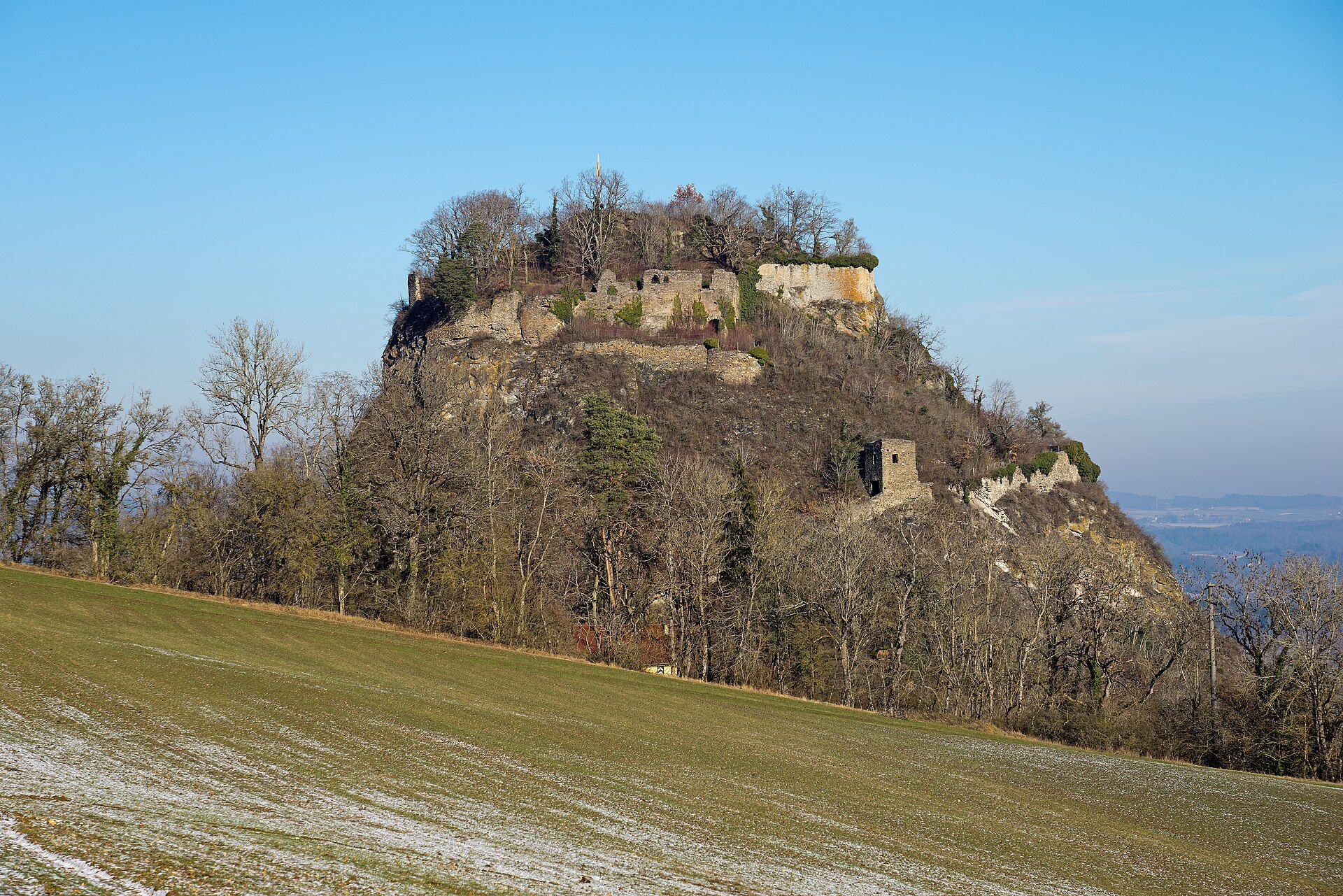
Burg Hohenkrähen is a high-medieval hilltop castle ruin in Germany, built between 1180 and 1190 by the Lords of Friedingen on the summit of the 644-metre Hohenkrähen near Singen and Hilzingen in Baden-Württemberg. Its elevated position made the mountain a defensible location, while the castle later became involved in conflicts among local nobles, Austria, the Swiss Confederates, and the Swabian League.
Early settlement and foundation
Human activity around Hohenkrähen reaches back to prehistoric times. Individual finds indicate occupation during the Neolithic period, with further evidence of settlement in the Late Neolithic and Bronze Age. Romans and Alemanni used the mountain as a cult site, and traces of Roman settlement date from the second century AD.
The medieval castle was probably constructed between 1180 and 1190 by the Lords of Friedingen. From 1191 onward, members of the family were also known as “de Craien,” a name associated with Hohenkrähen.
Feuds and the siege of 1512
Hohenkrähen became a base for armed raids during the fifteenth century. After an inheritance dispute and a war with the Swiss Confederates, Hans Wilhelm von Friedingen recruited about 20 former Swiss mercenaries around 1446. Raids were launched from the castle into Swiss territory for six months before an agreement was reached between the castle lord and the Swiss Confederates. In the years that followed, the Friedingen family exploited rivalries involving Austria, the Swiss Confederates, and the Swabian League, an alliance of princes, nobles, and cities in the Swabian region, through highway robbery and plunder.
The immediate cause of the siege in 1512 was the rejected courtship of a citizen’s daughter from Kaufbeuren by the Swabian nobleman Stefan Hausner. Hausner attacked merchants and withdrew to Hohenkrähen, where he had allies among the Friedinger family. Emperor Maximilian then assembled an army of the Swabian League under Paul von Lichtenstein and Georg von Frundsberg. The force numbered about 8,000 men and brought ten heavy guns from Innsbruck. After a three-day siege, Hohenkrähen was captured on 12 November 1512. The nobles had escaped during the night, and the castle was burned and demolished. It was later rebuilt.
Ownership and destruction
Around 1560, Hans Jakob Fugger acquired Hohenkrähen from Wolf von Homburg for 20,300 gulden. The castle remained an Austrian fief, meaning that its owner held it under the authority of the Austrian feudal lord. The Fugger family sold it in 1571 to Hans Ludwig von Bodman. He was probably followed by Count Ernst Georg von Hohenzollern, who sold the castle and lordship on 3 January 1620 to his brother-in-law Caspar Ernst II von Rechberg-Illereichen.
The castle increasingly fell into decay. During the Thirty Years’ War, the major European conflict fought from 1618 to 1648 amid religious, dynastic, and territorial struggles, Konrad Widerholt, commander of Hohentwiel, ordered Hohenkrähen and Mägdeberg burned in 1634. Hohenkrähen remained a ruin after this destruction and ceased to function as a castle.
Youth castle and local tradition
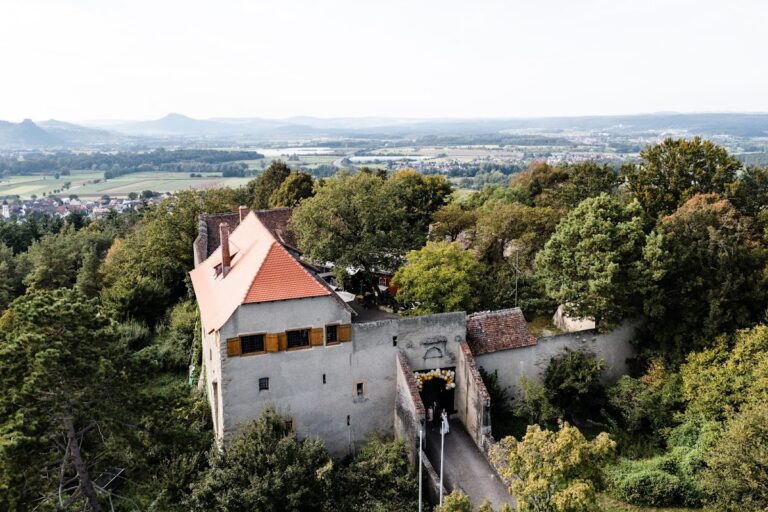
After further changes of ownership, the Grauer Reiter Scout Association leased the ruin from Count Douglas, Baron von Reischach, in 1956. The association undertook maintenance of the buildings and facilities in the outer bailey, the part of a castle complex outside its principal defensive core. Since then, the ruin has served as the association’s national center and as a youth castle, a residential meeting and educational institution for young people.
Construction of one building in the outer bailey began in 1956, followed later by a second accommodation building on the ruins of the former stables. Volunteers also installed a biological sewage-treatment plant, a new power supply, and escape ladders. In 1957, the Grauer Reiter Scout Association and the Nerother Wandervogel jointly hosted the first Inter-Association Gathering of the youth movement at the foot of the youth castle and on the surrounding meadows. In August 2007, heavy rainfall caused a rockfall that destroyed the route leading to the ruin.
Local tradition links Hohenkrähen with Popolius Maier, a legendary castle bailiff and robber knight said to have lived there around the beginning of the fifteenth century. According to the story, his crimes condemned him to wander as the ghost Poppele. The figure remains part of Singen’s carnival traditions, and a wayside cross at the foot of the mountain is said to protect against the ghost.
Remains
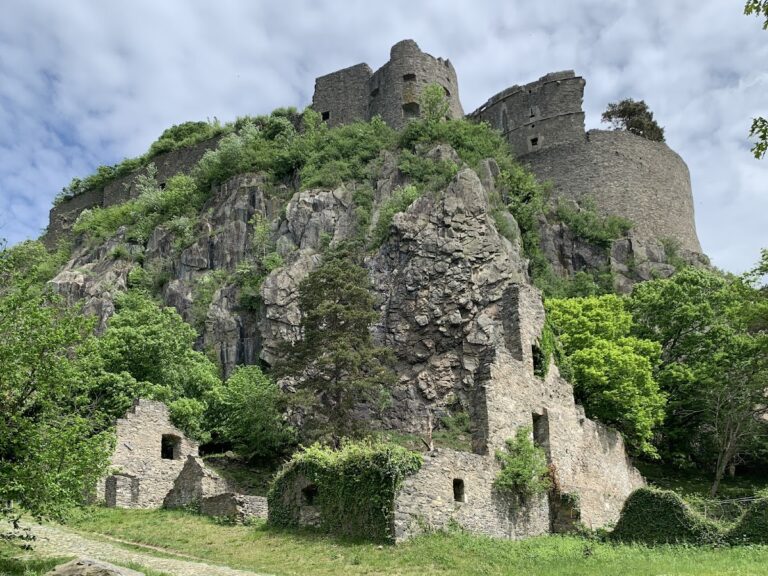
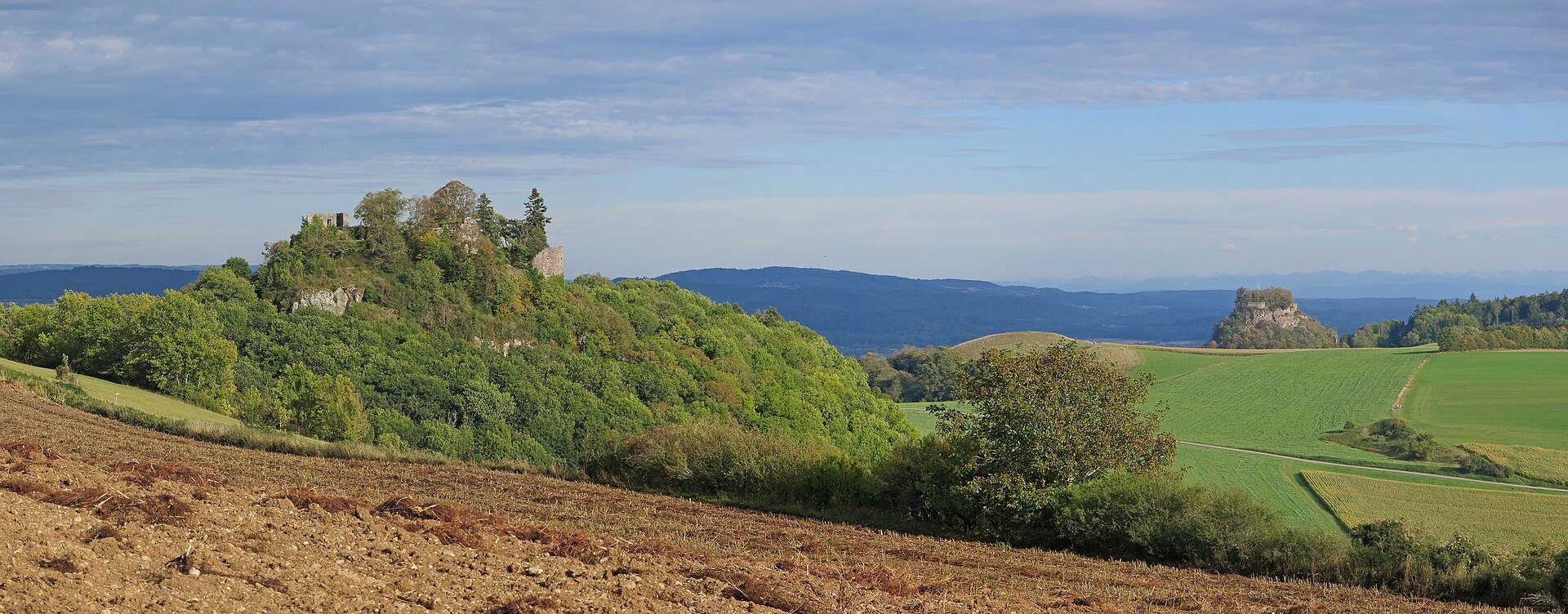
The ruin occupies the summit of Hohenkrähen, a volcanic mountain in the Hegau north of Singen. The overgrown summit complex is arranged as a hilltop castle with an upper castle and an outer bailey. Its surviving masonry includes sections with characteristic fishbone construction, while dense shrubs and trees cover much of the mountain.
Upper castle and defensive approach
Gates and outer defenses
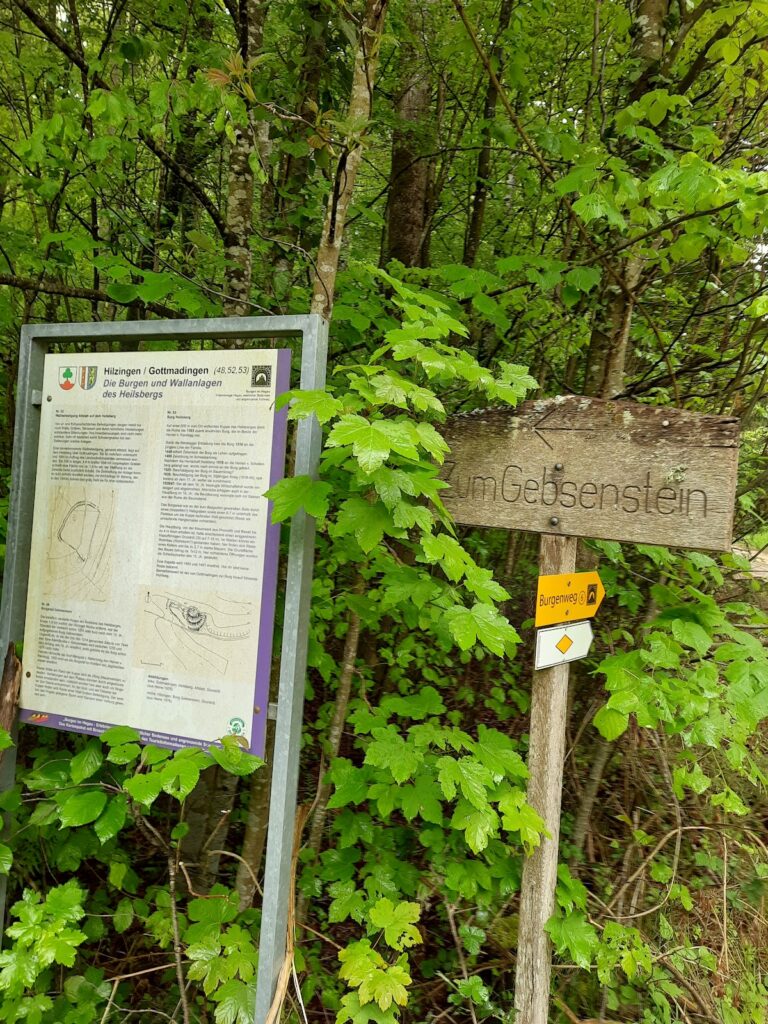
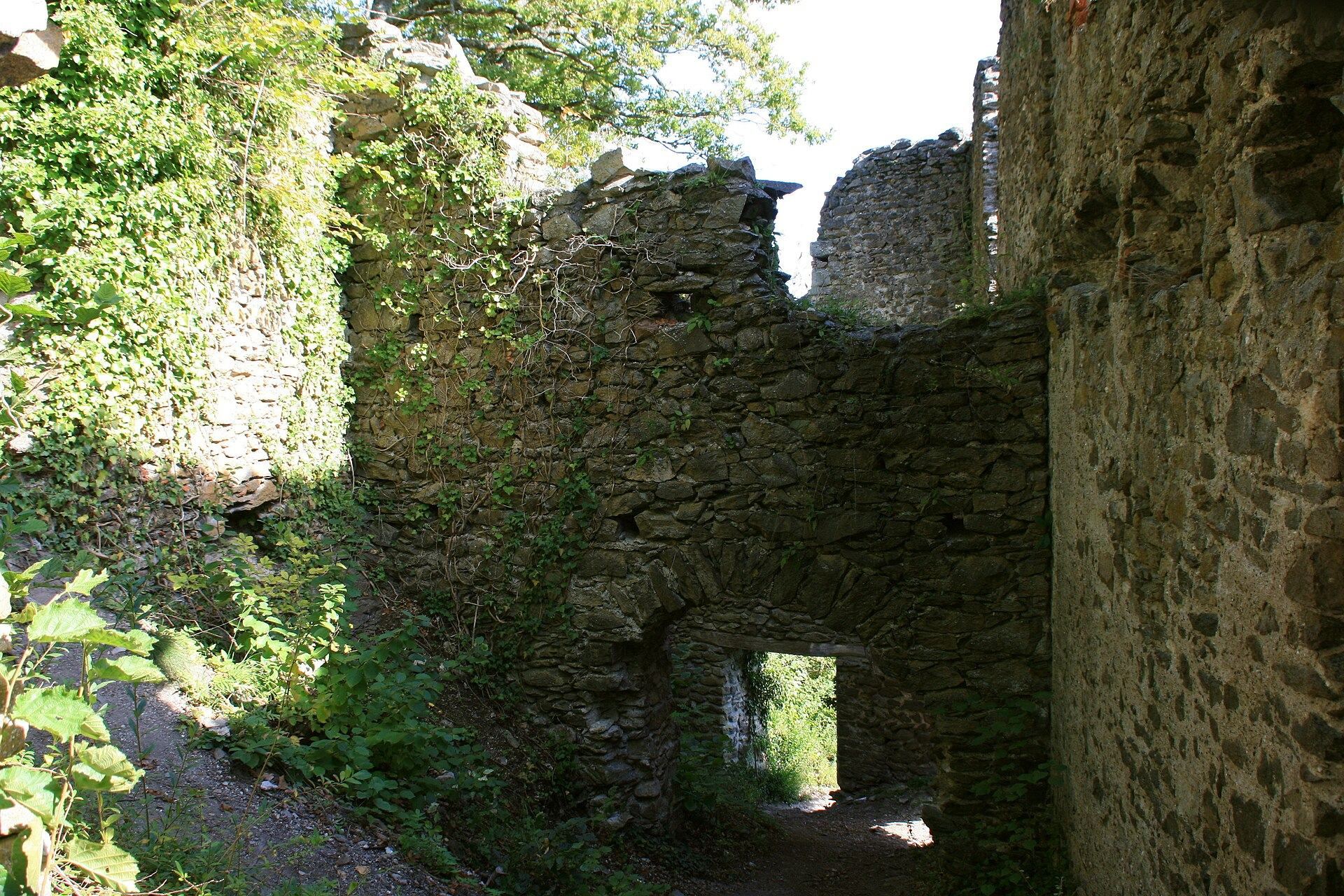
The approach to the upper castle includes the lower main portal, a gate tower on the route up the mountain, and remains of a zwinger, an outer defensive enclosure or passage between lines of fortification. Access to the upper castle passes through a section known as the Austrian Zwinger. The narrow path continues through wooded ground to the summit ruins.
Palas and vaulted cellar
On the eastern side are the ruined palas, the principal residential and representative building of a medieval castle, and the entrance to a vaulted cellar. The palas was added during the final major enlargement after Hans Jakob Fugger acquired Hohenkrähen. The surviving structures remain in a ruined and overgrown condition.
Outer bailey and surrounding landscape
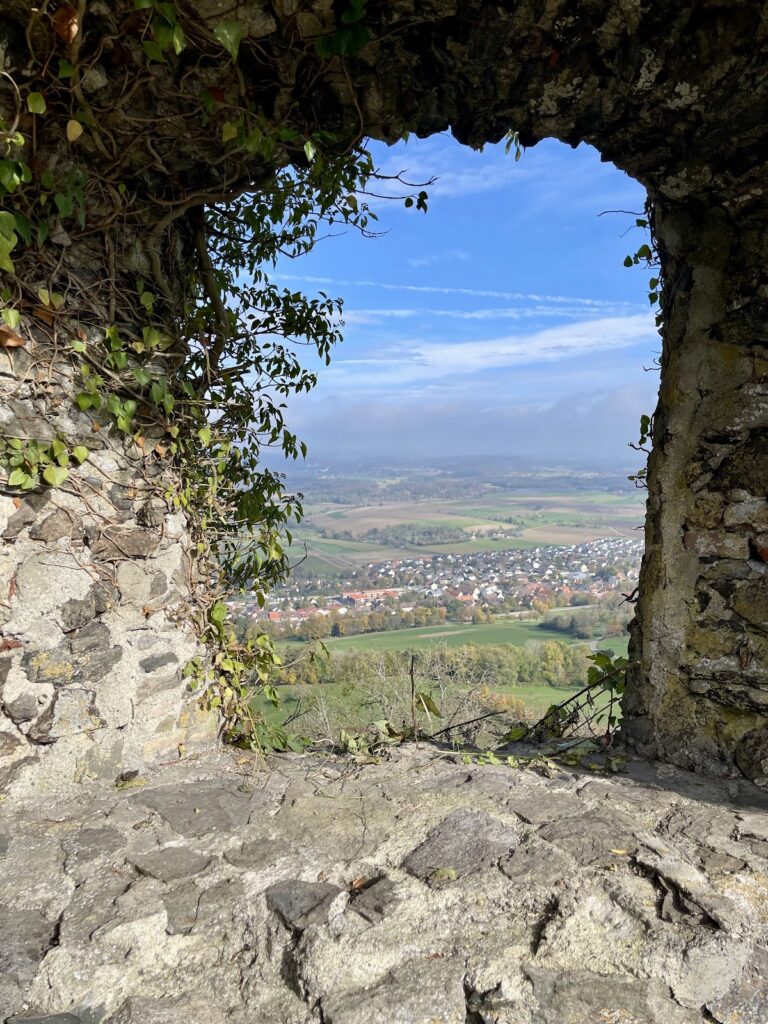
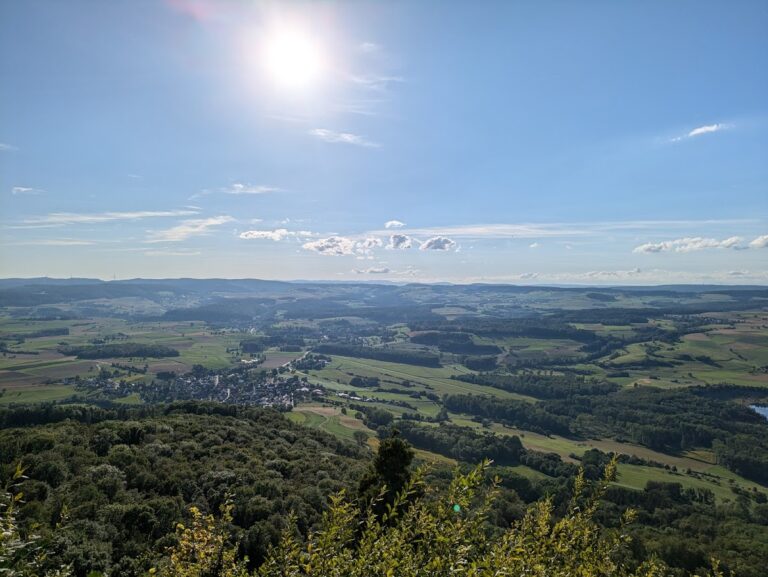
The former outer-bailey area contains the buildings and facilities of the youth castle. One accommodation building dates from 1956, while another stands on the ruins of the former stables. The area also includes a campsite. Very old linden trees cover the mountain slopes, which are described as the largest linden woodland currently in western Germany. The forests support one of Germany’s largest dormouse populations, and the summit has views toward Hohentwiel Fortress, Mägdeberg Castle, and the western Lake Constance region.