Burg Gebsenstein: A Medieval Hilltop Castle in Germany


Site at a Glance
- Rating
- 4.7
- Popularity
- Very Low
- Country
- Germany
- Primary era
- Medieval
- Eras represented
- Medieval
- Civilizations
- Holy Roman Empire
- Site type
- Military
- Remains
- Castle
On this page6 sections
History
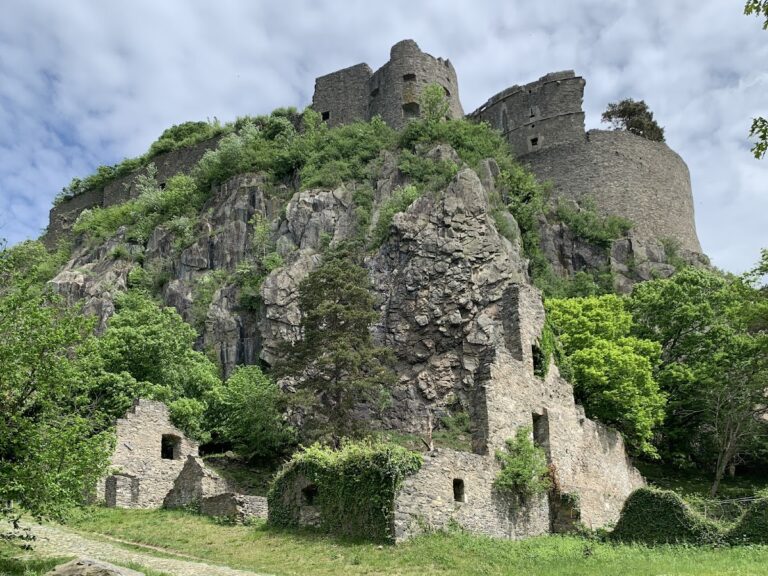
Burg Gebsenstein is a former hilltop castle in Germany, built during the first half of the thirteenth century on the Heilsberg near Hilzingen, probably as a noble residence. Its position on elevated ground formed part of the castle’s defensive setting, although the identity of its founder remains uncertain.
Origins and Ownership
The similarity between the castle’s name and that of Gebzio von Twiel, a medieval nobleman recorded in 1214, has led to the possibility that the site was his seat. This identification cannot be established with certainty. A family known as the Lords of Gebsenstein appears in records from 1253 until the beginning of the fourteenth century.
The castle belonged to this family as an ancestral seat until an unknown date before 1275. In that year, Count Mangold von Nellenburg sold the property, described as ze Gepsenstein, to the Lords of Randegg. The surviving evidence therefore places Burg Gebsenstein within the changing network of noble ownership in the medieval region.
Ruin and Later Discovery
The date when Burg Gebsenstein ceased to exist as a functioning castle is unknown. In 1683, a record concerning hunting rights referred to it as a Burgstall, a former castle site whose buildings had largely disappeared. The description indicates that the castle was already in ruins by the late seventeenth century.
Excavation or treasure-seeking activity probably took place around 1800, when the site was already ruinous. A historical account describes the discovery of a golden sword hilt, probably by Johann Nepomuk von Raiser, a state official with an interest in history. The object’s later whereabouts are unknown.
Remains
The two-part castle site covers about 900 square metres on a northwest-facing spur on the northeastern side of the Heilsberg, at approximately 550 metres above sea level. The spur descends toward the southeast, while level ground beyond the site rises toward a secondary summit reaching 561.4 metres. The core castle occupies the summit of the projection, set several metres behind its tip, while a secured area extends to the west and south.
Core Castle
The core-castle plateau measures about 23 by 16 metres and covers roughly 380 square metres. It falls steeply northward over rock cliffs and is enclosed on its other sides by very steep slopes. A bank along the plateau edge probably marks the remains of a collapsed surrounding defensive wall, or enceinte. Depressions as deep as four metres in the centre may be the cellars of former buildings, although they could also be later extraction pits.
A terrace about three metres wide runs along the southern and eastern sides of the mound, approximately five metres below the plateau. A ring ditch encircles the foot of the mound, stopping where the northern slope is already steep. The ditch is partly filled on the west and reaches up to 16 metres in width and three to four metres in depth elsewhere. On the eastern and southern approach sides, an outer rampart, an earthen defensive bank outside a ditch, survives to about 0.4 metres high.
Outer Bailey and Approach Defences
South of the core mound, the outer rampart continues as an artificially steepened slope toward a ditch at the tip of the spur. This ditch crosses the descending spur from south to north. It is about two metres deep on its outer side and three to four metres deep toward the interior, strengthening the approach-side defenses.
The area west of the core mound measures approximately 30 to 35 metres in length and 10 to 20 metres in width. It probably served as the outer bailey, a subsidiary enclosed area used for service, agricultural, or economic buildings. Along its northern edge, beside the steep slope, a rock ridge about three metres wide and one metre high forms the boundary.