Prüm Abbey: A Carolingian and Princely Benedictine Monastery in Germany
Site at a Glance
- Rating
- 4.4
- Popularity
- Low
- Country
- Germany
- Primary era
- Early Modern
- External website
- Open
- Eras represented
- Medieval, Early Modern
- Civilizations
- Carolingian, Holy Roman Empire
- Site type
- Religious
- Remains
- Monastery
On this page12 sections
History
Prüm Abbey is a former Benedictine monastery in Prüm, Germany, founded by Frankish nobles in 721 and later reshaped as a major Carolingian royal monastery. Historically dedicated to Saint Salvator, meaning the Most Holy Redeemer, it became a centre of dynastic, religious, economic, and intellectual life in the medieval Rhineland.
Frankish foundation and Carolingian patronage
Bertrada the Elder and her son Charibert, Count of Laon, established the first monastery at Prüm in 721. Monks from Echternach probably formed its initial community, although this foundation appears to have failed. Through Bertrada the Younger, probably a granddaughter of the founder and the wife of Pepin the Short, the monastery later entered the sphere of the Carolingians, the Frankish ruling dynasty that included Pepin, Charlemagne, and their successors.
Pepin refounded Prüm in 751 or 752 with Benedictine monks from Saint Faron at Meaux under Abbot Assuerus. He rebuilt the monastery and granted it extensive lands. In 762, Prüm received immunity, royal protection, and the right to elect its abbot, although royal-family approval was still required. The community also gained the right to choose its own advocate, or lay protector and legal representative, in 919.
Pepin gave Prüm portions of sandals attributed to Jesus Christ. He said that he had received them from Pope Zachary or Pope Stephen II in return for assistance connected with the establishment of the Papal States. The church and monastery were dedicated to Saint Salvator, a distinction that reflected Prüm’s close connection with the Carolingian dynasty and its high standing among royal monasteries.
Royal monastery and intellectual centre
Prüm’s endowments created a wide territorial and economic base. Around 893, the abbey possessed approximately 1,500 estates and pasture holdings for more than 8,000 pigs in over 400 places between the IJssel, Upper Rhine, Meuse, and Lahn. Its wider possessions extended from the Rhine to Brittany and the Netherlands. The Prüm estate register became one of the earliest documentary records for hundreds of places in the Eifel, along the Ahr, on the Taunus, around Sankt Goar, and in parts of France, Belgium, and the Netherlands.
The abbey also administered dependent advocacies and affiliated monasteries at places including Revin, Güsten near Jülich, Münstereifel, Kesseling on the Ahr, and Altrip. Its territorial power eventually developed into an imperial territory in the Carosgau and Ardennengau.
The church was consecrated by Pope Leo III in 799 in the presence of Charlemagne. Prüm also served as a place associated with members of the Carolingian family. Lothar I entered the monastery after abdicating as emperor in 855, died there soon afterward, and was buried in its church. Pepin the Hunchback died at Prüm in 811. Charles the Bald was confined there as a child and educated in the monastic school, while Hugo, the son of Lothar II, died there in 895.
Prüm’s ninth-century religious and intellectual life produced the Prüm Annals and other important writings. Markward, an adviser to Louis the Pious, served as abbot. Ado of Vienne, Ansbald, and Hungerus Frisus were later canonized, while Wandalbert worked as a poet and teacher at the monastery school. Regino of Prüm, abbot from 892 to 899, became an important medieval historian and writer on canon law.
A document from 762 records a hospital operated by the abbey. It permanently accommodated twelve poor and physically dependent people, who performed light duties such as ringing the bells in return for support. The hospital also temporarily housed and fed impoverished travellers.
Norman attacks and medieval recovery
Norman attacks severely damaged Prüm’s buildings. During the first assault in 882, the library was burned and about 90 percent of its manuscripts were destroyed. A second attack followed in 892, and tradition holds that the monks fled to Dasburg. Despite these losses, the monastery produced the Liber aureus Prumiensis between 891 and 919. This medieval cartulary, a collection of copied charters and legal documents, preserved evidence for Prüm’s estates, rights, and institutional history. Copies of the chronicles of Regino and Wandalbert survived because they had already been reproduced at other monasteries.
Prüm retained its economic stability and status as a royal monastery after the attacks. Ottonian, Salian, and Hohenstaufen rulers later used it in imperial service. Around 1003 or 1004, under Abbot Immo, the Gorze reform reached Prüm. This movement sought to restore strict Benedictine observance, communal discipline, and renewed liturgical and intellectual life. The monastery then entered a long period of prosperity.
A collegiate foundation for twelve priests was established at Prüm in 1016 or 1017, and a Benedictine nunnery was founded at Niederprüm between 1190 and 1198. During the eleventh and twelfth centuries, the monastery sometimes housed more than 300 monks. Its communities cultivated extensive lands, cared for poor and sick people, and maintained an active school and literary culture.
Princely abbey and incorporation into Trier
Emperor Frederick II raised Prüm to a principality in 1222. Its abbot thereby became a prince of the Holy Roman Empire, while the abbey became an imperial abbey, directly subordinate to the emperor rather than to a territorial prince. Prüm obtained full imperial immediacy in 1299, and its abbot held a seat and vote on the ecclesiastical bench of the Imperial Diet.
During the thirteenth and fourteenth centuries, monastic discipline and economic strength declined. The monks divided revenues among themselves and ceased to live communally, while disputes with the secular advocates became more intense. The archbishops of Trier repeatedly sought to incorporate Prüm and its possessions. They received imperial or papal approvals at different stages, although some were later revoked and the abbots resisted submission.
Trier acquired the lordships of Schönecken and Schönberg near Malmedy at the end of the fourteenth century. In the sixteenth century, a canonical visitation contributed to Pope Gregory XIII’s incorporation decree of 1574. After the death of the last Princely Abbot, Christoph of Manderscheid-Kayl, the incorporation took effect in 1576 despite resistance from the monks. The Electors and Archbishops of Trier thereafter administered Prüm, and the abbey’s Imperial Diet and Upper Rhenish Circle rights were transferred to Trier with imperial approval.
Under Trier’s administration, the Benedictine community experienced a renewed monastic revival in the eighteenth century. The monks considered recovering Prüm’s imperial immediacy, but Trier opposed the effort. After a visit in 1718, the Benedictine antiquarians Edmond Martène and Ursin Durand described the abbey as exceptionally well disciplined and scholarly.
Secularization, war, and reconstruction
French revolutionary troops occupied Prüm in 1794. Napoleon’s secularization dissolved the Benedictine abbey and expelled the monks. The territory was formally annexed to France in 1801, the estates were sold, and the buildings were given to the town. After Prüm passed to Prussia in 1815 as part of the Rhine Province, it eventually became part of modern Germany and Rhineland-Palatinate.
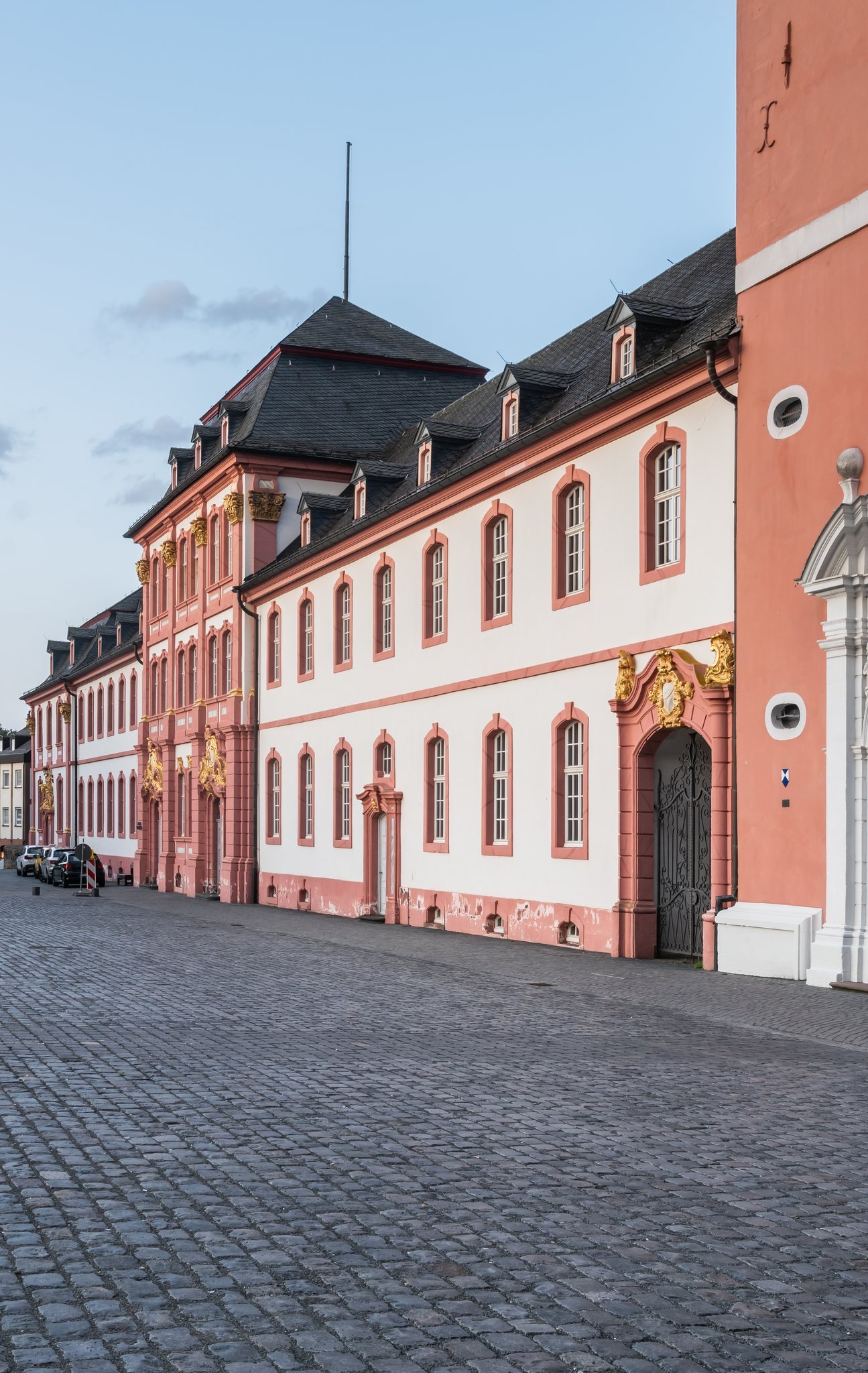
The former abbey buildings subsequently housed administrative offices and now contain the Regino-Gymnasium. The abbey church became the parish church of Saint Salvator in 1802, and Prüm became the seat of a deanery in 1827. The grave of Lothar I was rediscovered when the old high altar was removed in 1860. A monument was erected over it in 1874 and 1875 with financial support from Emperor Wilhelm I.
United States artillery fire struck Prüm from 16 September 1944, and bombing intensified from 23 December during the Ardennes Offensive. The former abbey buildings suffered severe damage. On Christmas Eve 1945, the vaults of the entire nave and right aisle collapsed as a result of the wartime destruction. Reconstruction of the church was largely complete by 1950, and the former abbey buildings were rebuilt by 1952. Pope Pius XII later granted the church the title of basilica minor pontificia, an honorary designation for a church of particular religious or historical importance.
Prüm is protected as a cultural monument under the Rhineland-Palatinate Monument Protection Act and lies within the protected monument zone of the Catholic parish church of Saint Salvator and the former monastery. It is also protected cultural property under the 1954 Hague Convention and bears the blue-and-white protection emblem.
Remains
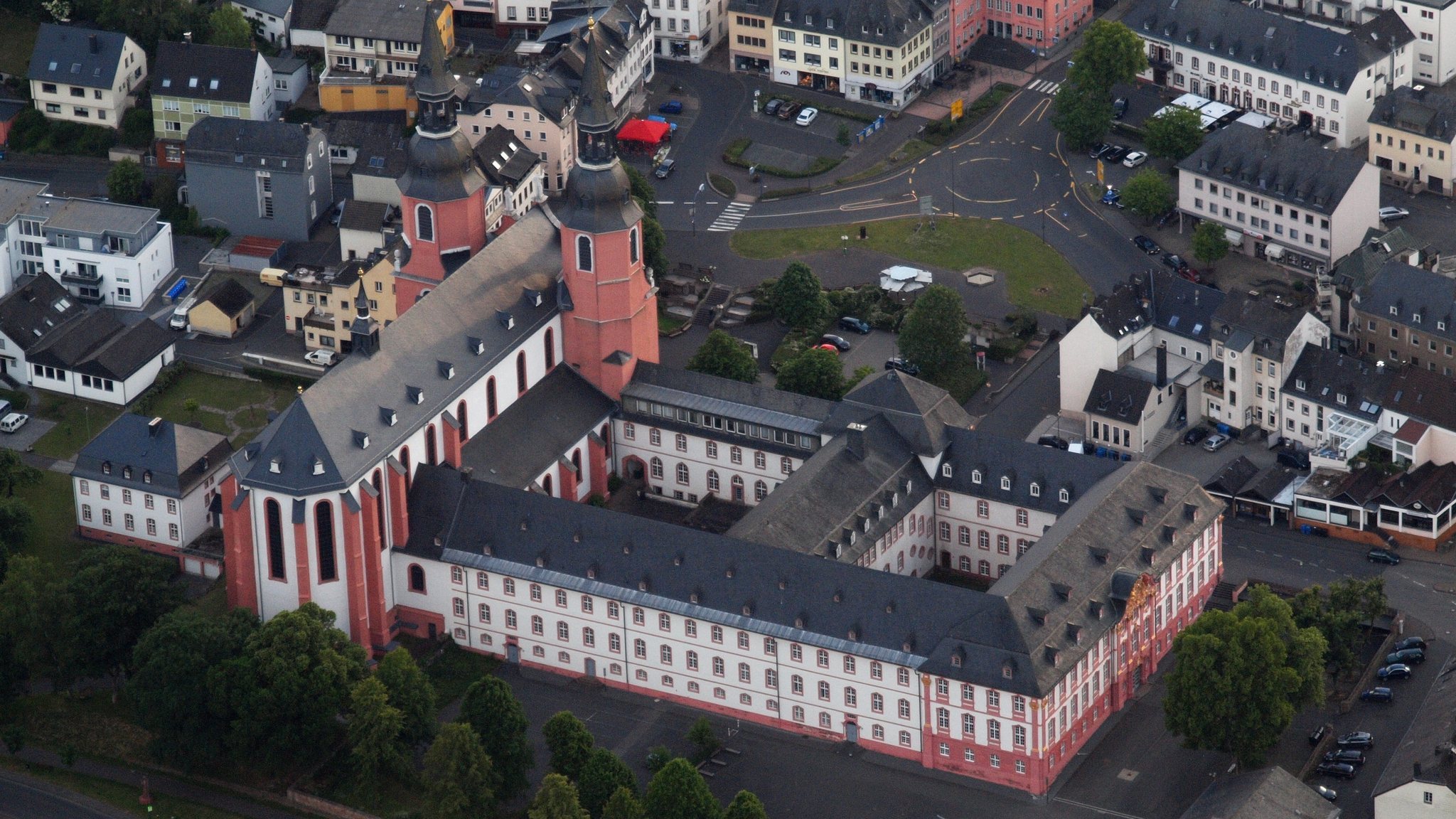
The surviving complex in the Eifel-Ardennes region consists principally of the former abbey church of Saint Salvator and the associated monastic buildings. The church preserves elements of the medieval foundation through its later Baroque rebuilding, while the monastic buildings reflect an eighteenth-century reconstruction followed by twentieth-century repair.
Abbey church and devotional features
Saint Salvator Church
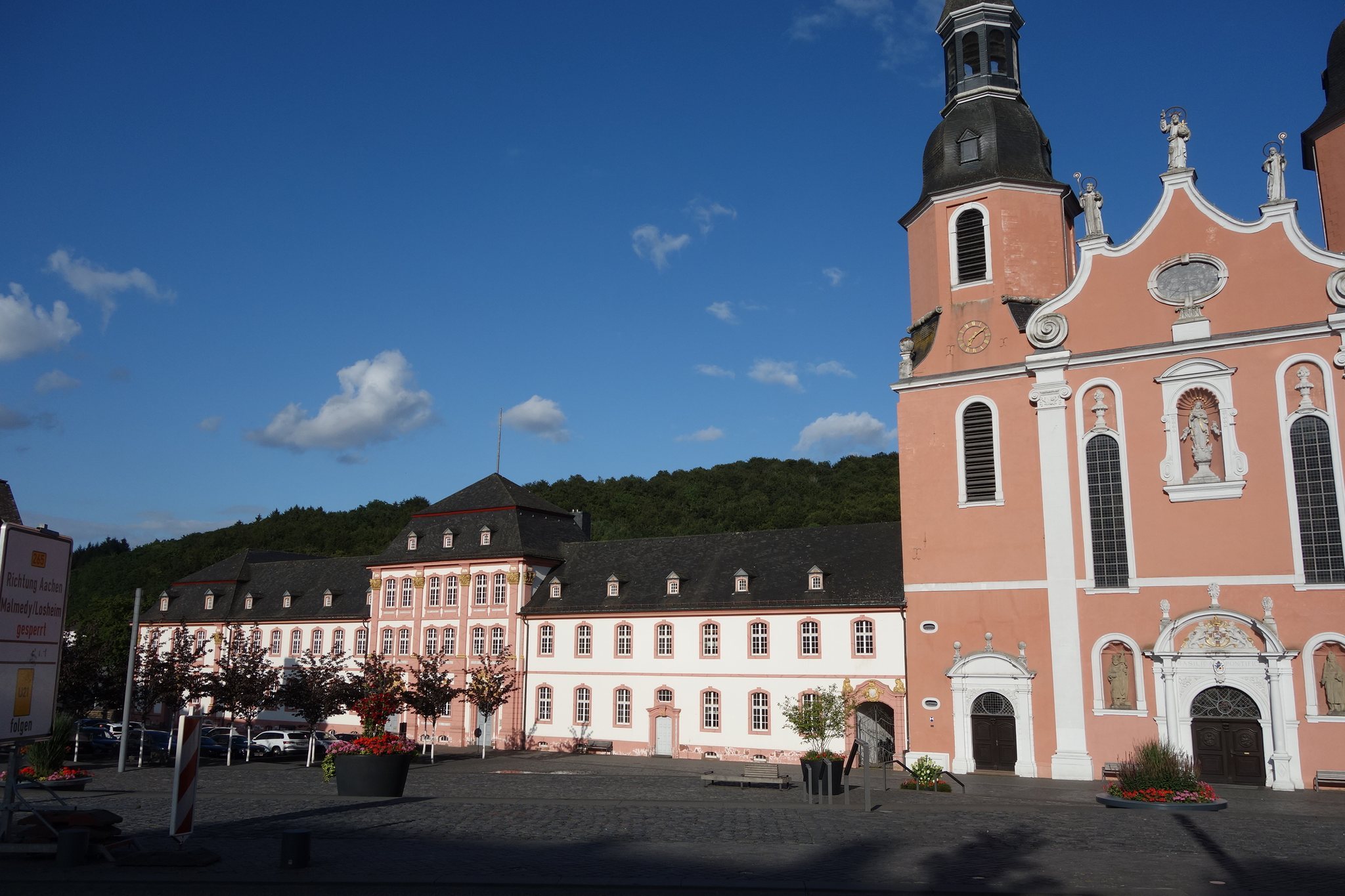
The original church dedicated to the Saviour was completed during Charlemagne’s reign and consecrated in 799. The present church took shape through a Baroque rebuilding in 1721 associated with Johann Georg Judas and Elector Franz Ludwig of Palatinate-Neuburg. Its later history includes severe wartime damage, including the collapse of the vaults over the entire nave and right aisle in 1945. The church was largely reconstructed by 1950 and continues to function as the parish church of Saint Salvator.
Tombs and reliquaries
The church contains the tomb monument erected over the rediscovered remains of Lothar I in 1874 and 1875. A reliquary for the Three Holy Doctors was donated in 1891, and a reliquary altar for the sandals attributed to Christ followed in 1896. These sandals are relics regarded by the abbey as connected with Jesus and derive from Pepin’s recorded gift in 762. The church also received a Baroque altar from the Carmelite church in Bad Kreuznach in 1927.
Former monastic buildings
Rebuilt abbey complex
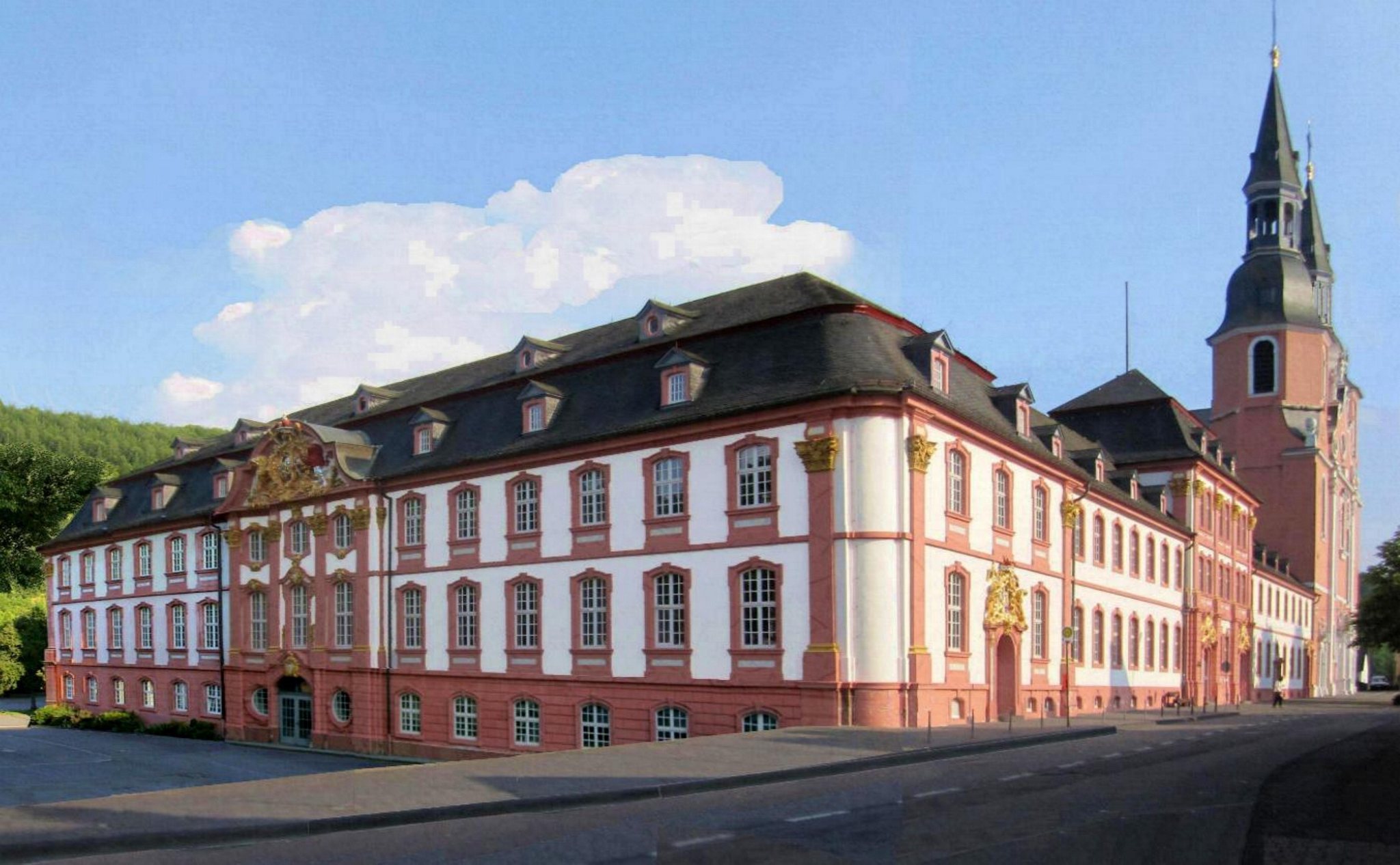
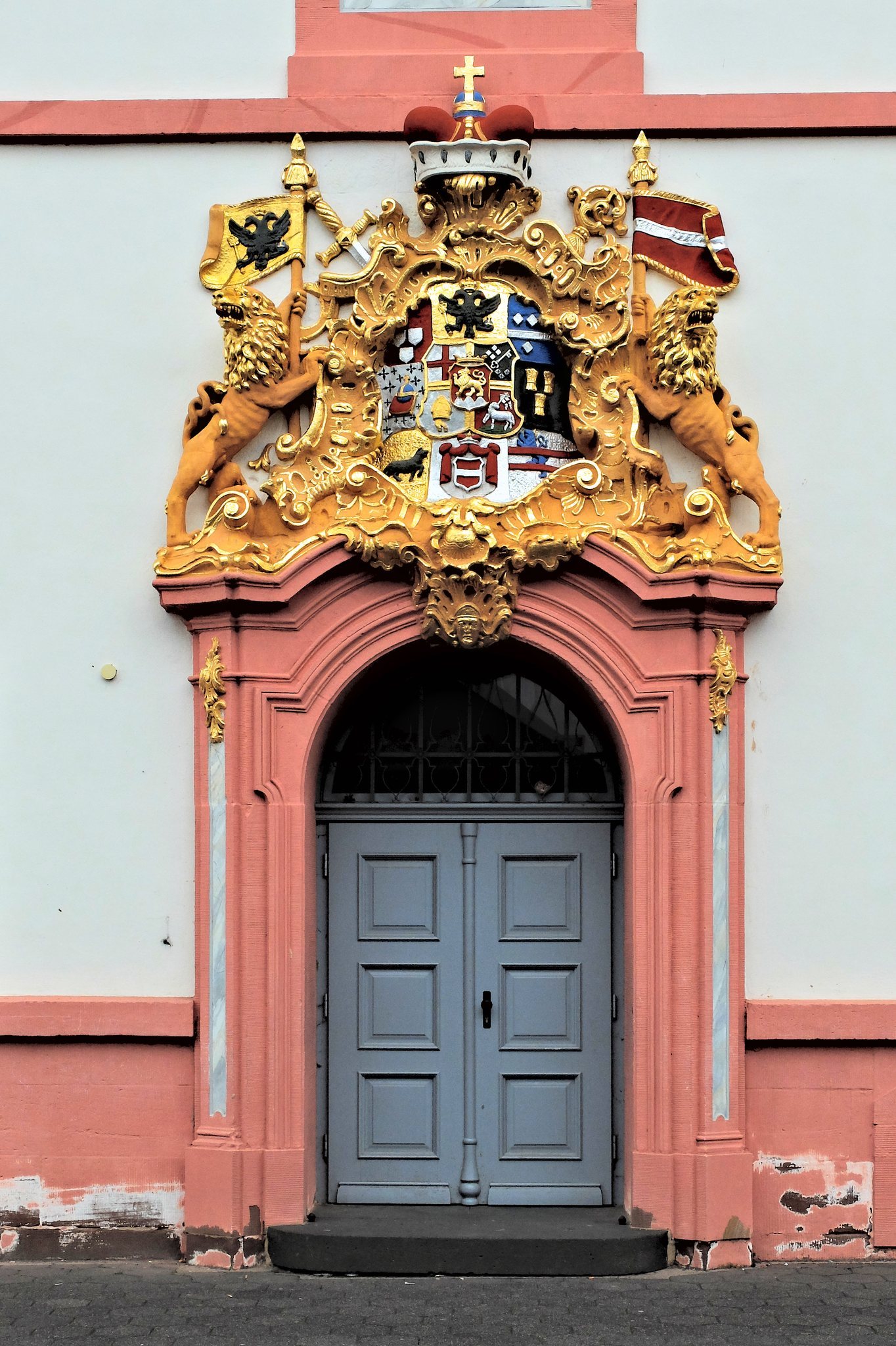
The monastic buildings were built anew in 1748 under Elector Franz Georg of Schönborn. Andreas Seitz carried out the work according to plans by Balthasar Neumann. The complex was severely affected during the Second World War and rebuilt by 1952. The former abbey buildings now house the Regino-Gymnasium, preserving their institutional use within the historic monastery complex.