Goryō Shrine: A Protective Shrine of Nara


Site at a Glance
- Rating
- 4.3
- Popularity
- Low
- Country
- Japan
- Primary era
- Unclassified
- External website
- Open
- Eras represented
- Unclassified
- Civilizations
- Unclassified
- Site type
- Religious
- Remains
- Sanctuary
On this page11 sections
History
Goryō Shrine, also called Nanto Goryō Shrine and Kihi Goryō, is a Shinto shrine in Nara, Japan, founded in 800 by order of Emperor Kanmu. Its one-bay sanctuary represents the Kasuga-zukuri style, a shrine form with a compact gabled building and projecting front porch. The shrine was created to pacify goryō, spirits believed in medieval Japanese religious traditions to cause disasters, especially epidemics, when angered or wronged.
Foundation and protection of the former capital
The shrine was established after the spirit of Empress Inoue was transferred from Goryō Shrine at Reianji in the former Uchi District of Yamato Province, now in Gojo. A ceremony to venerate and appease the spirit followed the transfer. Emperor Kanmu incorporated the shrine into a plan to protect Heijō-kyō, the former capital, from epidemics attributed to vengeful spirits.
The three entrances to the old capital were assigned different protective shrines. Prince Sawara was associated with the upper road, Prince Osabe with the lower road, and Empress Inoue with the middle road, where the shrine was first established as Inoue Goryō Shrine. A traditional belief held that the portable shrines of Empress Inoue, Prince Sawara, and Prince Osabe were placed on the central, upper, and lower roads during epidemics to prevent epidemic demons from entering.
Connection with Gangoji
Goryō Shrine originally stood in front of the Great South Gate of Gangoji, an ancient Buddhist temple in Nara. The area before the gate was known as Inoue-cho, and an old plan of Gangoji shows a mikoshi house beside the gate. The shrine was destroyed in the fire that followed the 1451 peasant uprising and was later moved to its present location.
After the relocation, its role as guardian shrine of Gangoji became stronger. An entry from 1483 in the Record of Miscellaneous Matters of Daijō-in Temple and Shrine calls it the Goryō Shrine of Gangoji and gives September 13 as the date of its festival. The entry also connects one of the eight spirits worshipped there with Fujiwara no Tokihira, a court noble and minister of the late ninth and early tenth centuries.
The Eight Goryō and later history
By this period, the shrine’s enshrined spirits were described as the Eight Goryō. They included Kibi no Mabi, an eighth-century court scholar and statesman, who was also regarded as the guardian deity of Gangoji. During the Meiji period, the shrine was classified as a village shrine and later designated as eligible to receive state offerings of food and cloth.
The shrine remains associated with health, longevity, household prosperity, and peace. Its community of worshippers now extends across 70 neighborhoods and includes more than 5,000 households. The annual festival takes place on October 13, replacing the former date of September 13. During the festival, a mikoshi procession visits all 70 neighborhoods over a two-year cycle. In earlier times, the worshipper area covered 64 neighborhoods between southern Nara districts and villages that marked its approximate northern, southern, eastern, and western boundaries. The chief priest was once a carpenter belonging to the Tera-za, an association of craftsmen connected with Kofukuji.
Remains
Main sanctuary and precinct
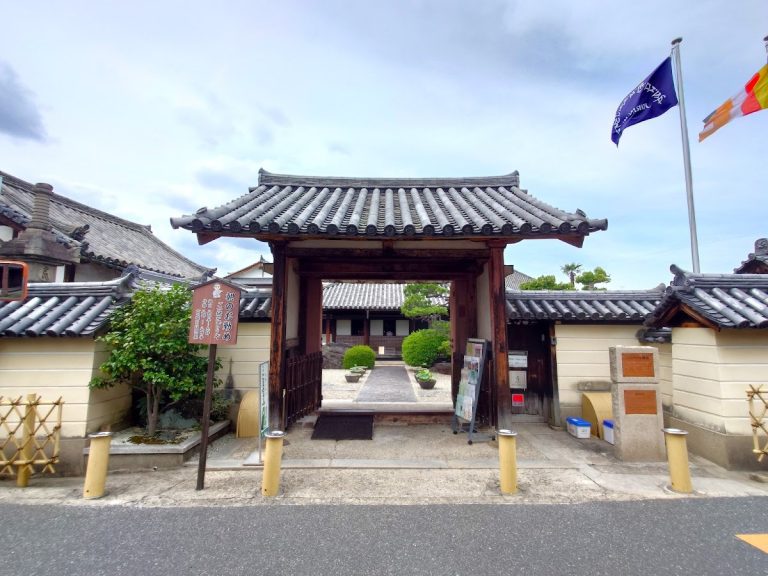
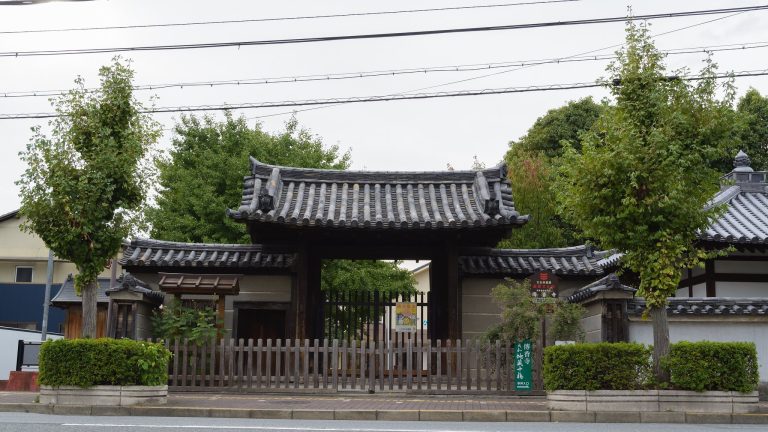
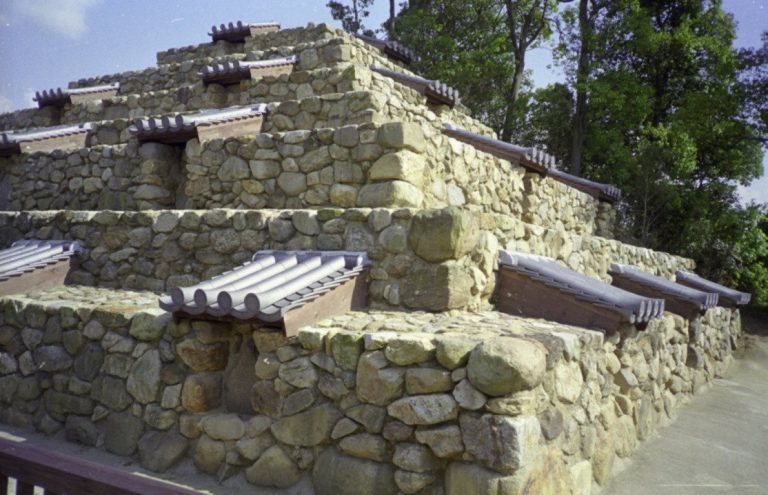
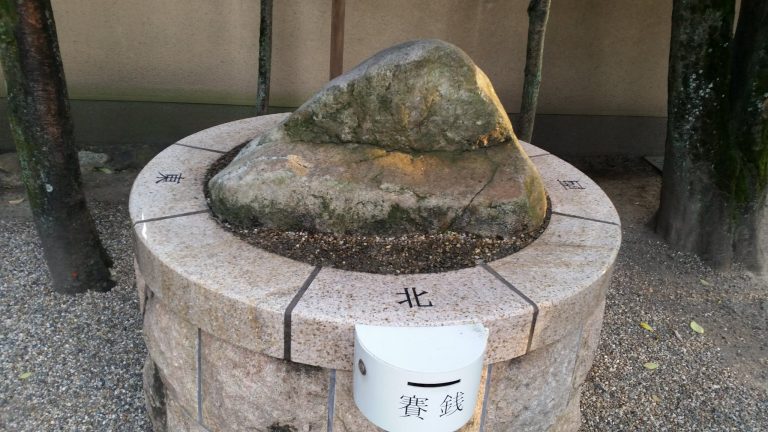
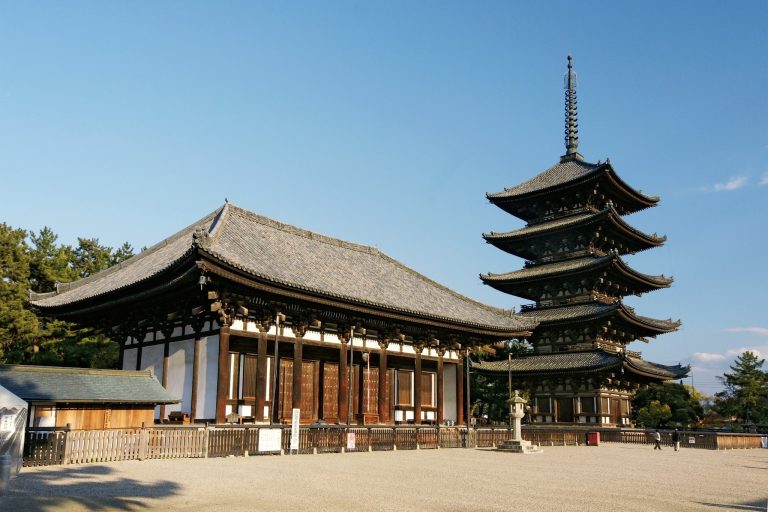
Goryō Shrine stands southwest of the remains of Gangoji’s five-storied pagoda. Its main sanctuary is a compact one-bay building in the Kasuga-zukuri style, covered by a cypress-bark roof. The precinct also contains a front gate and an office, while the former Gangoji precinct is recalled by the historical evidence for a mikoshi house beside the temple’s Great South Gate.
Associated shrines
Haraedo Shrine
Haraedo Shrine is dedicated to four purification deities and Ichikishima-hime. The term Haraedo refers to the Shinto function of removing ritual impurity.
Shusse Inari Shrine
Shusse Inari Shrine was transferred in 1952 from a shrine in Kyoto associated with Toyotomi Hideyoshi, the sixteenth-century military ruler who unified much of Japan. Its enshrined deities are the deity of the rice harvest, Sarutahiko, Okuninushi, Ame-no-Uzume, and Ukemochi.
Wakamiya Shrine
Wakamiya Shrine is dedicated to Sugawara no Michizane, a ninth-century court scholar and statesman later revered as the deity Tenjin. It was moved from Kitamuro-cho in 1877.
Mizuhiruko Shrine
Mizuhiruko Shrine is dedicated to Hiruko and forms another part of the group of associated shrines within the precinct.