Otokuni-dera: A Shingon Buddhist Temple in Nagaokakyo, Japan
Site at a Glance
- Rating
- 3.9
- Popularity
- Low
- Country
- Japan
- Primary era
- Early Modern
- External website
- Open
- Eras represented
- Early Modern
- Civilizations
- Tokugawa
- Site type
- Religious
- Remains
- Monastery
On this page14 sections
History
Otokuni-dera is a Shingon Buddhist temple in Japan, located in Nagaokakyo, Kyoto. Shingon is a Japanese school of Esoteric Buddhism founded traditionally by Kukai, who emphasized ritual practice, mandalas, and specialized teachings. The temple belongs to the Buzan branch, a major branch of Shingon Buddhism whose head temple is Hasedera, and is also known as the Peony Temple and “Kobo-san of Imazato.”
Early foundation and Nagaoka-kyo
Temple tradition attributes Otokuni-dera’s foundation in the Asuka period to Prince Shotoku, acting on the command of Empress Suiko. The precise date and circumstances remain uncertain, while roof tiles excavated within the precinct indicate that a temple stood here by the Nara period, before the construction of Nagaoka-kyo. The site is also traditionally identified with the former location of Emperor Keitai’s Otokuni Palace.
In 784, Emperor Kanmu established Nagaoka-kyo, a capital that preceded the later transfer to Heian-kyo, present-day Kyoto. Otokuni-dera was greatly enlarged at this time as a place intended to pacify and ritually protect the new capital. The temple soon became connected with one of the political crises surrounding the capital’s construction. In 785, Fujiwara no Tanetsugu, the official responsible for building Nagaoka Palace, was assassinated. Emperor Kanmu’s younger brother, Prince Sawara, was suspected of instigating the killing and was imprisoned at Otokuni-dera.
Kukai and imperial patronage
In 811, Emperor Saga appointed Kukai as the temple’s administrator. The buildings had fallen into disrepair, and Kukai directed their repair and reconstruction. This work was also understood as an effort to calm the angry spirit associated with Prince Sawara. Kukai presented Emperor Saga with citrus fruit grown within the precinct, together with a Chinese poem preserved in the Seireishu. A tree reputed to descend from that citrus plant still grows at the temple.
On October 27, 812, Saicho visited Kukai at Otokuni-dera to receive deeper teachings in Esoteric Buddhism. Saicho, later known as Dengyo Daishi, founded the Tendai school of Japanese Buddhism. The two men debated doctrine before a mandala of the Two Worlds, a paired Esoteric Buddhist diagram representing complementary doctrinal realms. Their meeting is traditionally regarded as an important event in the history of Japanese Esoteric Buddhism.
Retired Emperor Uda later used the temple as a temporary imperial palace and improved its halls and pagodas. Because of this association, Otokuni-dera acquired the alternative name Ho-o-dera, meaning “Retired Emperor’s Temple.”
Medieval decline and Edo revival
During the Muromachi period, the era of the Ashikaga shogunate, Otokuni-dera reportedly contained twelve monks’ residences. A large area now occupied by Nagaokakyo Municipal Nagaoka Third Elementary School formerly belonged to the temple. After an internal dispute, Ashikaga Yoshimitsu intervened, expelled the monks, and transferred Otokuni-dera to Hakuei Zenji of Nanzen-ji. The temple consequently came under Nanzen-ji’s control.
Otokuni-dera was destroyed by fire during military conflict involving Oda Nobunaga in the Eiroku era, from 1558 to 1569. It declined after the conflagration. Its revival began during the Genroku era, from 1688 to 1704, when Ryuko, the abbot of Goji-in in Edo, received the temple from Shogun Tokugawa Tsunayoshi and became its abbot. In 1693, Tsunayoshi gave Otokuni-dera an estate producing 100 koku, a historical measure of agricultural yield, and made it a prayer temple of the Tokugawa family. Ryuko restored its affiliation with Shingon Buddhism and established regulations for the temple.
In 1695, the buildings were reconstructed with donations from Tsunayoshi’s mother, Keisho-in, and others. The front gate, eastern gate, bell tower, tutelary Hachiman Shrine, and other surviving elements belong to this period of Edo rebuilding or reconstruction. The temple is also the sixth site on the Kyoto Rakusai Kannon Pilgrimage. Its reputation as the Peony Temple developed after roughly 2,000 peony plants were transplanted from Hasedera. They usually flower around late April, changing the character of a precinct once described as quiet and somewhat desolate.
Otokuni-dera’s historic materials include important cultural properties, municipal and prefectural cultural properties, and designated buildings and documents. These protections recognize surviving religious objects, structures, and records connected with the temple’s long history.
Remains
The surviving precinct combines Edo-period reconstructed buildings with earlier religious images, a stone pagoda, documentary materials, a peony garden, and a tree associated with Kukai. The south entrance is formed by the front gate, while an eastern gate, also called the rear gate, provides another historic element of the temple layout.
Main buildings and precinct features
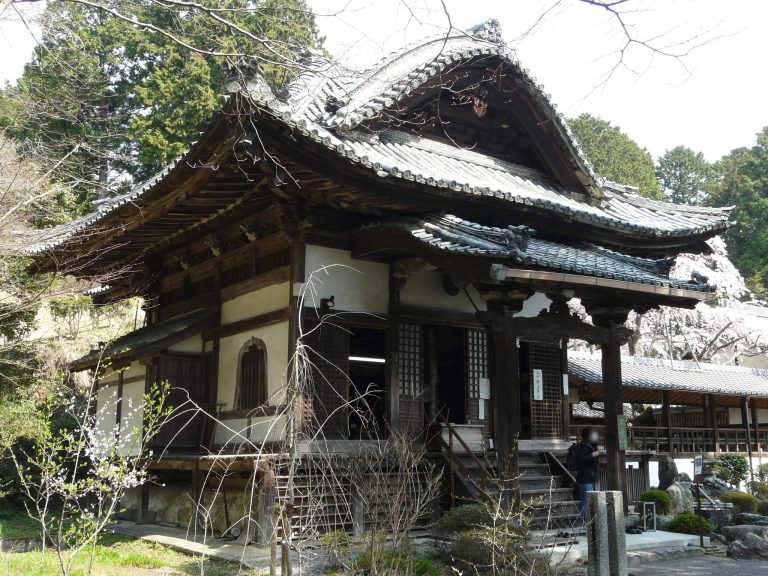
Main hall
The main hall is an Edo-period reconstruction and houses the temple’s principal image, the Combined Daishi Image. This hidden sacred image, a religious image not ordinarily shown to the public, unites representations of Hachiman and Kukai. The city’s tangible cultural-property designation for the hall includes its altar enclosure.
Gates and bell tower
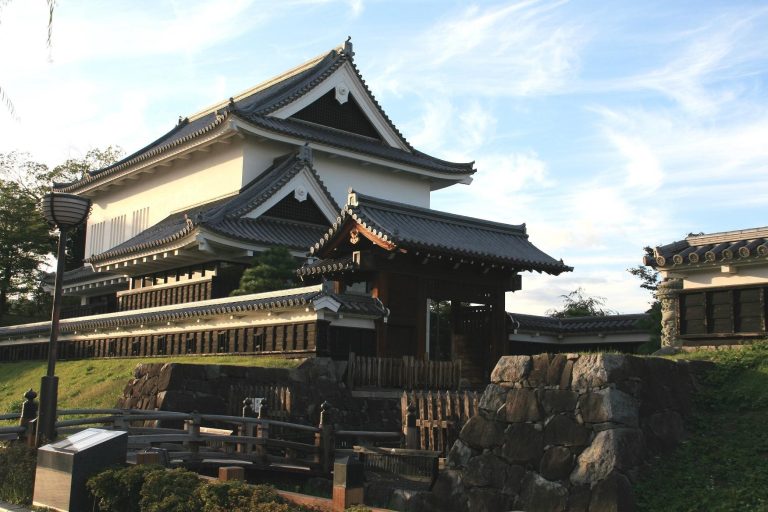
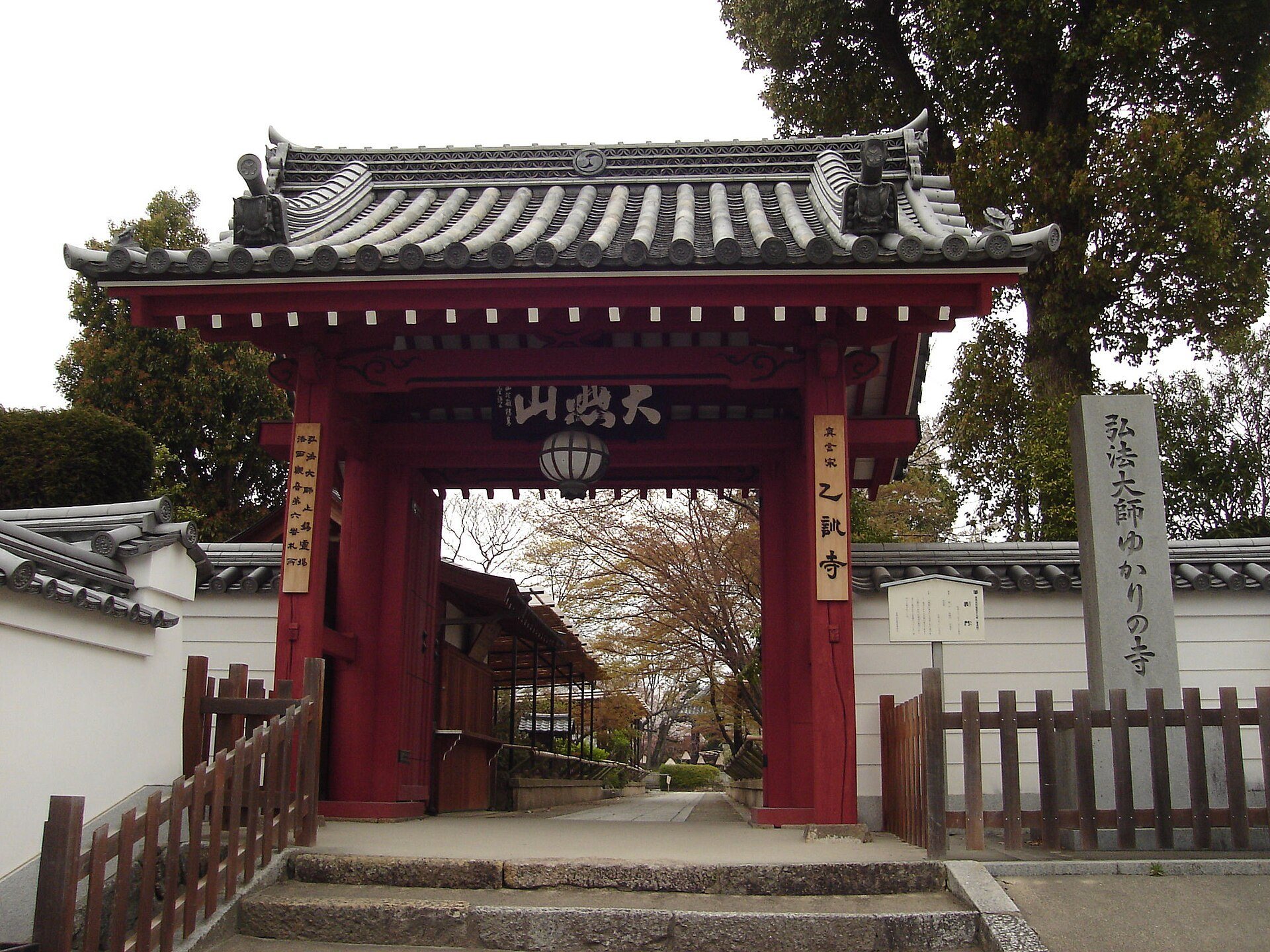
The front gate is the south gate and was rebuilt during the Edo period. The eastern, or rear, gate also dates from the Edo period and bears two ridge plaques dated 1695. The bell tower is an Edo-period reconstruction. Together, these structures preserve elements of the rebuilding undertaken after Ryuko’s revival of the temple.
Hachiman Shrine and garden
A tutelary Hachiman Shrine stands within the precinct. Hachiman is a Japanese deity associated with warfare and protection. The grounds also contain a thirteen-story stone pagoda, a statue of Kukai, the temple kitchen and residential service building, and a peony garden supplied with plants from Hasedera.
Citrus-descendant tree
A tree reputed to descend from the citrus tree that Kukai presented to Emperor Saga remains planted within the temple precinct. It preserves the physical setting of a tradition linking the temple with Kukai’s administration and his relationship with the imperial court.
Images and documentary materials
Bishamonten
The temple preserves a wooden standing image of Bishamonten dating from the late Heian period. Bishamonten is a Buddhist guardian deity. The image is recognized as an Important Cultural Property.
Eleven-Headed Kannon
A wooden standing image of Eleven-Headed Kannon dates to 1268, the fifth year of the Bun’ei era. Eleven-Headed Kannon is a form of the bodhisattva Kannon associated with compassionate protection. This image is also an Important Cultural Property.
Estate maps
Associated documentary materials include a copy of a map of the Jisso-in estate in Furuichi and Kotari villages. Two original sheets of an estate map survive, along with an additional sheet showing the Otokuni-dera estate in Furuichi and Kotari villages. These maps are registered as municipal tangible cultural properties and preserve evidence of the temple’s historical landholding.