Takaida Yokoana Group: A Kofun-Period Cave-Tomb Complex in Japan
Site at a Glance
- Rating
- 3.9
- Popularity
- Very Low
- Country
- Japan
- Primary era
- Medieval
- External website
- Open
- Eras represented
- Medieval
- Civilizations
- Yamato
- Site type
- Burial
- Remains
- Necropolis
On this page8 sections
History
The Takaida Yokoana Group is a complex of Kofun-period horizontal cave tombs in Kashiwara, Osaka, Japan. Ancient Japanese communities began cutting the tombs during the first half of the sixth century, and construction appears to have continued into the seventh century. More than 200 tombs are associated with the group, making it one of the largest complexes of its type. About 162 have been identified, while many more are believed to remain undiscovered.
Discovery and development
The group was discovered in 1917, when engraved drawings were already noted inside the tombs. Many chambers had long remained open, so it has not been established whether every drawing was made at the time of the tomb’s original construction. This uncertainty affects the interpretation of the group’s imagery and its phases of use.
Communities and cultural connections
The tombs are arranged in clusters that appear to reflect familial or clan organization. Smaller units of two to four tombs combine into larger clusters of approximately 10 to 15 units. These smaller groupings may represent households or successive generations. A comparable arrangement occurs in nearby collective tumuli, or groups of burial mounds, including the Hiraoyama Tumulus Group.
The identity of the tomb builders remains uncertain. Construction techniques and burial arrangements resemble those found in the Higo region of Kyushu, an area broadly corresponding to modern Kumamoto Prefecture. The clothing and boats shown in the engravings also suggest continental influence. Votive kamado rice cookers, associated with immigrant communities from Baekje, one of the ancient Korean kingdoms, have been found in only two tombs. Contemporary cave-tomb groups on the Korean Peninsula are not stylistically similar, and the evidence does not establish a single origin for the Takaida community.
Protection and interpretation
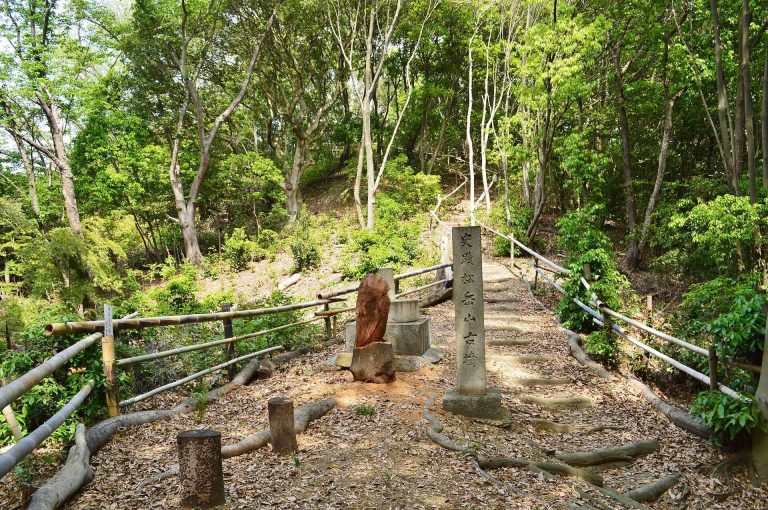
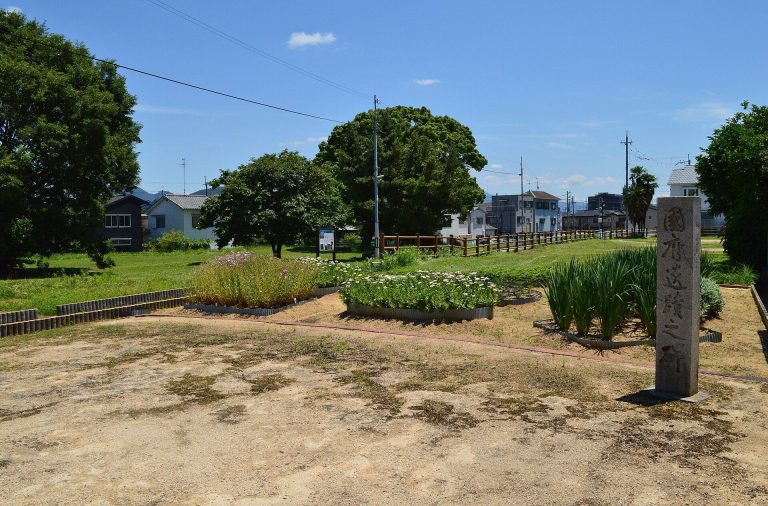
The Takaida Yokoana Group became a National Historic Site of Japan in 1922, and the protected area was enlarged in 1990. The preserved complex is maintained as Takaida Yokoana Historic Park, with explanatory facilities. Grave goods excavated from the tombs are displayed at the adjacent Kashiwara City History Museum, where they contribute to the interpretation of the burial community.
Remains
Hillside tombs
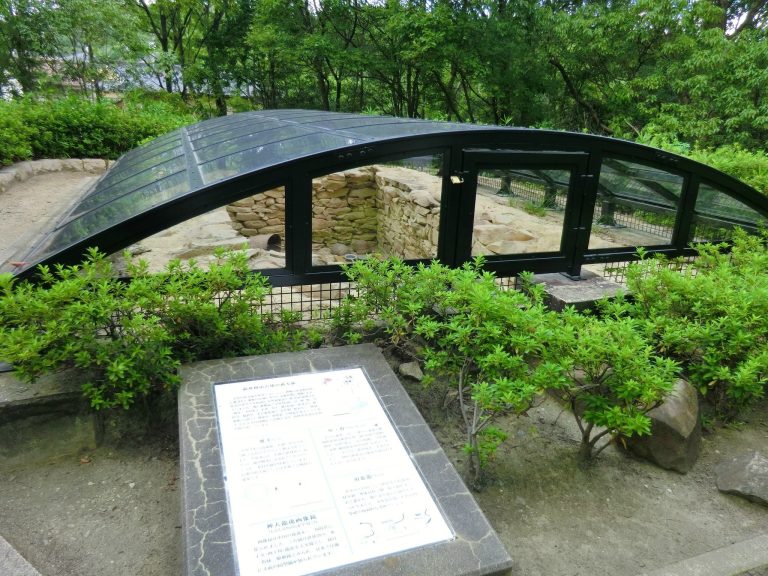
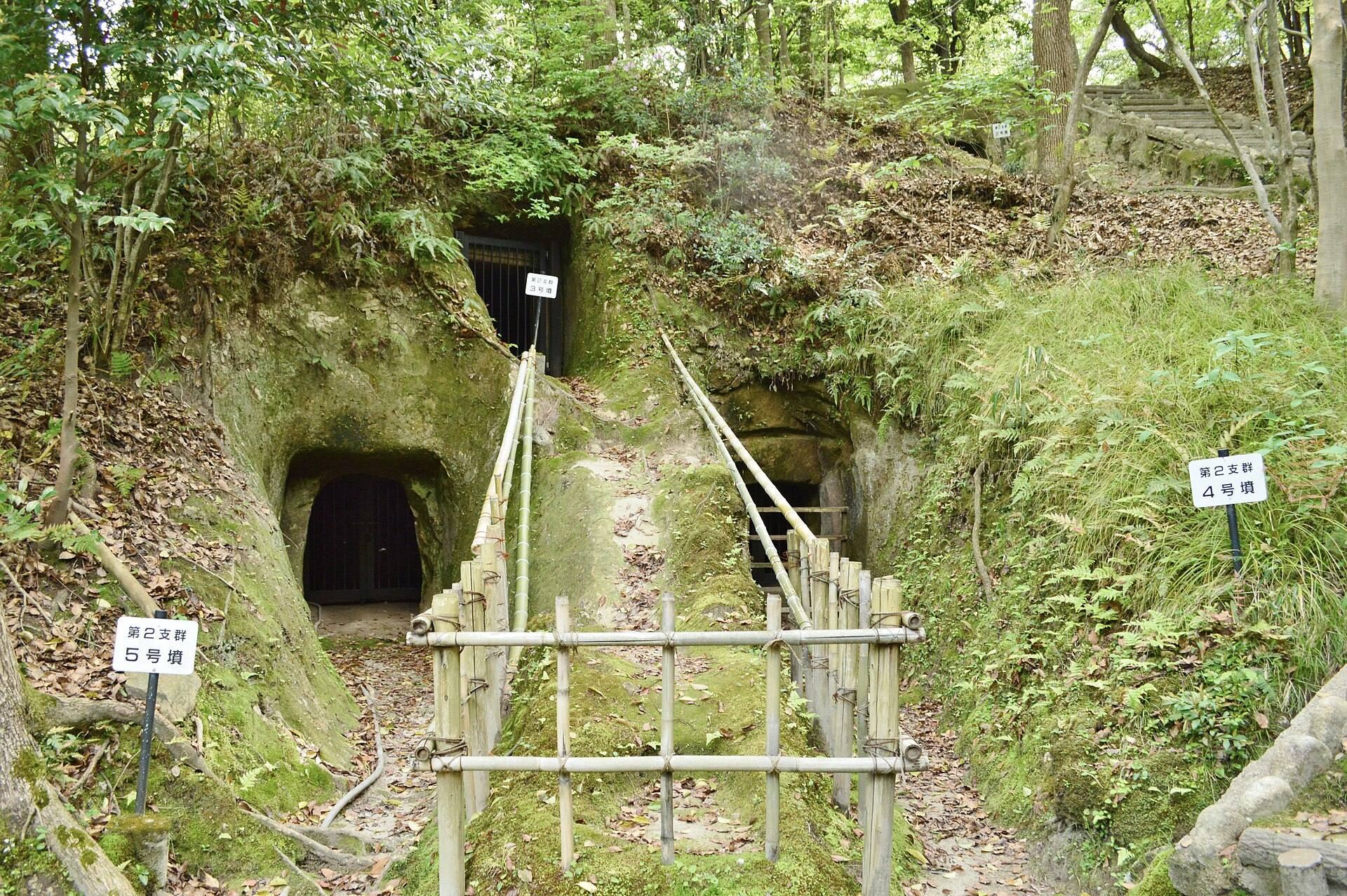
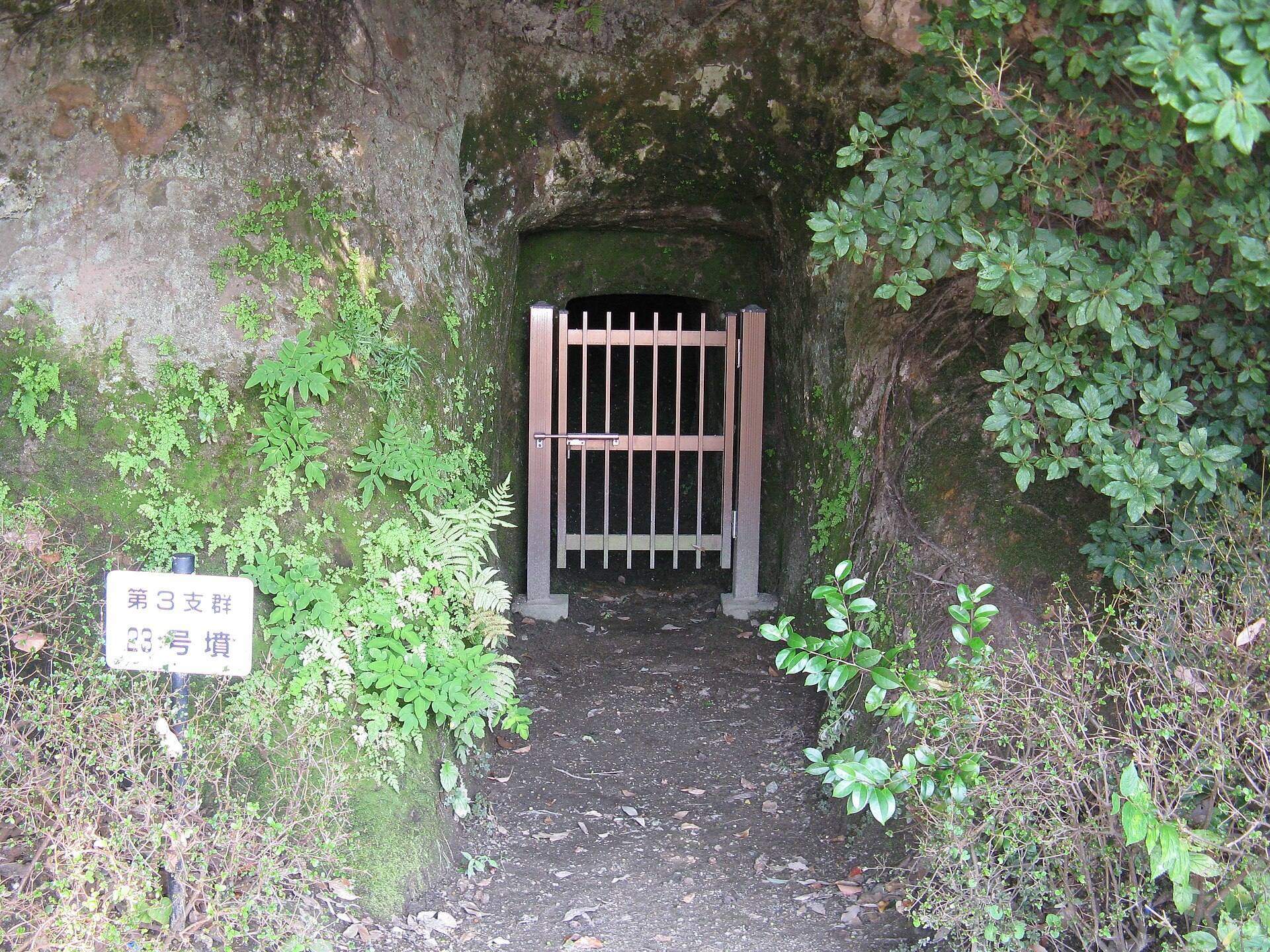
The tombs were cut into a soft layer of tuff, a rock formed from compacted volcanic ash, on a hillside at the southern end of the Ikoma Mountains. The slope faces the Yamato River and lies approximately 30 to 50 metres above sea level. A yokoana, or horizontal cave tomb, is reached through a side passage rather than built above ground. At Takaida, each entrance is about one metre square and leads through a narrow passage to an inner chamber measuring up to approximately nine square metres. Chamber ceilings are about 170 to 180 centimetres high, giving the tombs the form of horizontal stone burial chambers.
About half of the tombs have a step roughly 10 centimetres wide where the wall meets the ceiling. Its purpose is unknown, although it has been interpreted as a possible imitation of a house’s eaves. The preserved complex includes numbered branches and chambers, among them tombs 3, 4, and 5 in the second branch, together with other identified groups.
Burial chambers
A single chamber could hold up to three burials, normally placed in wooden coffins. Nails found on chamber floors indicate the presence and approximate size of some coffins. Many tombs contained no nails, leaving open whether certain burials used no coffins or whether some coffins were made without nails. The dead were placed with their heads facing north, regardless of the direction of the entrance.
A few chambers contain built-in stone sarcophagi. These appear to have been carved from the rock and reused for later burials, preserving evidence of repeated use within individual tombs.
Engravings and grave goods
Line engravings cover the walls of many chambers. Their subjects include people, boats, birds, horses, fish, trees, flowers, spiral designs, suns, and houses. Some human figures retain details of clothing, while several boats have a gondola-like hull. Together, these images provide evidence for the visual traditions and cultural contacts associated with the tombs.
Objects recovered from the tombs include earrings, beads and other jewellery, horse harnesses, and pottery bearing red pigment. These grave goods are displayed at the Kashiwara City History Museum rather than treated as objects still preserved inside the chambers.