Ageshima Kofun: A Sixth-Century Burial Mound in Japan

Site at a Glance
- Rating
- 4
- Popularity
- Very Low
- Country
- Japan
- Primary era
- Classical
- Eras represented
- Classical
- Civilizations
- Yamato
- Site type
- Burial
- Remains
- Burial Mound
On this page8 sections
History
Late Kofun-period burial
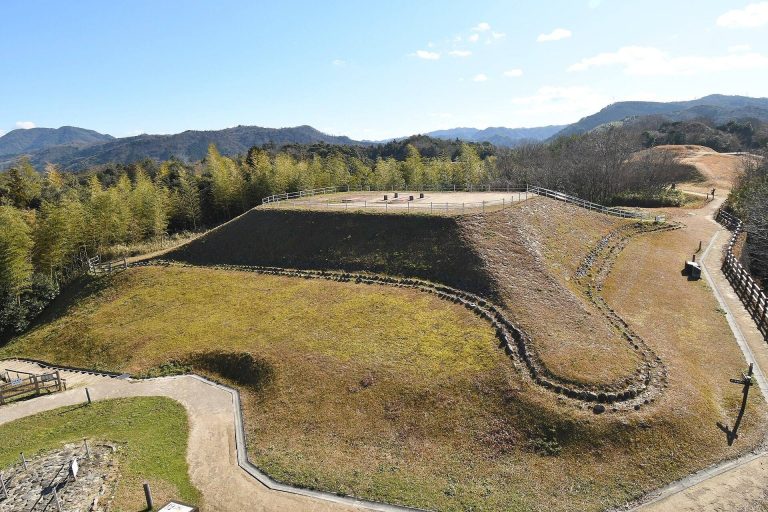
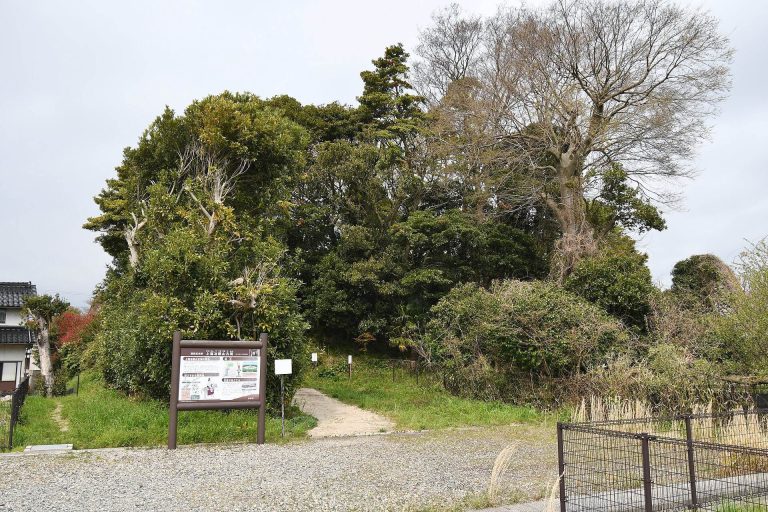
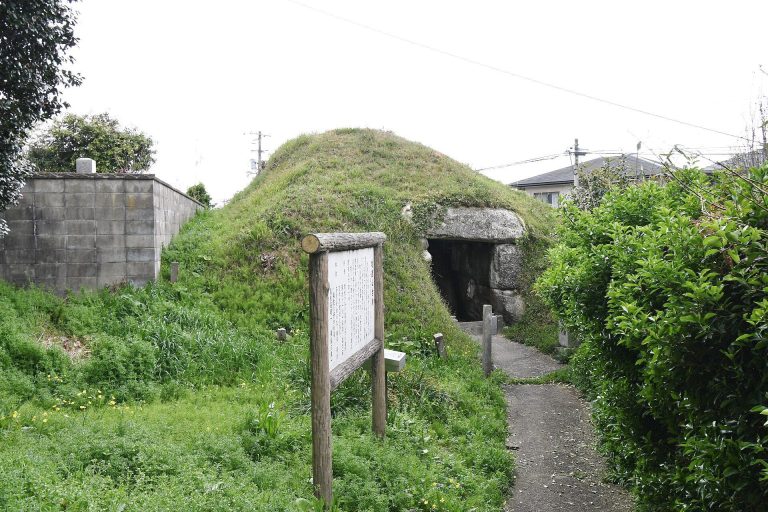
Ageshima Kofun is a round burial mound in Izumo, Japan, built by communities of the Kofun period around the middle of the sixth century. The Kofun period was Japan’s era of large monumental burial mounds, conventionally dated from about the third to the seventh centuries. The mound belongs to the period’s later phase and is regarded as representative of late Kofun-period burials in the Izumo area.
The tomb stands on the eastern foothills of Mount Tabushi, at the eastern end of the Kitayama massif. Its position above the surrounding rice fields gave it a view toward Lake Shinji. The burial was discovered during land clearance in 1949, bringing its stone coffin and abundant grave goods to archaeological attention. The house-shaped sarcophagus has no known parallel elsewhere in the Izumo region.
Recognition and surviving finds
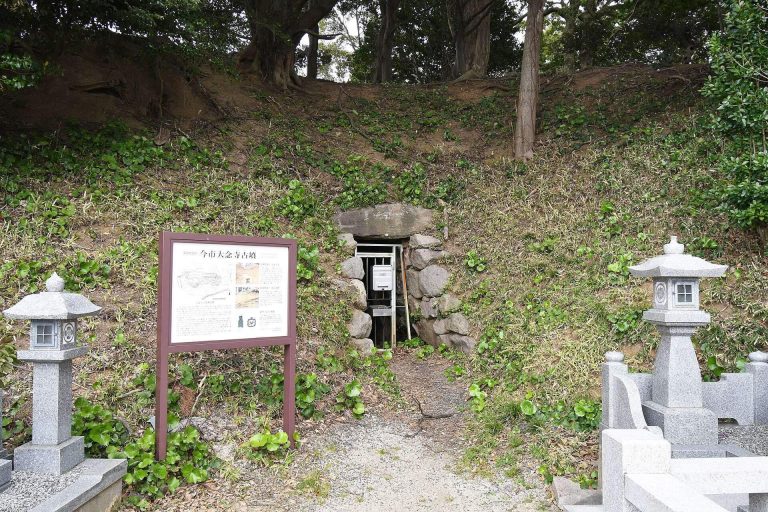
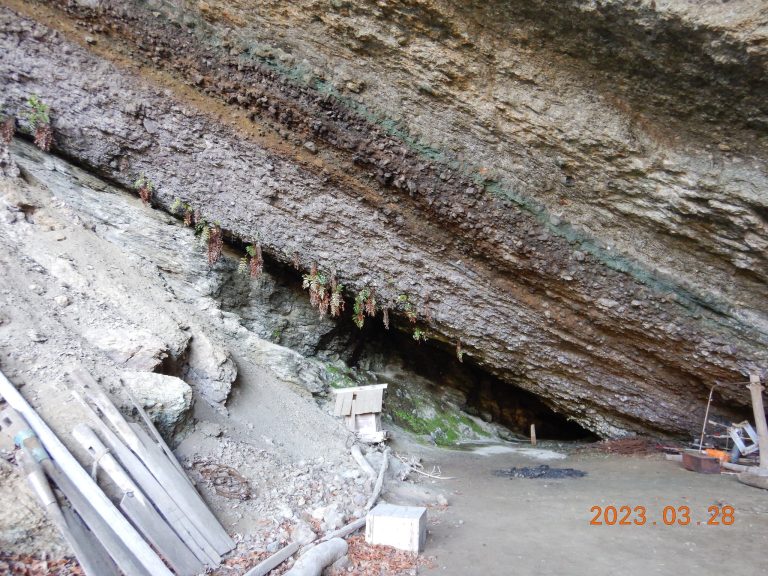
Ageshima Kofun became a National Historic Site of Japan in 1957. Its excavated artifacts were designated Izumo municipal tangible cultural properties in 1989, and the surviving finds are owned by the Ageshima Kofun Hosankai. Some objects recovered during the excavation were later lost. A portion of the surviving collection is displayed at the Shimane Prefectural Museum of Ancient Izumo History, while most of the Sue ware pottery is stored at Izumo’s Inome Cave Artifact-Containing-Layer Storage Facility.
Remains
Mound and burial layout
Ageshima Kofun is an enpun, the round-mound form of a Kofun-period burial mound. It measures approximately 15 meters in diameter and 2 meters high, and was constructed on a hillside about 35 meters above the rice fields. Two separate burial facilities occupy the mound: a house-shaped stone sarcophagus and a pit-style stone chamber.
Burial facilities
House-shaped stone sarcophagus
The sarcophagus was carved from volcanic tuff, a soft stone formed from compacted volcanic ash. Its interior is 1.83 meters long and 0.69 meters wide. Human remains were found within it, including a well-preserved skull visible in photographs taken soon after excavation.
The coffin held a dense group of objects. These included a five-bell bronze mirror, 184 beads consisting of 10 agate beads, 22 glass round beads, and 152 small glass beads, as well as sword and knife equipment, a silver ring, six gilt-bronze fittings, a bell-adorned bracelet fitting, at least 47 copper arrowheads, lacquer from arrow shafts, one double-ended bow fitting, and Sue ware pottery. Sue ware was high-fired, wheel-made pottery produced in Japan during and after the Kofun period.
The arrangement of the objects provides a detailed record of the burial. Tubular beads and small glass beads were placed beside both arms, while glass round beads lay beside both feet. A sword rested along the north wall on the deceased’s right-hand side, with six gilt-bronze fittings near its hilt. A silver ring lay beside the head on the right, and the five-bell mirror was placed beside the chest on the right. A large knife lay beside the left shoulder, and the bell-adorned bracelet fitting was beside the left hand. The mirror, bracelet fitting, and beads are no longer extant, while five of the six gilt-bronze fittings survive.
Pit-style stone chamber
The second burial facility was built from natural and split stones. It measures 1.85 meters in length, between 0.60 and 0.70 meters in width, and 0.70 meters in height. Its contents consisted of two sets of horse harnesses and fittings, demonstrating the presence of elaborate equestrian equipment within the mound.
The harness assemblage included two bridles, one with an f-shaped iron and gilt-bronze cheek plate and the other with a plain ring cheek plate. It also contained three iron and gilt-bronze diamond-shaped sword pendants, four iron heart-leaf-shaped pendants, and several hemispherical fittings with gilt-bronze coverings. Other elements included a ring used with one legless fitting, two four-legged hemispherical fittings, 27 cross-shaped fittings made up of six square, three rectangular, and 18 claw-shaped pieces, two plate-shaped fittings, two hook-shaped buckles, two figure-eight buckles, and one bar-shaped iron object. In horse-harness terminology, pendants hang from straps as decoration, while saddle fittings connect or secure the saddle and its straps.
The two saddles are represented by different surviving components. Saddle A retains fragments of iron covered with gilt bronze from its front and rear saddle-bow fittings, while Saddle B retains two iron loop fittings. The buckles cannot be assigned to either harness set. The pottery from the mound is all Sue ware rather than Haji ware, a contrasting low-fired earthenware tradition. Of three recorded sets of Sue ware lidded cups, only one cup body survives.