Hakodate Hachiman Shrine: A Historic Shinto Shrine in Hakodate


Site at a Glance
- Rating
- 4.4
- Popularity
- Medium
- Country
- Japan
- Primary era
- Modern
- External website
- Open
- Eras represented
- Modern
- Civilizations
- Japanese
- Site type
- Religious
On this page11 sections
History
Hakodate Hachiman Shrine is a Shinto shrine in Hakodate, Japan, traditionally founded in 1445 when Kono Masamichi, lord of Kameda District, invited Hachiman, a kami associated with warfare, protection, and Emperor Ojin, to guard a castle being built at the southeastern corner of the grounds. The shrine later became a major place of prayer for Ezo, the historical name for Japan’s northern territories and their peoples, and eventually developed into the complex seen today.
Foundation and Early Relocations
The shrine’s traditional foundation is connected with Kono Masamichi’s castle project. In 1512, an attack by the Ezo people drove the Kono clan from the castle. The clan fled to Akagawa Village and took the Hachiman deity with them, preserving the shrine’s association with the family during a period of political upheaval.
In 1649, a female ritual specialist of the Kono family received a spiritual revelation and moved the shrine to the former site of the Kono residence in Motomachi. This relocation established the shrine in a new setting within Hakodate, where it remained until the political and administrative changes of the late eighteenth century brought another move.
Shogunal Administration and Regional Role
In 1799, the Tokugawa shogunate placed eastern Ezo under its direct administration and chose the shrine grounds for the Hakodate magistracy. The magistracy was an office of government administration, and its establishment required the shrine to move. In 1804, a new shrine building was completed at Kaishochō, in the northeastern part of present-day Motomachi, through a project financed by the shogunate.
After the move, the Hakodate magistracy used the shrine as a place of prayer and revered it as the general shrine of Ezo. It was also believed to possess divine power that could aid the development of the northern territory. By the end of the early modern period, several other shrines had invited deities from Hakodate Hachiman Shrine, including Ishikari Hachiman Shrine, Muroran Hachimangu, and Sumiyoshi Shrine in Otaru.
Modern Shrine Status
In 1871, the Kaitakushi, the Meiji government agency responsible for the development and administration of Hokkaido, placed the shrine under its special patronage. The shrine entered the modern state ranking system for government-recognized Shinto shrines as a National Shrine of the Lesser Rank in 1877. A fire destroyed the shrine buildings in 1878, after which they were rebuilt at the present site with government funding. The shrine transferred there in 1880 and was elevated to the National Shrine of the Middle Rank in 1896.
Emperor Showa visited Hakodate and worshipped at the shrine in 1936. Following the Second World War, the shrine joined the Association of Shinto Shrines and became one of its listed shrines in 1948. It is dedicated principally to Hondawake no Mikoto, identified with Emperor Ojin, and also enshrines Sumiyoshi no Okami and Kotohira no Okami. It is additionally described as a Soja shrine, a shrine representing the principal deities of a wider administrative region, although Hakodate did not technically constitute a province.
The annual festival takes place on August 15, with ritual observances extending across the three days before and after that date. Every other year, a mikoshi, or portable sacred shrine, is carried through the city after the main festival. During its return, the mikoshi is carried at a run up the shrine approach’s 134 stone steps.
Remains
Setting and Sanctuary Complex
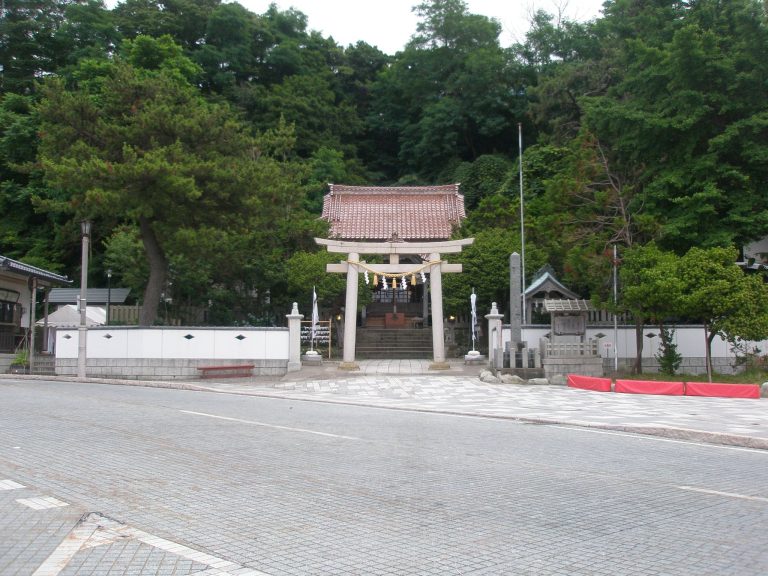
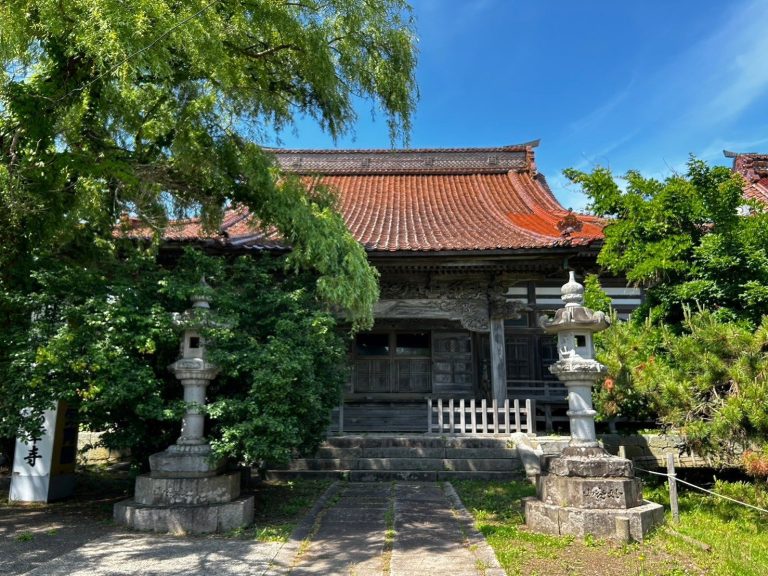
Hakodate Hachiman Shrine stands on the southeastern foot of Mount Hakodate and faces east. Its grounds overlook Hakodate’s urban area. The present complex was rebuilt between 1912 and 1915, and its principal buildings are arranged in a connected composition resembling gongen-zukuri. This form physically joins the honden, the main sanctuary, the heiden, the offering hall, and the haiden, the worship hall.
Honden
The honden is five bays wide and three bays deep, with a bay forming one structural division of the building. It follows a Hiyoshi-style form, an established Japanese shrine design associated here with the main sanctuary of Hiyoshi Taisha in Shiga Prefecture. A balustraded veranda surrounds the sanctuary. Its roof is covered with copper sheets.
Heiden
In front of the honden is the two-bay-long heiden. It has a gabled roof and an entrance at the gable end, with the same width as the front of the main sanctuary. The offering hall is joined to the rear of the haiden, creating the physical connection that defines the complex’s gongen-zukuri-like arrangement. Its roof is also copper-sheeted.
Haiden
The haiden is seven bays wide and four bays deep. Its roof combines hipped and gabled forms, and the entrance faces forward. Because the ridge of the heiden roof projects toward the front, the center of the haiden’s front roof forms a gable resembling the Kasuga style.
Below this central gable is a one-bay entrance porch with a projecting karahafu, a curved decorative gable. The porch roof is carried downward with a tsuihafu treatment. The forward parts of both side elevations have carriage entrances resembling those of the main sanctuary of Hakozaki Shrine in Fukuoka Prefecture. The shrine refers to the combination of its Hiyoshi-style honden and connected eight-building composition as the Hachiman eight-building style.
Portable Shrine and Festival Object
Principal Mikoshi
The principal mikoshi was made in 1894. It is octagonal, decorated with gold leaf, and fitted with a large carrying pole for processions. Used in the biennial festival procession, it is designated as a Hakodate municipal tangible cultural property in the crafts category. Its continued ceremonial use connects the surviving material culture of the shrine with the festival practices that carry the sacred presence through the city.