Ōda Chausuyama Kofun: A Fifth-Century Keyhole Burial Mound in Osaka
Site at a Glance
- Rating
- 3.7
- Popularity
- Very Low
- Country
- Japan
- Primary era
- Classical
- External website
- Open
- Eras represented
- Classical
- Civilizations
- Yamato
- Site type
- Burial
- Remains
- Burial Mound
On this page11 sections
History
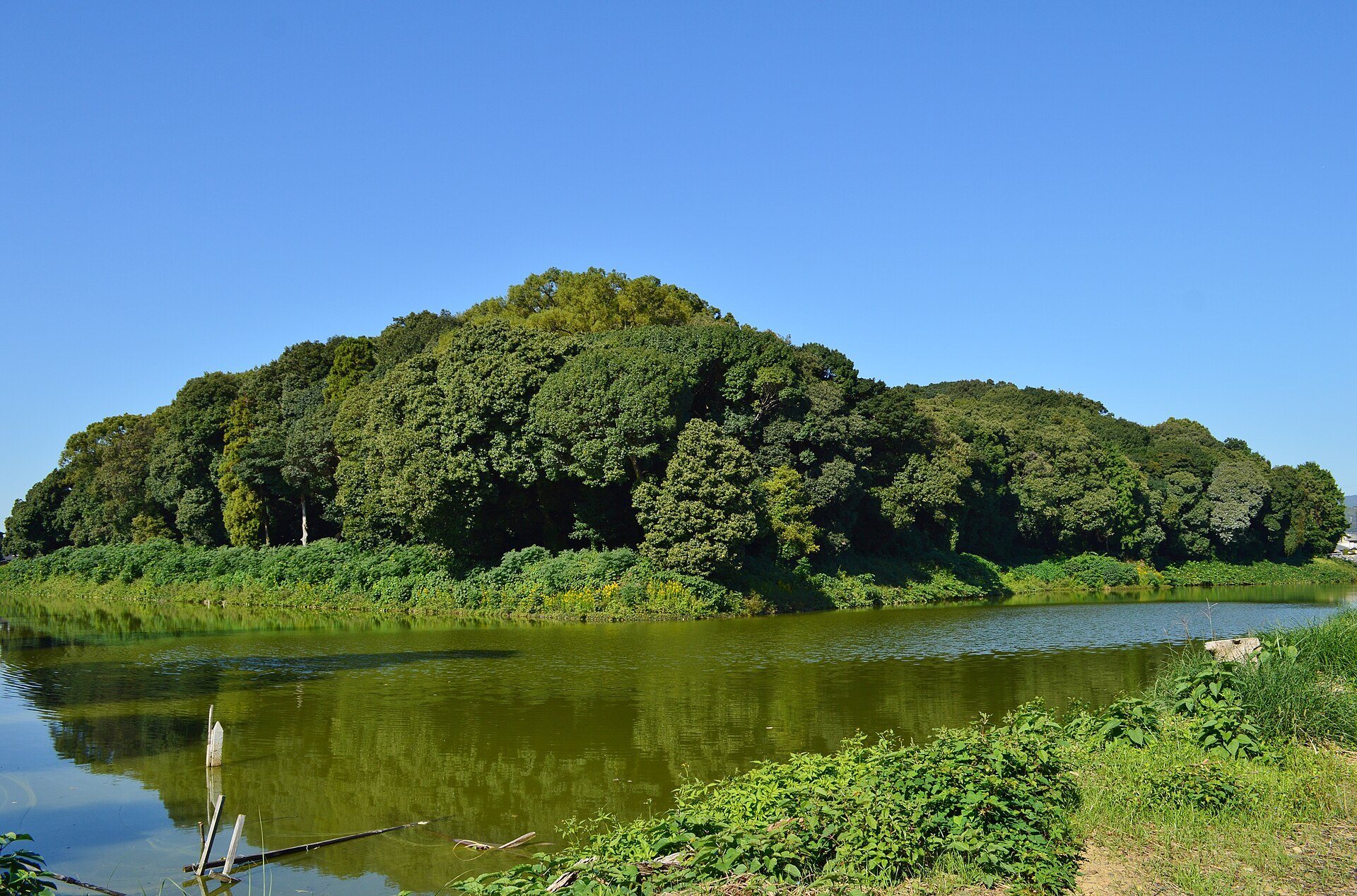
Ōda Chausuyama Kofun is a large burial mound in Japan, located in Ibaraki, Osaka, and built around the middle of the fifth century during the middle Kofun period. A kofun was a monumental Japanese burial mound, often built for members of the elite in distinctive forms such as the keyhole plan. The person buried at Ōda Chausuyama is unknown, although the Imperial Household Agency manages it as Mishima Aino no Misasagi, the mausoleum of Emperor Keitai.
The traditional imperial identification
The fifth-century date of the mound does not accord with the traditionally recorded death of Emperor Keitai around 527 or 531. The identification of Ōda Chausuyama with Keitai’s mausoleum was first recorded by the Edo-period scholar Matsushita Kenrin in 1696. The designation had been established by 1732, and in 1884 the site passed under the jurisdiction of the Ministry of the Imperial Household. It remains under the management of the Imperial Household Agency, the Japanese institution responsible for the imperial family and officially designated imperial mausolea.
Written traditions place Keitai’s burial in the wider area of Ai, but they do not resolve the mound’s identification. The Kojiki associates the burial with Mishima no Ai no Misasagi, while the Nihon Shoki gives the name Aino no Misasagi. The tenth-century Engishiki, an administrative and legal compilation that includes records of court rites and imperial mausolea, places Mishima Aino no Misasagi in Shimakami District. It describes a protected precinct measuring three cho from east to west and three cho from north to south, with five guard households assigned each year.
A record from 1200 also places Keitai in Shimakami District, and a diary from the late thirteenth century describes the plundering of a mausoleum in Shimakami. Ōda Chausuyama, however, lies in Shimashimo District. The Edo-period scholar Motoori Norinaga addressed this discrepancy by proposing that the boundary between Shimakami and Shimashimo had changed. The place-name Ai survives in Aigawa and refers to the wider surrounding area.
The Imashirozuka interpretation
From the Taisho era through the early Showa period, another interpretation identified Imashirozuka Kofun in Takatsuki as Keitai’s true mausoleum. Imashirozuka dates from the early sixth century, closer to the traditionally recorded date of the emperor’s death, and it is the only one of the two sites located in Shimakami District. This interpretation is now widely regarded as the stronger one, leaving Ōda Chausuyama’s occupant unidentified.
One theory regards the buried individual at Ōda Chausuyama as a royal figure who branched from the Yamato court. This proposal draws on the mound’s exceptional size, its proximity to the royal tomb groups at Mozu and Furuichi, its status as the only kofun in Settsu associated with subsidiary tombs, and the later construction of the Yamato royal Imashirozuka Kofun. A more specific theory identifies the occupant as a male ancestor of Emperor Keitai and the brother of the empress of Emperor Ingyo, but that attribution remains unconfirmed.
Administration and archaeological investigation
Ōda Chausuyama is the twenty-first largest kofun in Japan and the largest in northern Osaka. Its plan closely resembles that of Ichinoyama Kofun in Fujiidera, traditionally identified as Emperor Ingyo’s mausoleum. The two designs ultimately derive from the models of Konda Gobyo-yama Kofun and Hakayama Kofun, and the resemblance has been used to propose a connection between the person buried at Ōda Chausuyama and the powerful rulers of the Furuichi Kofun Group.
Archaeological investigations took place outside the surrounding moat in 1972, including work on the moat of a possible subsidiary tomb, through the Osaka Prefectural and Ibaraki City boards of education. A further excavation was carried out on the southwestern side in 1988 during construction of the Oda Community Center. The Imperial Household Agency’s Archives and Mausolea Department examined the foot of the mound in fiscal year 2002 before maintenance work. These investigations added to knowledge of the mound and its surrounding features while the site continued to be administered as Mishima Aino no Misasagi.
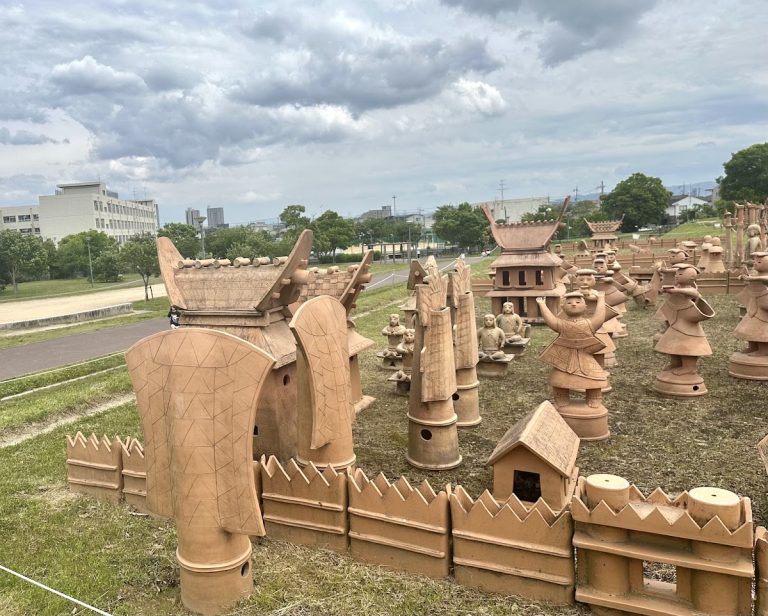
The northern location of Ōda Chausuyama makes it the only imperial tomb in northern Osaka designated by the Imperial Household Agency. It is administered by the Momoyama Mausoleum District Office rather than the office responsible for the Mozu and Furuichi tombs. Excavated haniwa, earthenware cylinders and funerary figures placed around or on burial mounds, are displayed at the Ibaraki Municipal Museum of Cultural Properties.
Remains
Ōda Chausuyama occupies the Tomita Plateau on the right bank of the Yodo River. It is a keyhole-shaped mound, combining a circular rear section with a square front section facing south. The mound was built in three stages, although a four-stage construction has also been proposed. It measures approximately 226 meters in length and reaches 19.8 meters in height at the front. Projecting platforms extend from both sides of the junction between the circular rear and square front sections.
Mound, moat, and outer bank
A shield-shaped moat surrounds the mound. It is approximately 28 to 33 meters wide, and an outer bank about 30 meters wide encloses the moat. The arrangement of the mound and moat is substantially the same as that of Ichinoyama Kofun, although the two are separate monuments. Together, the shaped mound, platforms, moat, and outer bank define the principal surviving layout of Ōda Chausuyama.
Haniwa and production connections
Excavations recovered both cylindrical and figural haniwa. Cylindrical haniwa commonly marked or enclosed burial mounds, while figural examples represented people, animals, houses, and equipment. The cylindrical examples from Ōda Chausuyama date by their position in the typological sequence to the middle of the fifth century, supporting the mound’s principal construction date.
The outer bank on the northern side yielded figures representing houses, people, armor, horses, and cormorants. The haniwa were supplied by the Niike Haniwa Production Site at Kamitsuchimuro in Takatsuki. That complex included firing kilns, workshops, and a settlement. Examples from its earliest Kiln Group A match those from Ōda Chausuyama, indicating that the production site began operating in response to the mound’s construction. Haniwa from the same kiln group were also found in the nearby Sojiji Kofun Group, linking the mound’s production network with smaller surrounding tombs.
Subsidiary tombs and associated mounds
Archaeologically identified subsidiary tombs
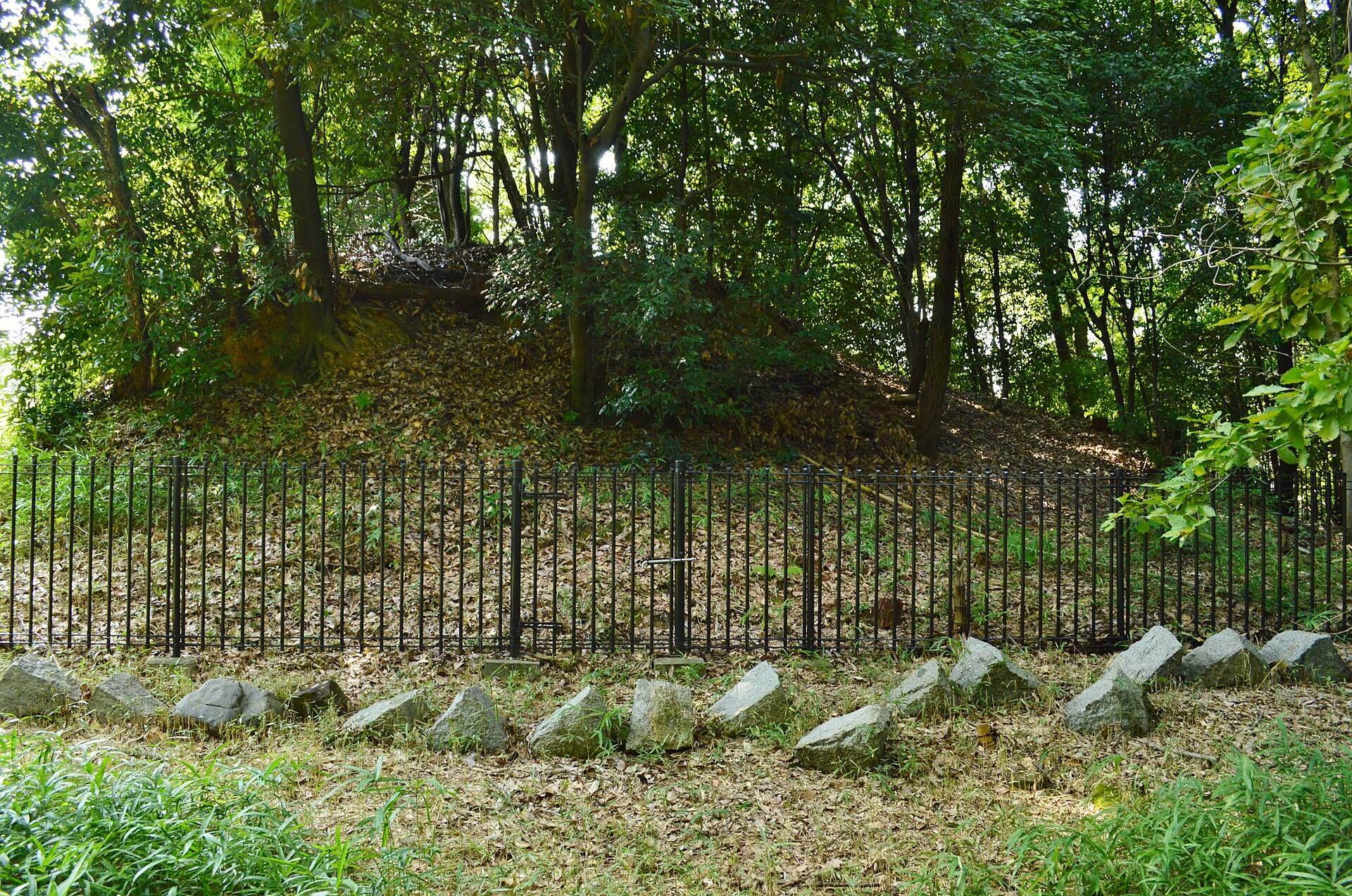
Several mounds around Ōda Chausuyama are considered possible subsidiary tombs. Five were assigned archaeological numbers by the Osaka Prefectural and Ibaraki City boards of education, although the relationship between some of these features and the sites designated by the Imperial Household Agency remains uncertain.
A, B, C, and D Subsidiary Tombs
A Subsidiary Tomb is circular, while B Subsidiary Tomb is also circular but has a projecting platform at its junction. C Subsidiary Tomb has a keyhole plan, and D Subsidiary Tomb is roughly rectangular. A, B, and C are treated as detached components of Mishima Aino no Misasagi by the Imperial Household Agency. D has no corresponding imperial designation.
Futagoyama and other designated sites
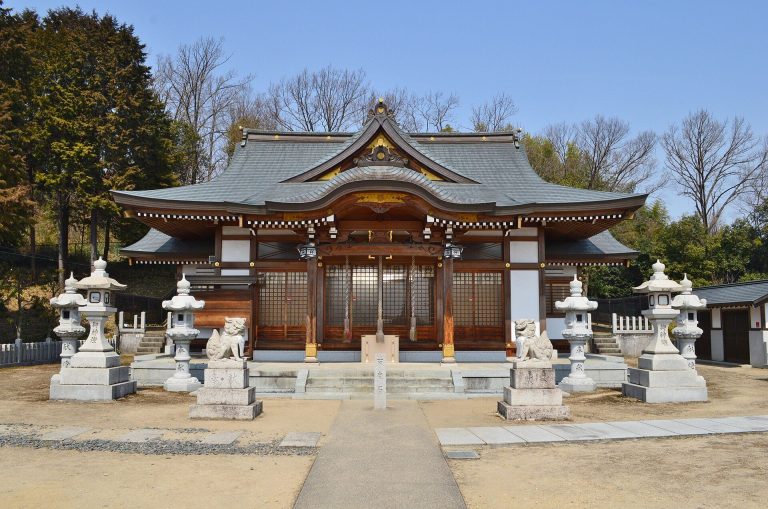
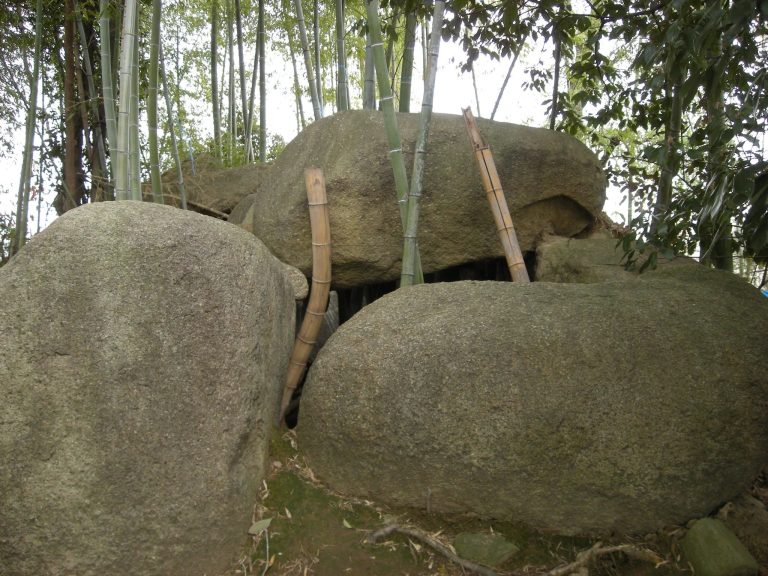
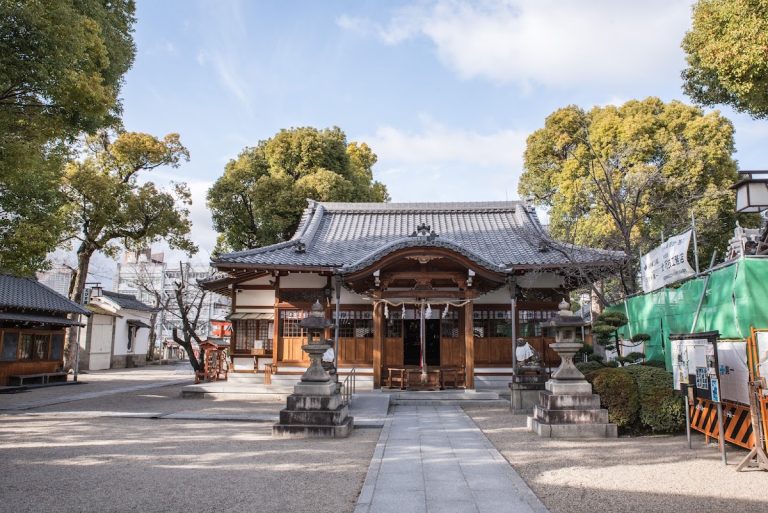
The Imperial Household Agency designates nine subsidiary locations in total, consisting of one site within the mausoleum precinct and eight detached sites. Futagoyama Kofun, in Kamitsuchimuro in Takatsuki, is one of the detached components and has a keyhole shape. Other designated locations include an in-precinct mound traditionally called Kurumazuka and detached sites known as I, Ro, Ha, and He. One of these is a mound in the grounds of Ota Shrine. The archaeological status of most of these locations, including whether they are kofun, remains uncertain.