Mitoshiro Kofun: A Late Kofun-Period Burial Mound in Japan
Site at a Glance
- Rating
- 4.1
- Popularity
- Very Low
- Country
- Japan
- Primary era
- Medieval
- External website
- Open
- Eras represented
- Medieval
- Civilizations
- Yamato
- Site type
- Burial
- Remains
- Burial Mound
On this page7 sections
History
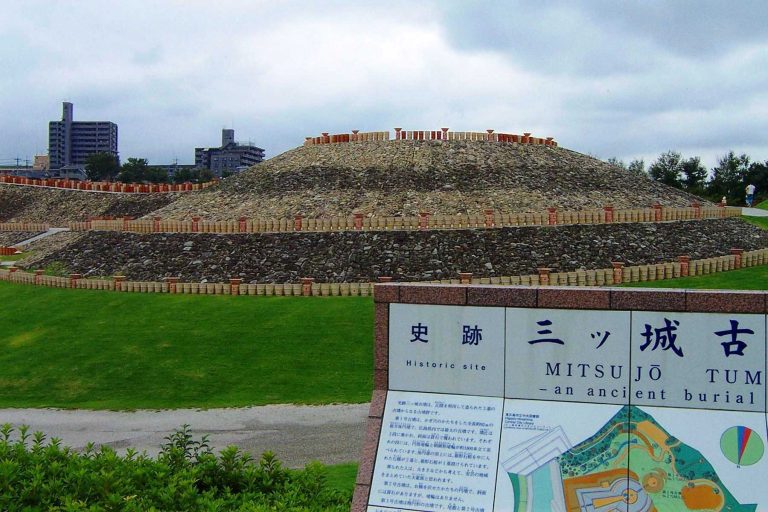
Mitoshiro Kofun is a Japanese burial mound in Mihara, Hiroshima, Japan, built around the middle of the seventh century during the final phase of the Kofun period. The Kofun period was an era when political elites were buried in large mounds. Regarded as a Kinai-style kofun, a mound type associated with the region around Kyoto, Osaka, and Nara, Mitoshiro Kofun is considered an important tomb of a regional chief in the Nuta area.
The Late Kofun Period
The mound was constructed on the southern side of a valley, against the slope of a hill above the left bank of the Ohara River, a tributary of the Nuta River. Its two-room burial chamber and two stone sarcophagi form an unusual combination that helps illuminate the political circumstances of the period.
Regional Connections and Preservation
Other kofun in the surrounding area include Umekidaira Kofun and the Sadamaru Kofun Group. The remains of the Hakuhō-period Yokomi abandoned temple site are also nearby. Together, these remains have been used to consider connections between local elites and the Yamato polity, the early state centered in the Kinai region that extended growing political influence across the Japanese archipelago. Mitoshiro Kofun was discovered as a kofun in 1895, and its precinct was designated a National Historic Site of Japan on April 13, 1933.
Remains
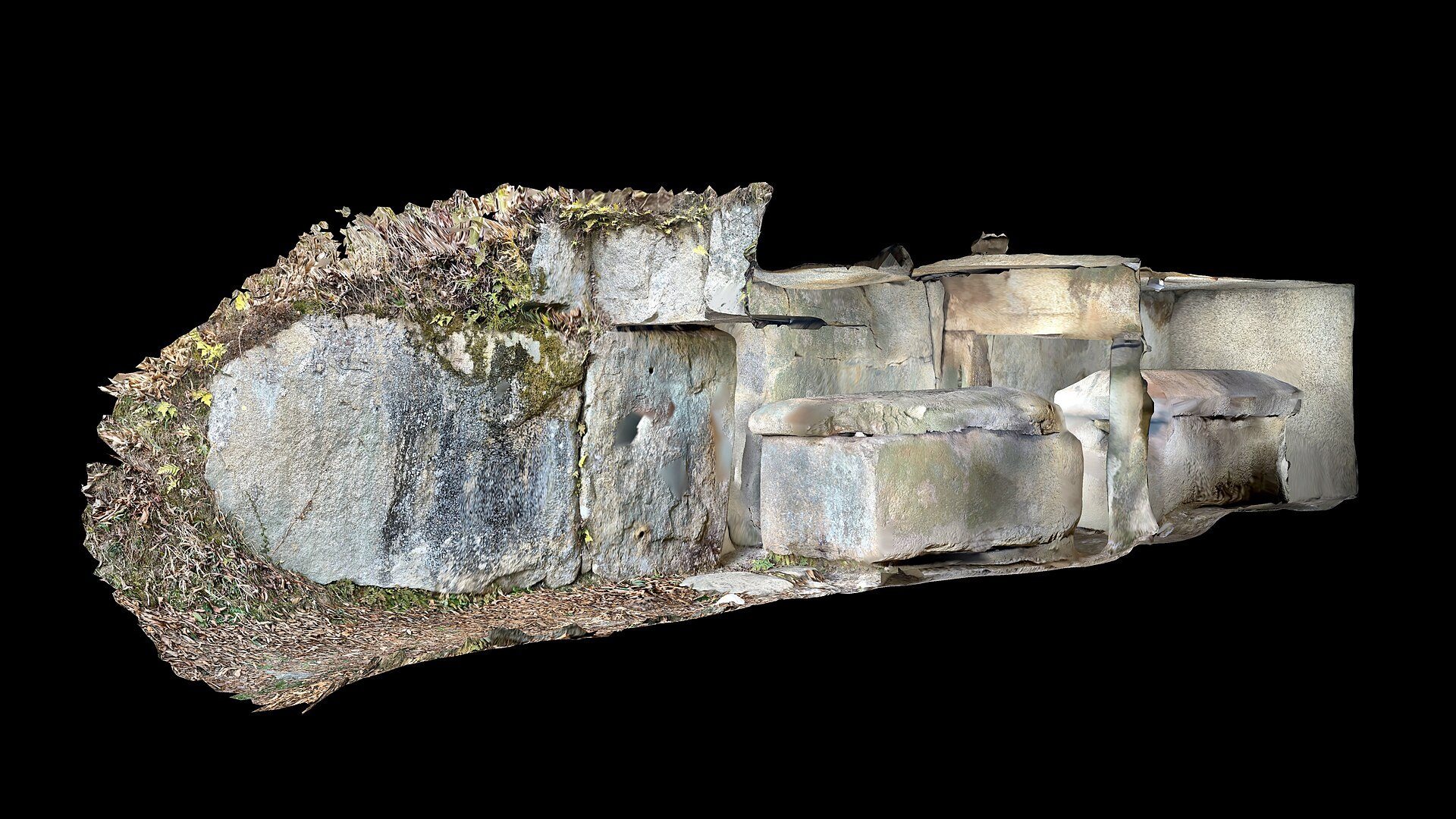
Mitoshiro Kofun was built into a hillside and is generally thought to have been a south-facing circular mound, although its original shape and dimensions remain uncertain. Within it is a south-facing corridor-style stone chamber, meaning a burial chamber entered through a passage. Made from finely cut granite, the facility extends about 10.7 meters and comprises a rear chamber, a front chamber, and an entrance passage.
Stone Burial Chamber
A cut-stone partition separates the front and rear rooms. The front chamber is approximately 2.7 to 3.0 meters long, 2.05 to 2.2 meters wide, and 2.15 to 2.2 meters high. The rear chamber measures about 3.4 to 3.6 meters in length, 1.9 to 2.0 meters in width, and 2.1 to 2.2 meters in height. The entrance passage is approximately 4.1 to 4.25 meters long, 1.55 meters wide, and 1.9 to 1.95 meters high.
Most of the chamber walls and ceilings are made from single stones. The east wall of the front chamber and the west wall of the rear chamber are exceptions. Cut stones form the internal partition, while a groove along the inner front edge of the doorway held a wooden door. The passage has two large stones in each side wall, and one capstone survives at its inner end.
Granite Sarcophagi
Each chamber contains a hollowed, house-shaped granite sarcophagus, a stone coffin whose raised upper part imitates a roof. These belong to a relatively late form that lacks projections for holding ropes. The rear sarcophagus is approximately 2.46 meters long, 1.07 meters wide, and 1.38 meters high, and is somewhat more slender than the one in the front chamber.
The granite coffins distinguish Mitoshiro Kofun from neighboring mounds along the Ohara River, where comparable house-shaped sarcophagi were made from Tatsuyama stone brought from Hyogo Prefecture.
Excavated Objects
Grave goods from the chamber include gold earrings and gilt-bronze horse harness fittings. The harness pieces include a cloud-shaped fitting, a flower-shaped junction fitting, and saddle fittings. Ceramic objects include Sue ware, a high-fired Japanese pottery tradition of the Kofun and succeeding periods. The vessels consist of a flask with attached small vessels, a footed dish with attached small vessels, a footed jar with attached small vessels, a tall-necked jar on a footed stand, cup bodies, cup lids, and footed spouted vessels. The excavated objects are held by the Tokyo National Museum.