Komoro Castle: A Japanese Hill Castle in Nagano


Site at a Glance
- Rating
- 4.1
- Popularity
- Medium
- Country
- Japan
- Primary era
- Early Modern
- External website
- Open
- Eras represented
- Medieval, Early Modern
- Civilizations
- Takeda, Tokugawa
- Site type
- Military
- Remains
- Castle
On this page13 sections
History
Komoro Castle is a Japanese hill castle in Komoro, Japan, whose surviving remains preserve the history of a stronghold shaped by regional warfare and Tokugawa rule. Its origins are uncertain, although 1487 is recorded as a construction date, and an earlier fortification was built during the Muromachi period, from approximately 1336 to 1573, by the local warlord Oi Mitsutada. The castle stands on a hill at the foot of Mount Asama and became known as Ana-jō because it lay below the surrounding castle town. It was also called Hakatsuru-jō, or “White Crane Castle.”
Takeda reconstruction
By 1554, Takeda Shingen, a prominent sixteenth-century regional warlord, had brought the area under his control. The earlier fortification was then extensively reconstructed as a castle under the direction of Yamamoto Kansuke, Shingen’s senior strategist. This work took place during the Sengoku period, an era of prolonged warfare among regional lords that followed the Muromachi period. The castle’s position and defenses reflected the military importance of the site during this unsettled phase.
From Nobunaga to Tokugawa rule
The destruction of the Takeda clan by Oda Nobunaga in 1582 transferred Komoro Castle to Nobunaga’s general Takigawa Kazumasu. After Nobunaga was assassinated in the Honnō-ji Incident, the castle briefly came under the Later Hōjō clan of Odawara, a ruling family defeated in 1590. After the Battle of Odawara that year, Komoro came under Tokugawa Ieyasu, one of the military and political leaders who expanded Tokugawa control over central Japan.
Ieyasu assigned Komoro to his general Sengoku Hidehisa, who became daimyō, or a major feudal lord governing a domain, of Komoro Domain. The holding was assessed at 50,000 koku, an agricultural unit conventionally based on the rice needed to support one person for a year, and its status was later confirmed under the Tokugawa shogunate. Hidehisa strengthened the walls and reorganized the castle around a central bailey with northern and southern baileys. His son, Sengoku Tadamasa, continued the improvements. The three-story keep is attributed to this period, although Hidehisa is also credited with building it.
Edo-period lords and disasters
Tokugawa Tadanaga held Komoro from 1622. The domain then passed to the Hisamatsu branch of the Matsudaira clan from 1624 to 1648, with an assessed income of 45,000 koku. Branches of the Aoyama clan governed from 1648 to 1662, the Sakai clan from 1662 to 1679, the Nishio clan from 1679 to 1682, and the Ishikawa clan from 1682 to 1702. Their recorded incomes were 42,000, 30,000, 25,000, and 20,000 koku respectively.
Lightning struck the keep in 1626, setting it on fire. The tower was never rebuilt. In 1702, a junior branch of the Makino clan received Komoro and retained the domain until the end of the Edo period, from 1603 to 1868, when Japan was governed by the Tokugawa shogunate. The Makino holding was assessed at 15,000 koku. Flooding caused further damage in 1742, after which the San-no-mon and other affected sections were reconstructed by 1765.
Abandonment and preservation
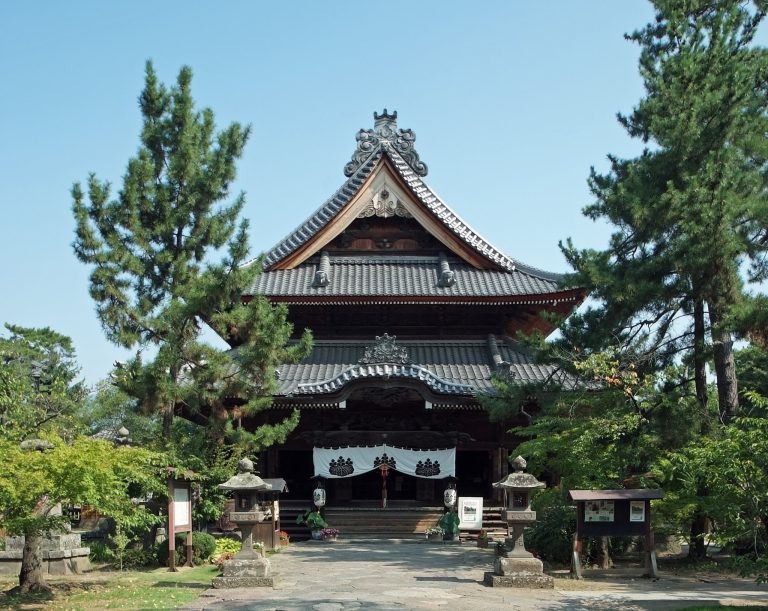
Following the Meiji Restoration, the political transformation that ended the Tokugawa shogunate, Komoro Castle was abandoned. The abolition of the han system, the Tokugawa-era system of domains governed by daimyō, in 1871 led to the demolition or transfer of most remaining structures. Some were donated to nearby Buddhist temples and to a merchant house.
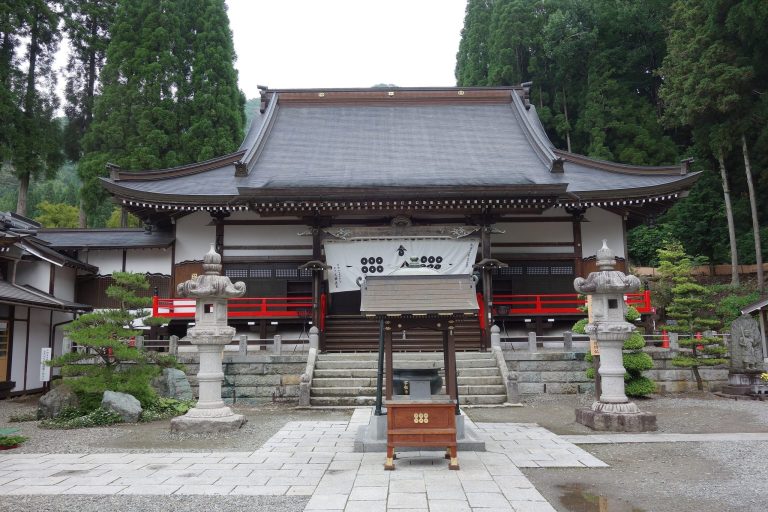
The principal ruins are now preserved as Kaikoen, meaning “nostalgic park.” The Ōtemon and San-no-mon are Important Cultural Properties. Two additional castle gates survive at Buddhist temples in Komoro, while part of the former central palace is privately held in the city of Tōmi. The Japan Castle Foundation listed Komoro among the 100 Fine Castles of Japan in 2006. The former grounds also include an amusement park, a zoo opened in 1926, and a museum dedicated to Shimazaki Tōson, a Japanese novelist and poet.
Remains
Komoro Castle is a hirayama-style castle, built on a hill or low rise to combine elevated defensive ground with access to the surrounding lowlands. Its builders incorporated natural gullies formed by rainwater into the fortifications. The site was also subject to falling volcanic ash mixed with small stones. The complex centered on the Hommaru, or main bailey, which contained the keep. The Ni-no-maru, the second bailey, was divided into the Kita-no-maru and Minami-no-maru and secured by the San-no-mon. Outer areas extended toward the Ōtemon, the main gate.
Central baileys and defensive features
Keep foundation
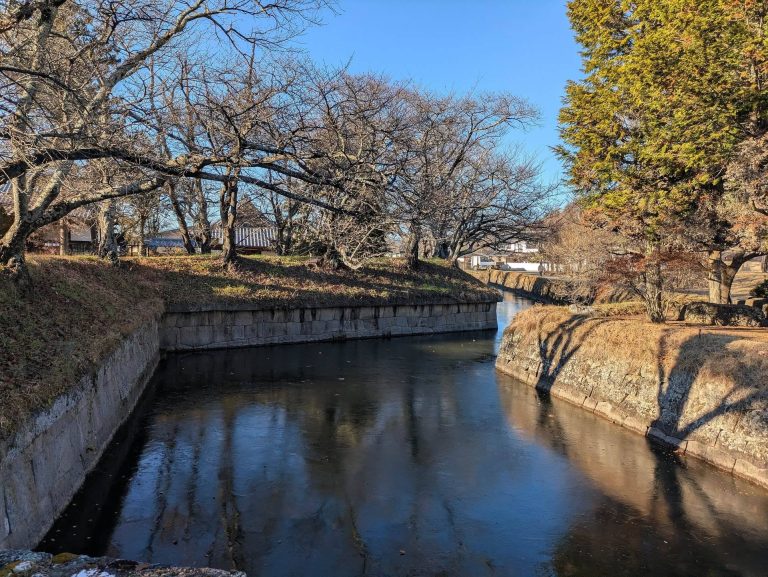
The three-story keep has disappeared, but its foundation survives within the Hommaru. The central bailey also retains stone walls, while sections of the moat gullies remain as part of the defensive ground plan. Below the Hommaru, the Akazu-no-mon led directly outside the castle.
San-no-mon
The San-no-mon, or third gate, survives in the Ni-no-maru. It was rebuilt in 1765 after the flooding of 1742, making its present form part of the castle’s later Edo-period fabric. It is one of the two gates associated with the Kaikoen grounds that retain Important Cultural Property status.
Gates and surviving associated structures
Ōtemon
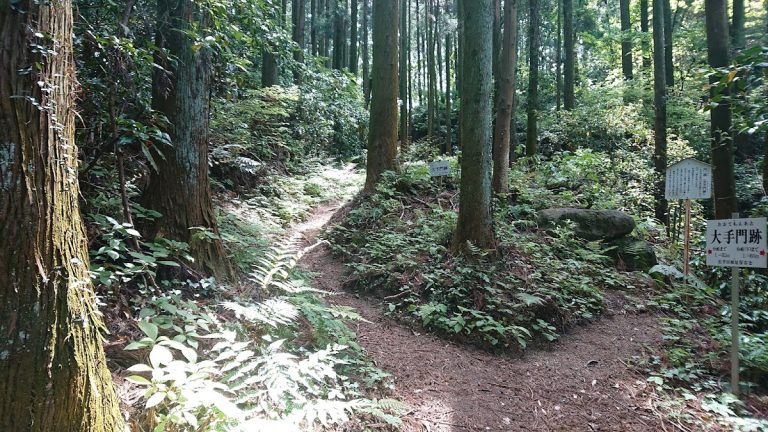
The Ōtemon is the castle’s main gate and a surviving original structure from the early Edo period. The Shinano Railway line now crosses the former castle grounds and separates this gate from the other principal remains. The Ōtemon stands within a small green area.
Other surviving gates and palace remains
Two further castle gates remain at Buddhist temples in Komoro. A portion of the former central palace survives in private ownership in Tōmi. Together with the keep foundation, Hommaru stone walls, moat gullies, Ōtemon, and San-no-mon, these structures represent surviving elements of the castle’s former complex.
Kaikoen grounds
The former castle grounds now contain Kaikoen park, an amusement park, the zoo, and the Tōson museum. Kaikoen is also noted for its cherry blossoms and autumn foliage, while the surviving castle features preserve the layout of the baileys and the relationship between the hilltop defenses and the lower approach toward the main gate.