Takatenjin Castle: A Sengoku-Period Mountain Fortress in Japan


Site at a Glance
- Rating
- 4.2
- Popularity
- Low
- Country
- Japan
- Primary era
- Early Modern
- External website
- Open
- Eras represented
- Medieval, Early Modern
- Civilizations
- Takeda
- Site type
- Military
- Remains
- Castle
On this page9 sections
History
Takatenjin Castle is a Japanese Sengoku-period mountain fortress in Kakegawa, Japan, whose surviving earthworks occupy Mount Kakuo, also known as Takatenjin Mountain. Its origins are uncertain, but the castle became an important stronghold during the sixteenth-century struggles among the Imagawa, Takeda, and Tokugawa powers. As a yamashiro, or Japanese mountain castle, it used ridges, steep slopes, earthworks, and restricted approaches as its principal defenses.
Early Origins and Imagawa Control
A tradition places the castle’s construction during the Genpei War, the late-twelfth-century conflict between the Taira and Minamoto clans. That origin has not been confirmed by documentary or archaeological evidence. The earliest secure written reference comes from the early sixteenth century and identifies Fukushima Sukeharu, a retainer of the Imagawa clan, as castellan of the castle of Hijikata.
Pottery from the latter half of the fifteenth century through the early sixteenth century points to earlier fortified activity on the mountain. Local powers may have established a headquarters there before the Imagawa expanded their authority. A fifteenth-century foundation by the Kushima clan, minor Imagawa retainers, has also been proposed.
The Fukushima clan declined after the Hanakura Disturbance of 1536. The local Ogasawara clan, which had submitted to the Imagawa, then assumed responsibility for the castle. Imagawa Yoshimoto expanded his territories during this period, but his death at the Battle of Okehazama in 1560 weakened the political position of the Imagawa.
Takeda Expansion
In 1569, the alliance between the Imagawa and Takeda clans ended. Takeda Shingen, working with Tokugawa Ieyasu, began the invasion of Suruga, an operation that brought about the destruction of Imagawa power. Ogasawara Ujioki and his son Ujisuke entered Tokugawa service, and Takatenjin Castle became a focus of the conflict between the Takeda and Tokugawa clans near the frontier of Suruga and Tōtōmi.
Takeda Shingen is said to have besieged the castle between March and May 1571 with an army of about 20,000 men, but he failed to capture it. The dating of this operation remains uncertain because a reassessment of related documents has produced an alternative date of 1575.
In 1574, Takeda Katsuyori attacked and seized the castle’s second fortified enclosure. Its castellan, Ogasawara Ujisuke, had expected aid from the Oda and Tokugawa forces. Tokugawa lacked the capacity to provide sufficient assistance, while Oda troops were occupied with religious uprisings. Ujisuke surrendered, entered Takeda service, and also became known as Nobuoki. Other defenders, including Osuga Yasutaka, were permitted to withdraw toward Hamamatsu. Katsuyori’s capture of a castle that his father had failed to take greatly strengthened his military reputation.
Siege and Fall
After the Takeda defeat at the Battle of Nagashino in 1575, Katsuyori faced Oda forces to the west and the Hojo clan to the east. He enlarged Takatenjin Castle toward the western ridge, extending the fortified area toward Takatenjin Shrine, and appointed Okabe Motonobu, a former Imagawa retainer, as castellan.
Tokugawa Ieyasu captured several regional strongholds, including Suwaharajo, blocking the Takeda supply route along the Oi River. He also built Yokosuka Castle and six surrounding bases known as the Six Forts of Takatenjin. These positions isolated the castle and made its long supply lines increasingly difficult to maintain.
The Tokugawa army began its second siege in September 1580. Okabe Motonobu held the castle with several hundred to about 1,000 men, but the blockade produced severe food shortages and a sharp decline in morale. Katsuyori repeatedly attempted to send relief, yet his forces were also threatened by enemies on both sides.
In late March 1581, Okabe and the remaining garrison made a final sortie in an effort to break through the besieging army. Okabe and many defenders were killed, while the small number of survivors were generally spared. Haraishi Motoyasu, a military magistrate who escaped but was captured, was forced to commit suicide the following day. A local tradition connects this exceptional punishment with Ieyasu’s lasting resentment toward Haraishi, who had been his neighbor during Ieyasu’s childhood as an Imagawa hostage.
Military inspector Yokota Inematsu escaped along the western ridge and carried news of the castle’s fall to Katsuyori in Kai Province. The route associated with his escape survives as part of the site. A surviving letter from Nobunaga instructing Ieyasu not to accept the besieged garrison’s surrender is also connected with the episode.
Abandonment and Later Recognition
The failure to relieve Takatenjin Castle badly damaged Katsuyori’s prestige. The Shinchō kōki, a chronicle of Oda Nobunaga’s rule, particularly stresses this consequence. Powerful local families, including the Kiso and Hoshina clans, defected the following year, and the loss of the castle is regarded as one reason for their change of allegiance.
Takatenjin Castle was abandoned after its fall in 1581 and was never again developed as a functioning castle. Takatenjin Shrine on the summit ensured that the mountain remained a local symbolic landmark. The ruins have been protected as a National Historic Site since 1975, and the protected area was expanded in 2007. In 2017, the castle was selected as site 147 in the Continued Top 100 Japanese Castles.
Remains
Mountain Setting and Linked Enclosures
The castle occupies the summit of Mount Kakuo in the northwestern part of the lower Kikukawa basin. The summit rises 132 metres above sea level and about 100 metres above the surrounding land. Its steep slopes made ascent difficult except along established routes. The fortified area follows a roughly Z-shaped plan across eastern and western peaks joined by a saddle about 50 metres long and only 10 metres wide. The entire complex extends approximately 400 metres from end to end and reaches about 200 metres across.
The eastern peak formed the original fortified area and contained the inner enclosure. The western peak was added during Takeda control, when the castle was extended toward the area of the present Takatenjin Shrine. Successive fortified enclosures connected along the narrow ridge made use of the mountain’s natural form. Terraces, dry moats, or ditches without standing water, and earthen ramparts reinforced the precipitous slopes. Cut ditches further strengthened the defensive arrangement.
Entrances and Approaches
The main gate stood on the southern side of the castle. From this entrance, the terrain extended toward samurai residences on the eastern terrace. The northern rear gate also served as the approach used by worshippers traveling to Takatenjin Shrine. The surviving earthworks preserve the arrangement of the enclosures, ramparts, and cut ditches. Kakegawa City, formerly Daito Town, maintains the ruins as a historic site.
Summit Shrine and Later Structures
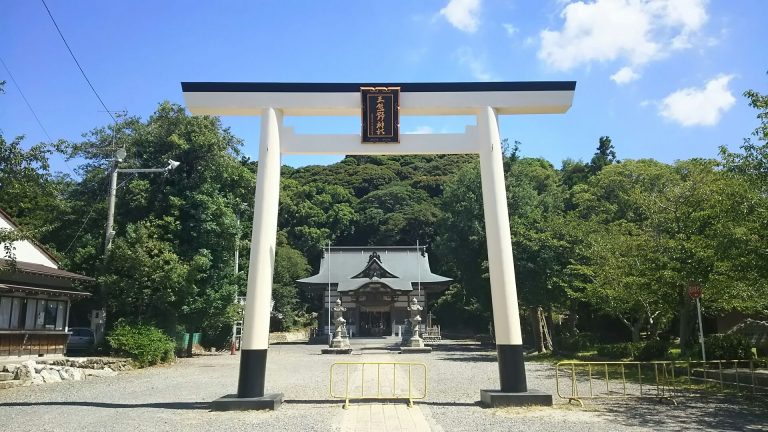
Takatenjin Shrine stands on the summit within the area added during the Takeda period. Monuments there commemorate those who died in the Satsuma Rebellion and the First Sino-Japanese War. The castle’s historical defenses relied on the mountain and its earthen fortifications. A faux keep was erected on the summit before World War II and later burned after being struck by lightning; its concrete foundation survives.