Taga Castle: A Nara-Period Fortified Administrative Settlement in Japan


Site at a Glance
- Rating
- 4
- Popularity
- Low
- Country
- Japan
- Primary era
- Medieval
- External website
- Open
- Eras represented
- Medieval
- Civilizations
- Yamato
- Site type
- Military
- Remains
- Fortified Town
On this page12 sections
History
Taga Castle is a Nara-period fortified administrative settlement in Tagajo, Japan, established in 724 by the imperial official and military commander Ono Azumabito. Known also as Taga Stockade, it became the provisional provincial capital of Mutsu, a historical province covering much of northeastern Honshu, and a principal base for the imperial court’s expansion against the Emishi communities of the region.
Foundation and Imperial Administration
The Ritsuryo government, the centralized system of law and administration used by the imperial government during the Nara and early Heian periods, created Taga Castle as both a military installation and a seat of government. The Mutsu provincial administration is thought to have been located previously at the Koriyama Site in present-day Sendai. In 724 it was transferred to Taga Castle, which also became the headquarters of the Chinjufu, the northern military command responsible for imperial defense and campaigns in northeastern Japan.
In peacetime, Taga Castle functioned as Mutsu’s administrative center. The government organized districts north of the Kurokawa River and established a chain of northern stockades, including Oshika, Nitta, Tamatsukuri, and Shikama, together with one unidentified installation. Taga Castle formed part of the imperial advance alongside Akita Castle and Okachi Fort. Its commander held the title Chinjufu-shogun, the northern equivalent of the commander of Dazaifu, the major administrative and military headquarters in Kyushu.
The castle developed through four major phases, approximately from 724 to 762, from 762 to 780, from 780 to 869, and from 869 until its abandonment in the middle of the eleventh century. Fujiwara Asakari carried out a major reconstruction in 762. In 780, the Emishi leader Iji no Kimi Ataramaro led a rebellion that resulted in the burning of Taga Castle. The installation was rebuilt afterward.
Frontier Change and the Jogan Earthquake
Imperial campaigns led by Sakanoue no Tamuramaro, followed by the construction of Isawa Castle, moved the frontier north after 802. The Chinjufu was transferred to Isawa, and Taga Castle gradually lost its military importance. It continued, however, to support provincial administration and logistical operations.
In 869, the Jogan earthquake destroyed or severely damaged the castle’s buildings, gates, towers, walls, and storehouses. A tsunami then inundated the settlement below the castle, causing approximately 1,000 deaths and destroying property and crops. The central complex was restored afterward as the Mutsu provincial government.
By the eleventh century, maintaining the provincial government had become increasingly difficult. During the latter half of that century, a level area was created beside the administrative center for banquets and ceremonies, changing the function of the provincial headquarters. Taga remained a military base during the Former Nine Years’ War and the Later Three Years’ War, eleventh-century conflicts in northeastern Japan involving imperial forces and regional warrior leaders. The Mutsu provincial government was destroyed by fire in 1097, while the rise of Hiraizumi under the Northern Fujiwara in the twelfth century contributed to the site’s final decline.
Medieval Afterlife and Rediscovery
In 1181, the faction based at the Mutsu provincial government and an estate whose name derived from that government broke with rival Mutsu vice-governors based at Hachimandate and the lowland development zone. The former faction declined during the 1189 Oshu War and the subsequent Rebellion of Okawa Kaneto. Rival officials obtained jito appointments from the Kamakura shogunate, making them land stewards responsible for administering estates and collecting revenues. The Hachiman estate may have continued as a Kamakura shogunal estate.
During the Nanboku-cho period, the fourteenth-century struggle between rival Northern and Southern imperial courts, Kitabatake Chikafusa and his son Kitabatake Akiie brought Prince Yoshiyoshi, later Emperor Go-Murakami, to Taga. They established the Mutsu General Headquarters of the Southern Court there before moving it to the more secure mountain fortress of Mount Ryosen.
After the medieval period, the site reverted to fields and gradually disappeared from view. It was rediscovered in 1955. Investigations of the castle and surrounding sites began in 1961, with more extensive investigations reported in 1976. Taga Castle and its associated temple ruins became a national Historic Site in 1922, and the protected area was expanded in 1965. The remains received Special Historic Site status in 1966 under the designation “Taga Castle Ruins, Including Temple Ruins,” with further additions between 1974 and 1993. The wider complex became a component of Japan Heritage in 2016.
Archaeological work has also clarified the castle’s institutions and chronology. A wooden tablet discovered in 2016 bearing the inscription “fu-fu” provided the first archaeological evidence supporting the existence of the Chinjufu. Groups of lacquered-paper documents, wooden tablets, and other materials received national Important Cultural Property designations between 2022 and 2024. Ten buildings in the Jomae government-office area had been reconstructed by October 2022. The outer southern gate was rebuilt in wood in 2023, followed by two sections of its earthen-wall enclosure in 2024. As of 2025, Tagajo City planned a wooden reconstruction of the central government hall.
The Taga Castle Stele was designated an Important Cultural Property in 1998 and elevated to National Treasure status in 2024. Its later literary reputation also shaped the site’s historical memory. Matsuo Basho visited the monument in 1689 and described it in Oku no Hosomichi. He treated the stele as an utamakura, a place linked to established poetic allusions, making it an important literary landmark for educated visitors from the capital.
Remains
Fortifications and Enclosures
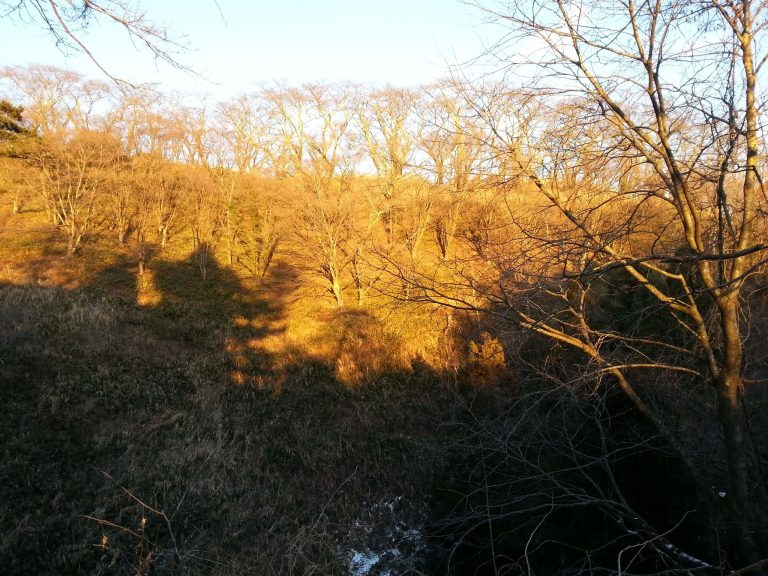
Taga Castle occupied a plateau in the hills northeast of Sendai, near the Pacific coast and close to Shiogama’s natural harbor. Marshes and rivers added to the defensive value of the setting. The castle was a josaku, an ancient fortified administrative settlement that combined earthworks with government offices, storehouses, military facilities, and residential areas.
The outer enclosure was approximately square, with a perimeter of about 3.4 kilometers. An earthen rampart roughly 5 meters high carried a wooden palisade and was protected by a dry moat about 3 to 4 meters wide. The eastern side, facing the adjoining hills, was especially strongly defended. An eastern gate occupied a hollow in the wall and was protected by a corner turret.
On the south, a fortified main gate opened onto a principal road more than 20 meters wide. The road led to a second, approximately square enclosure measuring about 100 meters across and also bounded by earthen walls. Archaeological investigations identify an outer perimeter of approximately 1,000 meters on the east, 700 meters on the west, 880 meters on the south, and 860 meters on the north. Earthen walls and rows of wooden palisade posts marked its boundaries.
Government Center and Settlements
Central Administrative Precinct
The central administrative precinct was enclosed by earthen walls and measured approximately 106 meters from east to west and 170 meters from north to south. Numerous foundation stones and postholes indicate major buildings, including the principal government hall. The precinct also contained subordinate offices and storage facilities, while the outer area held administrative offices, barracks, and residences for officers. The Jomae government-office area is represented today by reconstructed buildings.
Planned Settlement and Transport Network
A planned settlement lay outside the southern wall, and a further urban area followed a grid system at the foot of the hill containing the government center. The administrative complex and settlement connected with water transport on the Sunaoshi River and with the Tosan-do, a major land route linking the central provinces with northeastern Japan. Matsushima Bay and Chikaura, the port of Shiogama, served as the provincial government’s harbor.
Temple and Religious Landscape
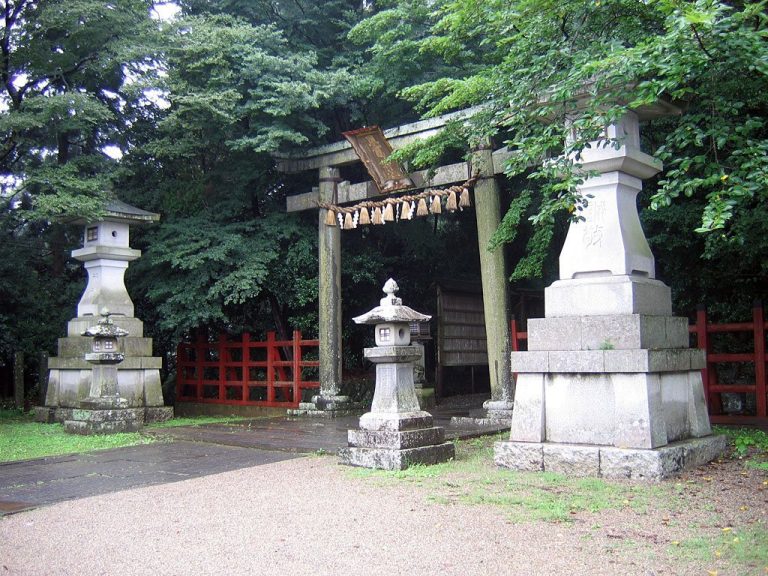
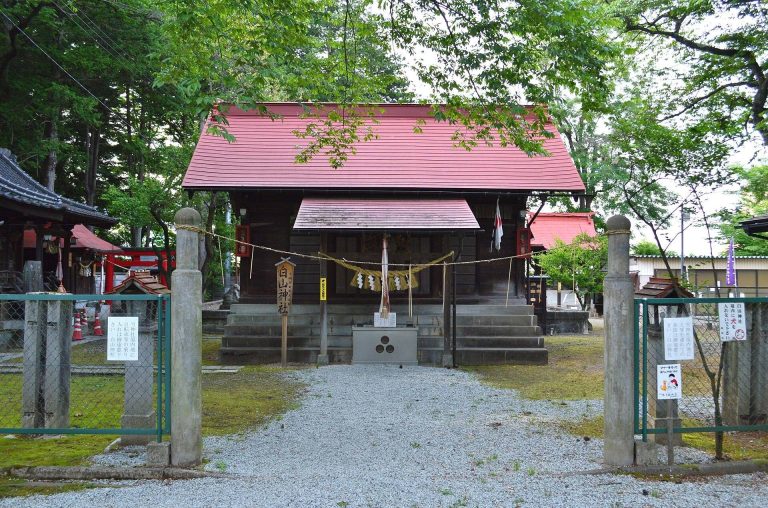
The ruins of Tagajo Temple lie southeast of the administrative precinct, about one kilometer south of the castle ruins. Excavation revealed a large rectangular compound enclosed by an earthen wall and containing the remains of five buildings. The temple was associated with the provincial administrative center. Taga Shrine stands north of the principal government hall, while Mutsu Sosha Shrine is beside the former eastern gate. The wider religious landscape also included the provincial temple and Shiogama Shrine, the highest-ranked shrine in Mutsu Province and a spiritual focus for the region.
Taga Castle Stele
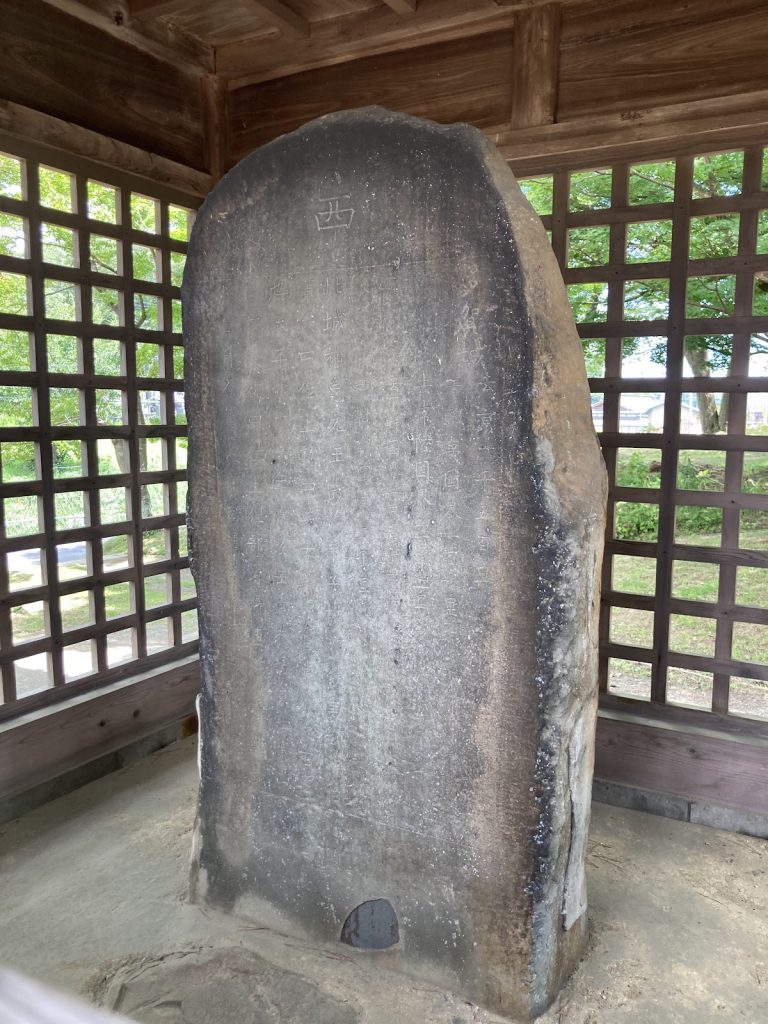
The Taga Castle Stele, also called the Tsubo no Ishibumi, stands near the former southern gate on a small hill. This vertically set Nara-period granite-sandstone monument is approximately 196 centimeters high and 92 centimeters wide. It has a semicircular top and faces almost due west. A large carved character meaning “west” appears above a rectangular inscription of 140 characters arranged in 11 lines.
The inscription gives distances to the capital, the Emishi province, and other regions. It attributes the foundation of Taga Castle to Ono Azumabito in 724 and records its repair by Fujiwara Asakari in 762. The monument’s authenticity was once questioned, but investigations since 1969 found that the castle’s date, scale, and structure do not conflict with the inscription. Its calligraphic style corresponds to eighth-century documents and wooden tablets, while the foundation beneath it resembles foundations used for buildings at Taga Castle.
Excavated Materials and Present Archaeological Park
Excavations have recovered 151 lacquered-paper documents, 450 wooden tablets from Taga Castle, 105 wooden tablets from associated sites, and 29 lacquered-paper documents from those sites. The materials are preserved by the Tagajo City Buried Cultural Properties Research Center, the Miyagi Prefectural Taga Castle Research Institute, and the Tohoku History Museum. The museum stands on the castle grounds and contains finds from Taga Castle and other sites in the Tohoku region.
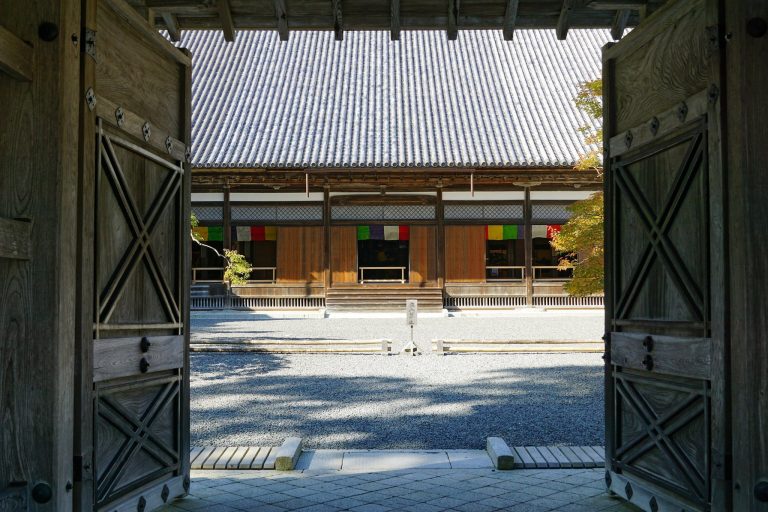
The remains are maintained as an archaeological park incorporating the former temple area, the Jomae government-office area, the eastern gate, the southern gate, reconstructed earthen walls, and associated archaeological areas such as Tate-mae, Kashiwagi, and Sanno. Together, these surviving features outline the fortified administrative settlement that governed Mutsu and supported imperial operations in northeastern Japan.